
How We Compared Home Water Test Kits
We evaluated 11 leading home water test kits across cost per analyte, EPA method validity, contaminant breadth, lab turnaround, and clarity of result reports. We also weighed kit-to-lab logistics, recall history, and customer support quality. Lab-based kits using EPA Methods 200.8, 537.1, and 525.2 are gold standard.
SimpleLab Tap Score (Editor Choice, $99–$249)
SimpleLab covers Essential ($99, 50+ contaminants), Advanced ($249, 110+), and PFAS specialty ($249, 14 PFAS). Uses ICP-MS and gas chromatography with EPA-validated methods. Reports are color-coded with health context — easiest to understand for non-technical homeowners.
National Testing Laboratories Well-Check ($199)
Best for private wells. Tests 75 contaminants including bacteria, nitrates, hardness, iron, manganese, lead, copper, arsenic, uranium, radon, and 15 VOCs. Used by EPA and state programs. Slightly less polished reports than SimpleLab but more comprehensive bacteria panel.
Cyclopure PFAS Test ($89)
Cheapest valid PFAS test on the market. Uses proprietary DEXSORB media to extract PFAS from a 250 mL sample, then mass-spec analysis at their lab. Tests 8–14 PFAS compounds. Best for screening before committing to a $249 panel.
Health Metric 17-in-1 Strip Kit ($25)
Best DIY screening kit. Detects bacteria (presence/absence), pH, hardness, alkalinity, chlorine, copper, lead, iron, nitrates, nitrites, mercury, sulfates, and more. Strips are ±15% accurate — useful for monthly monitoring between annual lab tests, not for sizing equipment.
DIY vs Lab: When Each Makes Sense
Use lab tests annually for compliance, real estate, prenatal planning, or after well work. Use DIY strips monthly for quick checks of chlorine, hardness, pH, and bacteria. Never rely on strips for lead (40+ ppb detection limit vs 15 ppb EPA action level) or PFAS (no valid strips exist).
What to Test For Based on Your Source
Municipal: lead (especially pre-1986 homes), chlorine, fluoride, hardness, PFAS if utility CCR shows detection. Private well: bacteria, nitrates, hardness, iron, manganese, lead, arsenic, uranium (especially Western US), radon. Add VOCs near gas stations or industrial sites.
Bottom Line
For comprehensive annual testing: SimpleLab Tap Score Advanced ($249). For wells: National Testing Laboratories Well-Check ($199). For PFAS screening: Cyclopure ($89). For monthly checks: Health Metric 17-in-1 strips ($25). Skip lead test strips entirely — always send to a lab for lead.
Why DIY Strips Fall Short for Regulatory-Grade Decisions
DIY test strips for general home testing are convenient, but they were designed as screening tools — not regulatory instruments. Strips typically rely on colorimetric chemistry interpreted by the human eye, which introduces 20–40% reading error even for trained users. Most strips have detection limits 5–50x higher than the EPA action level, meaning a strip can register clean while the actual concentration is well above the level that triggers health concern, particularly for general home testing where the action threshold focuses on lead, PFAS, bacteria.
Strips also have short shelf lives, are sensitive to humidity and temperature during storage, and cannot distinguish between similar chemical species (for example, total chlorine vs. free chlorine, or total iron vs. ferrous iron). They are useful for trend monitoring after you have an established baseline from a certified lab, but they should never be the only data behind a decision involving children, pregnancy, kidney disease, or property disclosure. Use strips weekly to detect change, and use a certified lab annually to anchor those readings to a verified absolute concentration.
Certified Lab Testing: EPA Methods, Chain of Custody, and Detection Limits
Certified labs run general home testing samples using EPA-approved analytical methods on instruments calibrated daily against known standards. SimpleLab Tap Score, Cyclopure, ETR Laboratories, and most state extension labs hold EPA, ELAP, or NELAP accreditation. The detection limit (LOD) and reporting limit (LOQ) on a certified report are 10–1,000x lower than any DIY strip, which matters because health-based concerns for many contaminants now fall into the parts-per-trillion range.
Chain-of-custody documentation, which travels with the sample bottle from your kitchen to the lab, is what makes the report defensible in real-estate transactions, insurance claims, school district decisions, and pediatric medical records. When ordering a general home testing test, confirm the lab provides chain-of-custody seals, follows the relevant EPA method, and reports both LOD and LOQ alongside numerical results. A report without these elements is informational at best.
Step-by-Step Sampling Protocol (First-Draw, Flushed, and Composite)
Sampling technique determines whether your general home testing result reflects the water you actually drink or just the water your utility delivers to the curb. A first-draw sample is collected after water has sat in the pipes for a minimum of 6 hours (overnight is ideal). Open the cold-water tap with no aerator running, fill the lab-supplied bottle to the marked line without splashing, cap immediately, and avoid touching the bottle interior. First-draw sampling exposes contamination from premise plumbing — the dominant lead and copper exposure route in older homes.
A flushed sample is collected after running the tap for 1–3 minutes and reflects what the utility delivered to your service line. A composite sample blends multiple draws from kitchen, bathroom, and basement taps to estimate household-average exposure. For most general home testing concerns the first-draw kitchen sample is the highest-value single test. Always sample cold water — hot water can leach additional contamination from the water heater. Avoid sampling within 24 hours of plumbing work, water main flushing, or any utility notice of distribution-system disturbance.
Interpreting Results: MCLs, Health Advisory Levels, and Action Thresholds
Your general home testing report will show a numerical concentration, the EPA MCL, and often a health-advisory or non-enforceable goal level. Compliance with the MCL is the legal floor, not a clinical all-clear. For general home testing, the EWG health guideline, the WHO drinking water quality value, and several state-level limits are useful reference points when the federal MCL is older than 10 years or based on outdated toxicology.
If your result exceeds the MCL, the action is unambiguous: stop drinking unfiltered water immediately, install certified treatment, and re-test the treated tap within 30 days. If your result falls between the MCL and a stricter health-guideline value, the decision becomes contextual — pregnant women, bottle-fed infants, immunocompromised individuals, and households with elderly residents should treat any detection as actionable. Save every report; longitudinal trends are more meaningful than any single number, especially for general home testing where seasonal source-water variation is significant.
Cost Comparison: Strips vs. Digital Meters vs. Certified Labs
DIY strips for general home testing cost $10–$25 for 50–100 tests, putting per-test cost under $0.50. Handheld digital meters (TDS, pH, ORP, free chlorine) range $20–$200 with calibration solutions adding $15–$30 annually. Certified single-parameter lab tests cost $25–$80; comprehensive panels covering 50–120 parameters run $150–$700 depending on whether VOCs, semi-VOCs, PFAS, and pesticides are included.
For a typical household, the cost-effective stack is one comprehensive certified panel at baseline ($300–$500), an annual targeted re-test for general home testing and any other detected contaminant ($60–$120), and continuous monitoring with a digital meter or strip kit ($50 one-time plus $20/year). This stack costs $500 over the first year and $80–$150 annually thereafter — less than a single emergency-room visit and less than three months of bottled water for a four-person household.
Common Sampling Mistakes That Invalidate Results
The most frequent sampling errors for general home testing are running the tap before collection (which artificially lowers the result), removing the faucet aerator before sampling (which can release accumulated debris), sampling hot water (which leaches additional metals), letting the bottle overflow (which can wash out preservative), and shipping in non-temperature-controlled containers during summer (which can degrade certain analytes).
Other common errors include sampling within 24 hours of construction, plumbing work, or utility flushing; using a tap with a point-of-use filter still attached; reusing bottles from prior tests; and missing the lab's hold-time window (most analytes require lab analysis within 7–14 days of collection). Read the lab's sampling instructions carefully, set a kitchen timer for the 6-hour stagnation window if you are doing a first-draw sample, and ship samples on the same day they are collected whenever possible.
Testing Frequency by Source: City, Private Well, Cistern, Spring
Households on municipal water should run a comprehensive baseline test once and re-test for general home testing annually thereafter, with additional tests after any utility violation notice, distribution-system disturbance, or visible water-quality change. Private well households should test annually for bacteria and nitrate, every 2–3 years for a comprehensive panel including general home testing, and after any nearby agricultural application, well repair, flood, or septic work.
Cistern and rainwater-catchment households need quarterly bacteria testing and an annual heavy-metals and general home testing panel because catchment surfaces, gutter screens, and storage tanks are continuous contamination sources. Spring-fed and surface-water households (lake, creek, pond) should test seasonally because turbidity, runoff, and biological activity vary dramatically with rainfall and temperature. Document every result in a single notebook or spreadsheet — trends matter more than any one number.
What to Do After a Positive Result: Filtration, Re-Testing, Reporting
If a general home testing result comes back above the action level, the immediate priorities are stopping ingestion and identifying the source. Switch to bottled or pre-tested filtered water for drinking and cooking within 24 hours of receiving the result. Within 7 days, install an NSF/ANSI-certified filter rated for the specific general home testing parameter — pitcher and under-sink filters are appropriate for low-volume needs, RO is appropriate for confirmed contamination at any concentration above the MCL.
Within 30 days of installation, re-test the treated tap to verify the filter is reducing general home testing to below detection. If a private well shows general home testing contamination, also test neighboring wells and report the result to the local health department — many state programs will subsidize follow-up testing in confirmed contamination zones. If the contamination source is a municipal utility, file a formal complaint, request the most recent compliance reports under the Freedom of Information Act, and consider engaging a certified water-quality consultant for an independent assessment.
Recordkeeping for Real-Estate, Insurance, and Pediatric Use
Water test reports for general home testing have a long useful life beyond the immediate household decision. Real-estate transactions in many states either require or recommend a current well-water test as part of disclosure. Insurance claims involving water-quality damage frequently hinge on documented baseline conditions. Pediatricians can use a documented water-quality history when evaluating developmental concerns, particularly for lead, nitrate, and disinfection-byproduct exposure during pregnancy and early childhood.
Store every test report — both the PDF and the original chain-of-custody form — in a single household folder, along with the sample collection date, sampling location within the home, and any unusual conditions (recent plumbing work, weather events, utility notices). Cloud backup is recommended because many homeowners lose paper records during moves or insurance events. A 5–10 year longitudinal record is one of the most valuable household-health documents you can build.
Comparison of Top Lab Providers in 2026
For home water testing, the leading certified providers in 2026 are SimpleLab Tap Score, Cyclopure (PFAS-specific), ETR Laboratories, Eurofins Water Testing, and most state-run agricultural extension labs. SimpleLab is the most widely used third-party provider for households and offers panels ranging from $80 single-parameter to $700 comprehensive. State extension labs in agricultural and well-water states (Iowa, Wisconsin, Michigan, Pennsylvania, North Carolina) offer subsidized home water testing testing for $25–$50 — a meaningful discount for households on a budget.
Comparing providers, the key differentiators are reporting limit (lower is better — measured in parts per billion or trillion), turnaround time (5–14 days is standard, 24–48 hours is rush), parameter scope (single vs. panel), included interpretation (raw numbers vs. plain-language explanation), and chain-of-custody documentation (essential for legal or insurance use). For most households, SimpleLab Tap Score offers the best balance of scope, interpretation, and turnaround for home water testing; state labs are the best value when available; and Cyclopure leads for PFAS-specific testing at meaningful detection limits.
How Treatment Plants and Utilities Test for This Parameter
Municipal utilities test for home water testing on a schedule defined by the EPA Safe Drinking Water Act — typically quarterly for regulated contaminants, with results reported in the annual Consumer Confidence Report (CCR). Utilities are required to use EPA-approved methods and certified labs, but the sampling locations and schedules they choose meet legal minimums and may not capture seasonal or distribution-system variation that affects your specific tap. Read the CCR for your utility every year to identify trends that your household testing should investigate.
Distribution-system testing for home water testing happens at locations the utility selects, often near the treatment plant rather than at the end-of-line residential taps where contamination from premise plumbing or stagnation can be highest. The Lead and Copper Rule explicitly recognizes this gap by requiring sampling at high-risk residential addresses, but the same gap exists for many other contaminants. Your household sample is the only data point that reflects the water you actually drink — utility data is necessary context, not a substitute.
Reading and Storing Your Test Report Properly
A complete home water testing test report includes the analyte name, CAS registry number where applicable, EPA method number, sample collection date and time, lab receipt date, analysis date, reporting limit, detection limit, numerical result, and the unit of measure (typically ppb, ppm, or ng/L). Compare your numerical result to the EPA MCL, the EPA MCLG (the no-effect goal), the EWG health guideline, and any state-specific limit that applies to you. The MCL is the floor for legal compliance; the MCLG and stricter health-guideline values are the floor for clinical safety.
Store every home water testing report in a single household water-quality folder with the original PDF, a printed copy, the chain-of-custody document, and a one-line summary written in your own words. Cloud-backup the folder annually. After 5–10 years of consistent recordkeeping, the longitudinal trend in your reports becomes more valuable than any individual data point — it documents whether your filter is working, whether the source water is changing, and whether household exposure has been managed during pregnancy or early childhood windows.
Test Frequency Recommendations by Risk Level
For home water testing, baseline frequency recommendations split by risk profile. Low-risk households (newer construction, municipal water, no agricultural or industrial neighbors): comprehensive baseline test once, then targeted re-test for home water testing every 2–3 years. Medium-risk households (homes built before 1986, private well, suburban-fringe location): comprehensive baseline, then annual targeted test for home water testing plus a 5-year comprehensive re-test. High-risk households (agricultural runoff zones, post-industrial neighborhoods, post-fire watersheds, recent plumbing work): semi-annual home water testing testing plus annual comprehensive panel.
Trigger-based testing for home water testing should occur after any utility violation notice, any visible change in water color or odor, any plumbing work or water main repair near the home, any flood event that may have affected wells or distribution lines, and any new sensitive household member (pregnancy, infant, immunocompromised resident). The cost of a triggered test ($50–$150) is trivial compared to the value of confirming exposure either occurred or did not.
Beyond the Test: Ongoing Monitoring Strategies
Single point-in-time tests for home water testing miss the variability that matters most for chronic exposure assessment. Continuous monitoring tools fill this gap: TDS meters ($20) for general dissolved-mineral trends, pH meters ($30) for corrosion monitoring, free-chlorine photometers ($60) for residual disinfectant tracking, and online water-quality dashboards from forward-looking utilities. None of these tools replace lab testing for home water testing specifically, but they reveal upstream changes in source water that should trigger a follow-up lab test.
For households with documented home water testing contamination, consider a smart water monitor (Phyn Plus, Flo by Moen) that detects flow anomalies and provides a leak-free baseline for sampling. Install a calibrated TDS meter at the kitchen tap and check weekly — a sudden change in TDS often precedes a measurable change in regulated contaminants. Combine continuous monitoring with annual lab verification for home water testing and you have a household water-quality system that approaches utility-grade rigor at consumer cost.
FAQ Section: Practical Testing Questions
How long does home water testing testing take? Most certified labs return results in 5–14 business days from sample receipt. Add 2–3 days for shipping. Rush turnaround (24–48 hours) is available from most labs for an additional fee, typically $50–$150. Can I test for home water testing myself with a strip? Strips exist for some parameters but rarely meet the detection limit needed for health-based decisions. Use strips for trend monitoring, not for first-time risk assessment. Strips are also unsuitable for any application requiring legal documentation.
Do I need a special bottle for home water testing? Yes — most labs ship a sampling kit that includes the correct bottle, preservative, and instructions. Using a random household container will invalidate the result for most regulated parameters. Where do I send the sample? The lab provides a return-shipping label or address; most use UPS or FedEx with a 24–48 hour delivery window to keep the sample within hold-time. Always ship Monday through Wednesday to avoid weekend delays at the lab.
Top Recommended Home Water Test Kits
Certified lab kits and DIY strips for every household budget.
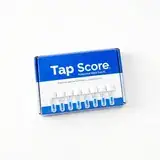
Tap Score Advanced City Water Test
Tap Score Advanced City Water Test
Certified Lab Kit
Our top pick because it uses EPA-certified lab analysis for 110+ contaminants and delivers the clearest, most actionable report.
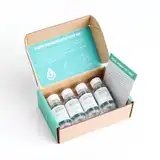
Safe Home Ultimate Drinking Water Test
Safe Home Ultimate Drinking Water Test
Lab Mail-In Kit
Best for well water because it covers 200+ contaminants including bacteria, heavy metals, and VOCs in one mail-in panel.
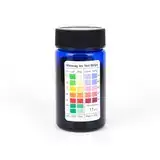
Health Metric 17-in-1 Test Strips
Health Metric 17-in-1 Test Strips
DIY Strips
Best DIY option for quick 17-parameter screening between annual lab tests.
Authority Resources
test water TDS · test water pH · lead in water · test water for lead · lead poisoning symptoms · PFAS contamination · PFAS health effects · test water for PFAS · test water for bacteria · waterborne illness guide · boil water advisory guide · test water hardness · soften hard water · best home water filters · best RO systems · best whole house filters · best water softeners · best well water filters · best water test kits · local water quality · how to choose a water filter