
What Atrazine Is and Where It Comes From
Atrazine is a triazine herbicide used on corn, sorghum, sugarcane, and turfgrass. The US applies 70+ million pounds annually, mostly in the Midwest. Atrazine is banned in the EU since 2004 due to groundwater contamination concerns but remains the second most-used herbicide in the US.
EPA Limit and Why It Is Controversial
EPA maximum contaminant level is 3 ppb. The 2003 atrazine atlas found dozens of US municipal systems regularly exceed this on individual sample days, but the running annual average masks short-term spikes. Critics, including the Natural Resources Defense Council, argue the limit should be 0.1 ppb based on endocrine evidence.
Endocrine Disruption Evidence
UC Berkeley research showed atrazine causes male frogs to develop ovaries and produce eggs at concentrations as low as 0.1 ppb — 30x below the EPA limit. Human studies link atrazine exposure to reduced sperm count, increased prostate and breast cancer risk, low birth weight, and birth defects.
Reproductive and Developmental Risks
Pregnant women in atrazine-exposed areas show higher rates of preterm birth, gastroschisis (a birth defect), and low birth weight. Atrazine crosses the placenta and is detected in cord blood and breast milk. EPA acknowledges atrazine as a "likely human carcinogen" but maintains the 3 ppb limit.
Geographic Hotspots
Iowa, Illinois, Indiana, Nebraska, Kansas, and Missouri have the highest atrazine detections. Spring application season (April–June) sees concentration spikes 10–50x above the annual average. Wells under 100 feet in corn-belt agricultural areas are most vulnerable. Utilities sourcing from rivers and reservoirs also show elevated atrazine spring–summer.
How to Test Water for Atrazine
SimpleLab Tap Score Pesticide Panel ($199) tests atrazine via EPA Method 525.2. Cyclopure does not currently offer atrazine. Many state agricultural extension labs offer subsidized atrazine testing for private wells in corn-belt states.
Filtration That Removes Atrazine
Activated carbon (NSF/ANSI 53 VOC certification) removes 90–95% of atrazine. Reverse osmosis removes 95%+. Whole-house carbon tanks are valuable in agricultural areas because atrazine reaches all fixtures including showers (where skin absorption matters). Clearly Filtered and Aquasana Clean Water Machine are NSF 53 atrazine-validated pitchers.
Bottom Line
Atrazine is a confirmed endocrine disruptor with controversial EPA limits. If you live in the corn belt or use shallow well water in agricultural areas, install carbon filtration at the kitchen tap and consider whole-house carbon during spring application season. Pregnant women should prioritize RO or NSF 53 carbon during pregnancy and lactation.
Health Impact Deep Dive: Mechanisms and Vulnerable Populations
Atrazine exerts its harm through specific biological pathways that vary by dose, age, and exposure duration. Chronic low-level exposure is often more concerning than acute spikes because the body accumulates the contaminant in fat, bone, or organ tissue before symptoms appear. Pregnant women, infants under one year, immunocompromised adults, and the elderly consistently show the highest risk in epidemiological studies, which is why EPA and CDC frequently set health-advisory levels well below enforceable MCLs for these groups. The key pathway in atrazine exposure is endocrine disruption, and reducing tap-water concentration is the single most effective intervention since drinking water represents 60–90% of daily intake for non-occupational exposure.
Bottle-fed infants are an especially sensitive population because reconstituted formula is roughly 87% water, meaning a baby's exposure on a body-weight basis can be 10–15x higher than an adult's. Pediatricians at the American Academy of Pediatrics now recommend that parents in known contamination zones use NSF/ANSI 53-certified or NSF 58 reverse-osmosis-treated water for formula and infant cooking through age two. Adults with chronic kidney disease, liver impairment, or cardiovascular conditions should also discuss filtered water with their physician because their bodies clear contaminants more slowly than the EPA reference population assumes.
Regulatory Landscape: EPA, WHO, EU, and State-Level Standards
The US EPA sets a federal Maximum Contaminant Level (MCL) for atrazine under the Safe Drinking Water Act, but the MCL is the legally enforceable ceiling — not a no-effect threshold. The EPA also publishes a non-enforceable Maximum Contaminant Level Goal (MCLG) that represents the level at which no known or anticipated adverse health effects occur, and for many regulated contaminants the MCLG is significantly stricter than the MCL because of treatment cost feasibility, not health science.
The World Health Organization, European Union, and Health Canada often diverge from EPA values for atrazine, and several US states (California, New Jersey, Michigan, Massachusetts, New York) have enacted their own stricter limits. The Environmental Working Group maintains a parallel health-guideline database that frequently sits 10–100x below federal MCLs based on more recent peer-reviewed risk assessments. Consumers are not legally protected by these stricter values, but they are useful when deciding whether to install point-of-use filtration even if a Consumer Confidence Report shows compliance with federal limits.
Real-World Case Studies and Documented Outbreaks
Documented contamination events involving atrazine demonstrate how quickly utility-level controls can fail. The Flint, Michigan lead crisis, the Hoosick Falls PFAS contamination, the Toledo microcystin shutdown, and dozens of smaller incidents catalogued by the EPA Enforcement and Compliance History database show that even compliant utilities can experience exceedances during source-water stress, treatment plant upsets, or distribution-system disturbances. Most affected residents had no warning until weeks or months after the exceedance.
For atrazine specifically, watch for utility notices that include phrases like running annual average, locational running annual average, or quarterly compliance — these wording choices can mask short-duration spikes that exceed the MCL on individual sample days. Investigative reporting by ProPublica, the Guardian, and the Environmental Integrity Project has consistently shown that vulnerable communities in agricultural, post-industrial, and tribal areas bear a disproportionate share of these incidents, making point-of-use filtration the most reliable individual-household control.
Source Water Pathways: How It Enters Your Tap
Atrazine reaches household taps through multiple routes that differ by region, source water type, and plumbing age. Surface-water systems (rivers, lakes, reservoirs) are vulnerable to runoff, atmospheric deposition, and seasonal turnover. Groundwater systems pick up the contaminant through infiltration from agricultural fields, industrial sites, septic plumes, landfills, and naturally occurring geological deposits. Distribution-system contamination — meaning the contaminant enters between the treatment plant and your faucet — accounts for a meaningful share of residential exposure, particularly for lead, copper, and disinfection byproducts.
Private well owners face an additional risk profile because no federal agency monitors their water — testing is the homeowner's responsibility. CDC and USGS data suggest 13% of US private wells exceed at least one health-based standard at any given time, and the rate is much higher in agricultural and industrial regions. Annual testing through a state-certified lab or a third-party service like SimpleLab Tap Score is the only reliable way to know whether atrazine is present at concerning levels in a private well.
Detailed Treatment Comparison: Carbon, RO, Ion Exchange, Distillation
For atrazine, four core technologies dominate the residential market: granular activated carbon (NSF/ANSI 42 and 53), reverse osmosis (NSF 58), ion-exchange (NSF 44 for softening, NSF 61 for select contaminants), and distillation (NSF 62). Activated carbon is highly effective for chlorine, taste/odor, VOCs, pesticides, and PFAS when the cartridge carries NSF 53 or NSF 401 certification for the specific contaminant. Reverse osmosis adds removal of dissolved solids, heavy metals, fluoride, nitrate, and arsenic, achieving 90–99% reduction across most regulated parameters.
Ion-exchange resins are the gold standard for hardness, perchlorate, nitrate, and certain PFAS, while distillation excels at producing extremely low-TDS water for medical, lab, or sensitive-population use. The right choice depends on water-test results, household volume, kitchen space, drain access, and budget. A combination approach — whole-house carbon plus an under-sink RO at the kitchen tap — is the most defensible setup for households with confirmed atrazine contamination because it addresses showering and cooking exposure as well as drinking water.
Cost of Filtration vs. Cost of Inaction
A quality NSF/ANSI 53-certified pitcher costs $40–$90 with $50–$120 per year in replacement filters. An under-sink reverse-osmosis system runs $250–$700 installed with $80–$150 in annual cartridge changes. Whole-house carbon tanks cost $900–$2,500 with media replacement every 5–10 years. Compared to the medical, cognitive, and reproductive costs of chronic atrazine exposure documented in peer-reviewed literature, even the most expensive whole-house system pays for itself within a single childhood exposure window.
Bottled water is not a cost-effective long-term solution. A four-person household drinking 1 gallon per person per day spends roughly $1,800 annually on bottled water — more than the lifetime cartridge cost of an under-sink RO. Bottled water also carries its own contamination risk (microplastics, phthalates from PET, BPA from older containers) and produces 1,500+ plastic bottles per family per year. A certified filter is cheaper, more reliable, and verifiable through periodic re-testing of the treated tap.
Whole-House vs. Point-of-Use Strategy
Point-of-use (POU) filters at the kitchen sink address drinking and cooking water — the highest-volume oral exposure routes. Point-of-entry (POE) or whole-house systems treat every fixture in the home, which matters for atrazine contaminants that pose dermal or inhalation risk during showering. Disinfection byproducts (chloroform, HAA5), VOCs, and radon are well-documented inhalation hazards because they volatilize from hot shower water, and skin absorption can rival oral intake for several pesticides and chlorinated solvents.
A defensible household strategy combines a whole-house sediment plus carbon configuration with a kitchen under-sink RO for the highest-stakes uses (drinking, infant formula, ice). Households on chlorinated municipal water benefit from whole-house carbon to protect bath water and rubber plumbing components. Households with private wells should add UV disinfection or chlorination ahead of the carbon to prevent bacterial colonization of the carbon bed, which is a frequently overlooked failure mode.
Maintenance, Cartridge Lifespan, and Performance Verification
Manufacturer-stated cartridge lifespans assume average influent conditions. If your incoming water carries elevated sediment, hardness, chlorine, or atrazine, real-world cartridge life will be shorter than the package promises. Track gallons used (most RO and under-sink systems include a meter or smart indicator) and replace based on volume rather than time alone. Set calendar reminders for the smaller of the two — manufacturer time interval or rated gallon capacity.
The only way to know your filter is still performing is periodic verification testing of the treated tap. Send a SimpleLab Tap Score sample annually for households on municipal water and every 6 months for households with confirmed contamination or private wells. Compare treated-tap results to your baseline untreated-source results. A meaningful reduction confirms the filter is working; a result approaching the unfiltered baseline means a cartridge has channeled, fouled, or exhausted and needs replacement immediately.
Action Plan: 7-Day Protection Checklist
Day 1 — Pull your most recent Consumer Confidence Report from your utility's website (private well owners skip to a SimpleLab Tap Score order). Note any atrazine detections, distribution-system disturbances, or violation notices in the past three years. Day 2 — Order a certified water test that covers atrazine at the EPA-approved detection limit. Day 3 — Inventory existing filters, including refrigerator inline filters, and verify NSF/ANSI certification numbers against the contaminant of concern. Day 4 — Choose a filter configuration based on the household risk profile.
Day 5 — Purchase the filter and required installation supplies. Day 6 — Install or schedule installation, run the recommended flush cycle (typically 5–10 gallons for new RO systems), and label every faucet served by treated water. Day 7 — Mark the cartridge replacement date on a kitchen calendar, schedule a 90-day verification re-test, and add the manufacturer's customer-service line and replacement-cartridge SKU to your phone contacts. This seven-day protocol moves a household from passive risk to verified protection.
Comparison With Other Common Tap-Water Contaminants
Understanding atrazine in context helps prioritize household action. Lead, PFAS, arsenic, nitrate, and disinfection byproducts are often present together in the same water supply because they share source-water and treatment-system risk factors. A household focused only on atrazine can miss equally important co-occurring contaminants. The most informative starting point is a comprehensive panel that screens 50 or more parameters at once, then a follow-up targeted test for any flagged parameter.
On a relative-risk basis, lead and PFAS generally outrank atrazine for the EPA reference exposure scenario, but atrazine can dominate the risk profile in specific source-water situations — agricultural watersheds, post-industrial regions, distribution systems with old asbestos-cement pipe, and utilities with aggressive disinfection regimens. Use a panel result to rank what matters in your specific water, not a generic priority list pulled from another household's circumstances.
Filter Certifications That Matter for This Contaminant
For atrazine, the certifications that carry technical weight are NSF/ANSI 42 (aesthetic effects), NSF/ANSI 53 (health effects), NSF/ANSI 58 (reverse osmosis), NSF/ANSI 401 (emerging contaminants), and NSF P473 (PFOA/PFOS). The relevant certification depends on whether atrazine is regulated under the original NSF 53 contaminant list, the newer NSF 401 emerging-contaminant scope, or the PFAS-specific P473 protocol. Read the product specification sheet, not the marketing copy — many products advertise NSF certification without being certified for the contaminant you actually care about.
WQA Gold Seal and IAPMO certification are alternative third-party validations that follow the same NSF/ANSI test protocols. Avoid filters whose only certification claim is to NSF/ANSI 42, which only covers chlorine taste and odor — that certification says nothing about atrazine reduction. When in doubt, look up the product directly on the NSF Listing Database, the WQA Product Listing, or IAPMO R&T Listing to confirm the contaminant scope before purchase.
Long-Term Exposure Studies and Emerging Research
The peer-reviewed literature on atrazine continues to evolve as analytical chemistry improves and longitudinal cohorts mature. Studies published in Environmental Health Perspectives, Environmental Science and Technology, the American Journal of Public Health, and the Journal of Exposure Science and Environmental Epidemiology consistently find that household-level filtration produces measurable reductions in body-burden biomarkers within 6–12 months. The body's clearance rate for atrazine varies but is usually slow enough that interventions taken today produce most of their benefit over years rather than days.
Emerging research on atrazine now incorporates mixture toxicology — recognizing that real-world drinking water carries dozens of contaminants whose combined effects can exceed the sum of individual exposures. Consensus statements from the National Academies of Sciences, the President's Cancer Panel, and the Endocrine Society support precautionary point-of-use filtration in households where any of the major regulated contaminants is detected, even at concentrations below the federal MCL. The science is moving in one direction: lower acceptable thresholds and broader recognition of low-dose harm.
Special Considerations for Pregnancy, Infants, and Children
Pregnant women, infants under one year of age, and children under six are the populations where atrazine exposure carries the most documented developmental consequence. The placenta and the immature blood-brain barrier offer limited protection against many waterborne contaminants, and per-body-weight intake during infancy is the highest of any life stage. ACOG, AAP, and CDC have all issued guidance encouraging certified point-of-use filtration in households with pregnant women and young children when atrazine is detected at any concentration above the LOD.
Practical infant-feeding guidance for atrazine households: use NSF/ANSI 53 or NSF 58 filtered water for formula reconstitution, use the same filtered water for boiling pasta and vegetables (boiling concentrates non-volatile contaminants rather than removing them), and replace the kitchen fridge inline filter on schedule because expired filters can become a source of contamination. Pediatric blood lead and urinary contaminant testing should be part of routine well-child visits in any household with documented atrazine contamination.
DIY vs. Professional Installation: When to Call a Plumber
Most under-sink RO and carbon systems for atrazine are designed for homeowner installation and ship with detailed instructions. The skills required are limited to using an adjustable wrench, a Phillips screwdriver, and a 1.25-inch hole saw. A confident DIY-er can install a Waterdrop G3, APEC ROES-50, or AquaTru countertop unit in 60–120 minutes. Whole-house carbon tanks, water softeners, and any system that requires soldering or pressing copper require a licensed plumber in most jurisdictions and are not appropriate weekend projects.
Hire a plumber if the home has galvanized steel supply lines (which can leak when disturbed), if the kitchen sink is a stone composite that cannot easily be drilled, if the home has a recirculating hot-water loop, or if the local plumbing code requires permits for any new water-line modification. Permits matter for resale and insurance — an undocumented filter installation can become a contingency item in a future home sale. When in doubt, get one quote from a licensed plumber and one from a water-treatment specialist before committing.
FAQ Section: Practical Questions About This Contaminant
Does refrigerator inline filter remove atrazine? Most fridge filters are NSF/ANSI 42 only and address chlorine taste and odor — they do not reliably remove atrazine. Check the model's certification scope on the manufacturer's spec sheet. Does a Brita standard pitcher remove atrazine? The standard Brita uses NSF 42 carbon and addresses taste, chlorine, copper, mercury, and zinc only. The Brita Elite (formerly Longlast) carries NSF 53 and addresses lead and other regulated contaminants but does not cover all atrazine concerns; verify against your specific contaminant.
Can I just buy bottled water? Bottled water is regulated by FDA rather than EPA, with less stringent testing requirements and no consumer-confidence reporting. Independent testing by Consumer Reports and the Environmental Working Group has found atrazine and other contaminants in bottled water samples at concentrations comparable to municipal tap water. Bottled water also costs 1,000–10,000x more per gallon than filtered tap water and produces significant plastic waste. A certified filter is cheaper, more reliable, and verifiable.
Recommended Test Kits for Atrazine & Pesticides
Confirm exposure with a certified lab panel before choosing a treatment system.

Tap Score Advanced City Water Test
Tap Score Advanced City Water Test
Certified Lab Kit
Our top pick because it uses EPA-certified lab analysis for 110+ contaminants and delivers the clearest, most actionable report.
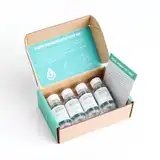
Safe Home Ultimate Drinking Water Test
Safe Home Ultimate Drinking Water Test
Lab Mail-In Kit
Best for well water because it covers 200+ contaminants including bacteria, heavy metals, and VOCs in one mail-in panel.
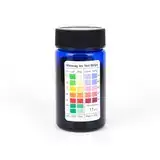
Health Metric 17-in-1 Test Strips
Health Metric 17-in-1 Test Strips
DIY Strips
Best DIY option for quick 17-parameter screening between annual lab tests.
Authority Resources
test water TDS · test water pH · best home water test kits · well water filtration types · test water for bacteria · waterborne illness guide · boil water advisory guide · best home water filters · best RO systems · best whole house filters · best water softeners · best well water filters · best water test kits · local water quality · how to choose a water filter