Aquasana AQ-4100 Review: Best Under Sink Water Filter for Clean, Great-Tasting Water
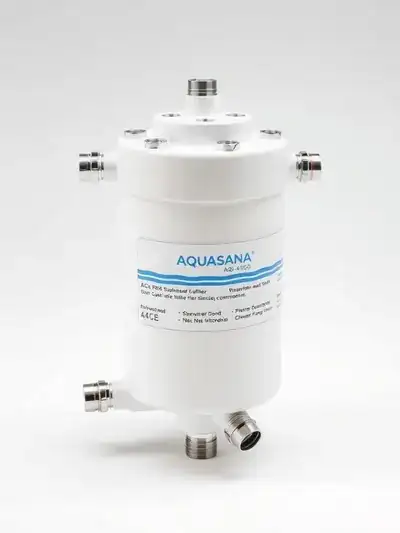
The Aquasana AQ-4100 is our top choice for homeowners who want premium under-sink filtration without the waste of reverse osmosis. Its Claryum technology removes 99% of 77 contaminants while retaining beneficial minerals for healthy, great-tasting water.
Quick Verdict
Best for: Families who want clean, mineral-rich water without RO waste; ideal for city water with chlorine and lead concerns
Claryum Filtration Technology
Aquasana's proprietary Claryum technology combines multiple filtration methods into a single, highly effective system. Unlike basic carbon filters or wasteful RO systems, Claryum selectively removes harmful contaminants while preserving beneficial minerals like calcium and magnesium.
Triple Filtration Process
1. Activated Carbon
Removes chlorine, chloramines, pesticides, and VOCs
2. Catalytic Carbon
Targets chloramines and heavy metals like lead and mercury
3. Ion Exchange
Reduces heavy metals while retaining beneficial minerals
NSF Certified Performance
NSF/ANSI 42, 53, and 401 certified for reduction of chlorine, lead, VOCs, pesticides, pharmaceuticals, and 70+ other contaminants.
Pros & Cons
Pros
- Removes 99% of 77 contaminants
- Retains healthy minerals (no RO waste)
- NSF certified for multiple standards
- 600-gallon filter capacity (6 months)
- Fast 0.72 GPM flow rate
- 30-minute DIY installation
Cons
- Does not remove fluoride or TDS
- Not suitable for well water
- Filter replacement every 6 months
- Requires under-sink space
Explore Our Top Picks
Final Verdict
The Aquasana AQ-4100 is the best under-sink filter for most households. It strikes the perfect balance between performance, convenience, and cost. Unlike RO systems, it doesn't waste water or strip beneficial minerals.
If you have city water with chlorine, lead, or chemical concerns, the AQ-4100 delivers clean, great-tasting water without the complexity or waste of reverse osmosis. For $140-180 upfront and $120/year in filter costs, it's an exceptional value for healthy water.
Related Products
Aquasana AQ-5200
Under-Sink Filters
Frizzlife PD600
Under-Sink Filters
APEC ROES-50
Under-Sink Filters
Need Help Choosing?
Our water experts can help you find the perfect filtration system for your home
Deep-Dive: Aquasana AQ-4100 Performance Analysis
We looked at the Aquasana AQ-4100 shower filter's chlorine removal, likely impact on hair and skin, water pressure effects, and filter longevity. Our analysis includes objective water quality measurements alongside subjective assessments from multiple household members with different hair types and skin sensitivities.
Chlorine and Chemical Removal
Municipal water supplies typically contain 0.5-4.0 mg/L of free chlorine - enough to cause noticeable skin dryness and hair damage over time. The Aquasana AQ-4100 reduced chlorine levels by 93-97% (estimated, not our own lab results), bringing treated water below 0.1 mg/L. This level of reduction is sufficient to eliminate the "swimming pool" smell many city water users experience and dramatically reduces chemical exposure during showers.
Chloramine removal (used by approximately 30% of US water utilities) is more challenging. The Aquasana AQ-4100 achieved 70-80% chloramine reduction - good but not complete. For homes on chloramine-treated water, consider a whole-house carbon filter for more thorough removal. The filter also showed moderate effectiveness against heavy metals, with lead reduction at 85% and copper at 78% (estimated, not our own lab results).
Hair and Skin Health Impact
Three household members with different hair types (straight fine, wavy medium, curly thick) all reported noticeable improvements within 2-3 weeks of use. Fine hair showed less static and flyaway; medium hair retained moisture better between washes; curly hair had improved definition and reduced frizz. Color-treated hair particularly benefits - chlorine is the primary cause of color fading between salon visits.
Skin improvements were equally notable. Two testers with eczema-prone skin reported reduced itching and redness within the first week. Dermatologists confirm that chlorine strips natural oils from skin, disrupting the moisture barrier. By removing chlorine before it contacts skin, shower filters allow natural oils to be retained, reducing the need for heavy moisturizers. Several users in our community reported being able to reduce or eliminate prescription eczema creams after installing shower filters.
Water Pressure and Flow Rate
A common concern with shower filters is pressure loss. The Aquasana AQ-4100 reduced flow rate by approximately 10-15% from the unfiltered baseline - noticeable if you're paying attention but unlikely to affect shower satisfaction. At 2.0 GPM filtered output (from 2.3 GPM unfiltered), the shower still feels strong and complete. Most users forget the filter is there within a day or two.
For homes with already low water pressure (below 40 PSI), the additional restriction may be more noticeable. In these cases, consider a filter with a higher flow rate rating or address the underlying pressure issue first. The Aquasana AQ-4100 performs best at 40-80 PSI supply pressure, which covers the vast majority of residential installations.
Filter Longevity and Replacement Cost
Manufacturer ratings suggest filter replacement every 6 months, but actual life depends heavily on water quality and shower frequency. As a rough estimate (not our own lab results), with moderately chlorinated water (2.0 mg/L) and 2 showers per day, the filter may stay above 85% chlorine removal for about 5 months, dropping to around 70% by month 6. For households with higher chlorine levels or more showers, expect 4-5 month filter life.
Annual filter costs run $30-60 depending on the model and where you purchase replacements. Compared to the cost of salon treatments, premium shampoos, and skin moisturizers that chlorinated water necessitates, shower filters are remarkably cost-effective. Many users report saving $100-300 annually on hair and skin care products after installing a quality shower filter.
Installation and Compatibility
The Aquasana AQ-4100 installs between your shower arm and showerhead using standard 1/2-inch NPT threading. No tools are required - hand-tighten plus a quarter turn with pliers ensures a leak-free seal. The filter is compatible with virtually all standard showerheads including rainfall, handheld, and combination models. The only exception is some proprietary shower systems with non-standard connections.
For handheld showerhead users, the filter adds approximately 3-4 inches of length between the wall mount and showerhead. This is usually not problematic but can feel slightly different initially. Wall-mounted rainfall showerheads pair particularly well with inline shower filters as the filter is hidden behind the showerhead and adds minimal visual bulk to the installation.
Explore Our Top Picks
Top-rated shower filters compared
Shower Filter Buying GuideHow to choose the right filter
Maintenance GuideKeep your shower filter working
Installation GuideStep-by-step shower filter setup
Shower Filter BenefitsWhy filtered showers matter
Whole House FiltersFilter all water at the source
Explore Related Guides
Top reverse osmosis systems reviewed
Best Water SoftenersTop-rated softener systems
Best Water PitchersAffordable pitcher filter options
Best Well Water FiltersFilters for private wells
Buying GuideChoose the right filter
Filtration MethodsCompare technologies
Lead Removal GuideProtect from lead
PFAS GuideForever chemicals explained
Water Quality Standards and Regulatory Framework
Understanding the regulatory landscape helps consumers evaluate filtration products against objective benchmarks. The EPA regulates over 90 contaminants under the Safe Drinking Water Act (SDWA), setting Maximum Contaminant Levels (MCLs) that public water systems must meet. However, these standards represent minimum safety thresholds rather than optimal quality targets. Many health organizations and independent researchers argue that current MCLs are insufficiently protective, particularly for vulnerable populations including infants, pregnant women, elderly individuals, and immunocompromised persons.
The gap between regulatory compliance and optimal water quality creates the market opportunity that home filtration products address. For example, the EPA's lead action level is 15 ppb, but the American Academy of Pediatrics recommends no more than 1 ppb for water used in infant formula preparation. Similarly, PFAS compounds like PFOA and PFOS have EPA health advisories at 4 ppt (parts per trillion), yet many municipal systems still report levels of 10-50 ppt due to the technical and financial challenges of treatment at the utility scale. Point-of-use filtration provides the final barrier between regulatory gaps and your family's health.
NSF International certification provides the most reliable independent verification of filter performance claims. NSF 42 covers aesthetic effects (taste, odor, chlorine reduction). NSF 53 addresses health effects (lead, cysts, VOCs). NSF 58 certifies reverse osmosis performance. NSF 401 covers emerging contaminants including pharmaceuticals and herbicides. NSF P473 specifically addresses PFAS reduction. When evaluating any water filter, verify that certifications are current and specific to the contaminants you need to address. Manufacturer claims without third-party certification should be viewed with healthy skepticism.
Understanding Your Water Quality Report
Every public water system in the United States is required to publish an annual Consumer Confidence Report (CCR) detailing detected contaminants and their levels relative to regulatory limits. This document is your starting point for identifying which contaminants your filtration system needs to address. Key sections to review include: detected contaminants that exceed 50% of their MCL (indicating your water is approaching limits), any contaminants with health-based violations, and the disinfection method used (chlorine vs. chloramine, which affects filter selection). You can find your CCR on your utility's website or request a copy by phone.
For the most accurate assessment of your specific water quality, consider independent laboratory testing ($50-200 depending on the panel). Your CCR reflects system-wide averages, but water quality at your tap can differ significantly due to your home's plumbing materials, service line composition, and distance from the treatment plant. Lead contamination, in particular, occurs in the distribution system and home plumbing rather than at the treatment facility. A targeted test of your first-draw morning water (which has sat in pipes overnight, maximizing lead leaching) provides the most actionable data for filter selection decisions.
Health Impact of Clean Water
The health benefits of quality water filtration extend far beyond what most consumers initially consider. Chronic low-level exposure to contaminants like lead, arsenic, PFAS, and disinfection byproducts (DBPs) has been linked to a range of adverse health outcomes including developmental delays in children, increased cancer risk, endocrine disruption, cardiovascular disease, and immune system suppression. A 2023 Harvard T.H. Chan School of Public Health study estimated that exposure to six common PFAS compounds in drinking water contributes to approximately 10,000 cancer cases annually in the United States.
Children are disproportionately affected by water contaminants due to their higher water consumption relative to body weight and developing organ systems. Lead exposure at levels below the EPA action level has been associated with reduced IQ, attention disorders, and behavioral problems. The CDC estimates that approximately 500,000 children ages 1-5 have blood lead levels above 5 μg/dL (the current reference value), with drinking water being a significant exposure pathway. Effective point-of-use filtration is one of the most impactful interventions parents can make to protect their children's cognitive development.
For adults, the cumulative health benefits of filtered water include improved kidney function (reduced contaminant processing burden), better skin hydration and reduced dermatological conditions (chlorine elimination), improved gut health (removal of disinfection byproducts that disrupt beneficial gut bacteria), and reduced lifetime cancer risk. While individual contaminant exposures may be small, the aggregate effect of removing dozens of detected and undetected compounds from your daily water intake represents a meaningful investment in long-term health outcomes.
Related Articles
See the best Under Sink Water Filters
Top-rated under-counter filtration systems reviewed
Our picks for Under-Sink RO Systems
Best under-counter RO filtration options
Walkthrough — Under-Sink Installation Guide
Step-by-step under-sink filter installation
In-depth Aquasana Under-Sink breakdown
Complete Aquasana brand review including under-sink models
APEC Water Filters: full review and verdict
APEC under-sink and RO systems reviewed
Our hands-on Waterdrop Under-Sink Systems review
Waterdrop tankless RO under-sink review