Step 1: Decide what to treat
Microplastics are plastic pieces under 5 millimeters; nanoplastics are under 1 micrometer. There's no routine home test, so you can't measure your starting level the way you can with lead or nitrate.
- Drinking and cooking water are the main concern, so a kitchen filter is the usual starting point.
- Showers and laundry aren't a known exposure route that needs treatment.
A 2019 World Health Organization review found no clear evidence of harm at drinking-water levels but called for more research. See microplastics in drinking water for what's changed since.
Step 2: Choose a filter that blocks fine particles
| Your situation | Usual treatment | Watch out for |
|---|---|---|
| Most thorough reduction for drinking water | Under-sink reverse osmosis | Sends some water to drain |
| One tap, no wastewater | Carbon block rated for 0.5–1 micron particles | Check for a particulate or microplastics claim |
| Renting, no plumbing changes | Pitcher or faucet filter that lists particle reduction | Many granular carbon pitchers don't |
| Larger particles at every tap | Whole-house sediment filter | Usually too coarse for the smallest pieces |
Only the tankless RO data sheet below names microplastics: it lists 99.61% reduction under NSF/ANSI 401. The Claryum sheet lists 99.9% particulate reduction under NSF/ANSI 42 without naming microplastics. Both tests use particles 0.5 to 1 micron across, so neither covers anything smaller.
Filters to compare for microplastics
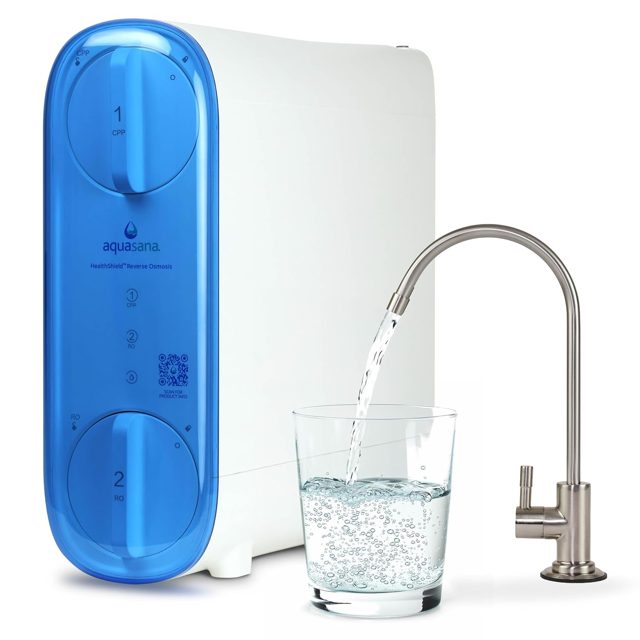
Aquasana Tankless Reverse Osmosis System (800 GPD)
Aquasana Tankless Reverse Osmosis System (800 GPD)
An under-sink tankless RO system whose membrane blocks particles far smaller than microplastics. Aquasana's data sheet (AQ-HSRO800) lists 99.61% microplastics reduction under NSF/ANSI 401, plus lead, fluoride and PFOA/PFOS reduction.
Compare sizing, treatment options and ongoing costs in our best reverse osmosis systems guide.
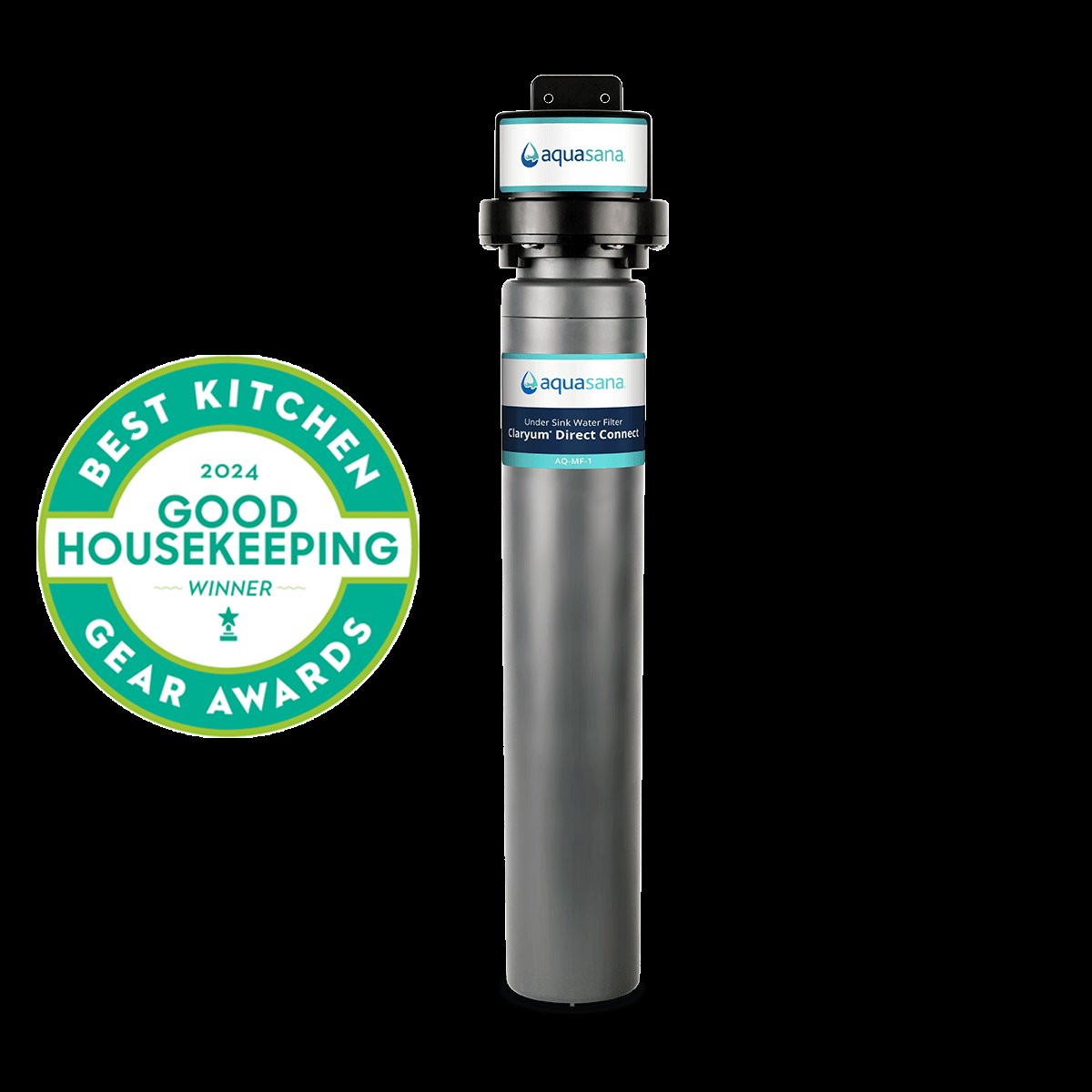
Aquasana Claryum Direct Connect (AQ-MF-1)
Aquasana Claryum Direct Connect (AQ-MF-1)
A compact under-sink carbon block. Aquasana's data sheet (AQ-MF-1) lists 99.9% particulate reduction under NSF/ANSI 42, plus lead, chlorine and PFOA/PFOS reduction, without RO wastewater.
Compare sizing, treatment options and ongoing costs in our best under-sink water filters guide.
Step 3: Install and maintain it
- Filter the tap you drink and cook from, and feed the fridge or ice maker from it if you can.
- Change cartridges on schedule. Slower flow is a sign a particle filter is loading up.
Step 4: Cut other sources
- Store filtered water in glass or stainless steel instead of single-use plastic bottles.
- Don't heat food or drinks in plastic, and replace scratched plastic kettles and containers.
What doesn't remove microplastics
- Boiling alone doesn't remove them.
- Granular carbon pitchers aren't designed for fine particles unless they list it.
- Switching to bottled water often adds more particles, not fewer.
Bottom line
If you want fewer microplastics, filter drinking water with RO or a tight carbon block, check the particle claim, and change it on time. Read the research in microplastics in drinking water, and compare full rankings in our best reverse osmosis systems guide and best under-sink filters guide.