How to Filter Microplastics from Drinking Water
Choose filtration based on documented particle reduction—not a promise of “plastic-free” water. Here’s how to compare the options for your kitchen.
Check the performance claim before you buy
Start with drinking and cooking water. A filter's exact model and cartridge matter more than the brand or the technology label.
- Look for independent microplastics testing or a specific reduction claim in the certification listing.
- Choose an under-sink system for daily capacity, or a pitcher if plumbing changes are not an option.
- Check replacement-cartridge costs and capacity; add RO only if its other treatment benefits suit your water.
Quick Answer
RO, fine filtration and some pitchers can reduce microplastic particles. Verify the specific claim, particle size and rated capacity. No generic filter type guarantees removal of every microplastic or nanoplastic. For most households, a documented point-of-use filter is a more practical starting point than whole-house treatment.
What Are Microplastics?
Microplastics are plastic particles smaller than 5 millimeters. Much smaller particles are often called nanoplastics; definitions and measurement methods vary. Fibers, fragments and films can reach source water through runoff, wastewater, airborne deposition and the breakdown of plastic materials.
Read about microplastics in drinking water and microplastics in bottled water. Detection depends on how small a particle the study can measure, so headline particle counts are not directly interchangeable.
What Health Research Can—and Cannot—Tell Us
Evidence is developing
Studies investigate exposure, inflammation and possible health associations. Laboratory findings and observational associations do not establish that a particular tap-water concentration causes disease.
Keep proven risks in view
Do not let microplastic concerns distract from a confirmed lead, arsenic, nitrate or microbial problem. Choose treatment for your actual water report and test results as well as your particle-reduction goal.
For related concerns, see PFAS explained, our water filter health benefits guide and water testing options. Ordinary water tests do not measure microplastics.
Compare the Filtration Options
| Filter type | Why consider it | What to verify |
|---|---|---|
| Reverse osmosis | Membrane treatment plus reduction of many dissolved substances | Exact model data, drain requirements and replacement schedule |
| Ultrafiltration | Fine membrane particle filtration without RO reject water | Particle size tested; it does not broadly remove dissolved salts |
| Fine carbon block | Particle filtration with taste-and-odor treatment | Microplastics claim, absolute versus nominal rating, and cartridge capacity |
| Pitcher or countertop filter | A practical option without permanent plumbing changes | Exact cartridge testing—not a general claim for all pitchers |
| Whole-house sediment filter | Larger-particle pre-filtration throughout the home | Micron rating, pressure drop and limits for very small particles |
Explore RO systems and under-sink filters alongside our certification guide. Do not turn a micron rating into a guaranteed removal percentage.
How to Verify a Microplastics Claim
- Find the exact model and replacement cartridge in the certifier’s directory or manufacturer’s performance data sheet.
- Look for the specific microplastics reduction claim. NSF/ANSI 401 includes microplastics claims, but not every 401-certified filter carries that claim.
- Check the tested size range, rated capacity and conditions. Evidence for larger microplastics does not automatically cover nanoplastics.
- Compare required water pressure, flow and maintenance with your home’s setup. Certification is not a substitute for correct installation.
PFAS reduction is a separate claim, not a proxy for particle capture. If both matter, use our PFAS filter guide to check that requirement independently.
Product Picks to Compare
These are practical setups to investigate—not a ranking of verified microplastics removal rates. Confirm current model-specific testing before choosing one for microplastics alone; current prices are available through the deal buttons.

iSpring RCC7AK 6-Stage RO System
iSpring RCC7AK 6-Stage RO System
Under-sink reverse osmosis with a remineralization stage for drinking water. Check pressure, cabinet space and any well-water pretreatment before ordering.
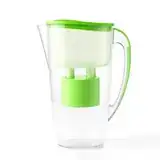
Clearly Filtered Water Pitcher
Clearly Filtered Water Pitcher
A pitcher is a practical format for renters and smaller daily volumes. Check the current cartridge's independent microplastics test report and capacity rather than assuming every pitcher provides the same protection.
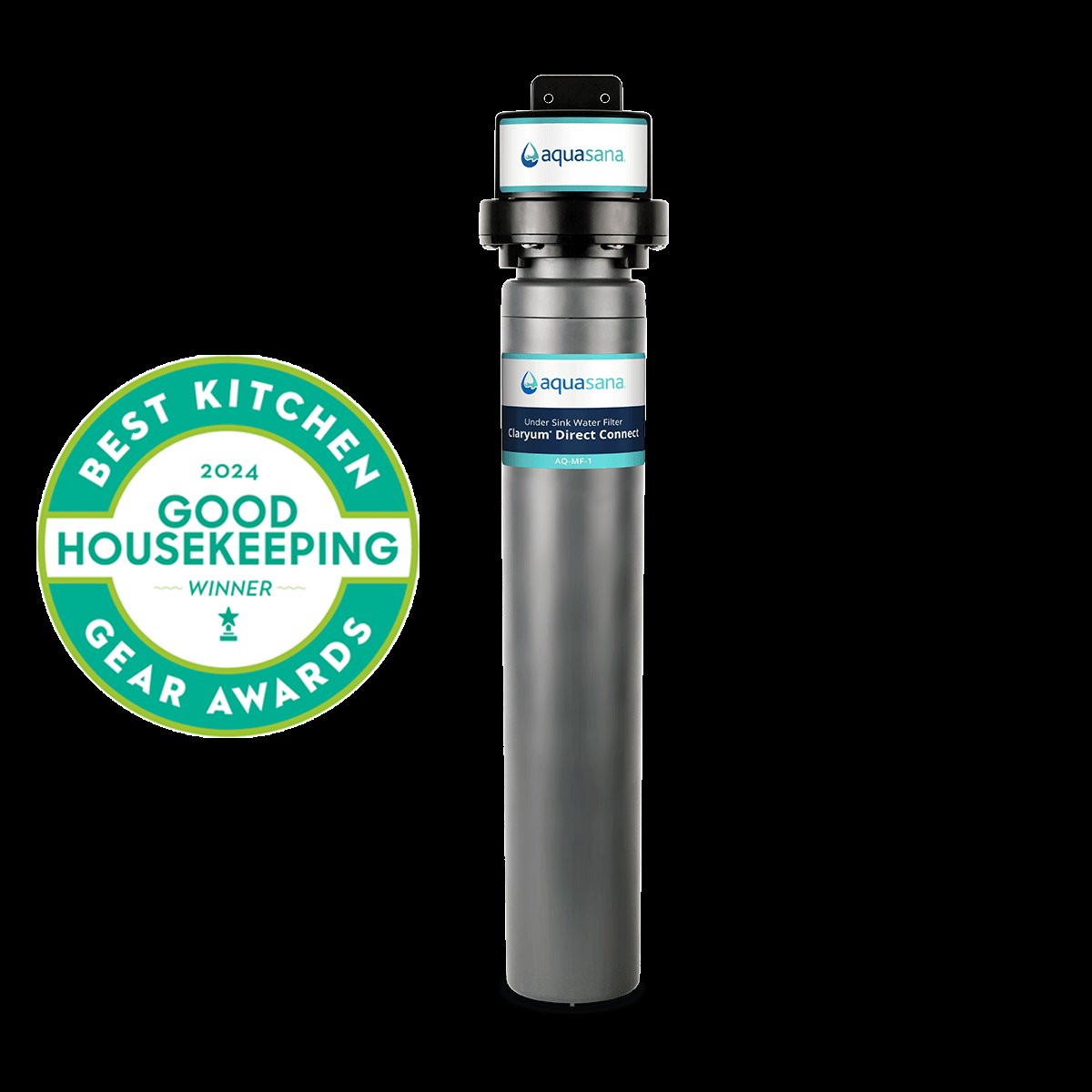
Aquasana Claryum Direct Connect
Aquasana Claryum Direct Connect
Consider a direct-connect filter if you prefer filtration without RO reject water. This is Claryum Direct Connect—not AQ-5200. Verify its exact microplastics reduction listing and cartridge capacity before purchasing for that purpose.
Make the Setup Work Day to Day
Maintain the filter
Use the specified cartridge, replace it at the time or volume limit and sanitize the system according to its instructions. Check for leaks or damaged seals after servicing.
Store water thoughtfully
Use a clean glass or stainless steel bottle, avoid excessive heat and keep refill containers clean. Filtering water does not prevent contamination from poor storage.
For a broader purchasing decision, read bottled water versus tap water and our water filter buying guide.
Explore Our Top Picks
Frequently Asked Questions
Can water filters remove microplastics?
Some filters can reduce microplastic particles, but performance depends on the exact filter, particle size and test conditions. Look for a model-specific microplastics reduction claim backed by independent testing or a certification listing. A generic chlorine claim or a brand name does not establish microplastic removal.
Does reverse osmosis remove microplastics?
Reverse osmosis membranes can provide a barrier to small particles, making RO a treatment option to consider. Do not assume every RO system removes a fixed percentage of microplastics or all nanoplastics. Check the exact model's performance data and follow its installation and maintenance instructions.
Do carbon filters remove microplastics?
Some fine carbon-block filters reduce particles, but carbon adsorption alone does not prove microplastic reduction. Verify the exact model's particle-reduction or microplastics test results. A nominal micron rating is not an absolute guarantee that every smaller particle will be captured.
Do pitcher filters remove microplastics?
It depends on the cartridge. Pitchers use different media and filtration methods, so a chlorine taste-and-odor claim is not enough. Check whether the exact pitcher and replacement cartridge have documented microplastics reduction, including the particle size tested and the rated filter capacity.
What certification should I check?
Read the certification listing for the specific microplastics or particle-reduction claim, not just a standard number on the box. NSF/ANSI 401 includes microplastics reduction claims for eligible systems; certification to that standard for another substance does not automatically cover microplastics. An NSF/ANSI 58 RO listing is likewise not a blanket claim for every contaminant.
Are microplastics in tap water dangerous?
Researchers are studying how microplastics and nanoplastics affect human health. Detection in water or human tissue does not by itself establish the risk from a particular glass of tap water. Reducing exposure is a reasonable preference, but avoid treating uncertain estimates as a personal dose or a proven disease prediction.
Is bottled water free from microplastics?
No. Researchers have detected microplastics and nanoplastics in bottled water as well as tap water. Results vary with the water, packaging and measurement method, so counts from different studies cannot always be compared directly. Switching to bottled water is not a reliable way to eliminate exposure.
Can I test for microplastics at home?
Ordinary test strips and TDS meters cannot identify microplastics. Specialist laboratories use methods such as infrared or Raman spectroscopy, and the detectable particle size varies. Ask a laboratory about sampling containers, detection limits and how results will be reported before paying for a test.
Does boiling remove microplastics?
Boiling alone is not a dependable general-purpose microplastics treatment. Some research has examined particle capture with mineral precipitation under specific conditions, but that does not establish a universal household removal rate. Use documented filtration rather than assuming boiled water is plastic-free.
Do whole-house filters remove microplastics?
A whole-house sediment filter may capture larger particles within its rating, but it does not automatically provide fine-particle protection at every tap. A verified point-of-use filter for drinking and cooking water is often more practical. Check flow, pressure drop and the exact performance claim before adding whole-house equipment.
How often should I replace the filter?
Follow the manufacturer's time and gallon limits, whichever comes first. Cartridge life depends on water quality and use. Replace worn components, sanitize the system as instructed and use the correct replacement cartridge; a different cartridge may not have the same documented reduction claims.
How can I reduce exposure beyond water filtration?
Use glass or stainless steel for drinking-water storage and avoid heating food in plastic containers not intended for that use. Keep bottles away from excessive heat and maintain your filter. These steps can reduce avoidable contact with plastic, but no household routine can guarantee zero exposure.
Related Articles
Best Reverse Osmosis Systems
Top-rated RO water filters
Top-rated Water Softeners
Top water softening systems
Top-rated Whole House Water Filters
Complete whole-house filtration
Our picks for Well Water Filters
Specialized well water treatment
More on Water Filter Buying Guide
Avoid common buying mistakes
Deep dive — State Water Quality Guide
Water quality by state