Microplastics Water Testing Guide
What microplastics are, how they reach tap and bottled water, why home testing is limited, and which filter types are certified to reduce them so you can cut your exposure.
What Are Microplastics?
Microplastics are tiny plastic particles less than 5mm in size that contaminate water sources worldwide. They come from the breakdown of larger plastics, synthetic fibers, and intentionally manufactured microbeads.
Primary Microplastics
Microbeads in cosmetics, plastic pellets, synthetic fibers from clothes
Secondary Microplastics
Breakdown of bottles, bags, packaging, fishing gear
Size Range
0.1 micron to 5mm - most are invisible to naked eye
Assess Your Exposure Risk
Select all that apply to estimate your microplastic exposure level
Health Concerns
Physical Effects
What it means: Particles can accumulate in organs and tissues
Research: Found in human blood, lungs, and placenta in recent studies
Chemical Leaching
What it means: Plastics release harmful chemicals like BPA and phthalates
Research: Endocrine disruptors linked to hormone imbalance
Inflammation
What it means: May trigger inflammatory responses in the body
Research: Animal studies show cellular inflammation
Long-term Unknown
What it means: Full health impacts still being studied
Research: Relatively new area of research (last 10 years)
Contamination by Source
Bottled Water
93% of bottled water contains microplastics - 325 particles/liter average
Tap Water (Municipal)
83% of tap water samples contain microplastics - but less than bottled
Filtered Tap Water
Depends heavily on filter type - some remove 99%+
Well Water
Varies by location and groundwater contamination
Testing Methods
Note: Microplastic testing is more complex and expensive than testing for other contaminants. Most people assess risk and choose filtration without formal testing.
Laboratory Testing
Most accurate method using microscopy and spectroscopy to identify and count microplastic particles.
2-4 weeks
Accuracy:
Availability:
Limited labs
Process:
- 1.Order test kit from specialized lab (Tap Score, SimpleLab, etc.)
- 2.Collect water sample following specific protocol
- 3.Mail sample to laboratory
- 4.Lab uses filtration, microscopy, and FTIR/Raman spectroscopy
- 5.Receive detailed report with particle counts and types
Pros:
- • Most accurate
- • Identifies plastic types
- • Quantifies particle size/count
Cons:
- • Expensive
- • Long wait time
- • Requires lab
- • Not readily available
DIY Microscope Method
Use a microscope to visually identify larger microplastic particles after filtering water samples.
1-2 hours
Accuracy:
Availability:
Requires equipment
Process:
- 1.Purchase digital microscope (100x-400x magnification)
- 2.Filter 1 liter of water through 1-5 micron filter paper
- 3.Dry filter paper completely
- 4.Examine filter under microscope
- 5.Look for plastic-like particles (fibers, fragments, beads)
Pros:
- • Immediate results
- • Can see particles
- • Reusable equipment
Cons:
- • Only detects larger particles (>5 microns)
- • Requires equipment
- • Hard to distinguish from organic matter
- • Not quantitative
Blacklight Test
Some plastics fluoresce under UV light, though this method is very unreliable for microplastics.
30 minutes
Accuracy:
Availability:
Easy
Process:
- 1.Get UV blacklight (365nm wavelength)
- 2.Fill clear glass with water sample
- 3.Shine blacklight in dark room
- 4.Look for fluorescent particles
- 5.Note: Many things fluoresce besides plastic
Pros:
- • Quick and cheap
- • Easy to do at home
Cons:
- • Very unreliable
- • Many false positives
- • Doesn't detect most microplastics
- • Not recommended for actual testing
Risk Assessment
Assess your likely microplastic exposure based on water source and usage patterns.
10 minutes
Accuracy:
Availability:
Immediate
Process:
- 1.Identify your water source (bottled, tap, well)
- 2.Note plumbing type (plastic vs. copper/PEX)
- 3.Consider location (urban vs. rural)
- 4.Review consumption patterns
- 5.Estimate relative risk level
Pros:
- • Free and immediate
- • Identifies risk factors
- • Helps prioritize filtration
Cons:
- • Not a real test
- • Only estimates risk
- • No actual measurement
Effective Filtration Solutions
The key to microplastic removal is pore size. Smaller pores = better filtration.
Reverse Osmosis
Most effective option - removes virtually all microplastics
Filtration Level:
Removes down to 0.0001 microns
Recommended Products:
✅ Advantages:
- • Removes smallest particles
- • Proven effective
- • Removes other contaminants too
⚠️ Considerations:
- • Higher cost
- • Wastes water
- • Professional installation helpful
Activated Carbon Block
Good option for most microplastics at lower cost than RO
Filtration Level:
Removes particles >0.5-1 micron
Recommended Products:
✅ Advantages:
- • More affordable
- • Faster flow rate
- • No water waste
⚠️ Considerations:
- • Doesn't catch smallest particles
- • Need regular replacement
Ultrafiltration (UF)
Between carbon and RO - removes most microplastics without waste water
Filtration Level:
Removes down to 0.01-0.1 microns
Recommended Products:
✅ Advantages:
- • No water waste
- • Fast flow
- • Removes bacteria too
⚠️ Considerations:
- • Doesn't remove dissolved contaminants
- • More expensive than carbon
Gravity Filters
Portable option using multiple filter stages
Filtration Level:
Varies by filter media (0.2-5 microns)
Recommended Products:
✅ Advantages:
- • No plumbing needed
- • Portable
- • Works without electricity
⚠️ Considerations:
- • Slow filtration
- • Large footprint
- • Manual filling
NOT Recommended
These filters are NOT effective for microplastics
Filtration Level:
Typically >5-10 microns only
Why These Don't Work:
✅ Advantages:
- • None for microplastics
⚠️ Considerations:
- • Pore size too large
- • Not designed for this purpose
- • False sense of security
Reduce Your Exposure
Water Choices
- Avoid bottled water - contains far more microplastics than tap
- Filter tap water with RO or carbon block system
- Use glass or stainless steel bottles, not plastic
- Let tap water run for 30 seconds before use (flushes pipe plastics)
Plumbing Considerations
- Copper or brass fittings better than plastic where possible
- If using PEX, flush new pipes thoroughly before drinking
- Replace old deteriorating plastic pipes
- Point-of-use filters better than point-of-entry for microplastics
Lifestyle Changes
- Don't heat water in plastic containers
- Avoid reusing single-use plastic bottles
- Choose products without microbeads
- Wash synthetic clothes less often (major source in water)
Top-Rated Microplastic Removal Systems
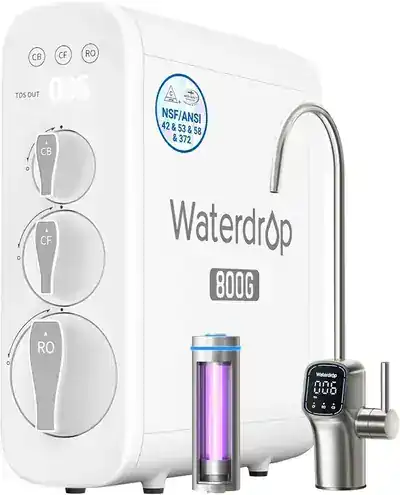
Waterdrop G3P800 — Best Overall
99.9% microplastic removal with 0.0001 micron RO membrane. Removes particles far smaller than any microplastic. Real-time TDS monitoring.
View on Amazon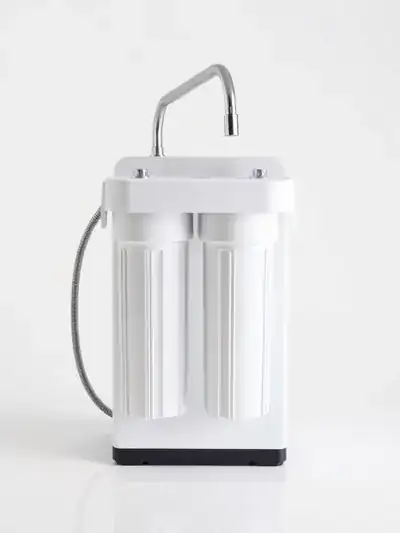
Aquasana AQ-5200 — Best Budget
Carbon block removes 80-95% of microplastics with sub-micron filtration. No water waste unlike RO. NSF certified for 77+ contaminants.
View on AmazonTake Action Today
While testing for microplastics can be expensive, effective filtration solutions exist at various price points.
Microplastics in Drinking Water: Science, Testing & Filtration Solutions
Microplastics—plastic particles smaller than 5 millimeters—have become one of the most concerning emerging contaminants in drinking water. A landmark 2024 study published in the Proceedings of the National Academy of Sciences found an average of 240,000 nanoplastic particles per liter of bottled water—100 times more than previously estimated. Tap water contains fewer particles (averaging 5,000-10,000 per liter depending on source and treatment), but the health implications of chronic exposure are still being actively researched by the WHO, EPA, and international health agencies.
Microplastics are classified by size: microplastics (1 µm to 5 mm) are visible under microscopy, while nanoplastics (below 1 µm) are small enough to cross cell membranes and the blood-brain barrier. Common types found in water include polyethylene (PE from packaging), polypropylene (PP from bottle caps), polyethylene terephthalate (PET from beverage bottles), nylon (from textiles), and polystyrene (from food containers). These particles carry adsorbed environmental pollutants including heavy metals, PFAS, pesticides, and endocrine-disrupting chemicals—acting as vectors that concentrate and deliver toxins into your body.
Sources of Microplastics in Your Water
Municipal tap water: Treatment plants remove 70-90% of microplastics through coagulation, flocculation, and sand filtration, but nanoplastics pass through conventional treatment. Distribution system PVC pipes contribute additional particles through pipe wear and degradation. Your home's PEX or PVC plumbing adds more particles—studies show first-draw water from PEX pipes contains 10x more microplastics than flushed water. Well water: Contains fewer microplastics than surface water-derived municipal supplies, but plastic well casings, PVC drop pipes, and submersible pump housings contribute particles over time.
Bottled water: Ironically, bottled water contains the highest microplastic concentrations due to PET bottle degradation, especially when exposed to heat or sunlight. Single-use plastic bottles exposed to temperatures above 80°F (common in warehouses and delivery trucks) release dramatically more particles. This is one of the strongest arguments for switching from bottled water to properly filtered tap water—a quality reverse osmosis system reduces microplastic exposure by 99%+ compared to both unfiltered tap and bottled water.
Which Filters Remove Microplastics?
Reverse Osmosis (99%+ removal): RO membranes have pore sizes of 0.0001 microns—far smaller than even the smallest nanoplastics (typically 0.1-1 µm). This makes RO the most effective technology for microplastic removal. The Waterdrop G3P800 combines sediment pre-filtration, carbon block, and RO membrane to achieve near-complete microplastic removal. Annual filter costs of $100-120 provide 4,000+ gallons of microplastic-free water—far cheaper than equivalent bottled water while dramatically reducing plastic exposure.
Carbon Block Filters (70-90% removal): Quality carbon block filters with sub-micron pore ratings (0.5-1.0 µm) remove most microplastics through physical straining. The Aquasana AQ-5200 with 0.5-micron filtration removes approximately 85% of microplastics while preserving beneficial minerals that RO removes. Carbon block is the best option for those who want significant microplastic reduction without the water waste and mineral stripping of RO.
Gravity Filters (80-95% removal): Gravity-fed ceramic filters with 0.2-0.5 µm pore sizes effectively strain microplastics through physical filtration. The ceramic elements are particularly effective because their absolute pore size rating means nothing larger than the rated size can pass through—unlike nominal ratings on some carbon filters. For off-grid situations or emergency preparedness, gravity ceramic filters provide excellent microplastic protection without electricity or water pressure.
Pitcher Filters (40-70% removal): Standard pitcher filters using granular activated carbon (GAC) provide limited microplastic reduction because GAC has larger void spaces than carbon block. Some premium pitchers with tighter media packing achieve better results—the Clearly Filtered pitcher claims 99.9% microplastic removal through its proprietary Affinity filtration technology. ZeroWater's 5-stage ion exchange system also provides good microplastic reduction through its fine mesh pre-filter stage. Standard Brita and PUR pitchers provide minimal microplastic filtration.
Reducing Microplastic Exposure Beyond Filtration
Water filtration addresses drinking water, but microplastic exposure comes from multiple sources. Reduce total exposure by: avoiding heating food in plastic containers (use glass or ceramic), switching from plastic cutting boards to wood or bamboo, choosing natural fiber clothing (synthetic textiles shed microfibers during washing), using a microfiber-catching laundry bag (reduces microfiber release by 80%), avoiding single-use plastics especially for hot foods and beverages, and choosing glass or stainless steel water bottles over plastic. The average person ingests approximately 5 grams of microplastic per week—equivalent to a credit card—from combined food, water, and air exposure.
Current Research & Regulatory Outlook
The WHO published its first assessment of microplastics in drinking water in 2019, concluding that microplastics at current levels do not appear to pose a health risk but acknowledging significant knowledge gaps. The EPA has not yet established a maximum contaminant level (MCL) for microplastics, though California became the first state to develop standardized testing methods in 2024. The European Union is further ahead, with proposed limits expected by 2026-2027.
Emerging research suggests potential health effects from chronic nanoplastic exposure including: gut microbiome disruption, inflammation of intestinal lining, endocrine disruption from plastic additives (BPA, phthalates), and accumulation in organs including liver, kidneys, and brain tissue. Animal studies show concerning results at concentrations found in human drinking water, but long-term human epidemiological data is still limited. Given the precautionary principle and the availability of affordable filtration technology, we recommend proactive microplastic reduction through water testing and appropriate filtration for all households—especially those with young children, pregnant women, or immune-compromised family members.
Frequently Asked Questions
Related Resources
Explore Our Top Picks
Additional Resources
Understanding Water Quality Science
Water quality is determined by a complex interplay of dissolved minerals, organic compounds, and potential contaminants that vary significantly by geographic region and water source. Municipal water treatment facilities use multi-stage processes including coagulation, sedimentation, sand filtration, and chemical disinfection to meet EPA Safe Drinking Water Act standards. However, these treatment processes can introduce disinfection byproducts such as trihalomethanes and haloacetic acids, which form when chlorine reacts with naturally occurring organic matter in the source water.
Private well water faces different challenges, as it bypasses municipal treatment entirely and may contain naturally occurring contaminants like arsenic, radon, and heavy metals that leach from surrounding geological formations. The Environmental Protection Agency recommends annual testing for coliform bacteria, nitrates, total dissolved solids, and pH levels for all private wells. Additional testing for volatile organic compounds, pesticides, and heavy metals should be conducted if you live near agricultural areas, industrial sites, or old mining operations. Understanding your specific water chemistry is the critical first step in selecting the most effective filtration system for your household needs.
Total dissolved solids (TDS) measurements provide a general indicator of water purity but should not be the sole basis for filtration decisions. Water with high TDS from beneficial minerals like calcium and magnesium may actually be healthier than ultra-purified water. The World Health Organization has noted that demineralized water may have adverse health effects due to the absence of essential minerals. This is why many advanced filtration systems, particularly reverse osmosis units, now include remineralization stages that add back beneficial minerals after removing contaminants. The ideal approach balances contaminant removal with mineral retention, targeting specific harmful substances identified through comprehensive water testing while preserving the natural mineral content that contributes to both taste and health benefits.
Related Articles
Water Filter Buying Guide
Complete guide to choosing the right filter
More on How Water Filters Work
Understanding filtration technologies explained
Deep dive — Water Filter Cost Comparison
Annual costs across all filter types
Walkthrough — Water Testing Kits Guide
Test your water before buying a filter
Maintenance guide — Filter Replacement Guide
When and how to replace filter cartridges
More on Water Filter Health Benefits
Health advantages of filtered water