How to Filter Iron from Well Water: Complete Guide
Complete guide to removing rust stains, metallic taste, and orange slime from your well water system
Iron is the single most common well water contaminant in the United States, affecting an estimated 25-30% of all private wells — roughly 3.5 million households. If you've noticed rust-colored stains on your sinks, a metallic taste in your drinking water, or orange slime building up in your toilet tank, iron is almost certainly the culprit.
While iron in drinking water is generally not considered a primary health hazard by the EPA, the aesthetic and practical consequences are significant. Iron-contaminated water stains laundry permanently, destroys water heaters and appliances, clogs pipes, and makes water virtually undrinkable at higher concentrations. The EPA's secondary maximum contaminant level (SMCL) for iron is 0.3 mg/L (0.3 PPM) — and many wells exceed this by 10-20 times.
The good news is that iron removal technology has advanced significantly in recent years, with systems now available for every budget from $50 sediment cartridges to $3,500 whole-house air injection units. The key challenge is matching the right technology to your specific type of iron contamination — because not all iron is created equal, and the wrong filter will fail completely.
In this comprehensive guide, we'll walk you through identifying your iron type, choosing the right removal technology, comparing the best systems on the market, and maintaining your iron filter for maximum lifespan. Whether your iron test shows 0.5 PPM or 15 PPM, you'll find a proven solution here.
Understanding the Three Types of Iron in Well Water
Before choosing an iron removal system, you must identify which form of iron is present in your water. Each type requires a different filtration approach, and using the wrong method will lead to poor results and wasted money.
Ferrous Iron (Clear Water)
Also called "dissolved iron" or "iron II," ferrous iron is completely dissolved in water and invisible when first drawn from the well. The water appears perfectly clear but turns rust-colored after sitting for 15-30 minutes as oxygen in the air converts ferrous to ferric iron.
- ✓ Water is crystal clear when first drawn
- ✓ Turns orange/brown after exposure to air
- ✓ Most common form in deep wells
- ✓ Removed by: water softeners (up to 3-5 PPM), oxidizing filters, air injection systems
Typical levels: 0.5-10 PPM
Ferric Iron (Red Water)
Ferric iron — or "iron III" — has already been oxidized into visible rust particles. The water appears orange, red, or brown immediately when drawn. This form is essentially microscopic rust floating in the water and is the easier form to remove.
- ✓ Water is visibly rust-colored immediately
- ✓ Already oxidized into particulate form
- ✓ Common in shallow wells and springs
- ✓ Removed by: sediment filters, spin-down filters, cartridge filters
Typical levels: 0.3-5 PPM
Iron Bacteria
Iron bacteria are living organisms that feed on dissolved iron in water, producing a reddish-brown slime (biofilm) and a swampy or oily smell. They're not typically a health hazard but cause severe clogging and create an environment where harmful bacteria can thrive.
- ✓ Produces slimy orange/red deposits
- ✓ Creates swampy or fuel-oil smell
- ✓ Clogs pipes, filters, and fixtures
- ✓ Removed by: shock chlorination + ongoing chemical feed or UV
Requires specialized treatment
How to Test Your Iron Type at Home
Fill a clear glass from your well tap and observe it immediately:
- Water is clear immediately but turns rusty in 15-30 minutes: Ferrous iron (dissolved)
- Water is rust-colored immediately: Ferric iron (particulate) or a combination of both
- Slimy orange deposits in toilet tank, oily sheen on surface: Iron bacteria
- Water is clear but has metallic taste: Low-level ferrous iron (below 0.3 PPM)
For accurate quantification, send a sample to a certified lab ($25-50) or use a home iron test kit. You'll need to know your exact iron level in PPM to choose the right system capacity.
Iron Removal Technologies Compared
Each iron removal technology has specific strengths, limitations, and ideal use cases. Here's a detailed breakdown to help you choose the right approach for your water chemistry.
1. Air Injection / Oxidation Systems (AIO)
Air injection systems are the gold standard for iron removal in residential wells. They work by drawing air into a pressurized tank, where oxygen converts dissolved ferrous iron into ferric iron particles. These particles are then trapped in a filter media bed (typically Birm, greensand, or Filox) and flushed away during automatic backwash cycles every 2-3 days.
Strengths:
- Handles 5-15+ PPM iron
- Also removes sulfur (hydrogen sulfide) and manganese
- No chemicals required — uses only air
- Media lasts 5-10 years before replacement
- Automatic backwash self-cleans the system
Limitations:
- Higher upfront cost ($1,500-3,500)
- Requires adequate water pressure (25+ PSI)
- Needs drain for backwash water
- Large footprint (requires utility room space)
Best for: Iron levels 3-15+ PPM, combined iron + sulfur + manganese problems
2. Water Softener with Iron Removal
Standard ion-exchange water softeners can remove ferrous (dissolved) iron as a secondary benefit of the softening process. The cation exchange resin attracts iron ions similarly to calcium and magnesium. However, this approach has significant limitations — iron fouls the resin over time, reducing softening effectiveness and requiring frequent resin bed cleaning with specialized iron-out products.
Strengths:
- Solves two problems at once (hardness + iron)
- Lower cost than dedicated iron filters ($500-1,500)
- Effective for low-level ferrous iron (up to 3-5 PPM)
Limitations:
- Only handles ferrous iron (not ferric or bacteria)
- Iron fouls resin, requiring iron-out treatments
- Requires salt (40-80 lbs/month)
- Adds sodium to water
Best for: Iron levels under 3 PPM combined with hard water
3. Sediment and Cartridge Filters
Sediment filters physically trap particulate iron (ferric iron) as water passes through a porous cartridge. Available in spin-down (washable) and disposable cartridge styles, these are the simplest and most affordable iron treatment option. They work well as standalone solutions for ferric iron or as pre-filters protecting more expensive downstream equipment from rust particles.
Strengths:
- Lowest cost option ($50-200)
- Easy DIY installation (30 minutes)
- No electricity or drain needed
- Excellent as pre-filtration stage
Limitations:
- Cannot remove dissolved (ferrous) iron
- Frequent cartridge replacement (every 1-3 months)
- Pressure drop increases as filter clogs
Best for: Ferric (particulate) iron only, or as pre-filtration for other systems
4. Chemical Oxidation (Chlorine or Hydrogen Peroxide Injection)
Chemical feed systems inject an oxidizing agent (chlorine bleach or hydrogen peroxide) into the water before a retention tank and carbon filter. The chemical oxidizes ferrous iron into ferric particles, which are then filtered out. This approach is necessary for very high iron levels (10+ PPM) or iron bacteria contamination where other methods fail.
Strengths:
- Handles extreme iron levels (10-25+ PPM)
- Kills iron bacteria effectively
- Also disinfects water (bacteria, viruses)
Limitations:
- Requires ongoing chemical purchase
- More complex system with pump and retention tank
- Must remove residual chlorine with carbon filter
Best for: Extreme iron (10+ PPM), iron bacteria, combined disinfection needs
Iron Removal Technology Comparison
| Technology | Iron Types | Max PPM | Cost | Maintenance |
|---|---|---|---|---|
| Air Injection (AIO) | Ferrous, Ferric | 15+ PPM | $1,500-3,500 | Media every 5-10 yrs |
| Water Softener | Ferrous only | 3-5 PPM | $500-1,500 | Salt monthly + iron-out quarterly |
| Sediment Filter | Ferric only | 3-5 PPM | $50-200 | Cartridge every 1-3 months |
| Chemical Injection | All types + bacteria | 25+ PPM | $1,200-3,000 | Chemical refills + carbon filter |
| Greensand Filter | Ferrous, Ferric | 10 PPM | $800-2,000 | Potassium permanganate + media every 5-8 yrs |
Best Iron Removal Systems for 2026
After testing and evaluating dozens of iron removal systems, these are our top recommendations based on performance, value, and reliability.
1. SpringWell AIO Iron/Sulfur/Manganese System
$2,800-3,500
The SpringWell AIO is our top recommendation for well water with moderate to high iron levels. Using air injection oxidation technology, it removes up to 8 PPM iron, 8 PPM hydrogen sulfide (sulfur), and 1 PPM manganese — all without chemicals. The system automatically backwashes every 2-3 days to flush accumulated iron particles.
2. AFW Iron Pro 2 Combo System
$500-700
The AFW Iron Pro 2 is the best value option for homeowners dealing with combined iron and hard water problems. This dual-purpose system uses fine mesh cation exchange resin designed specifically for iron removal alongside standard water softening. It handles up to 6-8 PPM iron and 75 GPG hardness in a single tank, making it significantly more affordable than buying separate iron and softening systems.
3. iSpring WGB32BM 3-Stage System
$350-450
The iSpring WGB32BM is a 3-stage whole house water filtration system specifically designed for well water with iron and manganese. The first stage uses a 5-micron polypropylene sediment filter, the second stage uses catalytic carbon for chlorine and VOC removal, and the third stage uses iron and manganese reducing media. It's an excellent mid-range option for moderate iron levels.
10-Year Total Cost of Ownership
The upfront price tag only tells part of the story. Here's what each system actually costs over a decade of use, including installation, maintenance, and consumables.
| System | Upfront | Install | Annual Maint. | 10-Year Total |
|---|---|---|---|---|
| SpringWell AIO | $2,800 | $500 | $50 | $3,800 |
| AFW Iron Pro 2 | $600 | $300 | $200 | $2,900 |
| iSpring WGB32BM | $400 | $200 | $150 | $2,100 |
| Chemical Injection | $1,500 | $500 | $250 | $4,500 |
| Sediment Only | $100 | $50 | $80 | $950 |
* Costs assume family of 4, 300 gallons/day usage. Installation costs vary by region and complexity.
Installation Considerations
Proper installation is critical for iron filter performance. Here are the key factors to evaluate before purchasing a system.
Placement Requirements
- • Install after the pressure tank and before the water heater
- • Ensure adequate space (most systems are 10" x 54" to 13" x 62")
- • Need a floor drain or drain line within 20 feet for backwash
- • Electrical outlet required for control valve and air pump
- • Ambient temperature must stay above 40°F (no unheated garages in cold climates)
DIY vs. Professional Installation
- • DIY ($0-200): Feasible for sediment filters and some softeners. Requires basic plumbing tools and 2-4 hours. Most manufacturers provide video guides.
- • Professional ($400-1,200): Recommended for AIO systems and chemical injection. Ensures proper bypass valve installation, correct plumbing connections, and warranty compliance.
- • Always install a bypass valve to allow water flow during maintenance.
How to Test Your Well Water for Iron
Accurate testing is the foundation of effective iron treatment. You need to know your iron type, concentration level, pH, and presence of other contaminants before selecting a system.
Option 1: Home Iron Test Kit ($15-30)
Colorimetric test strips or liquid reagent kits that measure total iron in PPM. Accuracy is ±0.5 PPM. Good for a quick estimate but not sufficient for system sizing. Available at hardware stores or Amazon.
Brands we recommend: SenSafe, Hach, WaterSafe Well Water Kit
Option 2: Certified Lab Test ($30-75)
Send a water sample to a state-certified laboratory for precise analysis. Results include total iron, iron type breakdown (ferrous vs. ferric), pH, hardness, manganese, sulfur, and bacteria. Essential for choosing the right system — a $30 test can save you thousands by ensuring you get the right technology the first time.
Where to find a lab: Contact your county health department or search EPA's certified lab database. Most offer mail-in testing with results in 5-7 business days.
Key Parameters to Test
- • Total Iron: PPM level determines system size
- • Iron Type: Ferrous vs. ferric determines technology
- • pH Level: Below 6.5 may require pre-treatment
- • Manganese: Often found alongside iron
- • Hydrogen Sulfide: Sulfur smell indicates H2S
- • Iron Bacteria: Requires specialized treatment
5 Common Iron Filter Mistakes (And How to Avoid Them)
Mistake #1: Using a sediment filter for dissolved iron
The fix: Sediment filters only catch particulate (ferric) iron. For dissolved (ferrous) iron, you need an oxidizing system (AIO, greensand) or water softener.
Mistake #2: Buying an undersized system
The fix: Calculate your peak flow rate (GPM) and daily water usage. An undersized system will have poor iron removal and short media life. Most homes need 7-12 GPM capacity.
Mistake #3: Ignoring pH levels
The fix: Most iron filters work best at pH 7.0-8.5. Water below pH 6.5 can prevent proper oxidation. You may need a calcite neutralizer before the iron filter.
Mistake #4: Not installing a pre-filter
The fix: Heavy sediment or ferric iron clogs expensive media beds quickly. Always install a 5-micron sediment pre-filter before any iron removal system to extend media life.
Mistake #5: Skipping regular maintenance
The fix: Even 'maintenance-free' systems need attention. Check backwash schedules, clean injectors, inspect pre-filters monthly, and test water every 6 months to catch performance issues early.
Recommended Products
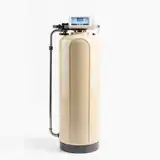
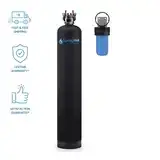
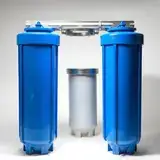
Explore Our Top Picks
Iron Filter FAQs
Well Water Safety & Treatment
Understanding Your Well Water Source
Private wells serve approximately 43 million Americans, drawing water from underground aquifers that can contain naturally occurring and man-made contaminants. Unlike municipal water, well water receives no EPA-mandated treatment or monitoring - homeowners bear full responsibility for testing and treatment. The most common well water contaminants include bacteria (coliform, E. coli), nitrates from agricultural runoff, iron and manganese from geological deposits, arsenic from natural rock formations, and radon gas. Annual testing is recommended at minimum, with additional testing after flooding, nearby construction, or any change in taste, color, or odor.
Iron and Sulfur Treatment Strategies
Iron is the most common well water complaint, causing orange staining, metallic taste, and plumbing damage. Ferrous (dissolved/clear water) iron requires oxidation followed by filtration - achieved through air injection, chlorination, or specialized media like Birm or Greensand Plus. Ferric (particulate/red water) iron can be removed with standard sediment filtration. Iron bacteria, which form slimy orange biofilm in toilets and pipes, require shock chlorination followed by continuous disinfection. Hydrogen sulfide (rotten egg smell) at levels above 1 ppm typically requires aeration, activated carbon, or oxidizing media. Many well water treatment systems combine multiple technologies to address iron, sulfur, and manganese simultaneously in a single unit.
Well Water Testing Protocol
Comprehensive well water testing should be conducted annually and include: total coliform bacteria and E. coli (safety baseline), nitrates/nitrites (agricultural contamination indicator), pH and alkalinity (corrosion potential), hardness (scale prevention planning), iron and manganese (staining and taste), and total dissolved solids (overall water quality). Every 3-5 years, add testing for arsenic, lead, radon, volatile organic compounds (VOCs), and pesticides. After any flooding event, immediately test for bacteria before drinking. Professional lab testing ($100-300) provides more accurate results than home test kits for health-related contaminants, though home kits ($15-50) are adequate for routine iron and hardness monitoring.
Water Quality Science and Consumer Protection
The science of water treatment has evolved dramatically over the past two decades, driven by advances in analytical chemistry that can now detect contaminants at parts-per-trillion concentrations. This detection capability has revealed the presence of thousands of previously unidentified compounds in municipal water supplies, including pharmaceutical residues, endocrine-disrupting chemicals, microplastics, and per- and polyfluoroalkyl substances (PFAS). The EPA currently regulates 90 contaminants under the Safe Drinking Water Act, but the Environmental Working Group has documented over 300 additional pollutants in US tap water that have no legal limits.
Understanding the distinction between regulated and unregulated contaminants is essential for making informed filtration decisions. Regulated contaminants have Maximum Contaminant Levels (MCLs) that public water systems must meet, enforced through mandatory testing and public reporting via annual Consumer Confidence Reports. Unregulated contaminants, despite being detected in water supplies, have no enforceable limits, meaning your water utility is not required to treat for or even report their presence. This regulatory gap means that water meeting all federal standards may still contain compounds of health concern at levels that research suggests could pose long-term risks.
The health economics of water filtration present a compelling case for proactive treatment. A 2023 analysis by the Water Quality Research Foundation estimated that the lifetime healthcare cost savings from removing lead exposure alone average $5,600 per child. When factoring in reduced cancer risk from PFAS and disinfection byproduct removal, improved developmental outcomes from reducing prenatal contaminant exposure, and decreased gastrointestinal illness from pathogen removal, the total health-economic benefit of comprehensive home water filtration ranges from $8,000 to $25,000 per household over a 20-year period. These savings dwarf the $2,000-5,000 total cost of purchasing and maintaining a quality filtration system over the same timeframe.
Explore Our Top Picks
Related Resources
Related Articles
SpringWell WS4 or Aquasana Rhino Well Pro? Full breakdown
Large home well water comparison
In-depth Aquasana Rhino Pro Grade breakdown
UV + carbon + softener combo for borderline wells
See the best Well Water Filters
Complete well water filtration buyer's guide
Our picks for Well Water Whole House Systems
Multi stage whole house treatment for wells
Well Water Bacteria Treatment
UV, chlorination, and disinfection methods
Read: Well Water Rust Removal
Iron and manganese treatment solutions