Best Water Filters Under $200: Budget-Friendly Top Picks for 2026
You don't need to spend a fortune for clean, safe drinking water. Based on certification listings and manufacturer specs, we identified the best options from $30 to $200 that deliver genuine contaminant removal backed by NSF certifications. Our top picks remove 90-99% of common pollutants including lead, chlorine, PFAS, and VOCs. See our research methodology →
Why Budget Water Filters Can Be Excellent
The water filtration industry has matured dramatically over the past decade. Manufacturing efficiencies, increased competition, and standardized NSF certification testing have driven quality up while keeping prices accessible. The result: a $40 ZeroWater pitcher now removes dissolved solids to 0 PPM—performance that rivals $500+ systems from just five years ago. Similarly, the $190 APEC ROES-50 reverse osmosis system delivers 99%+ contaminant removal that matches $400+ competitors membrane-for-membrane.
The key to finding genuine value under $200 is understanding what you're actually paying for. Premium-priced systems often include features like smart connectivity, designer faucets, or marketing budgets rather than superior filtration media. Certification listings show that NSF-certified budget systems can match premium models on the contaminants they are certified for—the difference is usually convenience features, not water quality.
That said, budget filters have real limitations. You won't find reliable whole-house filtration under $200, and some specific contaminants (like certain PFAS compounds or hexavalent chromium) require specialized media that costs more. Understanding these trade-offs ensures you choose the right system for your specific water quality challenges. Start by testing your water to identify which contaminants you actually need to remove—this prevents both overspending and underprotecting. See our DIY water testing guide for step-by-step instructions.
Understanding NSF Certifications: Your Budget Filter Buying Guide
NSF certifications are the single most important factor when choosing a budget filter. Without certification, manufacturer claims are unverified marketing. Here's what each certification means and which budget filters carry them:
| NSF Standard | What It Tests | Key Contaminants | Budget Filters With This Cert |
|---|---|---|---|
| NSF 42 | Aesthetic effects | Chlorine taste/odor, sediment | Brita, PUR, most pitchers |
| NSF 53 | Health effects | Lead, cysts, VOCs, mercury | PUR FM-3700, ZeroWater, Aquasana |
| NSF 58 | RO performance | TDS, arsenic, fluoride, nitrates | APEC ROES-50 |
| NSF 401 | Emerging contaminants | Pharmaceuticals, pesticides, herbicides | Brita Longlast, PUR Plus |
| NSF P473 | PFAS removal | PFOA, PFOS, GenX | Clearly Filtered, APEC ROES-50 |
Pro tip: A filter with NSF 42 only removes taste and odor—it does NOT protect against lead, PFAS, or other health-affecting contaminants. For genuine health protection, look for NSF 53 (lead/health effects) or NSF P473 (PFAS). Don't confuse "NSF certified materials" with actual performance certification—the former only means the materials won't leach contaminants, not that the filter removes them.
Top 5 Water Filters Under $200
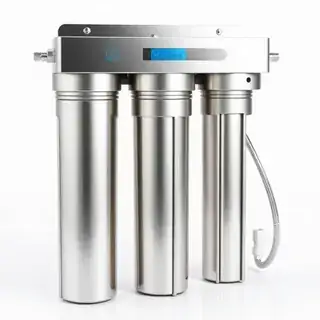
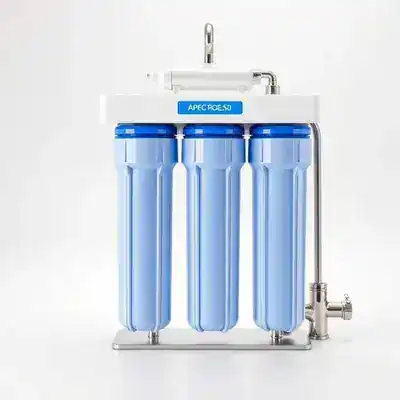
#1 Best Overall: APEC ROES-50 ($190-220)Our #1 Pick
Type: 5-Stage Reverse Osmosis (Under-Sink)
Why it's best: Professional-grade performance at consumer price point. The APEC ROES-50 uses the same semi-permeable membrane technology found in $400+ systems but at roughly half the price. Each of its five stages targets specific contaminant categories: Stage 1 removes sediment (5-micron PP filter), Stage 2 removes chlorine and organics (carbon block), Stage 3 provides additional carbon polishing, Stage 4 is the RO membrane (0.0001 micron), and Stage 5 is a coconut shell carbon post-filter for taste refinement.
Pros:
Cons:
Annual filter cost: ~$60
5-Year Total Cost
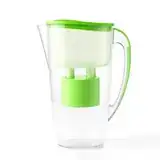
#2 Best Pitcher: ZeroWater 23-Cup Dispenser ($40-50)Best Value
Type: Pour-Through Pitcher with TDS Meter
Why it's best: The only pitcher filter that removes dissolved solids to 0 PPM through its 5-stage ion exchange process. While Brita and PUR use basic activated carbon granules, ZeroWater employs a combination of activated carbon, ion exchange resin, and three additional proprietary layers that strip virtually all dissolved minerals and contaminants from water. The included TDS meter lets you verify performance and know exactly when to replace the filter.
Pros:
Cons:
Annual filter cost: ~$90
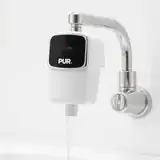
#3 Best Faucet Mount: PUR FM-3700 ($30-40)Easiest Install
Type: Faucet-Mounted Filter
Why it's best: At $30-40, the PUR FM-3700 offers the lowest entry price for NSF 53-certified lead removal. Installation takes under 5 minutes—screw it onto your existing faucet—and the toggle switch lets you alternate between filtered and unfiltered water to extend filter life. It uses PUR's MineralClear technology: activated carbon with ion exchange media that targets lead, mercury, and pharmaceutical residues alongside standard chlorine and sediment removal.
Pros:
Cons:
Annual filter cost: ~$50
#4 Best Countertop: Aquasana Clean Water Machine ($150-180)No Installation
Type: Countertop Reverse Osmosis
Why it's best: RO performance without under-sink installation. The Aquasana Clean Water Machine combines a 4-stage RO process with remineralization in a countertop unit that requires zero plumbing work. It's the best option for renters who want comprehensive filtration without modifying their apartment. The electric pump provides consistent pressure regardless of your home's water pressure, and the remineralization stage adds back calcium and magnesium for improved taste and mineral content.
Pros:
Cons:
Annual filter cost: ~$100
#5 Best Under-Sink Carbon: Aquasana AQ-4100 ($140-160)Eco-Friendly
Type: 2-Stage Carbon Block (Under-Sink)
Why it's best: Zero wastewater, preserves healthy minerals, and NSF-certified for 77 contaminants. Unlike RO systems that strip all minerals, Aquasana's Claryum technology uses catalytic carbon and ion exchange to selectively remove harmful contaminants while leaving beneficial calcium and magnesium. The 800-gallon capacity means filter changes only every 6-12 months for most households, and the fast 0.5 GPM flow rate delivers filtered water without noticeable delay.
Pros:
Cons:
Annual filter cost: ~$70
5-Year Total Cost of Ownership Comparison
The upfront price tells only part of the story. Filter replacement costs, water waste, and electricity use can dramatically change the true cost over time. This analysis assumes a family of 4 consuming 3 gallons of filtered water daily (1,095 gallons/year). Understanding total cost per gallon helps you choose the most economical system for your household.
| System | Upfront | Annual Filters | 5-Year Total | Cost/Gallon | Contaminants Removed |
|---|---|---|---|---|---|
| APEC ROES-50 (RO) | $205 | $60 | $505 | $0.09 | 99%+ (everything) |
| Aquasana AQ-4100 | $150 | $70 | $500 | $0.09 | 77 contaminants |
| Aquasana Clean Water | $165 | $100 | $665 | $0.12 | 90+ contaminants |
| ZeroWater 23-Cup | $45 | $90 | $495 | $0.09 | 99.6% TDS |
| PUR FM-3700 | $35 | $50 | $285 | $0.05 | 70+ contaminants |
| Bottled water (comparison) | $0 | $1,095 | $5,475 | $1.00 | Varies widely |
Even the most expensive option on this list saves over $4,800 compared to bottled water over 5 years—while providing better filtration and zero plastic waste. The PUR FM-3700 is the most cost-effective per gallon at just $0.05, but the APEC ROES-50 offers vastly superior contaminant removal for only $0.04 more per gallon.
Filtration Technology Comparison: Which Type Is Right for You?
Budget filters under $200 span four distinct filtration technologies, each with different strengths. Matching the right technology to your specific water concerns is more important than brand selection.
Reverse Osmosis (RO)
How it works: Pressurized water passes through a semi-permeable membrane with 0.0001-micron pores, blocking virtually all dissolved and suspended contaminants.
Removes: 99%+ of TDS, lead, arsenic, fluoride, PFAS, nitrates, pharmaceuticals, microplastics, bacteria, and viruses.
Best under-$200 option: APEC ROES-50 ($190-220)
Trade-offs: Produces wastewater (3:1 ratio at this price), removes beneficial minerals, slower flow rate, requires under-sink space.
Choose if: You want maximum protection, have well water, or live in a city with poor water quality.
Activated Carbon Block
How it works: Water passes through compressed carbon blocks that trap contaminants via adsorption. The tight pore structure of carbon blocks (vs. granular) provides better contaminant contact time.
Removes: 95%+ chlorine, 99% lead (NSF 53 models), VOCs, some pesticides, pharmaceutical residues. Does NOT remove TDS, fluoride, or arsenic.
Best under-$200 option: Aquasana AQ-4100 ($140-160)
Trade-offs: Won't remove everything RO can. Filter life shorter in high-sediment water.
Choose if: You want to preserve minerals, have city water with chlorine/lead concerns, or prefer zero wastewater. See our under-sink filter guide.
Gravity/Pitcher Filters
How it works: Gravity pulls water through filter media. Ranges from basic carbon granules (Brita) to multi-stage ion exchange (ZeroWater) to advanced affinity media (Clearly Filtered).
Removes: Varies dramatically by brand. Basic models (Brita Standard): chlorine taste only. Advanced models (ZeroWater, Clearly Filtered): lead, TDS, PFAS, pharmaceuticals.
Best under-$200 option: ZeroWater 23-Cup ($40-50) for TDS; Clearly Filtered ($90-100) for PFAS
Trade-offs: Slow filtration, frequent filter replacements, limited capacity per fill.
Choose if: You want portability, zero installation, or are renting. Explore our pitcher filter comparison.
Faucet-Mounted Filters
How it works: Screws onto existing faucet head. Compact carbon block or multi-media cartridge filters water on-demand with a bypass switch for unfiltered flow.
Removes: Chlorine (95%+), lead (99% with NSF 53), mercury, some pharmaceuticals. Does not remove TDS, fluoride, or PFAS.
Best under-$200 option: PUR FM-3700 ($30-40)
Trade-offs: Not compatible with all faucet types (pull-down, commercial styles). Reduces flow rate when filtering. Plastic housing less durable than metal under-sink systems.
Choose if: You want the easiest possible installation and primarily need chlorine/lead removal. See our faucet filter rankings.
What Not to Buy Under $200
Avoid These Budget Traps
Our research highlights several marketing pitfalls in the under-$200 segment. Check specs and certification listings and avoid these common traps:
Quick Comparison
| Filter | Price | Type | Best For | Key Cert |
|---|---|---|---|---|
| APEC ROES-50 | $190-220 | RO Under-Sink | Maximum purification | NSF 58 |
| ZeroWater 23-Cup | $40-50 | Pitcher | Budget & portability | NSF 53 |
| PUR FM-3700 | $30-40 | Faucet Mount | Easiest install | NSF 42/53 |
| Aquasana Clean | $150-180 | Countertop RO | Renters | NSF 42/53/401 |
| Aquasana AQ-4100 | $140-160 | Carbon Under-Sink | Eco-friendly | NSF 42/53/401 |
Test First, Then Choose Your Filter
Know what contaminants you're dealing with before spending money. A $20-100 water test identifies exactly which contaminants are present in YOUR water, ensuring you choose a filter that actually addresses your specific issues rather than paying for removal capabilities you don't need. Check your city's annual Consumer Confidence Report first, then test your tap for confirmation.
Recommended Products