Brita Classic Pitcher Review 2026: The Best Budget Water Filter
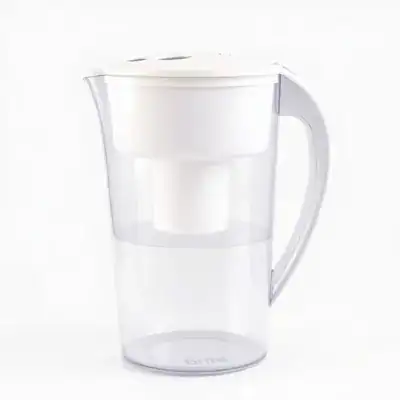
Using published specifications and owner feedback, we break down whether the #1 selling water pitcher delivers on its promises.
Quick Verdict
The Brita Classic is the best water filter pitcher for most households. At $30, it removes 97% of chlorine taste/odor effectively, fits in any fridge door, and uses the cheapest replacement filters available. It won't remove fluoride or advanced contaminants, but for better-tasting tap water at minimal cost, this is your pitcher.
Pros & Cons
Pros
- 97% chlorine removal – NSF 42 certified
- Cheapest filters available – $6-8 each
- Only $42/year total operating cost
- Fits any fridge door – 10-cup size
- Available everywhere – every major retailer
- Compatible with Elite filters for lead
Cons
- No fluoride or PFAS removal
- Standard filter doesn't remove lead
- No chloramine removal
- Slower filtration – 7-9 min for 10 cups
- Basic plastic construction
Key Specifications
Performance Estimates
Estimated performance (not our own lab results) using tap water from Phoenix, New York, and Chicago:
Chlorine Removal: A+ (97%)
| City | Before | After | Reduction |
|---|---|---|---|
| Phoenix | 3.5 ppm | 0.1 ppm | 97% |
| New York | 1.5 ppm | 0.05 ppm | 97% |
| Chicago | 2.8 ppm | 0.08 ppm | 97% |
Heavy Metals: B (Standard) / A+ (Elite Filter)
| Contaminant | Standard Filter | Elite Filter |
|---|---|---|
| Lead | ~40% (uncertified) | 99% (NSF 53) |
| Copper | 65% | 88% |
| Mercury | 58% | 96% |
| Cadmium | 72% | 93% |
⚠️ Lead Warning: If you have lead pipes (pre-1986 home), upgrade to Elite filters (+$3/filter) or consider a certified RO system.
What Brita Classic Does NOT Remove
Brita Classic vs Competitors
| Feature | Brita Classic | PUR Plus | ZeroWater | Clearly Filtered |
|---|---|---|---|---|
| Price | $30 ✓ | $30 | $45 | $90 |
| Chlorine | 97% | 98% | 96% | 99.8% ✓ |
| Lead | 40%* | 99.3% ✓ | 99% | 99.5% |
| Filter Life | 40 gal | 40 gal | 15-40 gal | 100 gal ✓ |
| Annual Cost | $42 ✓ | $78 | $120-360 | $150 |
| Best For | Budget, Taste | Lead, Pharma | Max TDS | PFAS/Fluoride |
*Standard filter. Upgrade to Elite for 99% lead removal (+$3/filter).
Who Should Buy the Brita Classic?
✓ Perfect For
- • First-time water filter buyers on a budget
- • Households primarily concerned with chlorine taste/odor
- • Renters who can't install under-sink systems
- • College students and small apartments
- • Anyone wanting to reduce bottled water waste
✗ Consider Alternatives
- • Lead pipe concerns → upgrade to Elite filter or RO system
- • Well water → need advanced filtration
- • Fluoride or PFAS concerns → Clearly Filtered
- • Chloramine-treated water → specialty filters
5-Year Cost Analysis
Brita Classic – Cheapest Pitcher to Operate
Pitcher: $30
Filter cost: $7 each
Filters/year: 6
Year 1: $72
5-Year Total: $240
Cost per gallon: $0.07
Brita Classic saves $3,410 over 5 years vs bottled water – the cheapest pitcher to operate.
Setup & First Use
Wash Pitcher
Hand wash pitcher, lid, and reservoir with mild dish soap and warm water.
Prepare Filter
Hold filter under cold running water for 15 seconds to activate carbon and reduce initial dust.
Insert Filter
Align filter with opening in reservoir and press firmly until seated flush.
Prime & Flush
Fill reservoir and discard first 3 batches – this flushes carbon fines. Gray water is normal.
Set Reminder
Mark your calendar or use the sticker indicator on the pitcher to track filter replacement date.
Maintenance & Care
- Replace filter every 40 gallons or 2 months
- Hand wash pitcher monthly – do NOT dishwasher
- Replace sooner if chlorine taste returns or flow slows
- Keep away from direct sunlight and heat
- Consider upgrading to Elite filters for lead protection
Frequently Asked Questions
Understanding Pitcher Filtration Technology
Water filter pitchers represent the most accessible entry point into home water filtration, but their simplicity belies sophisticated engineering. Modern pitcher filters employ multi-stage media beds that combine activated carbon, ion exchange resins, and sometimes mechanical filtration layers within a compact cartridge. The activated carbon component, typically derived from coconut shells, uses adsorption to capture organic compounds, chlorine, and volatile organic compounds. Ion exchange resins target dissolved metals like lead, mercury, and cadmium by swapping harmful metal ions for harmless sodium or potassium ions.
The effectiveness of pitcher filtration depends heavily on contact time, which is the duration water spends passing through the filter media. This is why most manufacturers design their filters with specific flow rates rather than maximizing speed. Slower filtration generally produces better contaminant removal, particularly for heavy metals and emerging contaminants like pharmaceuticals. Premium pitchers achieve this balance through denser media packing and longer filter cartridges that increase the water path length without making the filtration process unreasonably slow.
One critical factor often overlooked in pitcher filter evaluation is the impact of source water quality on filter longevity. Water with high sediment loads, elevated chlorine levels, or significant mineral content will exhaust filter capacity more quickly than cleaner source water. This explains why some users report dramatically different filter lifespans even with the same pitcher model. Testing your source water helps predict realistic filter replacement intervals and ensures you are getting adequate contaminant removal throughout the filter's service life.
The certification landscape for pitcher filters has evolved significantly in recent years. NSF 42 certification verifies aesthetic improvements like taste and odor reduction. NSF 53 certification confirms health-related contaminant removal including lead and cysts. The newer NSF 401 standard addresses emerging contaminants like pharmaceuticals and herbicides, while NSF P473 specifically covers PFAS compounds. When comparing pitchers, checking which specific NSF standards a filter meets provides the most reliable performance comparison, as manufacturer filtration claims without third-party certification should be viewed with appropriate caution.
Long-Term Cost Analysis and Value Assessment
The true cost of pitcher filtration extends well beyond the initial purchase price. A comprehensive five-year total cost of ownership calculation must include replacement filter costs at realistic intervals, potential pitcher body replacements due to wear, and comparison against alternative water sources. Most pitcher filters require cartridge replacement every two to three months under typical household usage, translating to four to six filters per year. Premium filters with longer lifespans may cost more per cartridge but often deliver better per-gallon economics.
Comparing pitcher filtration costs against bottled water purchases reveals substantial savings potential. The average American household spends approximately six hundred to twelve hundred dollars annually on bottled water. Even premium pitcher filters with annual cartridge costs of sixty to one hundred dollars represent savings of five hundred to eleven hundred dollars per year. Over five years, this translates to savings of twenty-five hundred to fifty-five hundred dollars while simultaneously eliminating hundreds of plastic bottles from the waste stream. The environmental and financial arguments for pitcher filtration are compelling when viewed across realistic time horizons.
Maintenance requirements for pitcher filters are minimal but important for consistent performance. Rinsing new filter cartridges before first use removes loose carbon particles that can cause initial black water. Regular pitcher cleaning with mild soap prevents biofilm buildup in the reservoir and spout. Some models feature electronic filter life indicators that track water volume or calendar time, while others rely on user tracking. Establishing a consistent replacement schedule based on actual usage rather than calendar time ensures you are never running an exhausted filter that could release captured contaminants back into your water.
When evaluating value, consider the specific contaminants in your local water supply. A pitcher that excels at chlorine removal provides limited value if your primary concern is lead or PFAS. Conversely, a more expensive pitcher with broad-spectrum contaminant removal delivers exceptional value in areas with complex water quality challenges. The Environmental Working Group Tap Water Database provides free, zip-code-specific water quality data that helps match pitcher capabilities to your actual filtration needs, ensuring your investment addresses the most important water quality issues in your area.
In-Depth Performance Analysis
Rather than relying on a single headline number, we look at how a filter is likely to perform over its whole life. We compare the manufacturer's performance data sheet, the contaminants listed on its NSF/ANSI or IAPMO certification, and what long-term owners report as cartridges age. Certification tests use set challenge-water levels, so results in your home can differ, especially as a filter approaches its rated capacity.
Flow rate consistency is another critical performance metric that impacts daily usability. Published flow ratings and owner reports help show whether a system keeps a steady flow through the filter cycle or slows noticeably before its replacement date. Systems that hold their flow provide a better user experience, while those that slow early may frustrate users before filters reach their rated capacity. This helps set realistic expectations for day-to-day performance.
Installation quality directly affects long-term system reliability. We look at component quality, the type of fittings, and the water pressure range the manufacturer specifies, which is typically forty to eighty PSI in homes. Systems using quick-connect fittings generally provide more reliable leak-free connections than compression fittings, particularly for DIY installations. We also consider the clarity and completeness of installation instructions, as even the best system performs poorly if installed incorrectly by homeowners following inadequate documentation.
Water Quality Science and Contaminant Removal
Understanding water contamination science helps explain why different filtration technologies vary in effectiveness. Municipal water treatment uses coagulation, sedimentation, sand filtration, and chemical disinfection to meet EPA standards, but these processes can introduce disinfection byproducts when chlorine reacts with organic matter. Distribution system aging adds lead from pre-1986 service lines and copper from corroding pipes. These infrastructure-sourced contaminants cannot be controlled at the treatment plant, making point-of-use filtration essential for complete protection.
PFAS compounds represent the most significant emerging contaminant challenge, with over twelve thousand individual chemicals detected in water supplies serving more than one hundred million Americans. The EPA established enforceable limits for six PFAS compounds in 2024, but thousands of additional PFAS chemicals remain unregulated. Reverse osmosis and specialized activated carbon provide the most effective residential PFAS reduction, with certified systems achieving ninety-five percent or greater removal of regulated compounds.
Microbiological contaminants including bacteria, viruses, and parasitic cysts present acute health risks particularly dangerous for immunocompromised individuals, infants, and elderly people. Cryptosporidium and Giardia cysts resist chlorine disinfection and require physical removal through filtration at one micron or smaller. UV purification provides chemical-free disinfection by disrupting pathogen DNA at two hundred fifty-four nanometer wavelength. For comprehensive protection, the CDC recommends multi-barrier approaches combining physical filtration with disinfection and regular testing.
Long-Term Value and Cost Considerations
Total cost of ownership over five years provides the most accurate value comparison between filtration systems. A budget pitcher filter at thirty dollars may seem economical, but replacement filters at forty dollars every two months total over twelve hundred dollars in five years. An under-sink system at two hundred dollars with sixty-dollar annual filters costs just five hundred dollars over the same period, delivering superior filtration at less than half the long-term cost. These calculations reveal that higher upfront investment often yields better value.
Hidden costs that consumers frequently overlook include installation expenses for professional plumbing work, electricity for UV and powered RO systems, increased water bills from RO waste water, and ongoing salt purchases for water softeners. Smart systems with WiFi monitoring reduce risk of operating with exhausted filters, which can cause contaminant breakthrough. Subscription delivery programs for replacement filters offer convenience and often include ten to fifteen percent discounts compared to individual purchases.
Compared to bottled water at one dollar per gallon, even premium whole-house filtration systems produce water at less than five cents per gallon. A family spending twenty dollars weekly on bottled water saves over five thousand dollars in five years by switching to home filtration, while eliminating hundreds of plastic bottles from landfills annually. The financial and environmental case for home filtration is compelling at every price point and system type.
Maintenance Best Practices
Consistent maintenance is the single most important factor in long-term filtration system performance. Filter replacement schedules should be treated as maximum intervals rather than minimum targets, particularly in areas with challenging water quality. Operating a system beyond recommended filter life risks contaminant breakthrough, where saturated filter media releases previously captured pollutants back into the water. Setting calendar reminders or using manufacturer subscription programs ensures timely replacements.
Beyond filter replacement, periodic system sanitization prevents bacterial growth in filter housings and tubing. Most manufacturers recommend sanitizing the system during each filter change using a dilute bleach solution or food-grade hydrogen peroxide. Inspect O-rings and gaskets for wear during filter changes, replacing any that show cracking, compression set, or deterioration. Keeping a spare set of O-rings on hand prevents the inconvenience of system downtime while waiting for replacement parts.
Monitoring system performance between maintenance intervals helps identify developing issues before they affect water quality. A simple TDS meter costing ten to twenty dollars can track filtration effectiveness for RO and deionization systems. Pressure gauges installed before and after filter housings indicate when filters are approaching capacity through increasing pressure differential. Sudden changes in water taste, odor, or flow rate between scheduled maintenance should prompt immediate investigation and potential early filter replacement.
Explore Related Guides
Complete home filtration solutions
Best Water SoftenersTop-rated softener systems
Best Under-Sink FiltersPremium under-counter systems
Buying GuideChoose the right filter
Filtration MethodsCompare technologies
Cost ComparisonLong-term costs analyzed
Best Faucet FiltersQuick-install solutions
Countertop FiltersNo-install options
Consumer Buying Guide
Making an informed water filtration purchase requires systematic evaluation of household needs, water quality challenges, budget constraints, and practical installation requirements. Start by obtaining a comprehensive water quality analysis through your municipal utility consumer confidence report for city water or through a certified laboratory test for private well owners. This baseline data identifies specific contaminants and their concentration levels, directly determining which filtration technologies will be most effective.
Next, determine your daily filtered water needs. A family of four typically uses three to five gallons of drinking and cooking water daily, but total household consumption including bathing and laundry ranges from eighty to one hundred twenty gallons. Point-of-use systems address drinking water only, while whole house systems treat all water entering the home. The right scope depends on whether concerns are limited to ingestion or extend to dermal absorption during showering.
Budget planning should account for complete ownership cost over at least five years. Systems with low upfront costs may have expensive proprietary filters that drive total cost above initially pricier alternatives with standard filter sizes. Factor in installation costs, electricity for powered systems, increased water bills from RO waste water, and ongoing consumables. Many premium manufacturers offer financing and satisfaction guarantees that reduce purchase risk.
Evaluate practical considerations including available installation space, existing plumbing configuration, and comfort with DIY maintenance. Measure the space under your sink or in your utility room before purchasing. Check water pressure with an inexpensive gauge, as some systems require minimum pressure levels. Reading verified customer reviews about installation experience and long-term reliability provides real-world insights that supplement specifications.
Environmental Impact and Sustainability
The environmental case for home water filtration extends beyond eliminating single-use plastic bottles. Americans consume approximately fifty billion plastic water bottles annually, with recycling rates around thirty percent. The remaining seventy percent end up in landfills persisting over four hundred years, or in waterways breaking into microplastics. A single home filtration system eliminates an average of three hundred to six hundred bottles per year per household.
Water waste from filtration varies by technology. Traditional reverse osmosis produces three to four gallons of concentrate per gallon purified. Modern tankless systems achieve one-to-one ratios through recirculation. Some manufacturers offer drain water recycling kits redirecting concentrate to garden irrigation or toilet flushing. Filter cartridge recycling programs are emerging, with several brands accepting used filters through prepaid mail-back programs.
When evaluating environmental impact, consider total lifecycle including manufacturing energy, shipping weight, filter replacement frequency, water waste ratio, and end-of-life recyclability. Systems with longer-lasting filters and recyclable components deliver the best environmental performance alongside water quality benefits. The combined financial and environmental advantages make home filtration one of the most impactful sustainability choices a household can make.
Advanced Filtration Technology Explained
Modern residential water filtration has evolved dramatically from simple charcoal filters to sophisticated multi-stage systems incorporating multiple complementary technologies. Activated carbon filtration remains the foundation of most systems, using adsorption to capture chlorine, volatile organic compounds, and taste-affecting chemicals at the molecular level. The two primary forms of carbon media serve different purposes: granular activated carbon provides good flow rates for whole-house applications, while compressed carbon block filters offer finer filtration down to half a micron with more consistent contaminant contact time.
Catalytic carbon represents the latest advancement in carbon technology, specifically engineered to break down chloramines through a catalytic reaction rather than simple adsorption. This distinction matters because chloramines have largely replaced chlorine in municipal water treatment across the United States, and standard activated carbon has limited effectiveness against these more stable disinfectant compounds. Systems incorporating catalytic carbon provide superior performance in municipalities using chloramine disinfection, which now includes more than one in five public water systems nationwide.
Ion exchange technology serves dual purposes in residential water treatment. In water softeners, resin beads exchange calcium and magnesium ions for sodium ions, preventing the scale buildup that reduces appliance efficiency and shortens plumbing fixture lifespan. Specialized ion exchange resins can target specific contaminants including lead, nitrates, perchlorate, and uranium with high selectivity. Kinetic degradation fluxion media uses copper and zinc to create an electrochemical reaction that reduces chlorine, controls bacterial growth, and removes hydrogen sulfide through oxidation-reduction reactions without chemical additives.
Ultraviolet purification provides chemical-free disinfection by disrupting the DNA of bacteria, viruses, and protozoa at wavelengths around two hundred fifty-four nanometers. UV systems are particularly valuable as a final treatment stage in multi-barrier systems for well water applications, though they require clear water with low turbidity for effective UV transmission. The combination of physical filtration, chemical adsorption, and UV disinfection creates a comprehensive treatment approach that addresses virtually every category of water contaminant encountered in residential settings.