Lead Water Testing Guide
How lead gets into tap water, how to collect a sample that gives a true reading, and which filters are certified to reduce it. Testing comes first, especially in older homes and homes with young children or a pregnancy.
Lead is Extremely Dangerous - Especially for Children
There is NO safe level of lead exposure. Even low levels cause permanent brain damage in children.
EPA Action Level:
15 ppb (parts per billion) - triggers action, not a "safe" level
EPA Goal:
0 ppb - the only truly safe level
Assess Your Lead Risk
Select all that apply - homes built before 1986 are highest risk
Health Impacts of Lead
Young Children (0-6 years)
Brain damage, learning disabilities, behavioral problems, reduced IQ, hearing loss
Pregnant Women
Fetal brain development issues, premature birth, low birth weight
Adults
Cardiovascular effects, kidney problems, reproductive issues
Lead Testing Options
3M LeadCheck Swabs
Quick swabs test pipes and fixtures for lead - NOT for water testing.
30 seconds
Accuracy:
Detects:
Lead on surfaces only
Process:
- 1.Swab pipe or fixture (not water)
- 2.Crush inner ampules to release testing solution
- 3.Wait 30 seconds
- 4.Pink/red color = lead detected
- 5.Use to identify lead pipes/solder
Pros:
- • Very quick
- • Cheap
- • Good for identifying lead pipes
Cons:
- • Does NOT test water
- • Only for surfaces
- • Doesn't show concentration
First Alert Lead Test Kit
At-home water test kit - only detects if lead is ABOVE 15 ppb.
10 minutes
Accuracy:
Detects:
Lead in water samples
Process:
- 1.Collect water sample per instructions (first draw)
- 2.Add test powder/solution to sample
- 3.Wait specified time (usually 10 minutes)
- 4.Pink color = lead detected above 15 ppb
- 5.No color change = below 15 ppb (but could still have some lead)
Pros:
- • Affordable
- • Quick results
- • Easy to use
Cons:
- • Only detects if ABOVE 15 ppb
- • Not quantitative
- • Can miss lower levels
Watersafe Lead Test
Similar to First Alert - simple yes/no test for lead above 15 ppb.
10 minutes
Accuracy:
Detects:
Lead presence
Process:
- 1.Run cold water for 6 hours minimum (overnight)
- 2.Collect first draw sample
- 3.Follow kit instructions for testing
- 4.Color change indicates lead above 15 ppb
- 5.Negative result means below 15 ppb (not zero)
Pros:
- • Well-known brand
- • Simple to use
- • Affordable screening
Cons:
- • Not precise
- • Can't measure exact levels
- • Only catches higher levels
Tap Score Lead Test
Lab testing with precise ppb readings - can detect lead at very low levels.
5-7 days
Accuracy:
Detects:
Exact lead concentration
Process:
- 1.Order test kit from Tap Score
- 2.Collect first draw sample (after 6+ hours no use)
- 3.Optional: Also test after flushing for comparison
- 4.Ship to EPA-certified laboratory
- 5.Receive detailed report with exact lead level in ppb
Pros:
- • Most accurate
- • Detects low levels
- • Exact measurements
- • Can compare first draw vs flushed
Cons:
- • More expensive
- • Takes days for results
- • Requires mailing sample
SimpleLab Lead Advanced
Comprehensive lab test identifying lead concentration and likely sources.
5-7 days
Accuracy:
Detects:
Precise lead levels + source indicators
Process:
- 1.Order test kit
- 2.Collect multiple samples (first draw + flushed water)
- 3.Laboratory analyzes lead and other metals
- 4.Report shows lead levels and potential sources
- 5.Recommendations for next steps
Pros:
- • Comprehensive
- • Identifies sources
- • Professional interpretation
Cons:
- • Higher cost
- • Multi-step sampling
- • Wait for results
Lead Removal Filters
Reverse Osmosis
Most effective option - removes nearly all lead from drinking water
NSF/ANSI 58
APEC ROES-50
5-stage RO, certified for lead
iSpring RCC7
NSF certified 5-stage
Waterdrop G3
Tankless RO system
Important:
- •Look for NSF 58 certification specifically for lead
- •Removes lead to non-detectable levels
- •Best choice for drinking/cooking water
Carbon Block Filters
Effective and more affordable than RO - good for whole house or under-sink
NSF/ANSI 53 for lead
Aquasana AQ-5200
NSF 53 certified for lead
Clearly Filtered Pitcher
Removes 99.9% lead
Aquasana Rhino
Whole house carbon block
Important:
- •MUST have NSF 53 certification for lead
- •Standard carbon without certification doesn't work
- •Good for all household water
Distillation
Boils water and collects steam - leaves lead behind completely
Effective by nature of process
Important:
- •Removes virtually all lead
- •Slow process - 4-6 hours per gallon
- •High energy use
- •Best for drinking water only
NOT Effective
These filters do NOT reliably remove lead
Basic Brita pitchers
Standard models NOT certified
Refrigerator filters (most)
Unless specifically certified
Faucet filters (basic)
Check for NSF 53
Water softeners
Do NOT remove lead
Important:
- •Generic filters without lead certification don't work
- •Flushing pipes helps but doesn't solve the problem
- •Boiling does NOT remove lead - concentrates it
Lead Exposure Prevention
Immediate Actions if Lead Detected
- Use only COLD water for drinking/cooking (hot water leaches more lead)
- Flush pipes by running water 30-60 seconds before use
- Use certified lead filter for all drinking/cooking water
- Don't boil water to remove lead - it concentrates it
- Have children tested for lead exposure (blood test)
Long-term Solutions
- Replace lead service lines (water utility may help with cost)
- Replace lead solder/fixtures
- Install NSF 53 certified whole-house filter
- Use RO system for drinking water
- Test water annually after repairs/changes
Reduce Exposure
- Never use hot tap water for cooking or formula
- Clean aerators regularly - lead particles collect there
- Run water until cold before drinking (especially after sitting)
- Use bottled water for infant formula if high lead detected
Certified Lead Removal Systems
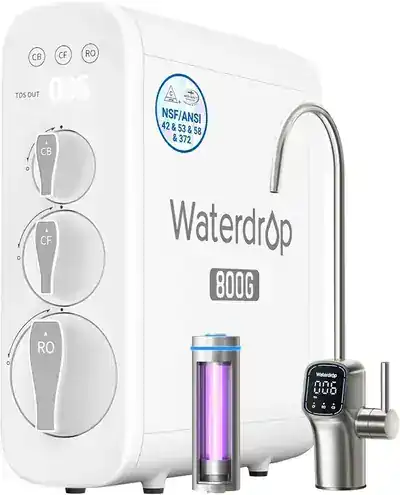
Waterdrop G3P800 — Best Lead Removal
Removes 99.9% of lead with NSF 58 certification. Real-time TDS monitoring confirms filtration. Tankless design saves space.
View on Amazon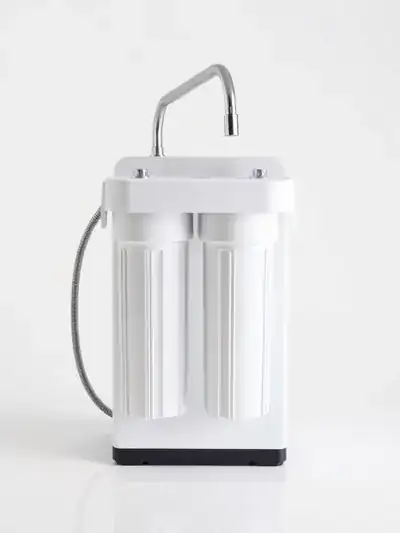
Aquasana AQ-5200 — Best Under-Sink
NSF 53 certified for lead removal. Dual-stage carbon block removes 99% of lead plus 77 other contaminants. Affordable alternative to RO.
View on AmazonProtect Your Family from Lead
Lead exposure is preventable. Test your water and use certified filtration to eliminate this dangerous neurotoxin.
Advanced Lead Testing: Laboratory Methods & Result Interpretation
While home test kits and swabs provide useful screening, laboratory analysis remains the gold standard for lead detection in drinking water. EPA-certified laboratories use Inductively Coupled Plasma Mass Spectrometry (ICP-MS) or Graphite Furnace Atomic Absorption Spectroscopy (GFAAS) to detect lead at concentrations as low as 1 ppb—far below the EPA action level of 15 ppb. Understanding the different laboratory methods, proper sample collection protocols, and how to interpret results empowers you to make informed decisions about your family's water safety.
The EPA recommends a specific two-sample protocol for lead testing: a first-draw sample (collected after 6+ hours of stagnation, typically first thing in the morning) and a flushed sample (collected after running water for 2-5 minutes). The first-draw sample reveals lead leaching from your home's plumbing, while the flushed sample indicates lead levels from the distribution system and service line. If both samples show elevated lead, the source is likely your service line or the main water supply. If only the first-draw is elevated, your internal plumbing is the culprit—and an under-sink filter at the tap provides effective protection.
Sequential sampling (collecting multiple 1-liter samples in sequence without flushing between) can pinpoint exactly where lead enters your plumbing. The first liter represents the faucet and internal plumbing (0-10 feet). The second and third liters represent interior piping. Subsequent liters represent the service line. This profile helps determine whether you need point-of-use filtration only (internal plumbing issue) or whole-house treatment and eventual service line replacement.
Interpreting Your Lead Test Results
Below 1 ppb: Excellent—your water meets the most stringent international guidelines. No immediate action needed, but consider annual testing to monitor for changes, especially if you have older plumbing. 1-5 ppb: Low but detectable. No regulatory action required, but health-conscious households with young children may want NSF 53-certified filtration as a precautionary measure. 5-15 ppb: Moderate concern. Filtration strongly recommended, especially for households with children, pregnant women, or immunocompromised individuals. Install an NSF 53-certified lead removal filter at drinking water taps.
15-50 ppb: Exceeds EPA action level. Immediate filtration is essential. Contact your water utility if on municipal water—they may be required to provide free testing, filters, or bottled water. Begin planning service line investigation and potential replacement. Above 50 ppb: Severe contamination. Do not use unfiltered water for drinking, cooking, or baby formula preparation. Install point-of-use RO filtration immediately. Contact your local health department and water utility. Consider using bottled water for cooking until filtration is verified through post-installation testing.
Lead Testing for Schools & Childcare Facilities
The EPA's 3Ts guidance (Training, Testing, Taking Action) recommends testing all drinking water outlets in schools and childcare facilities. Many states now mandate testing with action levels as low as 1-5 ppb (below the federal 15 ppb). Schools built before 1988 are at highest risk due to lead-soldered plumbing, leaded brass fixtures, and drinking fountain components containing lead. Results should be shared with parents and posted publicly. Remediation options include filter installation on drinking fountains and faucets, fixture replacement, or pipe replacement for severely affected buildings.
DIY Lead Pipe Identification
Before spending money on water testing, you can identify potential lead plumbing sources visually. Find where your main water line enters your home (usually in the basement or crawl space near the water meter). Scratch the pipe surface with a coin or key: lead pipes are soft, dull gray, and scratch easily to reveal shiny silver metal. Copper pipes are hard and copper-colored. Galvanized steel is gray but very hard and may be magnetic. Lead solder joints on copper pipes appear as irregular gray blobs at pipe connections—use the 3M LeadCheck swab test ($15) on suspicious joints for instant confirmation.
The service line connecting your home to the water main may be a different material than your interior plumbing. Many cities have online lead service line inventories—check your utility's website or call them directly. If your service line is confirmed as lead, your water utility may be responsible for replacement under the EPA's revised Lead and Copper Rule. Until replacement occurs, continuous use of certified point-of-use filtration is essential for protecting your household.
Continuous Monitoring & Annual Testing Protocol
Lead levels in water are not static—they fluctuate based on water chemistry changes, seasonal temperature variations, and plumbing disturbances. Annual testing is the minimum recommended frequency, with additional testing after any of these events: plumbing repairs or renovations, water main breaks or utility flushing, changes to water source or treatment (your utility must notify you), extended vacancy (2+ weeks), or after installing new fixtures. For homes with confirmed lead plumbing, semi-annual testing provides better trend data.
If you install a lead removal filter, test both influent (pre-filter) and effluent (post-filter) water to verify filter performance. A properly functioning NSF 53-certified filter should reduce lead by at least 93% from influent levels. If post-filter testing shows less than 90% reduction, the filter may be exhausted, improperly installed, or bypassed. Replace the filter element and retest. Keep records of all test results—this documentation is valuable for insurance claims, real estate transactions, and utility communications about service line replacement.
Frequently Asked Questions
Related Resources
Explore Our Top Picks
Additional Resources
Related Articles
Deep dive — Water Filter Buying Guide
Complete guide to choosing the right filter
Read: How Water Filters Work
Understanding filtration technologies explained
Water Filter Cost Comparison
Annual costs across all filter types
Step-by-step: Water Testing Kits Guide
Test your water before buying a filter
Filter Replacement Guide (upkeep tips)
When and how to replace filter cartridges
Read: Water Filter Health Benefits
Health advantages of filtered water
Understanding Water Quality Science
Water quality is determined by a complex interplay of dissolved minerals, organic compounds, and potential contaminants that vary significantly by geographic region and water source. Municipal water treatment facilities use multi-stage processes including coagulation, sedimentation, sand filtration, and chemical disinfection to meet EPA Safe Drinking Water Act standards. However, these treatment processes can introduce disinfection byproducts such as trihalomethanes and haloacetic acids, which form when chlorine reacts with naturally occurring organic matter in the source water.
Private well water faces different challenges, as it bypasses municipal treatment entirely and may contain naturally occurring contaminants like arsenic, radon, and heavy metals that leach from surrounding geological formations. The Environmental Protection Agency recommends annual testing for coliform bacteria, nitrates, total dissolved solids, and pH levels for all private wells. Additional testing for volatile organic compounds, pesticides, and heavy metals should be conducted if you live near agricultural areas, industrial sites, or old mining operations. Understanding your specific water chemistry is the critical first step in selecting the most effective filtration system for your household needs.
Total dissolved solids (TDS) measurements provide a general indicator of water purity but should not be the sole basis for filtration decisions. Water with high TDS from beneficial minerals like calcium and magnesium may actually be healthier than ultra-purified water. The World Health Organization has noted that demineralized water may have adverse health effects due to the absence of essential minerals. This is why many advanced filtration systems, particularly reverse osmosis units, now include remineralization stages that add back beneficial minerals after removing contaminants. The ideal approach balances contaminant removal with mineral retention, targeting specific harmful substances identified through comprehensive water testing while preserving the natural mineral content that contributes to both taste and health benefits.
Filtration Technology Comparison
Modern water filtration leverages several distinct technologies, each with unique strengths for addressing specific water quality challenges. Activated carbon filtration, the most common residential method, uses adsorption to capture chlorine, volatile organic compounds, and taste-affecting chemicals. Granular activated carbon (GAC) filters provide good flow rates but may allow channeling, while carbon block filters compress carbon particles for more consistent contact time and finer filtration down to 0.5 microns. Catalytic carbon represents the latest advancement, specifically engineered to break down chloramines through a catalytic reaction rather than simple adsorption.
Reverse osmosis systems force water through a semipermeable membrane with pore sizes as small as 0.0001 microns, effectively removing dissolved solids, heavy metals, and most microorganisms. Modern RO systems achieve 95-99 percent rejection rates for contaminants like lead, arsenic, fluoride, and PFAS compounds. The primary considerations for RO systems include water waste ratios (typically 3:1 to 4:1 for standard systems, improved to 1:1 in premium tankless models), storage tank requirements, and the need for pre-filtration to protect the delicate membrane from sediment and chlorine damage.
Ion exchange technology, used in both water softeners and specialized contaminant removal systems, swaps problematic ions in the water with benign alternatives. Water softeners exchange calcium and magnesium ions for sodium ions, preventing scale buildup in plumbing and appliances. Specialized ion exchange resins can target specific contaminants like lead, nitrates, or perchlorate. Ultraviolet purification provides chemical-free disinfection by disrupting the DNA of bacteria, viruses, and protozoa at wavelengths around 254 nanometers. UV systems are particularly valuable for well water and as a final treatment stage in multi-barrier systems, though they do not remove chemical contaminants or improve taste.