Best Water Filters for Lead Removal: NSF 53 Certified (2026)
Protect your family with certified lead removal systems that eliminate 95-99% of lead contamination
Lead in Water: A Silent Health Crisis
There is NO safe level of lead exposure, especially for children under 6 and pregnant women. Lead causes irreversible developmental damage, learning disabilities, and organ damage.
If you suspect lead, use bottled water immediately and test your water within 48 hours.
Quick Answer: Best Lead Removal Filters
Best Overall: Aquasana AQ-5200 — 99% lead removal, NSF 53 certified, $150
Best RO System: Waterdrop G3P800 — 99% lead removal, tankless, $450
Best Whole-House: SpringWell CF1 + Aquasana AQ-5200 combo — Complete home protection
Best Budget: Brita LongLast Pitcher — NSF 53 certified, 99% lead removal, $40
Understanding Lead in Drinking Water
How Lead Enters Your Water
Lead rarely occurs naturally in water sources. It leaches from plumbing materials as water travels from treatment plants to your tap:
Lead Service Lines
Pipes connecting homes to municipal water mains. Installed before 1986 in 6-10 million U.S. homes. Can leach 20-100+ ppb lead.
Lead Solder
Used to join copper pipes before 1986. Becomes corrosive over time, leaching 5-50 ppb lead into drinking water.
Brass Fixtures
Faucets, valves, and connectors contain up to 8% lead. Can contribute 1-15 ppb lead even in newer homes.
Galvanized Pipes
Steel pipes coated with zinc. If connected to lead service lines, can accumulate lead deposits and leach 10-40 ppb.
Health Effects of Lead Exposure
The EPA action level is 15 ppb, but the American Academy of Pediatrics states there is no safe level for children.
Children Under 6
- • Delayed development
- • Learning disabilities
- • Reduced IQ (3-5 points per 10 ppb)
- • Behavioral problems
Pregnant Women
- • Premature birth
- • Low birth weight
- • Developmental delays
- • Increased miscarriage risk
Adults
- • Cardiovascular disease
- • Kidney damage
- • Reproductive problems
- • Cognitive decline
Testing Your Water for Lead
Before investing in filtration, test your water to confirm lead presence and concentration. This helps select the appropriate filter system.
| Testing Method | Cost | Turnaround | Accuracy |
|---|---|---|---|
| EPA-Certified Lab | $20-$100 | 5-10 days | Highest |
| Home Test Kit | $10-$30 | 10-30 min | Moderate |
| Municipal Utility | Free-$20 | 7-14 days | High |
For comprehensive testing, see our water testing guide and best water test kits.
Lead Removal Filtration Technologies
Only filters certified to NSF/ANSI Standard 53 are proven to remove lead. Here's how each technology performs:
Carbon Block (NSF 53) — Best Value
Lead Removal: 99% | NSF 53 Certified
High-quality carbon block filters with NSF 53 certification remove 99% of lead through a combination of adsorption and mechanical filtration. The Aquasana AQ-5200 uses Claryum® technology with sub-micron carbon block achieving exceptional lead removal at $150.
Pros
- • 99% lead removal (NSF 53 certified)
- • No water waste
- • Retains healthy minerals
- • Lower cost ($100-300)
- • Fast flow rate
Cons
- • Doesn't remove fluoride or TDS
- • 6-12 month filter life
- • Under-sink installation required
Reverse Osmosis — Maximum Removal
Lead Removal: 95-99% | NSF 53 & 58 Certified
RO systems force water through a semi-permeable membrane with 0.0001-micron pores. This physical barrier blocks lead ions completely. Best choice when lead co-occurs with fluoride, arsenic, or nitrates.
Pros
- • Removes 95-99% of lead
- • Also removes fluoride, arsenic, PFAS
- • Long membrane life (2-3 years)
Cons
- • Higher cost ($200-500)
- • Wastes 2-4 gallons per gallon
- • Removes beneficial minerals
Recommended Lead Removal Systems
Aquasana AQ-5200 Under-Sink
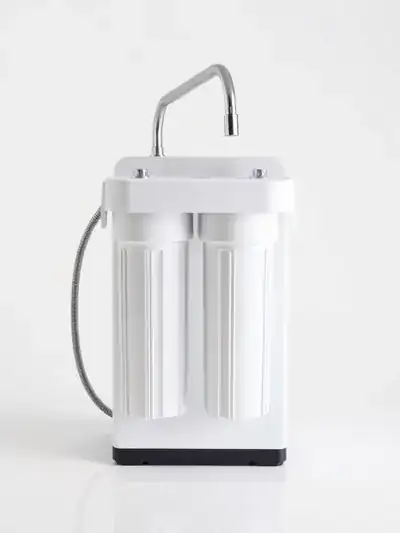
The Aquasana AQ-5200 is NSF 53 certified to remove 99% of lead, plus 76 other contaminants including mercury, PFAS, and chlorine. Claryum® dual-stage filtration retains healthy minerals while removing harmful ones. 800-gallon filter capacity lasts 6 months.
Check Aquasana AQ-5200 PriceWaterdrop G3P800
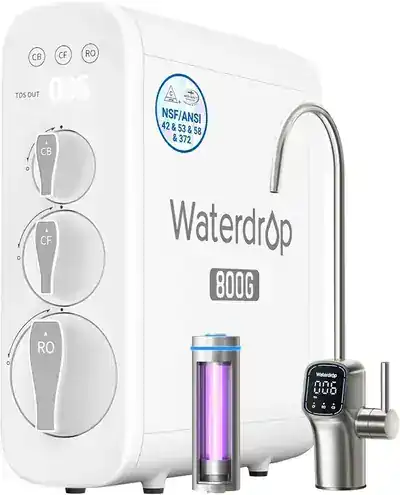
For maximum lead removal (99%) plus fluoride, arsenic, and PFAS, the Waterdrop G3P800 tankless RO produces 800 GPD with smart TDS monitoring. Ideal when multiple heavy metals are present.
Check Waterdrop G3P800 PriceSpringWell CF1 + Aquasana AQ-5200
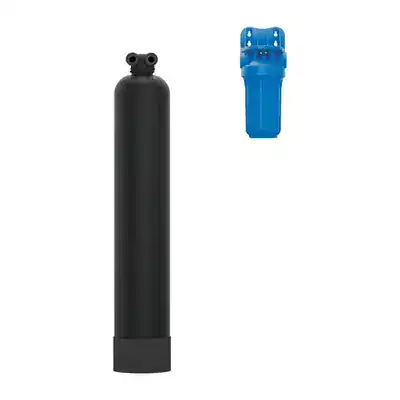
For comprehensive home protection, the SpringWell CF1 whole-house carbon filter removes chlorine, VOCs, and sediment from all taps, while the Aquasana AQ-5200 under-sink provides certified 99% lead removal at the drinking water point.
Check SpringWell CF1 PriceLead Filter Cost Comparison
| System | Upfront | Annual Filters | Lead Removal | 5-Year Cost |
|---|---|---|---|---|
| Aquasana AQ-5200 | $150 | $80 | 99% | $550 |
| Waterdrop G3P800 | $450 | $100 | 99% | $950 |
| Brita LongLast Pitcher | $40 | $60 | 99% | $340 |
| SpringWell CF1 + AQ-5200 | $1,050 | $130 | 99%+ | $1,700 |
Explore Our Top Picks
Related Resources
Understanding Water Quality Science
Water quality is determined by a complex interplay of dissolved minerals, organic compounds, and potential contaminants that vary significantly by geographic region and water source. Municipal water treatment facilities use multi-stage processes including coagulation, sedimentation, sand filtration, and chemical disinfection to meet EPA Safe Drinking Water Act standards. However, these treatment processes can introduce disinfection byproducts such as trihalomethanes and haloacetic acids, which form when chlorine reacts with naturally occurring organic matter in the source water.
Private well water faces different challenges, as it bypasses municipal treatment entirely and may contain naturally occurring contaminants like arsenic, radon, and heavy metals that leach from surrounding geological formations. The Environmental Protection Agency recommends annual testing for coliform bacteria, nitrates, total dissolved solids, and pH levels for all private wells. Additional testing for volatile organic compounds, pesticides, and heavy metals should be conducted if you live near agricultural areas, industrial sites, or old mining operations. Understanding your specific water chemistry is the critical first step in selecting the most effective filtration system for your household needs.
Total dissolved solids (TDS) measurements provide a general indicator of water purity but should not be the sole basis for filtration decisions. Water with high TDS from beneficial minerals like calcium and magnesium may actually be healthier than ultra-purified water. The World Health Organization has noted that demineralized water may have adverse health effects due to the absence of essential minerals. This is why many advanced filtration systems, particularly reverse osmosis units, now include remineralization stages that add back beneficial minerals after removing contaminants. The ideal approach balances contaminant removal with mineral retention, targeting specific harmful substances identified through comprehensive water testing while preserving the natural mineral content that contributes to both taste and health benefits.
Filtration Technology Comparison
Modern water filtration leverages several distinct technologies, each with unique strengths for addressing specific water quality challenges. Activated carbon filtration, the most common residential method, uses adsorption to capture chlorine, volatile organic compounds, and taste-affecting chemicals. Granular activated carbon (GAC) filters provide good flow rates but may allow channeling, while carbon block filters compress carbon particles for more consistent contact time and finer filtration down to 0.5 microns. Catalytic carbon represents the latest advancement, specifically engineered to break down chloramines through a catalytic reaction rather than simple adsorption.
Reverse osmosis systems force water through a semipermeable membrane with pore sizes as small as 0.0001 microns, effectively removing dissolved solids, heavy metals, and most microorganisms. Modern RO systems achieve 95-99 percent rejection rates for contaminants like lead, arsenic, fluoride, and PFAS compounds. The primary considerations for RO systems include water waste ratios (typically 3:1 to 4:1 for standard systems, improved to 1:1 in premium tankless models), storage tank requirements, and the need for pre-filtration to protect the delicate membrane from sediment and chlorine damage.
Ion exchange technology, used in both water softeners and specialized contaminant removal systems, swaps problematic ions in the water with benign alternatives. Water softeners exchange calcium and magnesium ions for sodium ions, preventing scale buildup in plumbing and appliances. Specialized ion exchange resins can target specific contaminants like lead, nitrates, or perchlorate. Ultraviolet purification provides chemical-free disinfection by disrupting the DNA of bacteria, viruses, and protozoa at wavelengths around 254 nanometers. UV systems are particularly valuable for well water and as a final treatment stage in multi-barrier systems, though they do not remove chemical contaminants or improve taste.
Lead in Drinking Water: Complete Science & Protection Guide
Lead contamination in drinking water remains one of America's most serious public health challenges. Unlike most contaminants that originate at the water source, lead typically enters water inside your home—leaching from lead service lines, lead-soldered copper pipes, and brass fixtures as water sits in contact with these materials. The Flint, Michigan crisis (2014-2019) exposed systemic failures in lead monitoring, but the problem is far more widespread: an estimated 6-10 million lead service lines remain in use across the United States, affecting over 22 million Americans.
Lead exposure has no safe threshold. The CDC lowered its blood lead reference value to 3.5 µg/dL in 2021, and the American Academy of Pediatrics emphasizes that any lead exposure can cause irreversible neurological damage in children. Effects include reduced IQ (2-5 points per 10 µg/L increase in blood lead), behavioral problems including ADHD, learning disabilities, hearing loss, and delayed growth. In adults, chronic lead exposure causes hypertension, kidney damage, reproductive problems, and cognitive decline. The EPA action level of 15 ppb is not a health-based standard—it is a treatment technique trigger that indicates corrosion control is needed.
How Lead Enters Your Water
Lead leaches into water through corrosion of lead-containing plumbing materials. The rate of leaching depends on water chemistry: acidic water (pH below 7.0), soft water (low mineral content), high temperature, and stagnation time all increase lead dissolution. This is why first-draw water (the water sitting in pipes overnight or during work hours) typically contains the highest lead levels. Running the cold water tap for 30-60 seconds before drinking flushes the most contaminated water, but this is a mitigation strategy—not a solution. Only certified filtration provides reliable protection.
Homes built before 1986 are at highest risk because lead solder was commonly used on copper pipe joints until the Safe Drinking Water Act amendments banned it. However, "lead-free" plumbing legally allows up to 0.25% lead content (reduced from 8% in 2014), meaning even newer homes can leach trace lead from brass valves and fittings. Galvanized steel pipes installed before 1960 may have internal lead coatings. The only way to know your exposure level is to test your water using first-draw and flushed samples.
NSF 53 Certification: What It Means & Why It Matters
NSF/ANSI Standard 53 is the certification specifically designed for health-related contaminant reduction, including lead. To earn NSF 53 certification for lead, a filter must reduce lead from 150 ppb (challenge concentration) to below 10 ppb—representing at least 93.3% reduction. In practice, top-performing filters like the Aquasana AQ-5200 achieve 99% lead reduction, far exceeding the minimum threshold.
Not all NSF 53 certifications are equal. A filter certified for cyst reduction (NSF 53 for Cryptosporidium) is NOT necessarily certified for lead. Always verify the specific contaminant claims on the manufacturer's NSF listing at nsf.org. The certification must specify "lead" in the claims. Additionally, NSF 53 certification is valid only at the rated flow rate and capacity—using a filter beyond its gallon rating voids the certification protection. For lead specifically, we recommend replacing filters at 80% of rated capacity as a safety margin.
Point-of-Use Filter Comparison for Lead
Under-Sink Carbon Block (Best Value): The Aquasana AQ-5200 ($150) uses selective filtration with sub-micron carbon block technology to achieve 99% lead removal while preserving beneficial minerals. It installs in 30 minutes, connects to the existing cold water line, and includes a dedicated faucet. Filter replacement costs $60 every 6 months (500 gallons per set). This is our top recommendation for most households because it provides certified lead removal at the lowest annual cost ($120/year) among dedicated under-sink systems.
Under-Sink Reverse Osmosis (Maximum Protection): RO systems remove 95-99% of lead through membrane rejection, plus they remove virtually all other dissolved contaminants including fluoride, arsenic, and PFAS that carbon filters cannot address. The Waterdrop G3P800 ($450) provides tankless RO with 800 GPD capacity and built-in TDS monitoring. Annual filter costs are $100-120. RO is the best choice when lead is accompanied by other dissolved contaminants or when you want maximum peace of mind.
Pitcher Filters: Only specific pitcher filter models carry NSF 53 certification for lead. The Brita Elite filter (99% lead reduction at $8.50/cartridge, 40-gallon capacity) and PUR Plus filter (99% lead reduction at $7/cartridge, 100-gallon capacity) are certified options. ZeroWater's 5-stage filter also removes lead effectively but at higher cost per gallon ($0.40/gallon). Pitcher filters are best as temporary protection while planning a more permanent under-sink solution—the low capacity and frequent replacement make them impractical as a long-term lead solution for families.
Whole-House Lead Treatment Strategy
Standard whole-house carbon filters (like the SpringWell CF1) are designed for chlorine, sediment, and VOC removal—they are NOT reliably certified for lead at whole-house flow rates. The high flow rate (10-15 GPM) reduces contact time below what is needed for consistent lead adsorption. The best whole-house approach for lead is a dual-strategy: install a whole-house carbon system for general water quality improvement, then add an NSF 53-certified under-sink filter at each drinking water tap for lead-specific protection.
For severe lead contamination (above 50 ppb), consider a whole-house lead-specific media system using granular activated alumina or iron-based adsorptive media designed for lead. These specialty systems cost $1,500-3,000 installed and require media replacement every 2-3 years. They are most common in areas with known lead service lines where full line replacement is pending. Always verify lead removal at the tap with post-installation testing—even with whole-house treatment, the last few feet of plumbing between the filter and faucet can contribute lead.
Lead Service Line Replacement: What You Need to Know
The EPA's revised Lead and Copper Rule (effective October 2024) requires water utilities to replace all lead service lines within 10 years. However, the homeowner-side portion (from the property line to the home) may be the homeowner's responsibility depending on your jurisdiction. Full service line replacement costs $3,000-10,000 per home. Partial replacement (utility side only) can temporarily increase lead levels as the disturbed connection leaches more lead—if your utility replaces their portion, use certified filtration for 3-6 months after construction.
Until service line replacement occurs, certified point-of-use filtration is your best protection. Flush cold water for 2-5 minutes after periods of non-use (overnight, work day), never use hot tap water for drinking or cooking (hot water leaches more lead), and maintain your filter replacement schedule rigorously. For households with infants or young children, we recommend RO filtration as the most protective option—the Waterdrop G3P800 or similar tankless RO system provides the highest confidence lead removal for the most vulnerable family members.
Frequently Asked Questions
Related Articles
See the best Lead Removal Filters
NSF-certified filters proven to remove lead
Top-rated Reverse Osmosis Systems
RO systems remove 99%+ of lead
Best Under Sink Filters
Under-sink filters excel at lead removal
Our picks for Water Pitchers
NSF-certified pitchers for lead removal
Top-rated Faucet Filters
Faucet filters certified for lead removal
Top-rated Whole House Filters
Whole-house lead treatment systems