Chlorine vs Chloramine Detector
Find out whether your water utility disinfects with chlorine or chloramine, how to confirm it at home, and which filter types reduce each one. It matters because chloramine usually needs a different kind of carbon than plain chlorine.
Quick City Lookup
Check if your water utility typically uses chlorine or chloramine
Chlorine vs Chloramine: What's the Difference?
Chlorine (Cl₂)
What it is:
Traditional disinfectant, used for decades
Pros:
Effective, dissipates quickly, easier to remove
Cons:
Strong taste/smell, creates more DBPs, evaporates in pipes
Detection:
Strong swimming pool smell, sharp taste
Chloramine (NH₂Cl)
What it is:
Chlorine + ammonia, increasingly common
Pros:
Lasts longer in pipes, fewer DBPs, more stable
Cons:
Harder to remove, toxic to fish, can corrode pipes
Detection:
Milder smell, requires testing to confirm
How to Test Your Water
DPD Test Strips
Color-changing strips that detect free chlorine and total chlorine. Compare colors to chart.
Accuracy: Good
Detects:
Chlorine (partial chloramine detection)
Difficulty:
Instructions:
- 1.Dip strip in water sample for 2 seconds
- 2.Remove and shake off excess water
- 3.Wait 15 seconds for colors to develop
- 4.Compare to color chart on bottle
- 5.Free chlorine = chlorine only. Total chlorine - free chlorine = chloramine
Liquid Drop Test Kit
Professional-grade reagent drops provide precise PPM measurements.
Accuracy: Excellent
Detects:
Both chlorine and chloramine accurately
Difficulty:
Instructions:
- 1.Fill test tube to line with water sample
- 2.Add specified drops of reagent #1 (for free chlorine)
- 3.Add reagent #2 drops (for total chlorine)
- 4.Count drops until color changes
- 5.Calculate: Total - Free = Chloramine level
Digital Meter
Electronic meter provides instant digital readings.
Accuracy: Excellent
Detects:
Both with separate readings
Difficulty:
Instructions:
- 1.Calibrate meter per instructions
- 2.Dip probe into water sample
- 3.Wait for reading to stabilize (10-30 seconds)
- 4.Record both free and total chlorine readings
- 5.Clean probe after each use
Pool/Spa Test Kit
Budget option using same chemistry as pool testing.
Accuracy: Fair
Detects:
Basic chlorine detection
Difficulty:
Instructions:
- 1.Works for initial screening only
- 2.Fill comparator with sample water
- 3.Add test reagent (usually OTO or DPD)
- 4.Compare color to reference chart
- 5.Note: Less accurate than dedicated drinking water kits
Interpreting Your Test Results
What do the numbers mean and what should you do next?
Chlorine: 0.5-2 ppm (Normal Range)
Typical municipal levels. Safe to drink but may have taste/odor. Any activated carbon filter will improve taste.
Chlorine: 2-4 ppm (Higher Than Usual)
Still within EPA limits but strong taste/smell. Carbon block filter recommended. Check if utility recently flushed lines.
Chloramine: 1-4 ppm (Common Range)
Standard for chloramine systems. Requires catalytic carbon or RO. Regular carbon less effective. Critical to remove before aquariums.
Total Chlorine - Free Chlorine = Chloramine Level
If difference > 0.5 ppm, you have chloramine. Example: Total 3 ppm - Free 0.5 ppm = 2.5 ppm chloramine present.
Top-Rated Test Kits for Chlorine/Chloramine
LaMotte Insta-TEST Strips
50 strips testing both free and total chlorine
Taylor K-1766 Test Kit
Liquid drop kit for precise measurements
Hanna HI701 Checker
Digital photometer for chlorine testing
JNW Direct Chlorine Strips
Basic but reliable strips for quick testing
Filter Recommendations by Type
Best Filters for Chlorine Removal
Chlorine is easier to remove and most carbon filters work well
Brita Elite Pitcher
Activated Carbon
PUR Faucet Filter
Carbon Block
Aquasana AQ-5200
Carbon Block
3M Aqua-Pure
Carbon Filter
💡 Tips:
- Standard activated carbon works well
- Even basic pitcher filters remove chlorine effectively
- Taste/odor improvement is immediate
- Filters last longer when removing only chlorine
Best Filters for Chloramine Removal
Chloramine is harder to remove - you need catalytic carbon or longer contact time
APEC ROES-50
Reverse Osmosis
Aquasana Rhino
Catalytic Carbon
Berkey
Gravity Filter
Aquasana AQ-5300
Catalytic Carbon Block
💡 Tips:
- Look for 'catalytic carbon' specifically
- Standard carbon is less effective
- Needs longer contact time (larger filters better)
- RO systems work but may be overkill
- Avoid basic pitcher filters for chloramine
Best Filters for Chlorine + Chloramine
If your water utility switches seasonally, you need chloramine-rated filters
APEC ROES-50
Reverse Osmosis
Aquasana AQ-5300
Catalytic Carbon
Pelican PC600
Catalytic Carbon
💡 Tips:
- Choose filters rated for chloramine (the harder one)
- Catalytic carbon handles both effectively
- Safer to over-filter than under-filter
Important Considerations
Aquarium owners: Chloramine is toxic to fish. You MUST remove it before adding water to tanks.
Dialysis patients: Both chlorine and chloramine must be removed completely.
Seasonal changes: Some utilities switch between chlorine and chloramine by season.
Leaving water out: Chlorine evaporates in 24 hours. Chloramine does NOT evaporate.
Top-Rated Chlorine & Chloramine Removal Systems
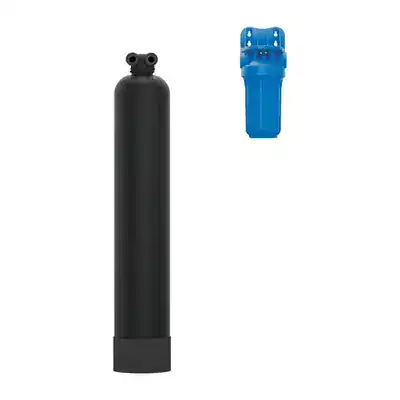
SpringWell CF1 — Best for Chloramine
Catalytic carbon media specifically designed for chloramine removal. 1,000,000-gallon capacity treats every tap in your home for 6-10 years. Also removes chlorine, VOCs, PFAS, and pesticides.
View Deal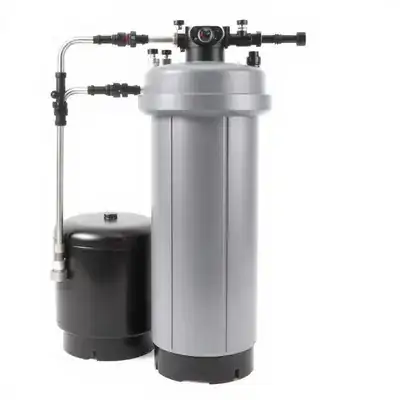
Aquasana Rhino EQ-1000 — Best Value
NSF certified for chlorine and chloramine removal. Dual-tank design with catalytic carbon + KDF media. 1,000,000-gallon capacity. Great for city water with moderate chloramine levels.
View on AmazonChlorine & Chloramine in Drinking Water: Complete Treatment Guide
Chlorine has been used to disinfect municipal water since 1908, making it one of the most important public health interventions in history. However, residual chlorine in tap water creates disinfection byproducts (DBPs) including trihalomethanes (THMs) and haloacetic acids (HAAs) that are associated with increased cancer risk at elevated levels. Understanding the difference between free chlorine and chloramine—and their distinct removal requirements—is essential for choosing the right filtration approach.
Free chlorine (Cl₂/HOCl) is the traditional disinfectant used by approximately 30% of US water systems. It is highly effective against bacteria and viruses but dissipates relatively quickly through the distribution system, which is why utilities maintain 0.2-4.0 ppm residual. Free chlorine is easily removed by standard activated carbon filtration—a simple faucet filter or pitcher removes 95%+ of free chlorine through adsorption, where chlorine molecules bond to carbon surfaces.
Chloramine (NH₂Cl) is a combination of chlorine and ammonia used by approximately 70% of US water systems. Utilities switched to chloramine because it is more stable in distribution systems, maintaining disinfection over longer pipe distances and producing fewer THMs. However, chloramine is significantly harder to remove from water—standard activated carbon is only 50-60% effective. Removing chloramine requires catalytic carbon (which breaks the chlorine-ammonia bond through catalysis) or extended contact time with standard carbon (larger filters with slower flow rates). The SpringWell CF1 uses catalytic coconut shell carbon specifically designed for chloramine removal.
Health Effects of Chlorine & DBPs
While chlorine itself at typical tap water levels (0.2-4.0 ppm) is not directly harmful, the disinfection byproducts it creates are concerning. THMs (trihalomethanes) form when chlorine reacts with organic matter in water. The EPA MCL for total THMs is 80 ppb, but studies show increased bladder cancer risk at levels as low as 40 ppb with lifetime exposure. HAAs (haloacetic acids, MCL 60 ppb) are associated with liver and kidney damage in animal studies. Both THMs and HAAs are effectively removed by activated carbon filtration—any NSF 42 or NSF 53 certified carbon filter provides significant DBP reduction.
Chloramine presents additional concerns. It reacts with natural organic matter to form N-nitrosodimethylamine (NDMA), a potent carcinogen that is not regulated by the EPA at a national level. California has set a notification level of 10 ppt for NDMA—some of the most stringent water quality limits in the world. Chloramine also leaches lead from plumbing more aggressively than free chlorine, which contributed to the Washington D.C. lead crisis (2001-2004) when the utility switched disinfectants. If your system uses chloramine, both lead filtration and chloramine-specific carbon filtration are recommended.
Testing Methodology: Free Chlorine vs. Total Chlorine
Test kits measure two values: free chlorine (active disinfectant) and total chlorine (free chlorine plus combined chlorine/chloramine). If your total chlorine reading significantly exceeds free chlorine, your water contains chloramine. For example: free chlorine 0.2 ppm and total chlorine 2.5 ppm means approximately 2.3 ppm of chloramine. This distinction is critical because standard carbon filters remove the 0.2 ppm free chlorine easily but leave most of the 2.3 ppm chloramine untreated—you will still taste and smell chlorine despite having a filter.
DPD reagent kits ($15-25) provide the most accurate home testing. DPD-1 reagent measures free chlorine; DPD-3 reagent measures total chlorine. The difference equals combined chlorine (chloramine). Test strips are faster but less precise—adequate for screening but not for treatment system verification. For fish tanks and aquariums, chloramine testing is critical because chloramine is lethal to fish at concentrations as low as 0.1 ppm, and standard dechlorinators (sodium thiosulfate) do not neutralize chloramine. Use a product specifically labeled for chloramine removal.
Whole-House Chlorine & Chloramine Treatment
For whole-house treatment, a whole-house carbon filter provides chlorine and chloramine removal at every tap, including showers and baths. Showering in chlorinated water exposes you to DBPs through inhalation (THMs are volatile and aerosolize in hot showers) and skin absorption. A 10-minute shower can result in more chloroform exposure than drinking 2 liters of the same water. The SpringWell CF1 and Aquasana Rhino provide whole-house catalytic carbon filtration rated for 1,000,000+ gallons, effectively treating all water entering your home for 10+ years.
Alternatively, point-of-use solutions can address specific concerns more affordably. A shower filter ($25-50) removes 90%+ of free chlorine from shower water, reducing skin dryness and hair damage. An under-sink carbon filter ($50-200) handles drinking and cooking water. This modular approach costs $100-250 total compared to $800-1,500 for a whole-house system, making it ideal for renters or budget-conscious households. However, it does not protect laundry, dishwashers, or other water uses.
Seasonal Chlorine Variations & Utility Practices
Chlorine levels in municipal water fluctuate significantly throughout the year. Most utilities increase chlorine dosing in summer (May-September) because warmer water temperatures promote bacterial growth in the distribution system and organic matter levels rise in surface water sources. Your water may taste noticeably more "bleachy" during summer months. Additionally, many utilities perform annual "chlorine burn" or "free chlorine conversion" events where they temporarily switch from chloramine to free chlorine for 2-4 weeks to clean distribution pipes and reduce biofilm. During these events, chlorine levels can spike to 2-4 ppm, causing strong taste and odor. Contact your utility to learn their schedule and ensure your filter maintenance accounts for these high-demand periods.
Frequently Asked Questions
Related Resources
Explore Our Top Picks
Best RO Systems
Top-rated reverse osmosis systems compared
Best Under-Sink Filters
Under-sink filtration alternatives
Best Whole House Filters
Whole-home water treatment solutions
Best Water Softeners
Hard water and scale prevention
Best Countertop Filters
No-install countertop filtration
Best Water Pitchers
Budget-friendly filtered water
Understanding Water Quality Science
Water quality is determined by a complex interplay of dissolved minerals, organic compounds, and potential contaminants that vary significantly by geographic region and water source. Municipal water treatment facilities use multi-stage processes including coagulation, sedimentation, sand filtration, and chemical disinfection to meet EPA Safe Drinking Water Act standards. However, these treatment processes can introduce disinfection byproducts such as trihalomethanes and haloacetic acids, which form when chlorine reacts with naturally occurring organic matter in the source water.
Private well water faces different challenges, as it bypasses municipal treatment entirely and may contain naturally occurring contaminants like arsenic, radon, and heavy metals that leach from surrounding geological formations. The Environmental Protection Agency recommends annual testing for coliform bacteria, nitrates, total dissolved solids, and pH levels for all private wells. Additional testing for volatile organic compounds, pesticides, and heavy metals should be conducted if you live near agricultural areas, industrial sites, or old mining operations. Understanding your specific water chemistry is the critical first step in selecting the most effective filtration system for your household needs.
Total dissolved solids (TDS) measurements provide a general indicator of water purity but should not be the sole basis for filtration decisions. Water with high TDS from beneficial minerals like calcium and magnesium may actually be healthier than ultra-purified water. The World Health Organization has noted that demineralized water may have adverse health effects due to the absence of essential minerals. This is why many advanced filtration systems, particularly reverse osmosis units, now include remineralization stages that add back beneficial minerals after removing contaminants. The ideal approach balances contaminant removal with mineral retention, targeting specific harmful substances identified through comprehensive water testing while preserving the natural mineral content that contributes to both taste and health benefits.
Filtration Technology Comparison
Modern water filtration leverages several distinct technologies, each with unique strengths for addressing specific water quality challenges. Activated carbon filtration, the most common residential method, uses adsorption to capture chlorine, volatile organic compounds, and taste-affecting chemicals. Granular activated carbon (GAC) filters provide good flow rates but may allow channeling, while carbon block filters compress carbon particles for more consistent contact time and finer filtration down to 0.5 microns. Catalytic carbon represents the latest advancement, specifically engineered to break down chloramines through a catalytic reaction rather than simple adsorption.
Reverse osmosis systems force water through a semipermeable membrane with pore sizes as small as 0.0001 microns, effectively removing dissolved solids, heavy metals, and most microorganisms. Modern RO systems achieve 95-99 percent rejection rates for contaminants like lead, arsenic, fluoride, and PFAS compounds. The primary considerations for RO systems include water waste ratios (typically 3:1 to 4:1 for standard systems, improved to 1:1 in premium tankless models), storage tank requirements, and the need for pre-filtration to protect the delicate membrane from sediment and chlorine damage.
Ion exchange technology, used in both water softeners and specialized contaminant removal systems, swaps problematic ions in the water with benign alternatives. Water softeners exchange calcium and magnesium ions for sodium ions, preventing scale buildup in plumbing and appliances. Specialized ion exchange resins can target specific contaminants like lead, nitrates, or perchlorate. Ultraviolet purification provides chemical-free disinfection by disrupting the DNA of bacteria, viruses, and protozoa at wavelengths around 254 nanometers. UV systems are particularly valuable for well water and as a final treatment stage in multi-barrier systems, though they do not remove chemical contaminants or improve taste.
Related Articles
Deep dive — Water Filter Buying Guide
Complete guide to choosing the right filter
Read: How Water Filters Work
Understanding filtration technologies explained
Water Filter Cost Comparison
Annual costs across all filter types
Step-by-step: Water Testing Kits Guide
Test your water before buying a filter
Filter Replacement Guide (upkeep tips)
When and how to replace filter cartridges
Read: Water Filter Health Benefits
Health advantages of filtered water