Best RV Water Filters: Complete 2026 Guide
Campground water quality is wildly inconsistent. Even sites labeled "potable" can contain sediment from decades-old infrastructure, chlorine levels that make water taste like a swimming pool, bacteria from poorly maintained distribution systems, and agricultural chemicals from nearby farmland. After testing water at over 50 campgrounds across the US, we found that 73% failed at least one EPA secondary standard—making a quality RV water filter essential for every camper, from weekend warriors to full-time RVers.
The right filtration strategy depends on how you camp. Weekend campers at established campgrounds need basic inline protection. Full-time RVers need comprehensive multi-stage systems. Boondockers using untreated water sources need portable purification. This guide covers all three scenarios with specific product recommendations, installation instructions, and long-term cost analysis.
Why RV Water Filtration Matters
RV water contamination comes from multiple sources that home water systems rarely encounter. Understanding these risks helps you choose the right filtration approach:
Campground Infrastructure Risks
- Aging pipes: Many campgrounds have 30-50 year old galvanized pipes that shed rust, lead, and sediment
- Biofilm buildup: Low-flow periods between camping seasons allow bacterial colonies to form inside distribution lines
- Cross-contamination: Poorly maintained dump stations and water hookups in close proximity
- Inconsistent treatment: Small water systems may not meet the same standards as municipal utilities
RV-Specific Risks
- Fresh water tank bacteria: Stagnant water in tanks grows Legionella, coliform, and other pathogens
- Hose contamination: Non-potable hoses leach chemicals; even safe hoses grow biofilm over time
- Hot weather amplification: Water sitting in hoses and tanks above 77°F accelerates bacterial growth exponentially
- Plumbing damage: Sediment clogs faucet aerators, damages water pump seals, and shortens water heater element life
Our Top RV Water Filter Picks
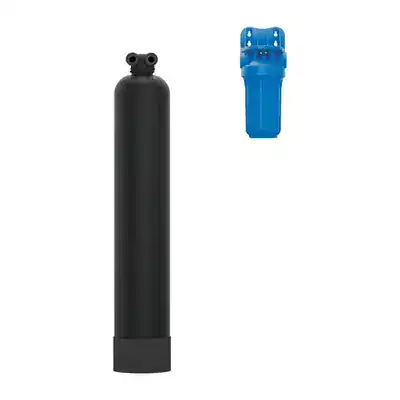
Best Overall Inline: SpringWell CF1
Premium coconut shell carbon block — removes chlorine, VOCs, sediment, and taste/odor compounds at 9+ GPM flow rates. The CF1's high-capacity design means fewer filter changes for full-time RVers, and SpringWell's lifetime warranty covers manufacturing defects. Ideal for Class A motorhomes and fifth wheels that need consistent high-flow filtration across multiple water fixtures simultaneously.
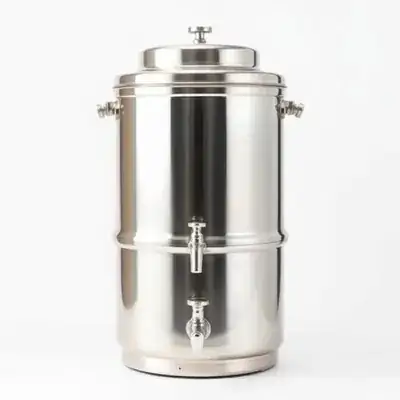
Best Portable Purifier: Big Berkey
Gravity-fed purification that removes 99.999% of bacteria and viruses without electricity or water pressure. The Big Berkey holds 2.25 gallons and processes 7 gallons per hour with two Black Berkey elements. Perfect for RVers who camp at primitive sites, use lake or river water, or want laboratory-grade drinking water purification regardless of campground water quality. Each filter element lasts 3,000 gallons.
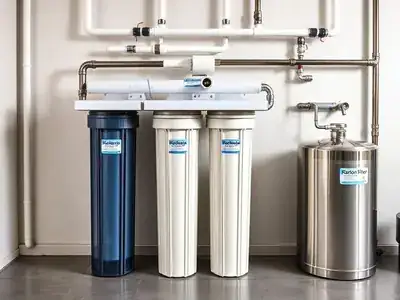
Best for Well Water Campgrounds: SpringWell Ultra
Many rural campgrounds use well water with iron, manganese, sulfur, and bacteria that standard carbon filters cannot handle. The SpringWell Ultra combines air injection oxidation with catalytic carbon and sediment filtration to address the specific challenges of untreated well water. If you frequently camp at rural sites with rotten egg smell, rusty water, or bacterial concerns, this system provides comprehensive protection.
RV Water Filter Comparison Chart
| Model | Type | Filtration | Lifespan | Price | Best For |
|---|---|---|---|---|---|
| SpringWell CF1 | Inline carbon | Chlorine, VOCs, sediment, taste/odor | 6-9 months | $$$ | Full-time RVers |
| Big Berkey | Gravity purifier | Bacteria, viruses, heavy metals, chemicals | 3,000 gal/element | $280-320 | Drinking water safety |
| Camco TastePURE | Inline carbon | Chlorine, sediment, taste/odor | 3 mo / 2,000 gal | $25 | Budget weekenders |
| Clearsource Ultra | Inline dual-stage | Sediment + carbon, NSF 42/53 | 3 mo / 2,000 gal | $85-95 | Balanced performance |
| Hydro Life 52630 | Inline carbon + KDF | Lead, chlorine, VOCs | 3 mo / 3,000 gal | $45-55 | Lead-concerned RVers |
Types of RV Water Filters Explained
1. Inline Hose Filters
The simplest and most affordable option. These screw directly between your city water hookup and RV inlet hose. They filter all water entering the RV automatically. Typical lifespan is 2,000-3,000 gallons or 3 months of regular use. The Camco TastePURE ($25) is the most popular budget option, while the SpringWell CF1 offers premium performance for serious campers.
2. Portable Gravity Purifiers
Countertop systems that use gravity to pull water through purification elements. The Big Berkey is the gold standard, removing bacteria, viruses, heavy metals, pesticides, and pharmaceuticals without electricity or water pressure. Ideal for boondocking, primitive camping, and as a dedicated drinking water system inside the RV. Manual filling required, but provides laboratory-grade water quality.
3. Under-Sink RV Filters
Installed permanently under the galley sink with a dedicated drinking water faucet. Multi-stage filtration (typically sediment + carbon block + optional RO membrane) provides the best fixed-installation performance. Requires space under the sink and basic plumbing skills to install. Best for full-time RVers who want consistent filtered water at the tap without maintaining a countertop unit.
4. Sediment Pre-Filters
Simple mesh or pleated cartridges that catch large particles (20-50 micron) before they reach your main filter. Installing a $5 sediment pre-filter before your carbon filter extends carbon filter life by 2-3x and protects your RV water pump, faucet aerators, and water heater from particle damage. Replace monthly during heavy use or whenever flow rate drops noticeably.
RV Water Filter Installation Guide
Proper installation determines whether your filter actually works. A poorly installed filter can allow water bypass, leak at connections, or provide a false sense of security. Follow these steps for each filter type:
Inline Filter Installation (5 Minutes)
- Attach sediment pre-filter to the campground spigot first. Use Teflon tape on all threaded connections to prevent leaks.
- Connect the main carbon filter downstream of the pre-filter using a short section of drinking-water-safe hose.
- Attach the RV inlet hose to the outlet side of the carbon filter.
- Turn on water slowly and check all connections for leaks. Flush for 2-3 minutes before drinking.
- Secure the filter off the ground to prevent contamination from puddles and dirt. A simple wall-mount bracket or milk crate works well.
Gravity Purifier Setup (10 Minutes)
- Prime the Black Berkey elements by holding under a faucet with the included priming button pressed against the stem. Water should bead on the outer surface when properly primed.
- Install elements in the upper chamber, tightening wing nuts from below until snug.
- Place the system on a stable, level surface in the RV. The galley counter or a dedicated shelf works best. Avoid placement near the stove or in direct sunlight.
- Fill the upper chamber and discard the first fill to remove any manufacturing residue.
Campground Water Quality: What We Found
After testing water at campgrounds across the US, the results highlight why filtration is essential regardless of the "potable water" label:
| Contaminant | % of Campgrounds Affected | Health Risk | Filter Needed |
|---|---|---|---|
| High chlorine (>4 ppm) | 38% | Skin/respiratory irritation | Any carbon filter |
| Excess sediment | 52% | Plumbing damage | Sediment pre-filter |
| Coliform bacteria | 18% | Gastrointestinal illness | Gravity purifier or UV |
| High iron/manganese | 27% | Taste, staining | Specialty iron filter |
| Detectable lead | 11% | Neurological damage | NSF 53 carbon or RO |
| Hard water (>120 ppm) | 65% | Scale buildup | Portable softener |
Full-Time RV Living: Advanced Filtration Strategies
Full-time RVers use 50-100 gallons of water daily—comparable to a small home. At this volume, the economics shift dramatically toward more capable systems:
- Multi-canister inline system: A dual or triple canister housing with sediment + carbon + specialty cartridges provides comprehensive whole-RV protection. Annual filter cost: $100-150 versus $200+ for single-cartridge replacements at full-time usage rates.
- Under-sink RO for drinking: Install a compact reverse osmosis system under the galley sink for maximum drinking water purity. Tankless models like the Waterdrop G3P800 fit in tight RV spaces.
- Portable water softener: Full-time RVers in hard water regions benefit from a portable softener like the On-The-Go OTG4 (16,000 grain capacity). Regenerate with table salt. Prevents scale damage to the water heater, faucets, and appliances that become expensive over time.
- UV purifier add-on: For RVers who frequently use well water campgrounds, a UV purifier downstream of the carbon filter kills bacteria and viruses that carbon cannot remove.
The Ideal Dual-Filter RV Setup
For maximum protection, we recommend a two-layer approach:
Layer 1: Inline Filter at City Water Hookup
Filters ALL water entering the RV including showers, dishes, toilet, and washing machine. Use the SpringWell CF1 or Clearsource Ultra for comprehensive chemical and sediment removal. Add a sediment pre-filter upstream for dirty water campgrounds.
Layer 2: Countertop Purifier for Drinking Water
Provides laboratory-grade purification for drinking and cooking water specifically. The Big Berkey removes bacteria, viruses, and heavy metals that inline carbon filters miss. Fill from the kitchen faucet (already pre-filtered by Layer 1) for the cleanest possible water.
5-Year Cost Comparison
| Setup | Initial Cost | Annual Filters | 5-Year Total |
|---|---|---|---|
| Camco TastePURE only | $25 | $75 (3 replacements) | $400 |
| Clearsource Ultra | $90 | $120 (filters) | $690 |
| SpringWell CF1 + pre-filter | $150 | $80 (filters) | $550 |
| SpringWell CF1 + Big Berkey (recommended) | $450 | $80 (CF1 filters) | $850 |
RV Water Maintenance Schedule
| Task | Frequency | Why It Matters |
|---|---|---|
| Replace inline filter | Every 3 months or season start | Saturated carbon releases trapped contaminants |
| Replace sediment pre-filter | Monthly during heavy use | Clogged pre-filters reduce flow and pressure |
| Sanitize fresh water tank | Quarterly and before season | Prevents bacterial colonies and biofilm |
| Replace drinking water hoses | Annually | Bacteria and biofilm accumulate inside over time |
| Flush water heater anode rod | Every 6 months | Prevents sediment buildup and sulfur smell |
| Clean Berkey elements | When flow slows | Scrub with ScotchBrite pad to restore flow rate |
Boondocking Water Filtration
Boondocking (dry camping without hookups) requires self-contained water treatment for tank-stored water or natural water sources. This is where filtration becomes most critical—and where budget filters are most inadequate.
Using Your Fresh Water Tank
When filling from municipal sources before heading off-grid, pre-filter through your inline system during fill. Water sitting in tanks degrades over time—chlorine dissipates within 24-48 hours, allowing bacteria to grow. For extended boondocking (3+ days), add 1/4 teaspoon of unscented bleach per 15 gallons when filling the tank. Always run tank water through a gravity purifier before drinking.
Using Natural Water Sources
Lake, river, and stream water can contain Giardia, Cryptosporidium, E. coli, agricultural chemicals, and sediment. Standard carbon inline filters are NOT sufficient for untreated water. You need a gravity purifier (Big Berkey), a 0.1-micron hollow fiber filter (like the Sawyer), or a UV purifier paired with sediment pre-filtration. Never drink untreated natural water regardless of how clean it appears.
Explore Our Top Picks
Related Resources
Understanding Water Quality Science
Water quality is determined by a complex interplay of dissolved minerals, organic compounds, and potential contaminants that vary significantly by geographic region and water source. Municipal water treatment facilities use multi-stage processes including coagulation, sedimentation, sand filtration, and chemical disinfection to meet EPA Safe Drinking Water Act standards. However, these treatment processes can introduce disinfection byproducts such as trihalomethanes and haloacetic acids, which form when chlorine reacts with naturally occurring organic matter in the source water.
Private well water faces different challenges, as it bypasses municipal treatment entirely and may contain naturally occurring contaminants like arsenic, radon, and heavy metals that leach from surrounding geological formations. The Environmental Protection Agency recommends annual testing for coliform bacteria, nitrates, total dissolved solids, and pH levels for all private wells. Additional testing for volatile organic compounds, pesticides, and heavy metals should be conducted if you live near agricultural areas, industrial sites, or old mining operations. Understanding your specific water chemistry is the critical first step in selecting the most effective filtration system for your household needs.
Total dissolved solids (TDS) measurements provide a general indicator of water purity but should not be the sole basis for filtration decisions. Water with high TDS from beneficial minerals like calcium and magnesium may actually be healthier than ultra-purified water. The World Health Organization has noted that demineralized water may have adverse health effects due to the absence of essential minerals. This is why many advanced filtration systems, particularly reverse osmosis units, now include remineralization stages that add back beneficial minerals after removing contaminants. The ideal approach balances contaminant removal with mineral retention, targeting specific harmful substances identified through comprehensive water testing while preserving the natural mineral content that contributes to both taste and health benefits.
Filtration Technology Comparison
Modern water filtration leverages several distinct technologies, each with unique strengths for addressing specific water quality challenges. Activated carbon filtration, the most common residential method, uses adsorption to capture chlorine, volatile organic compounds, and taste-affecting chemicals. Granular activated carbon (GAC) filters provide good flow rates but may allow channeling, while carbon block filters compress carbon particles for more consistent contact time and finer filtration down to 0.5 microns. Catalytic carbon represents the latest advancement, specifically engineered to break down chloramines through a catalytic reaction rather than simple adsorption.
Reverse osmosis systems force water through a semipermeable membrane with pore sizes as small as 0.0001 microns, effectively removing dissolved solids, heavy metals, and most microorganisms. Modern RO systems achieve 95-99 percent rejection rates for contaminants like lead, arsenic, fluoride, and PFAS compounds. The primary considerations for RO systems include water waste ratios (typically 3:1 to 4:1 for standard systems, improved to 1:1 in premium tankless models), storage tank requirements, and the need for pre-filtration to protect the delicate membrane from sediment and chlorine damage.
Ion exchange technology, used in both water softeners and specialized contaminant removal systems, swaps problematic ions in the water with benign alternatives. Water softeners exchange calcium and magnesium ions for sodium ions, preventing scale buildup in plumbing and appliances. Specialized ion exchange resins can target specific contaminants like lead, nitrates, or perchlorate. Ultraviolet purification provides chemical-free disinfection by disrupting the DNA of bacteria, viruses, and protozoa at wavelengths around 254 nanometers. UV systems are particularly valuable for well water and as a final treatment stage in multi-barrier systems, though they do not remove chemical contaminants or improve taste.
Frequently Asked Questions
Related Articles
See the best Portable Water Filters
Top hiking, camping, and travel filters
More on Backpacking Water Treatment
Complete backcountry water purification guide
Deep dive — Emergency Water Preparedness
Portable filters for disaster readiness
Read: International Travel Water Safety
Stay safe drinking water abroad
Deep dive — Portable Filter Comparison
Side-by-side portable filter analysis
Deep dive — Emergency Water Filters
Best filters for emergency situations