Salt vs Saltless Water Softeners
Salt softeners remove hardness; salt-free conditioners only change how it forms scale. Here is how they differ on results, upkeep and cost, and which one suits your home and water.
Test your hardness before you choose
The right system depends on how hard your water is and what you want it to fix.
- Measure hardness in grains per gallon, plus iron, manganese and pH if you are on a well.
- Decide whether you want soft water (skin, laundry, spot-free glass) or mainly less scale in pipes and heaters.
- Check local rules on brine discharge and the space you have near the main water line.
Quick answer
Choose a salt-based softener if you want truly soft water: better lather, softer-feeling laundry and fewer spots on glass and showers. Choose a salt-free conditioner if your main goal is less scale in pipes and your water heater, you want no salt, brine or drain line, and your water is within the conditioner's stated limits.
How each one works
Salt-based softener
Water flows through a tank of resin beads that hold sodium (or potassium) ions. Calcium and magnesium, the minerals that make water hard, stick to the beads and the sodium is released in their place. When the resin is full, the softener regenerates: it rinses the beads with brine from the salt tank and sends the hardness minerals down the drain.
Salt-free conditioner
Most conditioners use template-assisted crystallization (TAC). As water passes over the media, dissolved calcium and magnesium form tiny crystals that stay suspended and are far less likely to stick to pipes and heating elements. Nothing is removed, so there is no brine, no regeneration and usually no drain or power needed.
Side by side
| Question | Salt-based softener | Salt-free conditioner |
|---|---|---|
| Removes hardness? | Yes | No, changes how it forms scale |
| Reduces scale? | Yes, across a wide range of hardness | Yes, within the maker's limits |
| Soap lather and laundry | Noticeably better | Little or no change |
| Spots on glass and showers | Fewer | Can still appear as water dries |
| Salt or potassium refills | Yes | No |
| Drain line and power | Needed for regeneration | Usually not needed |
| Adds sodium | A small amount (none with potassium) | No |
| Sensitive to iron and manganese | Handles low levels; more needs a prefilter | Yes; usually needs very low levels |
What you will notice at home
With a salt softener, the change is easy to feel. Soap and shampoo lather with less product, towels and clothes come out softer, and kettles, shower glass and dishwasher loads show far less white residue. A hardness test strip from the tap will read near zero.
With a conditioner, most of the benefit happens out of sight: less scale inside the water heater, pipes, faucet aerators and appliances. Water still feels and tests hard, and spots can still form where water evaporates on glass or tile, though they usually wipe away more easily. If you bought a conditioner expecting soft-water lather, you will likely be disappointed.
Costs and upkeep
- Salt softener: top up salt or potassium every few weeks or months, depending on your hardness and water use. Check for salt bridges, clean the brine tank occasionally and expect to replace the resin after many years. Metered (demand) regeneration uses less salt and water than timer models.
- Salt-free conditioner: no refills or regeneration. Replace the media on the maker's schedule, often every few years, and change any sediment or carbon prefilters it uses. Its media can be damaged by iron, manganese, sulfur or chlorine levels above its limits.
- Installation: both go on the main line, usually after any whole-house filter. A salt softener also needs a drain and an outlet; a conditioner usually needs neither. If you are not comfortable cutting into your main line, budget for a plumber.
Which one should you choose?
Choose a salt-based softener if
- Your water is very hard
- You want softer skin, hair and laundry
- You want fewer spots on glass and showers
- Your well has some iron or manganese within the softener's limits
Choose a salt-free conditioner if
- Your main goal is less scale in pipes and appliances
- You want no salt, brine or regeneration
- Local rules restrict brine discharge
- Your water is within the conditioner's hardness, iron and pH limits
Not sure if hardness is your real problem? Read how water softeners work and our hard water guide first.
Systems to compare
One of each type, matched to the two goals above. Open each deal for the current price and check the sizing for your household.
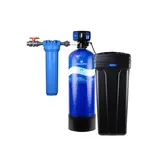
Aquasana SimplySoft 60,000 Grain Softener with LM Pre-Filter
Aquasana SimplySoft 60,000 Grain Softener with LM Pre-Filter
A salt-based softener for homes that want truly soft water. It removes calcium and magnesium by ion exchange and includes a prefilter. It needs a drain, an outlet and regular salt refills, so check the grain capacity against your hardness and household size.
Compare sizing, treatment options and ongoing costs in our best water softeners and conditioners guide.
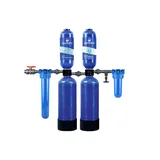
Aquasana Rhino Whole House Salt-Free Water Conditioner
Aquasana Rhino Whole House Salt-Free Water Conditioner
A whole-house filter paired with a salt-free conditioner for city-water homes that mainly want less scale and no salt. It does not remove hardness, so water will still test hard; confirm your hardness and any iron are within Aquasana's stated limits.
Compare sizing, treatment options and ongoing costs in our best water softeners and conditioners guide.
Bottom line
A salt-based softener is the only one that delivers soft water, and it is the better choice for very hard water or if you care about lather, laundry and spot-free glass. A salt-free conditioner is simpler to live with and can protect pipes and appliances from scale, but only within its limits and without the soft-water feel. Test your water, decide which result you want, and size the system to your home.
Related guides
Frequently Asked Questions
Related Reviews & Guides
See the best Lead Removal Filters
NSF-certified filters proven to remove lead
See the best PFAS Removal Filters
Filters certified to remove forever chemicals
Our picks for Budget Water Filters
Affordable filters under $50 that actually work
Our picks for Emergency Water Filters
Reliable filters for disaster preparedness
Buying guide: Hard Water Filters
Top filters for calcium and magnesium removal
Read: Sulfur Smell Removal Guide
Eliminate rotten egg smell from your water