Well Water Flow Rate Guide
How to measure your well's flow rate, compare it with what your household uses at busy times, and size treatment equipment so it never leaves you short of water pressure.
Measure available flow before sizing a filter
Use sustainable well yield and peak household demand together. A larger filter cannot make the well produce more water.
- Measure flow using the method below rather than assuming the pump’s rating.
- Compare sustainable supply with the demand when several fixtures run together.
- Check treatment flow and any backwashing requirements before shortlisting a system.
Quick answer: measure supply and demand separately
A bucket test estimates delivery at one tap, not how much the well can sustainably produce. Compare a professional yield test with the demand when several fixtures run together, then check each treatment system's service flow, pressure loss and backwash needs. A larger filter cannot make the well produce more water.
Understanding Well Flow Rate
Flow rate, measured in gallons per minute (GPM), indicates how much water your well can sustainably deliver. Unlike municipal water, private well water systems are limited by well capacity, aquifer recharge rate, and pump performance.
A well's flow rate isn't constant—it depends on how much water you're drawing and how fast the aquifer refills the well. Wells have two key measurements: yield (maximum GPM when pumping starts) and sustainable flow rate (GPM the well can maintain continuously without running dry). Sustainable flow rate is what matters for household planning and whole house filter system sizing.
Excellent Flow
10+ GPM
Supports large homes, irrigation, and unlimited simultaneous fixture use
Good Flow
5-10 GPM
Adequate for most homes with proper pressure tank sizing
Limited Flow
3-5 GPM
Requires careful water management and large pressure tank
Calculating Household Water Demand
To determine if your well's flow rate meets household needs, calculate peak demand—maximum water usage when multiple fixtures run simultaneously.
Standard Fixture Flow Rates
- Shower: 2.0-2.5 GPM (older showerheads up to 5 GPM)
- Toilet flush: 3-5 GPM for 30 seconds (0.5-0.8 GPM average)
- Kitchen faucet: 1.5-2.5 GPM
- Bathroom sink: 1.0-1.5 GPM
- Washing machine: 3-4 GPM during fill cycle
- Dishwasher: 1.5-2.5 GPM during fill
- Outdoor spigot: 5-10 GPM (depends on hose size and pressure)
- Lawn irrigation: 3-5 GPM per zone
Peak Demand Calculation Examples
Scenario 1 - Morning Rush: Two showers (2.5 GPM each), one toilet flush (0.8 GPM average), washing machine filling (4 GPM), kitchen faucet (2 GPM) = 12.8 GPM peak demand. Well producing 10 GPM would struggle; pressure tank buffers short-term demand but well can't sustain this rate continuously.
Scenario 2 - Modest Use: One shower (2.5 GPM), bathroom sink (1.5 GPM), dishwasher (2 GPM) = 6 GPM peak. Well producing 5-6 GPM handles this comfortably with adequate pressure tank storage.
Scenario 3 - Weekend Irrigation: Lawn sprinkler (8 GPM), garden hose (5 GPM) = 13 GPM. If well only produces 6 GPM, must irrigate zones separately or reduce irrigation flow rate. Many low-yield wells can't support irrigation and household use simultaneously.
Rule of Thumb Sizing
For typical household needs, minimum flow rates by home size:
- 1-2 bedrooms, 1 bath: 4-6 GPM minimum
- 3 bedrooms, 2 baths: 6-8 GPM minimum
- 4 bedrooms, 2-3 baths: 8-10 GPM minimum
- Large home (4+ bed, 3+ bath): 10-15 GPM minimum
- Add 3-5 GPM if irrigating lawn/garden regularly
These minimums assume proper pressure tank sizing and managed water use. Lower flow rates workable with larger pressure tanks and household cooperation avoiding simultaneous heavy water use.
How to Test Your Well's Flow Rate
Professional Well Flow Test
Professional well drillers or pump contractors conduct comprehensive flow tests measuring yield, sustainable flow rate, and drawdown (water level drop during pumping). Test involves pumping well at maximum rate, monitoring water level recovery, calculating sustainable GPM.
Test procedure: Measure static water level before pumping. Pump at maximum rate, recording flow rate and water level every 5 minutes. Continue until water level stabilizes (drawdown equals recharge) or well goes dry. Calculate sustainable flow rate at which well maintains water level during continuous pumping.
When to get one: Ask local well contractors for current pricing. A professional test is especially useful when buying property with well, installing irrigation system, or experiencing water shortage issues. Provides accurate data for filter system sizing and pump selection.
DIY Flow Rate Estimation
For quick estimation without professional testing, time a known volume at an accessible outdoor tap without bypassing or modifying the pressure system. Record the pressure and how often the pump cycles:
- Get 5-gallon bucket and stopwatch
- Open outdoor spigot fully
- Time how long to fill bucket to exactly 5 gallons
- Calculate GPM: 5 gallons ÷ fill time (seconds) × 60 = GPM
Example: Bucket fills in 50 seconds. 5 ÷ 50 × 60 = 6 GPM. This estimates flow rate but doesn't account for pressure tank effects or sustainable well capacity. Professional testing more accurate for critical decisions.
Understanding Drawdown and Recovery
Drawdown is water level drop in well during pumping. Shallow wells or wells in low-permeability rock experience more drawdown. Recovery rate is how fast water level returns after pumping stops. Fast recovery indicates productive aquifer; slow recovery suggests limited well capacity.
Well producing 10 GPM initially but water level drops rapidly and pump shuts off has high yield but low sustainable flow. Well producing steady 6 GPM with minimal drawdown has moderate yield but excellent sustainability. Sustainable flow rate matters more than peak yield for household reliability.
Pressure Tank Sizing for Low-Yield Wells
Pressure tanks store water and buffer differences between well capacity and household demand. Larger tanks help low-yield wells meet peak demand without running dry.
How Pressure Tanks Work
Pressure tank contains air chamber and water chamber separated by bladder or diaphragm. Pump fills tank until reaching cut-off pressure (typically 40-60 PSI). When you open faucet, compressed air pushes water out. Pressure drops until reaching cut-in pressure (typically 20-40 PSI), pump restarts to refill tank.
Usable capacity is water delivered between cut-in and cut-out pressure—typically 30-40% of tank size. A 60-gallon tank provides 20-25 gallons usable water before pump restarts. This buffer prevents pump cycling and covers short-term demand exceeding well capacity.
How to Size a Pressure Tank
Size a pressure tank from the pump's delivery rate, the pump manufacturer's minimum run time, your pressure-switch settings and the tank manufacturer's drawdown data. Nominal tank volume is not usable storage. Low-yield wells may need separately designed storage and controls, such as a cistern with a booster pump—ask a licensed pump installer to size these.
Pump Cycle Management
Follow the pump manufacturer's guidance on cycling. Undersized pressure tank causes excessive cycling. If pump runs constantly or cycles every few minutes, either tank too small or well can't keep up with demand. Solution: larger tank, reduced demand, or well improvement (deepening, hydrofracturing).
Sizing Water Filtration Systems for Well Flow Rates
Filter systems must accommodate your well's flow rate without restricting water delivery. Undersized filters can cause pressure loss and reduce flow at taps.
Whole House Filter Sizing
Sediment filters: Choose a service flow rating at or above your peak household demand. Larger filter housings (4.5" × 20" vs 2.5" × 10") handle higher flow rates with less pressure drop.
Iron/sulfur filters: These must match well flow rate. Air injection iron filters rated for specific GPM—undersizing allows untreated water to bypass. Sizing based on actual well capacity, not household fixture demand.
Carbon filters: Whole-house carbon tanks sized by flow rate and contact time. Faster flow requires larger carbon bed to maintain effectiveness. Check the manufacturer's service flow rating against your peak demand.
UV Sterilizer Sizing Critical for Bacteria Protection
UV systems for bacteria MUST be sized correctly—undersized UV allows bacteria through untreated. UV capacity in GPM must equal or exceed maximum flow rate.
Sizing method: Estimate peak demand from fixtures that could run at the same time, then choose a UV system rated for at least that flow at your water quality. Pretreatment may be needed so the water meets the UV maker's inlet limits.
Installation consideration: Install UV after pressure tank where flow rate more consistent. Follow the manufacturer's installation instructions.
Reverse Osmosis Systems
RO systems for drinking water require minimum input pressure (40-60 PSI) and flow rate (0.5-1 GPM) to operate effectively. Even low-yield wells provide adequate flow for point-of-use RO. Pressure tank maintains necessary pressure.
Whole-house RO systems demand higher flow (5-10 GPM) and pressure. Only viable for wells with excellent flow rates (10+ GPM sustained). Most well water situations use point-of-use RO for drinking water, whole-house systems for iron/sulfur/bacteria removal.
Recommended Well Water Systems
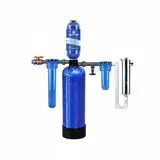
Aquasana Rhino Well Water with UV
Aquasana Rhino Well Water with UV
Consider filtration with UV only where water testing supports it. Confirm the peak-flow rating, inlet-water limits, pretreatment and maintenance needs; it cannot increase how much water the well produces.
Compare sizing, treatment options and ongoing costs in our best well water filters guide.
Match dedicated treatment to your water test and available flow; general filtration, softening and RO are not interchangeable. Compare well-water treatment options.
Compare sizing, treatment options and ongoing costs in our best well water filters guide.
Improving Low Well Flow Rates
Well Deepening
Drilling deeper may access more productive water-bearing zones. Consult local well driller about geology—some areas have better aquifers at greater depths. Deepening costs $15-30 per foot depending on rock hardness and well diameter.
Success factors: Geological surveys or nearby well data suggesting deeper aquifers. Current well not reaching main water-bearing zone. Budget $2,000-5,000 for typical deepening project. Not guaranteed to improve flow—depends entirely on local geology.
Hydrofracturing
Injecting water at extremely high pressure into bedrock wells fractures rock, creating new pathways for water flow. Effective in fractured bedrock aquifers (granite, shale). Success rate 60-80% for increasing flow 1-5 GPM.
Process: Seal off well section, pump water at 1,000-3,000 PSI, fracture rock formation, test flow improvement. Cost $1,500-3,500. Works best in low-permeability bedrock; ineffective in sand/gravel aquifers. Professional hydrofracturing companies provide flow improvement guarantees.
Well Cleaning and Rehabilitation
Over time, wells accumulate sediment, mineral deposits (iron and manganese especially), and bacterial slime reducing flow. Professional well cleaning uses acids, brushes, and high-pressure jetting to restore flow.
Indicators needing cleaning: Declining flow rate over months/years. Red or black staining suggesting iron bacteria. Sediment in water after years of clear water. Cost $500-1,500 for comprehensive cleaning. Can restore 20-50% lost flow capacity.
Supplemental Water Storage
For wells unable to meet demand through improvement, cistern storage systems collect well water slowly (overnight, during low-use periods) and provide reserve during peak demand. Cistern sizes 500-3,000 gallons depending on shortfall between well capacity and household needs.
Cost: Cistern installation $2,000-8,000 depending on size and complexity. Requires separate pump system delivering water from cistern to house. Effective for low-yield wells (2-4 GPM) serving households needing 8-10 GPM peak capacity.
New Well Installation
If existing well fundamentally inadequate and improvement methods unsuccessful, drilling new well may be necessary. Cost $5,000-15,000 depending on depth and geology. Some areas have better water at different locations on property—geological survey guides new well placement.
Before new well, exhaust other options (deepening, hydrofracturing, demand reduction, supplemental storage). New wells no guarantee of better flow—entirely dependent on local aquifer characteristics.
Water Conservation for Low-Yield Wells
When well improvement impractical or too expensive, reducing household water demand makes limited flow workable.
High-Efficiency Fixtures
Low-flow showerheads (1.5-2.0 GPM): Reduce shower water use 25-50% vs standard 2.5 GPM heads. Modern designs maintain pressure sensation while using less water. Cost $15-80, instant flow reduction.
WaterSense faucets (1.2-1.5 GPM): Aerators reduce flow while maintaining washing effectiveness. Retrofit existing faucets for $5-15 per aerator. Kitchen faucets with pause feature during vegetable washing further reduce waste.
High-efficiency toilets: Older toilets use 3-7 gallons per flush. Modern dual-flush toilets use 0.8-1.6 gallons. Toilet upgrades save 20-60 gallons daily for family of four. Cost $150-500 per toilet installed.
Behavioral Water Management
Stagger water use: Avoid running dishwasher during morning showers. Schedule laundry when no one showering or irrigating. Coordinate family bathroom schedules to prevent simultaneous heavy use.
Shorter showers: Reducing shower time from 10 to 5 minutes saves 12-25 gallons per shower. With limited well, 5-minute shower rule prevents well depletion during morning rush.
Fix leaks immediately: Running toilet wastes 1-3 GPM continuously. Dripping faucet wastes 5-10 gallons daily. With low-yield well, these "small" leaks quickly deplete available water. Address all leaks immediately.
Irrigation management: Water lawn early morning or evening when household water use minimal. Use drip irrigation (0.5-1 GPM) instead of sprinklers (5-10 GPM). Collect rainwater for garden watering reducing well demand.
Troubleshooting Flow Rate Problems
Sudden Flow Rate Decrease
Clogged filters or screens: Check sediment filters, well screen, and pump intake for blockages. Replace filters, clean screens. Most common cause of sudden flow loss.
Failing pump: Pumps wear out after 10-15 years. Reduced flow with pump running continuously suggests pump not generating adequate pressure. Test pump output; replace if failing.
Air in system: Air entering through cracked pipes or failed well seal causes sputtering, reduced flow. Inspect plumbing for air leaks, check well seal integrity.
Gradual Flow Rate Decline
Declining water table: Drought, increased demand from nearby wells, or aquifer depletion gradually reduces well yield. May need well deepening or demand reduction.
Well screen fouling: Iron bacteria, mineral deposits, or sediment accumulation on well screen restricts water entry. Professional well cleaning restores flow.
Pump efficiency loss: Pumps gradually lose efficiency as components wear. May pump but not achieve full rated capacity. Measure actual pump output; replace if significantly below specifications.
Seasonal Flow Variations
Normal pattern: Wells often produce more in spring (water table high from winter precipitation/snowmelt) and less in late summer/fall (water table lower after dry season).
Managing variations: Larger pressure tank buffers seasonal differences. Reduce discretionary use (lawn irrigation) during low-flow months. If well consistently inadequate in dry season, consider deepening or supplemental storage.
Explore Our Top Picks
Related Resources
Frequently Asked Questions
Related Articles
SpringWell WS4 versus Aquasana Rhino Well Pro — which wins
Large home well water comparison
Aquasana Rhino Pro Grade: full review and verdict
UV + carbon + softener combo for borderline wells
Top-rated Well Water Filters
Complete well water filtration buyer's guide
See the best Well Water Whole House Systems
Multi stage whole house treatment for wells
Read: Well Water Bacteria Treatment
UV, chlorination, and disinfection methods
Well Water Rust Removal
Iron and manganese treatment solutions