Water Odor Problems: Complete Diagnosis & Fix Guide
Identify the cause of smelly water and learn the right treatment for rotten egg, chlorine, musty, and other water odor issues.
Quick Odor Diagnosis
Click your water smell to jump to diagnosis and treatment options:
Water odor is often the first sign something's wrong with your water supply. While our noses are incredibly sensitive—detecting some compounds at parts per trillion—not all water smells indicate danger. The key is identifying the specific odor to determine whether it's a harmless nuisance or a sign of serious contamination.
This guide helps you diagnose water odors by type, understand whether they pose health risks, and choose the right filtration solution for permanent odor elimination. Whether you're dealing with sulfur smell from a well or chlorine from municipal treatment, we'll help you fix it.
⚠️ Stop Using Water If You Smell:
- • Gasoline, fuel, or petroleum — possible underground tank leak
- • Strong chemical/solvent smell — industrial contamination
- • Sewage smell from all taps — cross-connection or main line issue
Contact your local health department and use bottled water until tested.
Rotten Egg / Sulfur SmellMedium Concern
Common Causes
- Hydrogen sulfide gas from sulfur bacteria
- Magnesium anode rod in water heater
- Decaying organic matter in well
- Sulfate-reducing bacteria in plumbing
Health Considerations
Low health risk at typical levels; may cause nausea at high concentrations
Solutions
- Shock chlorination of well (well water)
- Replace water heater anode rod with aluminum/zinc
- Install air injection oxidation system
- Aeration system for continuous treatment
- Catalytic carbon filter for low levels
Match dedicated treatment to your water test and available flow; general filtration, softening and RO are not interchangeable. Compare well-water treatment options.
Compare sizing, treatment options and ongoing costs in our best well water filters guide.
Test For
Hydrogen sulfide levels, sulfate-reducing bacteria, sulfate concentration
Chlorine / Bleach SmellLow Concern
Common Causes
- Municipal water treatment disinfection
- Water sitting in pipes (concentrated)
- Proximity to treatment plant
- Seasonal increases in chlorination
Health Considerations
Safe at EPA levels (<4 mg/L); may form disinfection byproducts
Solutions
- Any carbon filter (pitcher, faucet, whole-house)
- Let water sit uncovered 30 minutes
- Install whole-house carbon system
- Use catalytic carbon for chloramine
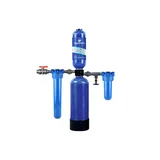
Aquasana Rhino Whole House Water Filter
Aquasana Rhino Whole House Water Filter
Carbon whole house filtration reduces chlorine taste and odor at every tap, including showers, so the bleach smell is handled for the whole home rather than one faucet.
Compare sizing, treatment options and ongoing costs in our best whole house water filters guide.
Test For
Free chlorine level, total chlorine (chloramine)
Musty / Earthy / Moldy SmellLow Concern
Common Causes
- Geosmin from algae blooms
- MIB (2-methylisoborneol) from bacteria
- Decaying vegetation in source water
- Seasonal surface water contamination
Health Considerations
Harmless but unpleasant; detectable at extremely low concentrations
Solutions
- Activated carbon filtration
- Whole-house carbon system
- Shock chlorinate well if bacteria cause
- RO system for point-of-use
Aquasana Rhino Whole House Water Filter
Aquasana Rhino Whole House Water Filter
Earthy or musty odors from algae byproducts on city water are commonly reduced by activated carbon. Rule out bacteria with a lab test before relying on carbon alone.
Compare sizing, treatment options and ongoing costs in our best whole house water filters guide.
Test For
Bacteria culture, visual inspection of well, contact utility for info
Fishy / Organic / Sewage SmellHigh Concern
Common Causes
- Barium or cadmium contamination
- Organic compound decomposition
- Chloramine reacting with organics
- Bacteria in drain (not water)
- Sewage infiltration (rare)
Health Considerations
Test immediately—barium and cadmium are health hazards
Solutions
- First: verify smell is from water not drain
- Test for barium, cadmium, ammonia
- RO system removes these contaminants
- Clean drains with baking soda/vinegar
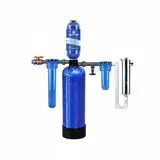
Aquasana Rhino Well Water with UV
Aquasana Rhino Well Water with UV
Fishy or organic odors on a well can point to bacterial activity. A whole house filter paired with UV disinfection treats bacteria after a lab test confirms the cause; fix any sewage contamination source first.
Compare sizing, treatment options and ongoing costs in our best well water filters guide.
Test For
Barium, cadmium, ammonia, coliform bacteria
Metallic / Bitter SmellMedium Concern
Common Causes
- Dissolved iron (most common)
- Copper from corroded pipes
- Manganese in groundwater
- Zinc from galvanized pipes
- Lead (older homes)
Health Considerations
Iron/manganese low concern; copper/lead require action
Solutions
- Iron/manganese filtration systems
- pH neutralizer for copper corrosion
- Replace corroded pipes
- RO system for drinking water
Test For
Iron, manganese, copper, lead, pH levels
Chemical / Fuel / Solvent SmellHigh Concern
Common Causes
- Industrial contamination
- Underground storage tank leak
- Pesticide/herbicide runoff
- VOCs in groundwater
- Cross-connection with contaminated source
Health Considerations
Serious health risk—do not drink; contact authorities
Solutions
- Stop using water immediately
- Contact local health department
- Well: test for VOCs and MTBE
- Professional remediation required
Test For
VOCs (volatile organic compounds), MTBE, benzene, petroleum
Water Odor Diagnostic Flowchart
Step 1: Hot Water vs Cold Water
Step 2: All Fixtures vs One Fixture
Step 3: Duration of Smell
Step 4: When Did It Start?
Recommended Filters by Odor Issue
Sulfur / Rotten Egg Smell
Air injection or chemical oxidation systems
Chlorine / Chemical Smell
Any activated carbon filter—pitcher to whole-house
Musty / Earthy Smell
Activated carbon effectively removes geosmin/MIB
Metallic Smell (Iron/Manganese)
Oxidizing filters or ion exchange systems
Heavy Metal Contamination
RO systems for barium, cadmium, and metal removal
Hot Water Only Smells Bad? Fix Your Water Heater
If only your hot water has a rotten egg smell, the problem is almost certainly your water heater—not your water supply. The most common culprit is the magnesium anode rod reacting with sulfates in your water.
Quick Fixes
- Replace anode rod with aluminum or zinc version ($20-40 part)
- Raise temperature to 140°F for 8 hours to kill bacteria (then lower)
- Flush water heater to remove sediment buildup
- Sanitize tank with chlorine flush (professional service)
When to Replace Water Heater
- Smell returns after anode replacement and sanitization
- Water heater is 10+ years old
- Visible rust or corrosion on tank
- Sediment buildup won't flush out
Water Odor Diagnosis: Identifying & Treating Every Type of Smell
Water odor is your most reliable early warning system for water quality problems. Different smells point to specific contaminants, each requiring different treatment approaches. A systematic diagnosis—identifying the type of smell, which taps are affected, and whether the odor occurs in hot water only, cold water only, or both—quickly narrows down the cause and guides you to the most cost-effective solution. Never ignore persistent water odor, as some smells indicate health-threatening contamination.
Rotten eggs / sulfur smell: The most common water odor complaint, caused by hydrogen sulfide (H₂S) gas at concentrations as low as 0.5 ppm. If the smell occurs only in hot water, your water heater's magnesium anode rod is likely reacting with sulfate-reducing bacteria—replace the anode rod with an aluminum or zinc alloy version ($20-40 DIY fix). If the smell occurs in both hot and cold water, hydrogen sulfide is in your water supply. Well water treatment requires oxidation (air injection or chlorination) followed by activated carbon filtration. The SpringWell Well Water System removes up to 8 ppm H₂S through air injection oxidation.
Bleach / chlorine smell: Normal in municipal water (utilities maintain 0.2-4.0 ppm residual chlorine for safety), but excessive chlorine taste typically indicates levels above 1.5 ppm or heightened sensitivity. Chlorine smell intensifies in hot water and enclosed spaces (showers). An activated carbon filter removes 95%+ of free chlorine—options range from a $25 faucet filter for drinking water only to a $800-1,500 whole-house system for complete chlorine removal at every tap. For chloramine-treated water (which has a flat, chemical taste rather than sharp bleach smell), catalytic carbon is required—standard carbon provides only 50-60% chloramine reduction.
Musty / earthy smell: Usually caused by geosmin and MIB (2-methylisoborneol), compounds produced by algae and bacteria in surface water sources. These are harmless but detectable at extremely low concentrations (10-20 parts per trillion). Common during late summer in water systems drawing from lakes or reservoirs. Activated carbon is highly effective at adsorbing geosmin and MIB. If the earthy smell comes from your well, it may indicate surface water intrusion—test for coliform bacteria immediately to rule out contamination.
Fishy smell: Can indicate naturally occurring organic matter (usually harmless), barium or cadmium contamination (health concern), or chloramine interaction with organic compounds. If you are on chloramine-treated municipal water and notice a fishy smell, it may indicate elevated levels of nitrogen-based disinfection byproducts. Test your water through a certified laboratory ($100-200 comprehensive panel) to identify the specific cause. Reverse osmosis provides the most comprehensive treatment for chemical-based odors because it removes both the odor-causing compounds and any associated health-threatening contaminants.
Metallic smell/taste: Usually caused by iron, manganese, copper, or zinc leaching from plumbing. Iron above 0.3 ppm and manganese above 0.05 ppm produce metallic taste and staining. New copper plumbing often causes metallic taste for the first 1-2 years until a protective patina forms. Run cold water for 30-60 seconds before drinking to flush stagnant water from pipes. For persistent metallic taste, test for iron and manganese to determine concentrations and select appropriate treatment—carbon filtration handles low levels, while oxidation-based systems address higher concentrations.
Frequently Asked Questions About Water Odors
Related Troubleshooting Guides
Our Top Recommendations
Based on our extensive testing and analysis, these are the systems we recommend most highly for this category:
Our top-rated tankless RO with 800 GPD capacity and smart monitoring
Check Price: iSpring RCC7AK6-stage RO with alkaline remineralization for great-tasting water