Why Does My Water Taste Salty?
Complete guide to diagnosing salty water causes, understanding health implications, and choosing the right filtration system for sodium and chloride removal.
Salty-tasting tap water is an alarming experience for homeowners, and unlike earthy or chlorine flavors, it often indicates a mechanical problem or significant water quality issue that requires attention. Whether your water has always had a slight salty flavor or has suddenly developed a brackish taste, understanding the cause is critical for choosing the right solution.
The four most common causes of salty water are water softener malfunction (the leading cause in homes with softeners), high natural sodium or chloride in source water, saltwater intrusion in coastal aquifers, and elevated total dissolved solids (TDS) from mineral-rich groundwater. Each cause requires a different treatment approach, so accurate diagnosis is essential before investing in filtration equipment.
In this comprehensive guide, we will walk you through the diagnostic process, explain the health implications of sodium in drinking water, compare treatment technologies, and recommend the most effective and cost-efficient filtration solutions for salty water.
250 mg/L
EPA secondary standard for chloride—above this level water tastes noticeably salty
95-99%
Sodium and chloride removal rate with reverse osmosis filtration systems
<20 mg/L
Recommended sodium level for people on restricted sodium diets
Common Causes of Salty Water
Cause #1: Water Softener Malfunction
If you have a water softener, this is the most likely cause of suddenly salty water. During the regeneration cycle, concentrated brine (salt water) flushes through the resin bed to recharge it. If the softener malfunctions, this brine can enter your household water supply instead of being flushed to drain.
Common Softener Problems:
- Stuck regeneration valve: The valve fails to switch from brine rinse to service mode, sending brine directly to your taps
- Overfilled brine tank: Excess water in the brine tank creates too-concentrated solutions that cannot be fully rinsed
- Worn seals: Deteriorated internal seals allow brine bypass during the rinse cycle
- Incorrect settings: Regeneration frequency or salt dose set too high for your water hardness
Quick test: Use the bypass valve on your softener to send unsoftened water to your taps. If the salty taste disappears, your softener is the culprit. Schedule a service call or check the brine tank and valve manually.
Cause #2: Saltwater Intrusion (Coastal Areas)
Saltwater intrusion is a growing problem in coastal regions where seawater migrates into freshwater aquifers. This occurs when groundwater is pumped faster than it can be replenished, lowering the water table and allowing the denser saltwater to move inland. Climate change and sea-level rise are accelerating this process in many regions.
Most Affected Regions:
- • South Florida and the Florida Keys (severe intrusion in Miami-Dade)
- • California Central Coast and Salinas Valley
- • Gulf Coast states (Texas, Louisiana, Mississippi)
- • Long Island, New York and Cape Cod, Massachusetts
- • Hilton Head and coastal Carolinas
For coastal areas with saltwater intrusion, reverse osmosis is the only practical residential solution. See our guide to best RO systems for recommendations.
Cause #3: High Natural Sodium in Source Water
Some groundwater sources naturally contain elevated sodium and chloride levels due to the geological formations they pass through. Shale, clay, and certain sedimentary rock formations can leach sodium into aquifers over thousands of years. Additionally, road salt used for de-icing during winter can contaminate shallow wells and surface water sources.
Other Environmental Sources:
- • Road salt runoff contaminating shallow wells and municipal reservoirs
- • Agricultural drainage and irrigation return flows
- • Industrial discharge and wastewater treatment plant effluent
- • Natural mineral deposits (halite, sylvite) in the aquifer
- • Brine from oil and gas drilling operations
Cause #4: Water Heater Anode Rod Degradation
If only your hot water tastes salty, the issue may be your water heater. The sacrificial anode rod (made of magnesium or aluminum) can react with high-sulfate or high-TDS water, producing a salty or metallic taste in hot water only. Replace the anode rod every 3-5 years, or switch to a powered anode rod that does not degrade. Flushing the water heater annually also helps prevent taste issues.
Health Implications of Sodium in Drinking Water
While sodium in water is not regulated by the EPA as a primary contaminant, it can contribute significantly to daily sodium intake, especially for people who drink 8 or more glasses of water per day. Understanding the health implications helps you decide how urgently you need treatment.
| Sodium Level (mg/L) | Taste | Health Consideration | Action Needed |
|---|---|---|---|
| <20 | Undetectable | Safe for all | None |
| 20-60 | Slightly detectable | Safe; low-sodium diets may prefer RO | Optional RO |
| 60-200 | Noticeably salty | Monitor if hypertensive | RO recommended |
| 200-500 | Very salty | Health concern for sodium-sensitive | RO essential |
| >500 | Brackish | Not suitable for drinking | RO mandatory or alt source |
People with hypertension, heart failure, kidney disease, or who are on sodium-restricted diets should be especially cautious about sodium in drinking water. Even at 100 mg/L, drinking 2 liters of water daily adds 200 mg of sodium to your diet—nearly 10% of the recommended daily limit. A reverse osmosis system is the most reliable way to reduce sodium to safe levels.
Treatment Options: What Actually Removes Salt?
Not all water filters remove sodium and chloride. Understanding which technologies work—and which do not—saves you from wasting money on ineffective solutions.
| Technology | Sodium Removal | Chloride Removal | Cost | Verdict |
|---|---|---|---|---|
| Reverse Osmosis | 95-99% | 95-99% | $200-600 | ✅ Best option |
| Distillation | 99% | 99% | $100-400 | ✅ Effective but slow |
| Carbon Filter | 0-5% | 0-5% | $20-300 | ❌ Ineffective |
| Pitcher Filter | 0-5% | 0-5% | $25-45 | ❌ Ineffective |
| Water Softener | Adds sodium | None | $800-2,000 | ❌ Makes it worse |
Important: Standard carbon filters (Brita, PUR, faucet filters, whole-house carbon) do NOT remove dissolved sodium or chloride. These filters work by adsorption and are designed for chlorine, VOCs, and organic compounds. Dissolved salt passes directly through carbon media. Only reverse osmosis membrane technology or distillation can separate dissolved sodium chloride from water.
Recommended Products for Salty Water
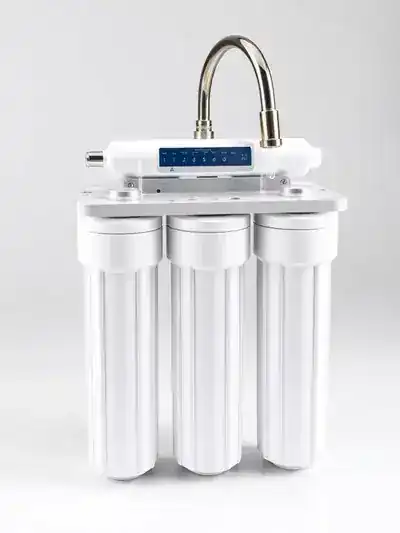
Aquasana OptimH2O Reverse Osmosis
The Aquasana OptimH2O is our top pick for salty water because it combines RO membrane technology with Claryum carbon and ion exchange filtration for 95-99% sodium and chloride removal. Unlike many RO systems, it includes a remineralization stage that adds beneficial calcium and magnesium back to the water for improved taste and health benefits.
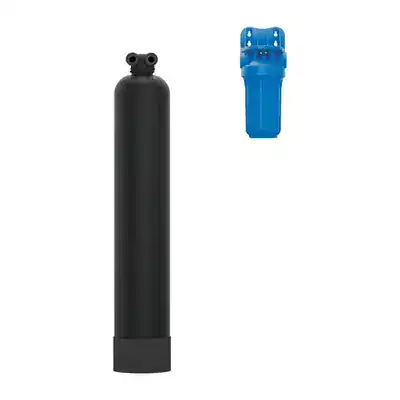
SpringWell CF1 + RO Combo
For homes with salty water AND other contaminants (chlorine, VOCs, sediment), the SpringWell CF1 whole-house carbon filter paired with an under-sink RO system provides comprehensive treatment. The CF1 removes chlorine and organics at every tap while the RO handles sodium removal at the kitchen sink for drinking and cooking water.
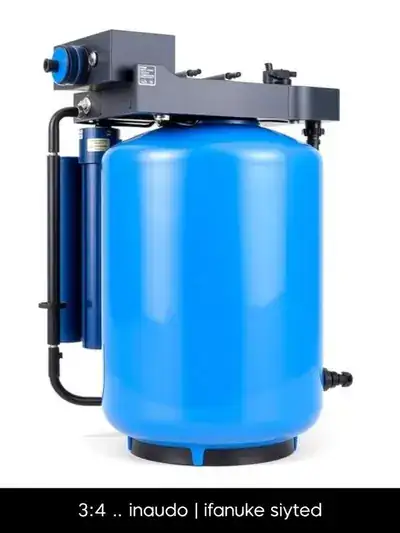
Aquasana Rhino + UV + RO Bundle
For well water with salty taste plus bacterial concerns, the Aquasana Rhino whole-house system with UV disinfection provides comprehensive point-of-entry treatment. Add an under-sink RO system for sodium removal at the kitchen tap. This combination addresses bacteria, sediment, organics, and sodium in a complete treatment train.
Step-by-Step Diagnostic Guide
Follow these steps to identify exactly why your water tastes salty and determine the most cost-effective treatment approach for your specific situation.
Step 1: Check Your Water Softener
If you have a water softener, bypass it immediately and taste the unsoftened water. If the salty taste disappears, your softener is the problem. Check the brine tank water level, inspect the regeneration valve, and verify the salt dose settings. A softener service call typically costs $100-250 and resolves most issues.
Step 2: Test Hot vs. Cold Water
Run cold water for 2 minutes, then taste. Do the same with hot water. If only hot water tastes salty, the issue is likely your water heater anode rod. If both taste salty, the problem is your incoming water supply. Check our maintenance guide for water heater flushing instructions.
Step 3: Use a TDS Meter
A TDS meter ($15-25) provides instant measurement of total dissolved solids. Normal municipal water reads 50-300 ppm. Readings above 500 ppm suggest elevated mineral content. While TDS does not specifically measure sodium, significantly elevated TDS in salty-tasting water confirms dissolved salt presence. Compare readings from multiple taps and neighbors.
Step 4: Send Water for Lab Testing
For definitive diagnosis, send a water sample to a certified lab. Request specific testing for sodium, chloride, TDS, and conductivity. Services like Tap Score provide comprehensive analysis. Lab results tell you the exact sodium concentration, helping you determine if RO treatment is necessary and establishing a baseline for monitoring treatment effectiveness.
Step 5: Choose Your Treatment
Based on lab results: below 60 mg/L sodium may not need treatment. 60-200 mg/L warrants an under-sink RO system for drinking water. Above 200 mg/L strongly recommends RO for all consumption water. For coastal saltwater intrusion or very high levels above 500 mg/L, consult with a water treatment professional about whole-house solutions or alternative water sources.
Cost Analysis: Salty Water Solutions
| Solution | Initial Cost | Annual Maintenance | 5-Year Total |
|---|---|---|---|
| Softener Repair | $100-500 | $50-100 | $350-1,000 |
| Under-Sink RO | $200-600 | $50-120 | $450-1,200 |
| Countertop RO | $350-500 | $60-100 | $650-1,000 |
| Whole-House RO | $3,000-10,000 | $200-500 | $4,000-12,500 |
For most households, an under-sink RO system provides the best value for salty water treatment. Whole-house RO is only necessary for severe saltwater intrusion where bathing and laundry water quality is also affected. See our comprehensive cost comparison guide for detailed analysis.
Explore Our Top Picks
Best RO Systems
Maximum contaminant removal
Best Whole House Filters
Every-tap water treatment
Best Water Softeners
Hard water scale prevention
Best Under-Sink Filters
Drinking water protection
Best Well Water Filters
Well water treatment systems
Best Countertop Filters
No-install countertop options
Best Water Pitchers
Affordable filtered water
Water Test Kits
Diagnose your water problems
Frequently Asked Questions
Related Articles
More on Chlorine Taste Removal
Eliminate chlorine taste and odor with carbon filters
Read: Metallic Taste Fix
Diagnose and remove iron, copper, and zinc tastes
Read: Rotten Egg Smell Removal
Treat hydrogen sulfide and sulfur odors in well water
Brown Water Solutions
Fix discolored water from iron, rust, or sediment
More on Hard Water Stain Removal
Stop blue-green and white scale buildup
Read: Sediment & Sandy Water Fix
Remove sand, silt, and sediment with filtration