Why Does My Water Taste Fishy?
Compare taps, check utility notices and test before choosing treatment. Taste alone cannot identify a contaminant or prove water is safe.
By the Clean Water Hacks editorial team
Find the source before buying a filter
A fishy taste is a reason to investigate, not a diagnosis of metals or bacteria.
- Compare cold water from several taps, then compare hot and cold water at the same tap.
- For a sudden change, contact your utility or a qualified well professional and follow any water-use advisory.
- Choose treatment only after checking your utility report or laboratory results.
Quick answer
If only hot water tastes fishy, look at the water heater. If every cold tap is affected, the cause is usually in the supply—check your utility's notices or test your well. Carbon can reduce many taste-and-odor compounds; dissolved metals need treatment certified for that specific contaminant.
Quick Diagnosis: When to Act Quickly
Investigate Promptly If:
- • Taste appeared suddenly (contamination event)
- • All taps affected (source water issue)
- • You're on well water near agriculture
- • Taste accompanied by discoloration
- • Pregnant or have young children
More Likely a Local or Aesthetic Issue If:
- • Only one faucet affected (localized)
- • Seasonal pattern (summer algae)
- • Only hot water tastes fishy (check the water heater)
- • Taste is faint and intermittent
- • Municipal water with recent chloramine switch
5 Possible Causes of Fishy-Tasting Water
Fishy taste in drinking water is more than just unpleasant—it's a signal to investigate. Each possible cause needs a different response, so confirm the cause with your utility report or a laboratory test before buying equipment.
1. Barium in Some Groundwater
Barium is a naturally occurring alkaline earth metal found in groundwater that dissolves from barite and witherite mineral deposits. It is sometimes linked to off-tastes, but taste is not a reliable way to detect it—only a laboratory test can confirm your level.
Key Facts About Barium in Water
- • EPA MCL: 2 mg/L (2 ppm)
- • Health effects: Long-term exposure above the MCL may increase blood pressure
- • Detection: Laboratory testing; taste is not reliable
- • Treatment options: Reverse osmosis or ion exchange certified for barium reduction
Unlike many contaminants, barium cannot be removed by standard carbon filters or simple pitcher filters. A point-of-use RO system certified for barium is a common option for drinking and cooking water.
2. Chloramine Disinfection Byproducts
Many US water utilities use chloramine (a combination of chlorine and ammonia) as a secondary disinfectant. When chloramine reacts with naturally occurring organic matter in source water, some people notice fishy, chemical, or rubber-like tastes.
The fishy taste from chloramine byproducts tends to intensify during summer months when organic matter levels in reservoirs increase due to algal growth and higher water temperatures. If the taste started suddenly, ask your utility whether it changed disinfectant or flushed its system.
Chloramine vs. Chlorine Taste
- • Chlorine: bleach-like, sharp taste that dissipates with aeration
- • Chloramine: fishy, rubbery, or medicinal taste that persists
- • Standard carbon filters remove chlorine easily but struggle with chloramine
- • Solution: Catalytic carbon filters or RO systems remove chloramine effectively
3. Algal Compounds (Geosmin & MIB)
Geosmin and 2-methylisoborneol (MIB) are organic compounds produced by cyanobacteria (blue-green algae) and actinomycetes in surface water reservoirs. These compounds produce earthy, musty, or fishy flavors detectable by humans at astonishingly low concentrations—as low as 10-15 parts per trillion (ng/L).
While geosmin and MIB themselves are non-toxic, their presence often coincides with harmful algal blooms (HABs) that can produce cyanotoxins; follow any utility advisory. Municipal treatment plants monitor for these compounds, but standard chlorination doesn't fully break them down.
Seasonal Pattern
Algae-related taste often follows a seasonal pattern, tending to be worse when surface water is warm. If your fishy taste follows this pattern, algal compounds are the likely cause. Activated carbon filtration effectively adsorbs geosmin and MIB.
4. Cadmium from Corroded Pipes
Cadmium leaches into water from galvanized steel pipes, solder joints, and certain industrial discharges. Taste is not a reliable sign of cadmium, which is classified as a Group 1 carcinogen by the International Agency for Research on Cancer (IARC). The EPA MCL for cadmium is just 0.005 mg/L (5 ppb).
Cadmium contamination is most common in homes built before 1980 with original galvanized plumbing, in areas with soft or acidic water (pH below 6.5) that accelerates pipe corrosion, and near industrial sites with cadmium-containing waste. If you have older galvanized plumbing, ask a certified laboratory about a metals panel. Learn more about heavy metals in drinking water.
5. Water Heater Bacterial Growth
If only your hot water tastes fishy, the water heater is the likely source—for example bacterial activity, sediment, or a reaction involving the anode rod.
Hot Water Fix Checklist
- • Flush the tank following the manufacturer's instructions
- • Have a qualified plumber inspect the anode rod and temperature setting
- • Do not raise the temperature without anti-scald protection at taps
- ✅ Check our water heater maintenance guide for step-by-step instructions
Fishy Taste Contaminant Comparison Matrix
Use this table to narrow down the likely cause based on your symptoms and water source type.
| Contaminant | Taste Profile | Common Source | Health Risk | Best Treatment |
|---|---|---|---|---|
| Barium | Fishy, metallic | Well water, groundwater | Test; EPA limit | RO, ion exchange |
| Chloramine DBPs | Fishy, rubbery | Municipal water | Ask utility | Catalytic carbon, RO |
| Geosmin/MIB | Earthy, fishy, musty | Surface water | Usually aesthetic | Activated carbon |
| Cadmium | Metallic, fishy | Old pipes, industrial | Test; EPA limit | RO, distillation |
| SRB (Hot Water) | Fishy, sulfurous | Water heater | Usually aesthetic | Heater flush, plumber inspection |
How to Test for the Cause of Fishy-Tasting Water
Accurate diagnosis requires proper testing. Here's a systematic approach to identifying exactly what's causing your water to taste fishy, organized from simplest (DIY) to most comprehensive (lab testing).
Step 1: DIY Screening Tests ($15-50)
Start with at-home screening to narrow down possibilities before investing in lab testing:
- Hot vs. Cold Water Test: Run cold water for 2 minutes, taste. Then run hot water separately. If only hot water tastes fishy → water heater issue (Cause #5). If both → source contamination.
- Single Faucet Test: Check every tap in your home. If isolated to one faucet → localized pipe corrosion. If all taps → source water or main supply pipe.
- Seasonal Pattern: Track when the taste occurs. Summer peaks → algal compounds. Year-round → mineral contamination or chloramine.
- Heavy Metal Test Strips: Products like WaterSafe or Hach strips ($15-25) screen for lead, copper, and some heavy metals. While not specific to barium, they indicate metallic contamination.
See our complete guide to water test kits for detailed recommendations.
Step 2: Professional Lab Testing ($100-300)
For definitive identification, send a sample to a certified laboratory:
- Tap Score Advanced City Water Test ($290): Tests 111+ contaminants including barium, cadmium, chloramine residual, and total organic carbon. Best for municipal water users.
- Tap Score Essential Well Water Test ($199): Covers heavy metals, bacteria, and minerals most relevant to well water fishy taste issues.
- National Testing Laboratories ($150-250): Offers targeted panels for heavy metals and organic compounds.
Request specific analysis for: barium, cadmium, total organic carbon (TOC), chloramine/chlorine residual, and coliform bacteria. These five parameters cover the most common causes of fishy taste. Learn more about water quality testing methods.
Proven Treatment Solutions by Cause
Once you've identified the cause through testing, match treatment to it.
For Barium & Heavy Metal Contamination
Reverse osmosis certified for the specific metal found in your test is a common point-of-use option. Compare systems in our reverse osmosis buying guide, and check that the certification covers the contaminant and level in your report.
Some ion exchange softeners reduce barium; confirm the manufacturer's performance data before relying on one. See our best water softeners guide.
For Chloramine & Organic Compounds
Chloramine requires catalytic carbon or extended-contact carbon filtration. Standard carbon is generally less effective against chloramine than chlorine:
- Whole-house carbon: Systems with catalytic carbon can reduce chloramine at every tap; check the manufacturer's flow and capacity data. Compare options in our whole-house filter guide.
- Countertop RO: AquaTru or similar countertop RO provides point-of-use chloramine removal without installation.
For Algal Compounds (Geosmin/MIB)
Activated carbon can reduce geosmin and MIB, so lower-cost carbon filters are often a reasonable first step:
- Pitcher Filters ($25-40): Carbon pitchers can reduce some taste compounds. An affordable first step.
- Faucet Filters ($25-60): PUR or Brita faucet-mount filters reduce taste compounds at one tap.
- Under-Sink Carbon ($100-250): Dedicated carbon block systems provide higher capacity and flow rate for ongoing seasonal issues.
5-Year Treatment Cost Comparison
Understanding total cost of ownership helps you choose the right solution for your budget and contamination level.
| Solution | Upfront Cost | Annual Filters | 5-Year Total | Removes |
|---|---|---|---|---|
| Under-Sink RO | $200-500 | $60-120 | $500-1,100 | Many dissolved contaminants (check certification) |
| Whole-House Carbon | $800-1,500 | $100-200 | $1,200-2,500 | Chloramine, geosmin |
| Pitcher Filter | $25-40 | $50-80 | $275-440 | Some taste compounds |
| Anode Rod Swap | $20-50 | $0 | $20-50 | Hot water SRB only |
| Well Shock Chlorination | $50-200 | $50-200 | $300-1,200 | Bacteria, algae |
Preventing Fishy Taste From Returning
Once you've resolved the immediate issue, these maintenance practices prevent recurrence:
For Municipal Water
- • Replace carbon filters on schedule (every 6-12 months)
- • Monitor Consumer Confidence Reports (CCR) for barium/cadmium levels
- • Run faucets for 30 seconds each morning to flush stagnant pipe water
- • Test annually during peak summer months for seasonal compounds
- • Consider a whole-house city water filter for ongoing protection
For Well Water
- • Annual water testing for bacteria, heavy metals, and minerals
- • Maintain well seal integrity—inspect annually for cracks or gaps
- • Keep surface drainage away from wellhead (follow local setback rules)
- • After flooding or a positive bacteria test, disinfect using a well-specific procedure
- • See our well water treatment guide for complete protocols
When to Call a Professional
While many fishy taste issues can be resolved with DIY filtration, certain situations require professional intervention:
- Barium above EPA MCL (2 mg/L): Professional water treatment system sizing and installation ensures adequate removal.
- Cadmium detected: A assessment of your plumbing system is critical. May require pipe replacement.
- Persistent well water contamination: A hydrogeologist can assess your well construction, aquifer conditions, and recommend long-term treatment.
- Multiple contaminants detected: Complex water chemistry requires professional system design to ensure treatment stages don't interfere with each other.
- Whole-house system installation: Proper sizing, bypass valves, and water pressure considerations require plumbing expertise.
Product Picks When Testing Points to Treatment
These picks fit specific confirmed problems. They are not a fix for a sudden taste change, which should be reported to your utility or well professional first.
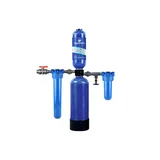
Aquasana Rhino Whole House Water Filter
Aquasana Rhino Whole House Water Filter
For city water where the taste comes from disinfectant or taste-and-odor compounds, a whole-house carbon system treats every tap. Check the product's listed contaminant reductions and flow rate; it is not a metals treatment.
Compare sizing, treatment options and ongoing costs in our best whole house water filters guide.
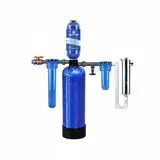
Aquasana Rhino Well Water with UV
Aquasana Rhino Well Water with UV
For well water where testing confirms bacteria and the source has been repaired, filtration with UV adds ongoing protection. Confirm inlet-water limits and pretreatment needs, and keep retesting.
Compare sizing, treatment options and ongoing costs in our best well water filters guide.
For dissolved metals such as barium or cadmium at the kitchen tap, compare certified systems in our reverse osmosis buying guide.
Frequently Asked Questions
Related Articles
Chlorine Taste Removal
Eliminate chlorine taste and odor with carbon filters
Deep dive — Metallic Taste Fix
Diagnose and remove iron, copper, and zinc tastes
Deep dive — Rotten Egg Smell Removal
Treat hydrogen sulfide and sulfur odors in well water
More on Brown Water Solutions
Fix discolored water from iron, rust, or sediment
Hard Water Stain Removal
Stop blue-green and white scale buildup
Deep dive — Sediment & Sandy Water Fix
Remove sand, silt, and sediment with filtration