Best Water Softeners 2026
Hard water affects 85% of American homes. Our expert guide helps you choose the right water softener to eliminate scale, protect appliances, and improve water quality throughout your home. Comprehensive reviews, sizing calculator, and installation help.
Why Soften Your Water?
Protect Your Investment
Hard water costs you money:
- ✓ Water heaters fail 30% faster ($1,200 replacement)
- ✓ Dishwashers/washing machines lifespan reduced 40%
- ✓ Plumbing clogs from scale buildup
- ✓ Higher energy bills (scale reduces efficiency 25%)
- ✓ 50% more soap/detergent needed
A softener pays for itself in 2-3 years
Better Quality of Life
Notice the difference immediately:
- ✓ Softer skin and hair (no mineral buildup)
- ✓ Soap lathers 3x better
- ✓ Spot-free dishes and glassware
- ✓ Brighter, softer laundry
- ✓ No more scrubbing scale off showerheads
- ✓ Water pressure stays consistent
Top Water Softeners & Conditioners
Aquasana's take on salt-free conditioning uses their SCM technology - basically changes the structure of hard water minerals so they don't stick to pipes and appliances. It's paired with their whole house filter, so you're getting both filtration and conditioning in one system. Great for people who want clean, conditioned water without the hassle of salt-based systems. The 10-year warranty is solid, and it can handle up to 7 GPM flow rate. Keep in mind this doesn't remove minerals, just prevents them from causing problems.
SCM Technology + Carbon
7 GPM
3-6 months filters
N/A (Salt-free)
Pros
- Combined filtration and conditioning
- No salt or wastewater
- 10-year warranty
Cons
- Limited to 7 GPM flow
- Doesn't remove hardness
- Filter replacements needed
Price
SimplySoft focuses purely on salt-free conditioning without the filtration bundle. Uses Aquasana's SCM technology to prevent scale buildup while keeping minerals in your water. Great for homes with moderate hardness that want to protect plumbing and appliances without dealing with salt. Flow rate handles up to 11 GPM. It won't remove hardness minerals, but it stops them from causing problems.
SCM Technology
11 GPM
N/A (Media lasts 10 years)
N/A (Salt-free)
Pros
- No salt or maintenance
- Retains healthy minerals
- Prevents scale buildup
Cons
- Doesn't remove hardness
- 11 GPM flow rate
- Not effective for very hard water
Price
The Fleck 5600SXT is legendary in the water softener world - it's the valve everyone trusts. No fancy apps or features, just rock-solid performance that'll last for years. The digital display makes programming easy, and it's efficient with salt usage. DIY-friendly installation if you're handy. Basically the Toyota Camry of water softeners - reliable, affordable, gets the job done.
High-Capacity Resin
11 GPM
48,000 grains
Pros
- Industry-standard Fleck valve
- Digital LCD display
- Highly efficient
Cons
- Basic design
- Requires salt
- Manual regeneration option
Price
Water Softener Sizing Calculator
Calculate Your Perfect Size
Your Recommendation:
32,000 grain system (1-3 people)
Daily grain capacity needed: 4,500 grains
Recommended total capacity: 5,000 grains
Hardness Levels Guide
- 0-3 GPG: Soft (no treatment needed)
- 3-7 GPG: Slightly hard (consider salt-free)
- 7-10 GPG: Moderately hard (softener recommended)
- 10-14 GPG: Hard (softener needed)
- 14+ GPG: Very hard (definitely need softener)
Capacity by Household
- 1-3 people: 32,000 grain
- 3-5 people: 40,000-48,000 grain
- 5-7 people: 64,000 grain
- 7+ people: 80,000+ grain
Water Usage Guide
Average per person/day:
- • Shower: 20 gallons
- • Toilet: 15 gallons
- • Laundry: 15 gallons
- • Dishes: 10 gallons
- • Cooking/drinking: 5 gallons
- Total: ~75 gallons
Salt-Based vs Salt-Free: Complete Comparison
| Feature | Salt-Based Softener | Salt-Free Conditioner |
|---|---|---|
| How It Works | Ion exchange removes minerals | Crystallization prevents scale formation |
| Removes Hardness | ✓ Yes (100%) | ✗ No (only prevents scale) |
| Prevents Scale Buildup | ✓ Yes | ✓ Yes (85-90% effective) |
| Soft Water Feel | ✓ Yes (silky skin/hair) | ✗ No (water feels the same) |
| Soap Lathering | ✓ Excellent (use 50% less) | ✗ Same as hard water |
| Maintenance | Monthly (add salt) | Minimal (replace media 3-5 years) |
| Operating Cost | $5-10/month (salt + water) | $0 (no consumables) |
| Wastewater | 50-100 gal/week (regeneration) | None |
| Electricity | Optional (some use timers) | None |
| Adds Sodium | Yes (~30-50 mg/L) | No |
| Price Range | $400-$3,000 | $800-$2,500 |
| Best For | Hardness >10 GPG, want soft water benefits | Hardness 3-10 GPG, eco-friendly, low maintenance |
Choose Salt-Based If:
- ✓ You have hardness above 10 GPG
- ✓ You want the soft water feel (skin/hair)
- ✓ You want to use less soap/detergent
- ✓ You don't mind monthly maintenance
- ✓ Maximum scale protection is priority
Choose Salt-Free If:
- ✓ Hardness is 3-10 GPG (moderate)
- ✓ You're on sodium-restricted diet
- ✓ You want zero maintenance
- ✓ You want eco-friendly (no waste water)
- ✓ Scale prevention (not removal) is enough
Installation Guide
DIY Installation: Step-by-Step
Time Required: 2-4 hours | Skill Level: Intermediate plumbing | Cost Savings: $200-500 vs professional
Choose Location
Install where main water line enters house, BEFORE water heater and branch lines. Requirements:
- Level concrete or solid floor
- Drain within 20 feet (floor drain or laundry)
- 110V outlet (if system requires power)
- Protected from freezing (40°F minimum)
- Space for salt bag loading (2x3 feet)
Shut Off Water & Drain System
Turn off main water. Open lowest and highest faucets to drain pressure. Have buckets ready.
Cut Into Main Water Line
Measure and mark where bypass valve will go (needs 3-5 feet of pipe). Use pipe cutter for clean cuts.
Install Bypass Valve Assembly
Connect bypass valve between cut pipe ends using SharkBite fittings (easiest) or solder. Ensure flow arrows point toward house.
Connect Softener to Bypass
Attach inlet/outlet hoses from softener to bypass valve ports. Hand-tighten, then ¼ turn with wrench.
Run Drain Line
Connect ½" drain hose from brine tank to floor drain. Must have 2" air gap to prevent backflow. Max run: 20 feet.
Add Salt & Program
Add 40-80 lbs softener salt pellets (not rock salt). Fill brine tank with water to salt level. Program: current time, hardness (GPG), regeneration time (2 AM recommended).
Test & Initiate Regeneration
Turn water back on slowly. Check all connections for leaks. Run manual regeneration cycle (90 minutes) to test system and prepare resin.
Cost Breakdown & ROI
Initial Investment
Annual Operating Costs
Salt-free systems: $0/year (no operating costs)
Return on Investment
Annual Savings with Soft Water:
- Soap/detergent: $150-200/year (use 50% less)
- Energy savings: $100-150/year (efficient water heater)
- Appliance lifespan: $200-400/year (avoided replacements)
- Plumbing repairs: $50-100/year (no scale clogs)
Total Annual Savings:
$500-850
Less $100-240 operating cost
Net Savings: $300-700/year
Our Top Water Softener Picks
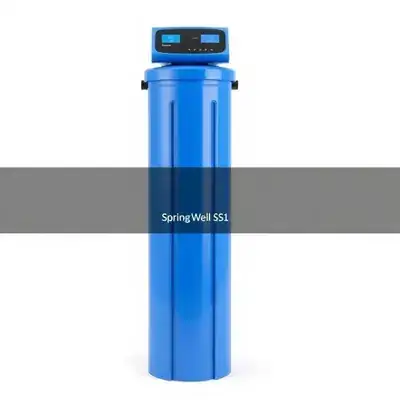
SpringWell SS1 Salt-Based Softener
The SS1 uses high-capacity 10% crosslink resin that handles iron up to 3 ppm without a separate iron filter. The Bluetooth-enabled valve head allows remote programming of regeneration schedules. Available in 32K, 48K, and 80K grain capacities to match any household size. Lifetime warranty on tanks and valves.
$949-1,495
View Deal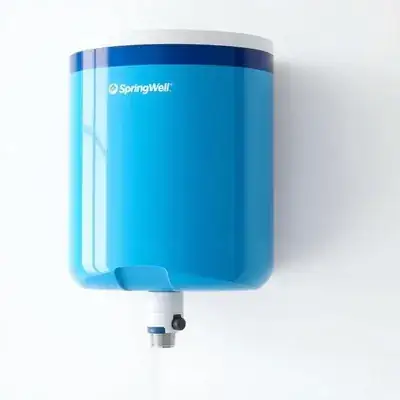
SpringWell FutureSoft Salt-Free Conditioner
Uses Template Assisted Crystallization (TAC) to convert hardness minerals into microscopic crystals that can't stick to surfaces. Zero waste water, zero electricity, zero maintenance. Ideal for hardness levels of 3-25 GPG. Prevents 99.6% of scale formation based on independent testing. Retains beneficial minerals in water.
$1,149-1,695
View Deal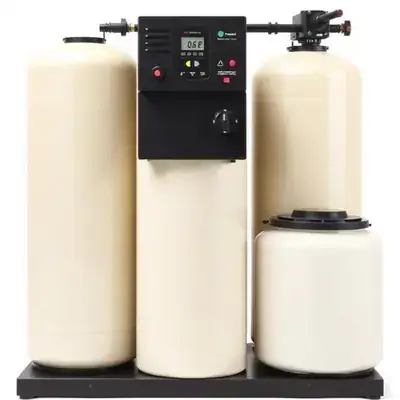
AFW Iron Pro 2 Combination Softener
Combines water softening with iron and manganese removal in a single tank using fine mesh resin. Handles up to 6 ppm iron, 6 ppm manganese, and 75 GPG hardness. The Fleck 5600SXT digital valve provides reliable demand-initiated regeneration. Best value for well water with moderate iron and hardness.
$649-799
View on AmazonWater Hardness by US Region
Water hardness varies dramatically across the United States, driven by local geology. The USGS National Water Quality Assessment found that approximately 85% of US homes have some degree of hard water. Understanding your region's typical hardness helps set expectations, though individual well and municipal sources can differ significantly from regional averages.
| Region | Typical Hardness (GPG) | Classification | Recommended Treatment |
|---|---|---|---|
| Pacific Northwest | 1-3 | Soft | Usually none needed |
| Southeast | 3-7 | Slightly Hard | Salt-free conditioner |
| Northeast | 5-12 | Moderate-Hard | 32K-48K grain softener |
| Midwest/Great Plains | 15-30 | Very Hard | 48K-64K grain softener |
| Southwest/Texas | 20-50+ | Extremely Hard | 64K-80K grain softener |
Always test your specific water source—regional averages provide guidance but individual variation is significant. A $15-20 hardness test strip gives you an accurate reading within minutes.
5 Common Water Softener Mistakes to Avoid
1. Buying the Wrong Size
An undersized softener regenerates too frequently, wasting salt and water while leaving you with hard water between cycles. An oversized softener wastes money upfront and can develop channeling issues where water bypasses the resin. Use the formula: people × 75 gal/day × GPG = daily grain requirement, then choose a system that regenerates every 3-5 days at that rate.
2. Not Treating Iron Before Softening
Iron above 3-4 ppm fouls softener resin, reducing capacity and eventually requiring expensive resin replacement ($200-400). If your well water has iron above 3 ppm, install a dedicated iron filter upstream of the softener. This is the most expensive mistake well water homeowners make with softeners.
3. Using Rock Salt Instead of Solar/Evaporated Salt
Rock salt contains 1-5% insoluble matter (dirt, sand, minerals) that accumulates in the brine tank, requiring frequent cleaning and potentially clogging the injector. Solar salt crystals (99.4% pure) or evaporated salt pellets (99.9% pure) cost slightly more but prevent buildup and extend system life.
4. Setting Regeneration at Peak Usage Times
During regeneration (60-90 minutes), the softener delivers untreated hard water. Schedule regeneration for 2-3 AM when no one is using water. Some budget systems use timer-based regeneration that may not align with your schedule—demand-initiated regeneration (DIR) systems are worth the upgrade.
5. Neglecting Annual Maintenance
Even "maintenance-free" softeners need annual attention: clean the brine tank, inspect the resin bed for channeling, check the bypass valve operation, verify hardness settings match current water conditions, and replace the sediment pre-filter. Skipping maintenance shortens system life from 15-20 years to 8-10 years.
Explore Our Top Picks
More Guides & Reviews
Frequently Asked Questions
Related Articles
Buying guide: Water Softeners
Top-rated salt-based and salt-free systems
Our picks for Salt-Free Water Conditioners
Scale prevention without salt or drain
Salt-Based or Salt-Free Softeners? Full breakdown
Which technology is right for your home?
Water Softener Sizing Guide
Calculate grain capacity for your household
Walkthrough — Water Softener Installation
DIY installation step-by-step
Keep it running: Water Softener Maintenance
Salt refills, resin cleaning, and care schedule
Water Softener Deep Dive Guides
Salt-Based vs Salt-Free
Complete technology comparison
Grain Capacity Sizing
Calculate the right softener size
Regeneration Cycles
Optimize timing and salt use
Dual-Tank Systems
24/7 soft water supply
Installation Guide
DIY vs pro installation
Top Salt-Free Systems
Pelican vs Aquasana comparison
Related Resources
Understanding Water Quality Science
Water quality is determined by a complex interplay of dissolved minerals, organic compounds, and potential contaminants that vary significantly by geographic region and water source. Municipal water treatment facilities use multi-stage processes including coagulation, sedimentation, sand filtration, and chemical disinfection to meet EPA Safe Drinking Water Act standards. However, these treatment processes can introduce disinfection byproducts such as trihalomethanes and haloacetic acids, which form when chlorine reacts with naturally occurring organic matter in the source water.
Private well water faces different challenges, as it bypasses municipal treatment entirely and may contain naturally occurring contaminants like arsenic, radon, and heavy metals that leach from surrounding geological formations. The Environmental Protection Agency recommends annual testing for coliform bacteria, nitrates, total dissolved solids, and pH levels for all private wells. Additional testing for volatile organic compounds, pesticides, and heavy metals should be conducted if you live near agricultural areas, industrial sites, or old mining operations. Understanding your specific water chemistry is the critical first step in selecting the most effective filtration system for your household needs.
Total dissolved solids (TDS) measurements provide a general indicator of water purity but should not be the sole basis for filtration decisions. Water with high TDS from beneficial minerals like calcium and magnesium may actually be healthier than ultra-purified water. The World Health Organization has noted that demineralized water may have adverse health effects due to the absence of essential minerals. This is why many advanced filtration systems, particularly reverse osmosis units, now include remineralization stages that add back beneficial minerals after removing contaminants. The ideal approach balances contaminant removal with mineral retention, targeting specific harmful substances identified through comprehensive water testing while preserving the natural mineral content that contributes to both taste and health benefits.
Filtration Technology Comparison
Modern water filtration leverages several distinct technologies, each with unique strengths for addressing specific water quality challenges. Activated carbon filtration, the most common residential method, uses adsorption to capture chlorine, volatile organic compounds, and taste-affecting chemicals. Granular activated carbon (GAC) filters provide good flow rates but may allow channeling, while carbon block filters compress carbon particles for more consistent contact time and finer filtration down to 0.5 microns. Catalytic carbon represents the latest advancement, specifically engineered to break down chloramines through a catalytic reaction rather than simple adsorption.
Reverse osmosis systems force water through a semipermeable membrane with pore sizes as small as 0.0001 microns, effectively removing dissolved solids, heavy metals, and most microorganisms. Modern RO systems achieve 95-99 percent rejection rates for contaminants like lead, arsenic, fluoride, and PFAS compounds. The primary considerations for RO systems include water waste ratios (typically 3:1 to 4:1 for standard systems, improved to 1:1 in premium tankless models), storage tank requirements, and the need for pre-filtration to protect the delicate membrane from sediment and chlorine damage.
Ion exchange technology, used in both water softeners and specialized contaminant removal systems, swaps problematic ions in the water with benign alternatives. Water softeners exchange calcium and magnesium ions for sodium ions, preventing scale buildup in plumbing and appliances. Specialized ion exchange resins can target specific contaminants like lead, nitrates, or perchlorate. Ultraviolet purification provides chemical-free disinfection by disrupting the DNA of bacteria, viruses, and protozoa at wavelengths around 254 nanometers. UV systems are particularly valuable for well water and as a final treatment stage in multi-barrier systems, though they do not remove chemical contaminants or improve taste.
Long-Term Cost Analysis
When evaluating water filtration costs, the total cost of ownership over five years provides a much more accurate picture than initial purchase price alone. A budget pitcher filter at thirty dollars may seem economical, but replacement filters at forty dollars every two months add up to over twelve hundred dollars in five years. Meanwhile, an under-sink system costing two hundred dollars upfront with sixty-dollar annual filter changes totals just five hundred dollars over the same period, delivering superior filtration at less than half the long-term cost.
Whole house filtration systems represent a larger initial investment of eight hundred to two thousand dollars including professional installation, but they protect all water fixtures and appliances simultaneously. When you factor in the extended lifespan of water heaters, dishwashers, and washing machines that no longer process unfiltered water, the return on investment often exceeds the system cost within three to four years. Water softener savings are particularly dramatic: the Water Quality Association estimates that soft water can reduce water heating costs by up to twenty-nine percent and extend appliance lifespans by thirty to fifty percent.
For households currently purchasing bottled water, any home filtration system provides massive savings. The average family spending twenty dollars per week on bottled water spends over five thousand dollars in five years. Even the most premium whole house filtration system with annual maintenance costs less than two thousand dollars over the same period, saving over three thousand dollars while eliminating hundreds of plastic bottles from landfills annually. The environmental and financial case for home filtration is compelling at every price point.
Health and Safety Considerations
The health implications of water contaminants vary significantly based on exposure levels and duration. Lead exposure, even at low levels, can cause developmental delays in children, cardiovascular problems in adults, and reproductive issues. The EPA has set the maximum contaminant level goal for lead at zero, acknowledging that no level of lead exposure is considered safe. Homes built before 1986 are at particular risk due to lead solder in copper pipes and lead service lines connecting to municipal water mains.
PFAS compounds, known as forever chemicals due to their environmental persistence, have been detected in drinking water supplies serving over one hundred million Americans. These synthetic chemicals, used in nonstick cookware, food packaging, and firefighting foam, have been linked to cancer, thyroid disease, immune system effects, and reproductive problems. The EPA established enforceable maximum contaminant levels for six PFAS compounds in 2024, driving increased demand for filtration systems capable of removing these persistent pollutants.
Microbiological contaminants including bacteria, viruses, and parasitic cysts present acute health risks, particularly for immunocompromised individuals, elderly people, infants, and pregnant women. Cryptosporidium and Giardia cysts are resistant to chlorine disinfection and require physical removal through filtration at one micron or smaller. UV purification provides an additional barrier against biological threats without adding chemicals to the water. For comprehensive protection, the Centers for Disease Control recommends a multi-barrier approach combining physical filtration, chemical or UV disinfection, and regular testing to verify system performance and identify emerging contaminant threats in your water supply.