Best Water Filters for City Water
Compare the main filter types for treated tap water, from pitchers and faucet mounts to under-sink RO and whole-house systems: what each one reduces, what it costs to run and how to match it to your utility's water report.
Match the filter to your city water
City water is already treated, so most households are choosing for taste, lead from home plumbing or specific contaminants in their report.
- Read your utility's annual water quality report.
- Test at the tap if your home has older plumbing.
- Check certification for the exact contaminant you want reduced.
Quick Recommendations
Under-Sink RO System
Reduces a wide range of dissolved contaminants; check certification for lead or PFAS
$200-400
View top picks →Pitcher Filter
Removes chlorine, improves taste. Easy and affordable
$25-50
View top picks →Whole-House Carbon
Filters all water including showers. Removes chlorine throughout
$500-1,500
View top picks →What's Actually in Your City Water?
Municipal water undergoes treatment to meet EPA safety standards, but "safe" doesn't mean "pure." City water can contain dozens of contaminants at levels below EPA limits that many health experts consider too lenient. Understanding what's in your water helps you choose the right filtration solution.
Common Contaminants in Municipal Water
| Contaminant | Source | Health Concern | Best Removal |
|---|---|---|---|
| Chlorine | Added for disinfection | Taste, gut bacteria, byproducts | Carbon filter |
| THMs/DBPs | Chlorine + organics | Bladder cancer risk | Carbon filter |
| Lead | Old pipes, solder | Brain damage, especially children | RO, NSF 53 carbon |
| PFAS | Industrial contamination | Cancer, immune issues | RO, activated carbon |
| Chromium-6 | Industrial runoff | Stomach cancer | RO, ion exchange |
| Microplastics | Plastic degradation | Unknown long-term | RO, fine carbon |
| Fluoride | Added for dental health | Controversial, dental fluorosis | RO (if desired) |
| Hard minerals | Natural groundwater | Scale, soap issues | Water softener |
Lead Risk in Older Homes
Homes built before 1986 likely have lead solder or lead service lines. The Flint, Michigan crisis showed that even "treated" water can leach lead from pipes when water chemistry changes. Contact the utility about service-line replacement and use verified lead-reduction treatment when indicated.
Action: Test your tap water for lead ($20-50 test kit) if you have pre-1986 plumbing. Use NSF 53-certified filter or RO system if lead is detected.
Filter Types for City Water: Complete Comparison
1Pitcher Filters (Budget Option)
Pitcher filters are the simplest, most affordable entry point for city water filtration. They use granular activated carbon (GAC) to remove chlorine, taste, and odor. Premium models (ZeroWater, Clearly Filtered) remove additional contaminants.
✓ Removes
- • Chlorine taste and odor
- • Some VOCs and pesticides
- • Mercury, cadmium (select models)
- • Lead (premium models only)
✗ Doesn't Remove
- • Fluoride, nitrates, arsenic
- • PFAS (most models)
- • Bacteria, viruses
- • Dissolved solids
2Faucet-Mount Filters (Convenient)
Faucet-mount filters attach directly to your kitchen faucet, providing filtered water on demand. They're more convenient than pitchers—no waiting for filtration, and you can switch between filtered and unfiltered water.
✓ Removes
- • Chlorine taste and odor
- • Lead (NSF 53 certified models)
- • Sediment and particulates
- • Some pharmaceuticals
✗ Doesn't Remove
- • Fluoride, nitrates, arsenic
- • Most PFAS chemicals
- • TDS (dissolved minerals)
- • Hardness
3Under-Sink RO Systems (Best Protection)Recommended
RO combines a membrane with supporting filters to reduce specific dissolved contaminants. Check the exact system’s certification for lead, PFAS or other targets. A household RO system is not a substitute for a boil-water advisory.
✓ Removes
- • Lead, arsenic, chromium-6
- • PFAS, nitrates, fluoride
- • Chlorine, THMs, VOCs
- • Not an advisory-proof disinfection guarantee
- • Microplastics, pharmaceuticals
Considerations
- • Wastes some water (modern: 1:1 to 3:1 ratio)
- • Removes minerals (remineralization optional)
- • Requires under-sink space
- • Slower flow than tap (tankless faster)
4Whole-House Filters (Complete Coverage)
Whole-house systems filter all water entering your home, including showers, baths, laundry, and all taps. For city water, carbon-based systems effectively remove chlorine throughout the house—important for skin and hair health during showers.
✓ Benefits
- • Filters all water points
- • Better for skin/hair (shower water)
- • Protects appliances from sediment
- • No chlorine smell anywhere
Consider Adding
- • Under-sink RO for drinking (more thorough)
- • Softener if hard water issues
- • UV for bacteria protection
5-Year Cost Comparison: Filter Options for City Water
| Filter Type | Initial Cost | Annual Filters | 5-Year Total | Cost/Gallon |
|---|---|---|---|---|
| Pitcher (Brita) | $35 | $50 | $285 | $0.08-0.12 |
| Faucet Mount | $40 | $60 | $340 | $0.05-0.08 |
| Under-Sink RO | $300 | $75 | $675 | $0.02-0.04 |
| Whole-House Carbon | $800 | $150 | $1,550 | $0.01-0.02 |
| Bottled Water (comparison) | $0 | $800 | $4,000 | $1.00-2.00 |
*Based on family of 4 consuming approximately 3 gallons of drinking water daily. Whole-house costs include all household water usage.
How to Check Your City Water Quality
1Find Your Consumer Confidence Report (CCR)
Every city water utility must publish an annual CCR listing all detected contaminants. Search "[your city] water quality report" or contact your utility. The report shows contaminant levels vs. EPA limits, violation history, and water source information.
A utility report summarizes system monitoring and does not establish conditions at your individual tap. Household plumbing can contribute lead or copper; use an appropriate certified laboratory sampling plan for those concerns.
2Test Your Tap Water
For accurate tap-specific results, especially for lead, test your water directly. Options include:
DIY Test Strips
$15-30. Basic screening for selected parameters such as chlorine or hardness. Strips do not establish lead or microbiological safety.
Mail-In Lab Tests
$50-150. Professional analysis for specific contaminants. More accurate than strips.
Comprehensive Lab
$200-400. Tests 50+ contaminants including PFAS, pesticides. Best for peace of mind.
3Check EWG's Tap Water Database
The Environmental Working Group maintains a database at ewg.org/tapwater that shows utility test results compared to stricter health guidelines (not just EPA limits). Enter your ZIP code for a quick overview of potential concerns.
Installation Considerations for City Water Filters
Renters
If you rent, focus on portable solutions that don't require permanent installation:
- Pitcher filters: Completely portable, no installation
- Faucet mounts: Attaches/removes in minutes
- Countertop RO: Connects to faucet temporarily
- Shower filters: Easy thread-on installation
Homeowners
Homeowners can invest in permanent solutions for better long-term value:
- Under-sink RO: DIY install with basic tools
- Whole-house: Professional install recommended ($200-400)
- Water softener: If hard water, combine with filter
- Adds home value: Filtration systems appeal to buyers
Our Top Picks for City Water Filtration
Start with your utility report or a tap test, then match the filter type to what you want to reduce. Check each model's current certifications before relying on a specific claim.

iSpring RCC7AK 6-Stage RO System
iSpring RCC7AK 6-Stage RO System
Under-sink reverse osmosis for drinking and cooking water, with a remineralization stage. Confirm cabinet space, water pressure and filter costs before ordering.
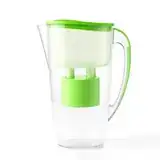
Clearly Filtered Water Filter Pitcher
Clearly Filtered Water Filter Pitcher
A renter-friendly option that needs no plumbing. Compare its published test results and replacement-filter cost with your water report.
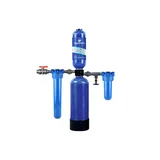
Aquasana Rhino Whole House Water Filter
Aquasana Rhino Whole House Water Filter
Whole-house filtration for chlorine taste and odor at every tap, including showers. Check whether your utility uses chloramine and plan for main-line installation.
Explore Our Top Picks
The Growing PFAS Problem in City Water
PFAS rules and compliance schedules can change. Read the current EPA guidance and your utility’s latest report rather than relying on a fixed deadline here. Match any home treatment to documented exact-model PFAS reduction claims.
PFAS occurrence varies by source and utility. Your local report and an appropriate laboratory test are more useful for treatment decisions than assuming every city has the same exposure.
Which Filters Remove PFAS from City Water?
Effective Against PFAS
- • Reverse osmosis: verify exact-model PFAS claims
- • Activated carbon: capacity and contact time matter
- • Specialty ion exchange: must target PFAS
- • Nanofiltration: verify tested system performance
NOT Effective Against PFAS
- • Boiling (concentrates PFAS)
- • Basic pitcher filters (most models)
- • UV sterilization
- • Water softeners
Key Questions, Answered
Do I need a filter for city water?
While city water is treated and generally safe by EPA standards, filtration is recommended for several reasons: removes chlorine taste and odor, eliminates THMs (chlorine byproducts linked to cancer), provides protection against lead from aging pipes, addresses contaminants that slip through treatment, and improves overall taste. Minimum recommendation: a carbon filter for chlorine removal. For comprehensive protection, consider an RO system, especially if your city has known contamination issues.
What's the best filter for city tap water?
Match the filter to your utility report and tap conditions. Carbon may suit chlorine taste, a certified lead-reduction filter may suit plumbing concerns, and RO may address specific dissolved contaminants. Check exact claims and upkeep rather than a universal removal percentage.
Does city water have chlorine?
Many utilities disinfect with chlorine or chloramine; check your utility report. A filter must be documented for the disinfectant used, particularly chloramine. Unexpected smell or appearance changes should be reported to the utility.
Frequently Asked Questions
Find Your Perfect City Water Filter
Remove chlorine, lead, and contaminants from municipal tap water with the right filtration system.
Understanding Water Quality Science
Water quality is determined by a complex interplay of dissolved minerals, organic compounds, and potential contaminants that vary significantly by geographic region and water source. Municipal water treatment facilities use multi-stage processes including coagulation, sedimentation, sand filtration, and chemical disinfection to meet EPA Safe Drinking Water Act standards. However, these treatment processes can introduce disinfection byproducts such as trihalomethanes and haloacetic acids, which form when chlorine reacts with naturally occurring organic matter in the source water.
Private well water faces different challenges, as it bypasses municipal treatment entirely and may contain naturally occurring contaminants like arsenic, radon, and heavy metals that leach from surrounding geological formations. The Environmental Protection Agency recommends annual testing for coliform bacteria, nitrates, total dissolved solids, and pH levels for all private wells. Additional testing for volatile organic compounds, pesticides, and heavy metals should be conducted if you live near agricultural areas, industrial sites, or old mining operations. Understanding your specific water chemistry is the critical first step in selecting the most effective filtration system for your household needs.
TDS measures dissolved substances, not specific contaminants or microbial safety. Mineral content and taste are separate from health and safety; choose treatment for laboratory findings and regard remineralization as optional.
Filtration Technology Comparison
Modern water filtration leverages several distinct technologies, each with unique strengths for addressing specific water quality challenges. Activated carbon filtration, the most common residential method, uses adsorption to capture chlorine, volatile organic compounds, and taste-affecting chemicals. Granular activated carbon (GAC) filters provide good flow rates but may allow channeling, while carbon block filters compress carbon particles for more consistent contact time and finer filtration down to 0.5 microns. Catalytic carbon represents the latest advancement, specifically engineered to break down chloramines through a catalytic reaction rather than simple adsorption.
Reverse osmosis can reduce specific dissolved contaminants, with performance depending on the exact model and inlet water. Verify certification for the contaminants in your test, check drain-water and installation requirements, and maintain prefilters and membranes. Household RO is not automatically a microbiological purifier.
Ion exchange technology, used in both water softeners and specialized contaminant removal systems, swaps problematic ions in the water with benign alternatives. Water softeners exchange calcium and magnesium ions for sodium ions, preventing scale buildup in plumbing and appliances. Specialized ion exchange resins can target specific contaminants like lead, nitrates, or perchlorate. Ultraviolet purification provides chemical-free disinfection by disrupting the DNA of bacteria, viruses, and protozoa at wavelengths around 254 nanometers. UV systems are particularly valuable for well water and as a final treatment stage in multi-barrier systems, though they do not remove chemical contaminants or improve taste.
Long-Term Cost Analysis
When evaluating water filtration costs, the total cost of ownership over five years provides a much more accurate picture than initial purchase price alone. A budget pitcher filter at thirty dollars may seem economical, but replacement filters at forty dollars every two months add up to over twelve hundred dollars in five years. Meanwhile, an under-sink system costing two hundred dollars upfront with sixty-dollar annual filter changes totals just five hundred dollars over the same period, delivering superior filtration at less than half the long-term cost.
Whole house filtration systems represent a larger initial investment of eight hundred to two thousand dollars including professional installation, but they protect all water fixtures and appliances simultaneously. When you factor in the extended lifespan of water heaters, dishwashers, and washing machines that no longer process unfiltered water, the return on investment often exceeds the system cost within three to four years. Water softener savings are particularly dramatic: the Water Quality Association estimates that soft water can reduce water heating costs by up to twenty-nine percent and extend appliance lifespans by thirty to fifty percent.
For households currently purchasing bottled water, any home filtration system provides massive savings. The average family spending twenty dollars per week on bottled water spends over five thousand dollars in five years. Even the most premium whole house filtration system with annual maintenance costs less than two thousand dollars over the same period, saving over three thousand dollars while eliminating hundreds of plastic bottles from landfills annually. The environmental and financial case for home filtration is compelling at every price point.
Related Articles
Best Whole House Water Filters 2026
Complete whole house filtration buyer's guide
SpringWell CF4: full review and verdict
20 GPM whole-house carbon filter for 4-6 bath homes
Aquasana Rhino Max Flow Review
NSF-certified pro-grade Aquasana whole-house filter
Is the SpringWell WHF Combo 4 (filter + softener) worth it?
CF4 + FutureSoft bundle for hard city water
In-depth Aquasana Rhino Pro Grade (UV + salt-free) breakdown
Carbon + UV + SimplySoft Aquasana stack
SpringWell CF4 or Aquasana Rhino EQ-1000? Full breakdown
Large-home whole house filter showdown