Step 1: Find your PFAS results
- City water: check your utility's water quality report or ask for its PFAS results by compound.
- Private well: use a certified lab that runs EPA Method 533 or 537.1. Home strips can't reach parts-per-trillion levels.
- Sample carefully: follow the lab's kit instructions, since some everyday products contain PFAS.
- Compare with the limits: EPA's 2024 rule set 4.0 ppt each for PFOA and PFOS. See EPA's PFAS drinking water page.
Sources, health effects and the rule's status are covered in PFAS in drinking water.
Step 2: Choose a filter for your result
| Your situation | Usual treatment | Watch out for |
|---|---|---|
| Kitchen tap, PFOA and PFOS detected | Certified under-sink carbon block | No wastewater; change cartridges on schedule |
| Short-chain PFAS or several contaminants | Under-sink reverse osmosis | Slower flow; sends some water to drain |
| Renting, no plumbing changes | Pitcher whose exact cartridge lists PFOA/PFOS | Small capacity; replace often |
| Whole house or high well results | Carbon or anion exchange sized by a pro | Needs a full test; short-chain PFAS break through sooner |
The older PFOA/PFOS certification test passes a filter at 70 parts per trillion, well above the 2024 limit of 4. Look at the reported reduction percentage, and test the filtered tap.
PFAS filters to compare
One RO system and one carbon block, both for the kitchen tap. Choose RO if your results include short-chain PFAS or other dissolved contaminants.
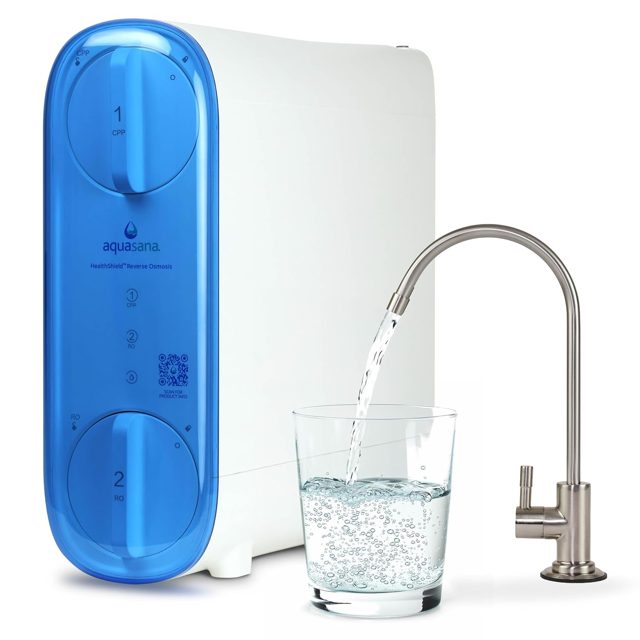
Aquasana Tankless Reverse Osmosis System (800 GPD)
Aquasana Tankless Reverse Osmosis System (800 GPD)
Aquasana's performance data sheet for this tankless model (AQ-HSRO800) shows 99.67% PFOA and PFOS reduction under NSF/ANSI 53, plus lead, fluoride and arsenic V reduction. The RO membrane also helps with short-chain PFAS that carbon handles less well.
Compare sizing, treatment options and ongoing costs in our best reverse osmosis systems guide.
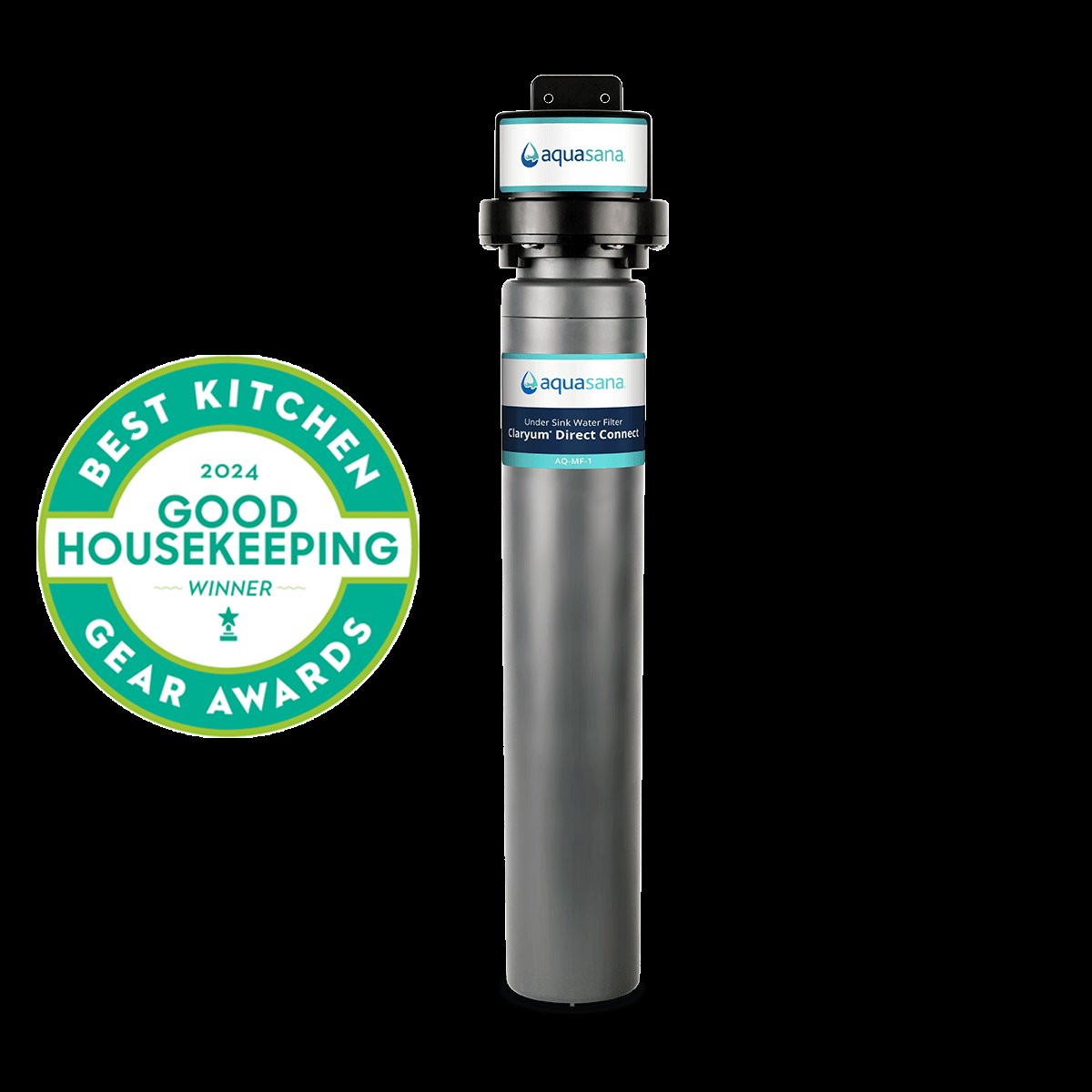
Aquasana Claryum Direct Connect (AQ-MF-1)
Aquasana Claryum Direct Connect (AQ-MF-1)
Aquasana's data sheet shows 95.8% PFOA and PFOS reduction, and the system is IAPMO certified to NSF/ANSI 42, 53 and 401. It keeps minerals in and runs through your existing faucet, with no drain line or tank.
Compare sizing, treatment options and ongoing costs in our best under-sink water filters guide.
Step 3: Install and maintain it
- Treat the water you drink and cook with, including the fridge or ice maker line if you can.
- Change cartridges by date or gallons, whichever comes first. PFAS breakthrough has no taste or smell.
- Write the install date on the housing or set a reminder.
Step 4: Retest the filtered water
Send a filtered-tap sample to the same lab, using the same method, after installing. Retest once a year, or sooner if your utility reports a change.
What doesn't remove PFAS
- Boiling slightly concentrates PFAS. See does boiling water remove PFAS.
- Pitchers without a PFAS claim on the exact cartridge.
- Water softeners and plain sediment filters.
Bottom line
Get your PFAS results, then filter drinking water with a certified carbon block or RO, change it on time and confirm with a lab test. Read the background in PFAS in drinking water, and compare products in our best PFAS filters guide and best reverse osmosis systems guide.