PFAS Water Testing Guide
How to find out whether your water contains PFAS, the long-lasting “forever chemicals,” how to get a reliable lab test, and which filters are certified to reduce them once you know what you are dealing with.
What Are PFAS "Forever Chemicals"?
PFAS (Per- and Polyfluoroalkyl Substances) are a group of over 9,000 man-made chemicals that don't break down naturally. They accumulate in your body and the environment forever - hence "forever chemicals."
Found In:
Non-stick pans, waterproof clothing, food packaging, firefighting foam, stain-resistant fabrics
Why Dangerous:
Never breaks down, accumulates in body, linked to cancer, liver damage, immune problems, thyroid disease
Assess Your PFAS Risk
Check all that apply to determine if you should test for PFAS
Types of PFAS in Water
PFOA (Perfluorooctanoic acid)
Common Uses:
Teflon manufacturing, food packaging
Health Effects:
Cancer, thyroid disease, high cholesterol
EPA Limit:
PFOS (Perfluorooctanesulfonic acid)
Common Uses:
Firefighting foam, stain repellents
Health Effects:
Liver damage, immune system effects, cancer
EPA Limit:
GenX Chemicals
Common Uses:
PFOA replacement in manufacturing
Health Effects:
Liver effects, kidney effects, developmental issues
EPA Limit:
PFNA, PFHxS, Others
Common Uses:
Various industrial applications
Health Effects:
Similar to PFOA/PFOS - hormone disruption, cancer risk
EPA Limit:
PFAS Testing Options
PFAS testing requires specialized laboratory equipment. Home test strips DO NOT exist for PFAS.
Tap Score PFAS Test
Most comprehensive at-home PFAS testing available. EPA-certified lab analysis.
7-10 days
Accuracy:
Detects:
All major PFAS compounds
How it works:
- 1.Order test kit online from Tap Score
- 2.Collect water sample per instructions (first draw)
- 3.Ship sample to EPA-certified laboratory
- 4.Lab tests for 44+ PFAS compounds using EPA Method 537.1
- 5.Receive detailed report with concentration levels
Pros:
- • Most comprehensive
- • EPA-certified
- • Tests 44+ PFAS types
- • Easy to use
Cons:
- • Most expensive option
- • Takes 1-2 weeks for results
SimpleLab PFAS Test
Reliable lab testing focusing on most common PFAS contaminants.
5-7 days
Accuracy:
Detects:
29 PFAS compounds
How it works:
- 1.Purchase kit from SimpleLab
- 2.Collect sample using provided sterile bottle
- 3.Mail to their partner laboratory
- 4.Lab analyzes for 29 major PFAS including PFOA and PFOS
- 5.Digital report with comparison to EPA health advisories
Pros:
- • Trusted lab network
- • Faster results
- • Good coverage of common PFAS
Cons:
- • Tests fewer compounds than Tap Score
- • Still expensive
MyTapScore Essential Metals + PFAS
Comprehensive test covering PFAS and other common contaminants.
7-10 days
Accuracy:
Detects:
PFAS + heavy metals combo
How it works:
- 1.Order comprehensive testing kit
- 2.Collect single sample for multiple tests
- 3.Laboratory runs full panel including PFAS, lead, arsenic, etc.
- 4.One report covers all contaminant types
- 5.Personalized recommendations included
Pros:
- • Tests multiple contaminants at once
- • Better value for comprehensive testing
- • Single sample
Cons:
- • Higher upfront cost
- • May test for things you don't need
State/Local Health Dept Testing
Some states offer free or subsidized PFAS testing in affected areas.
2-4 weeks
Accuracy:
Detects:
Depends on program
How it works:
- 1.Contact local health department
- 2.Ask about PFAS testing programs
- 3.May need to qualify based on location
- 4.Follow their collection procedures
- 5.Results timing varies by department
Pros:
- • Free or low cost
- • May include follow-up support
Cons:
- • Not available everywhere
- • May have long wait times
- • Limited to affected areas
PFAS Removal Filters
Reverse Osmosis
Most effective technology for PFAS removal - removes nearly all PFAS compounds
NSF/ANSI 58
APEC ROES-50
5-stage RO, NSF certified
iSpring RCC7AK
6-stage with remineralization
Waterdrop G3
Tankless RO system
Important Notes:
- •Look for NSF/ANSI 58 certification specifically for PFOA/PFOS
- •Regular membrane replacement critical
- •Removes virtually all PFAS types
Activated Carbon (GAC/Carbon Block)
Good option if specifically certified for PFAS - effectiveness varies by contact time
NSF/ANSI 53 for PFOA/PFOS
Aquasana AQ-5300+
Certified for PFOA/PFOS
Clearly Filtered
Pitcher certified for PFAS
Epic Water Filters
NSF 53 certified
Important Notes:
- •MUST have NSF 53 certification specifically for PFOA/PFOS
- •Standard carbon filters without certification won't work
- •Longer contact time = better removal
Ion Exchange
Specialized resins can remove PFAS, but must be designed for it
Specific PFAS certification required
Important Notes:
- •Not all ion exchange removes PFAS - check certifications
- •Can be effective but specialized systems needed
NOT Effective
These common filters do NOT effectively remove PFAS
Basic Brita/PUR pitchers
Standard models NOT certified
Faucet filters (most)
Unless specifically certified
Refrigerator filters
Generally not effective
Boiling water
Does NOT remove PFAS - concentrates it!
Important Notes:
- •Boiling water makes PFAS MORE concentrated
- •Generic carbon filters are not enough
- •Always check for specific PFAS certification
PFAS Reduction Strategies
Immediate Actions
- Don't boil water to remove PFAS - it concentrates them
- If high levels detected, use bottled water while installing filter
- Contact local water utility to report test results
- Avoid non-stick cookware and stain-resistant products
Long-term Solutions
- Install NSF 53 or NSF 58 certified filter for PFAS
- Replace filters on schedule - exhausted filters release PFAS
- Consider whole-house RO if levels are very high
- Test annually to monitor contamination levels
What Doesn't Work
- Boiling (makes it worse)
- UV light (no effect on PFAS)
- Standard pitcher filters
- Basic sediment filters
Certified PFAS Removal Systems
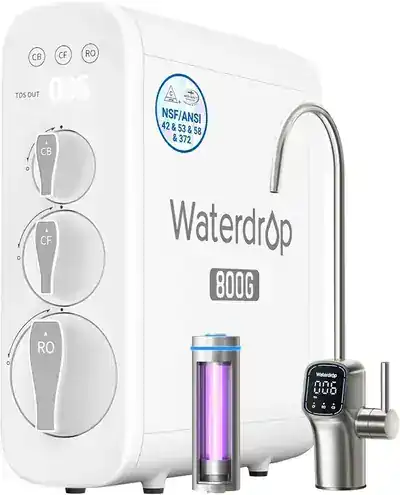
Waterdrop G3P800 — Best PFAS Removal
Tankless RO system removes 99.9% of PFAS including PFOA and PFOS. Real-time TDS monitoring confirms filtration effectiveness. 800 GPD capacity for large families.
View on Amazon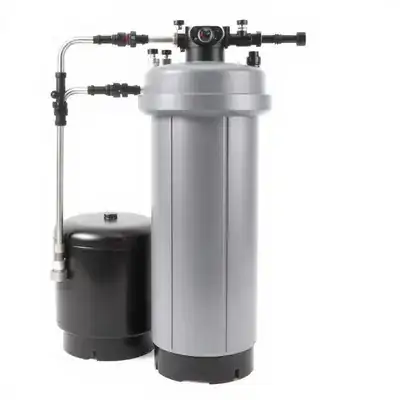
Aquasana Rhino — Best Whole House
NSF certified for PFOA and PFOS removal from every tap. Catalytic carbon with 1,000,000-gallon capacity. Protects showers and laundry from PFAS exposure too.
View on AmazonProtect Your Family from PFAS
PFAS contamination is widespread and dangerous, but the right filter can remove 90-99% of these forever chemicals.
PFAS Testing: Laboratory Methods & Regulatory Landscape
PFAS (per- and polyfluoroalkyl substances) testing requires specialized laboratory analysis because no reliable home test kits exist for these compounds. The EPA's final PFAS rule (April 2024) set maximum contaminant levels of 4 parts per trillion (ppt) for PFOA and PFOS individually, and hazard index limits for PFHxS, PFNA, HFPO-DA (GenX), and PFBS. These are among the strictest drinking water standards ever established—detecting contaminants at parts per trillion requires advanced instrumentation that only certified laboratories possess.
EPA Method 533 and 537.1 are the approved analytical methods for PFAS in drinking water. Method 537.1 targets 18 PFAS compounds including PFOA, PFOS, and other long-chain perfluoroalkyl acids. Method 533 expands coverage to 25 additional short-chain PFAS and newer replacements like GenX. Both methods use solid phase extraction (SPE) followed by liquid chromatography-tandem mass spectrometry (LC-MS/MS), achieving detection limits of 1-5 ppt—well below the new MCLs. When ordering PFAS testing, request both methods for the most comprehensive coverage.
Where to get PFAS testing: Tap Score ($299 for 44+ PFAS compounds) offers the most user-friendly experience with detailed results and treatment recommendations. SimpleLab ($249 for 29 compounds) provides excellent value. Eurofins and SGS are the largest commercial laboratories offering certified PFAS testing for $200-400. Some states (Michigan, New Hampshire, Vermont, New Jersey) offer free or subsidized PFAS testing for private well owners in contaminated areas—check your state health department before paying for private testing.
Sample collection for PFAS requires special precautions because PFAS contamination is ubiquitous—many common materials contain PFAS that can contaminate your sample. Use ONLY the laboratory-provided PFAS-free sample containers. Do not use any containers that have been in contact with non-stick coatings, waterproof clothing, food packaging, or stain-resistant fabrics. Wash your hands with PFAS-free soap before collection. Remove the faucet aerator and run cold water for 2 minutes before collecting. Fill to the marked line and ship on ice within 24 hours.
Interpreting PFAS results: The new EPA MCLs (effective 2024, full compliance by 2029) set individual limits for PFOA and PFOS at 4 ppt each. For PFHxS, PFNA, HFPO-DA, and PFBS, a hazard index calculation determines compliance—the sum of each compound's concentration divided by its health-based water concentration must be below 1.0. If your results exceed any limit, install reverse osmosis filtration (95-99% PFAS removal) or activated carbon (60-90% removal of long-chain PFAS). Ion exchange resin achieves 99%+ removal for the broadest range of PFAS compounds but is more expensive than RO for residential use.
Who should test for PFAS: Priority testing is recommended if you live within 5 miles of military bases or airports (AFFF firefighting foam), industrial facilities that manufacture or use PFAS, wastewater treatment plant discharge points, or landfills accepting industrial waste. Municipal water customers can check the EPA's PFAS testing dashboard for results from their utility. Private well owners in affected areas should test annually until contamination is confirmed absent—PFAS plumes migrate slowly through groundwater and may take years to reach your well. For comprehensive water quality assessment, combine PFAS testing with a standard contaminant panel to address all potential threats simultaneously.
PFAS Treatment Verification & Ongoing Monitoring
After installing a PFAS removal system, post-treatment verification testing is essential because PFAS breakthrough occurs gradually and is undetectable by taste, odor, or visual inspection. Test post-filter water through a certified lab within 30 days of installation to confirm baseline performance, then retest every 6-12 months. For reverse osmosis systems, expect 95-99% PFAS reduction; for activated carbon, expect 60-90% depending on the specific PFAS compound and carbon type. If post-treatment levels exceed 4 ppt for PFOA or PFOS, replace the filter media immediately regardless of the manufacturer's rated capacity. Keep all test results documented—this data is valuable for warranty claims, real estate disclosures, and potential litigation against PFAS polluters in your area.
Municipal water systems must achieve compliance with the new EPA PFAS rules by 2029, but many utilities are already installing granular activated carbon or ion exchange treatment. Check your utility's compliance timeline—if treatment is planned within 1-2 years, a temporary point-of-use solution may suffice. For private well owners in contaminated areas, PFAS treatment is entirely your responsibility, making proper testing and filtration critical for long-term health protection.
Frequently Asked Questions
Related Resources
Explore Our Top Picks
Best Whole House Filters
Whole-home water treatment solutions
Best Well Water Filters
Complete well water treatment systems
Best Water Softeners
Hard water and scale prevention
Best Countertop Filters
No-install countertop filtration
Best Water Pitchers
Budget-friendly filtered water
Water Test Kits
Verify your water quality
Understanding Water Quality Science
Water quality is determined by a complex interplay of dissolved minerals, organic compounds, and potential contaminants that vary significantly by geographic region and water source. Municipal water treatment facilities use multi-stage processes including coagulation, sedimentation, sand filtration, and chemical disinfection to meet EPA Safe Drinking Water Act standards. However, these treatment processes can introduce disinfection byproducts such as trihalomethanes and haloacetic acids, which form when chlorine reacts with naturally occurring organic matter in the source water.
Private well water faces different challenges, as it bypasses municipal treatment entirely and may contain naturally occurring contaminants like arsenic, radon, and heavy metals that leach from surrounding geological formations. The Environmental Protection Agency recommends annual testing for coliform bacteria, nitrates, total dissolved solids, and pH levels for all private wells. Additional testing for volatile organic compounds, pesticides, and heavy metals should be conducted if you live near agricultural areas, industrial sites, or old mining operations. Understanding your specific water chemistry is the critical first step in selecting the most effective filtration system for your household needs.
Total dissolved solids (TDS) measurements provide a general indicator of water purity but should not be the sole basis for filtration decisions. Water with high TDS from beneficial minerals like calcium and magnesium may actually be healthier than ultra-purified water. The World Health Organization has noted that demineralized water may have adverse health effects due to the absence of essential minerals. This is why many advanced filtration systems, particularly reverse osmosis units, now include remineralization stages that add back beneficial minerals after removing contaminants. The ideal approach balances contaminant removal with mineral retention, targeting specific harmful substances identified through comprehensive water testing while preserving the natural mineral content that contributes to both taste and health benefits.
Filtration Technology Comparison
Modern water filtration leverages several distinct technologies, each with unique strengths for addressing specific water quality challenges. Activated carbon filtration, the most common residential method, uses adsorption to capture chlorine, volatile organic compounds, and taste-affecting chemicals. Granular activated carbon (GAC) filters provide good flow rates but may allow channeling, while carbon block filters compress carbon particles for more consistent contact time and finer filtration down to 0.5 microns. Catalytic carbon represents the latest advancement, specifically engineered to break down chloramines through a catalytic reaction rather than simple adsorption.
Reverse osmosis systems force water through a semipermeable membrane with pore sizes as small as 0.0001 microns, effectively removing dissolved solids, heavy metals, and most microorganisms. Modern RO systems achieve 95-99 percent rejection rates for contaminants like lead, arsenic, fluoride, and PFAS compounds. The primary considerations for RO systems include water waste ratios (typically 3:1 to 4:1 for standard systems, improved to 1:1 in premium tankless models), storage tank requirements, and the need for pre-filtration to protect the delicate membrane from sediment and chlorine damage.
Ion exchange technology, used in both water softeners and specialized contaminant removal systems, swaps problematic ions in the water with benign alternatives. Water softeners exchange calcium and magnesium ions for sodium ions, preventing scale buildup in plumbing and appliances. Specialized ion exchange resins can target specific contaminants like lead, nitrates, or perchlorate. Ultraviolet purification provides chemical-free disinfection by disrupting the DNA of bacteria, viruses, and protozoa at wavelengths around 254 nanometers. UV systems are particularly valuable for well water and as a final treatment stage in multi-barrier systems, though they do not remove chemical contaminants or improve taste.
Long-Term Cost Analysis
When evaluating water filtration costs, the total cost of ownership over five years provides a much more accurate picture than initial purchase price alone. A budget pitcher filter at thirty dollars may seem economical, but replacement filters at forty dollars every two months add up to over twelve hundred dollars in five years. Meanwhile, an under-sink system costing two hundred dollars upfront with sixty-dollar annual filter changes totals just five hundred dollars over the same period, delivering superior filtration at less than half the long-term cost.
Whole house filtration systems represent a larger initial investment of eight hundred to two thousand dollars including professional installation, but they protect all water fixtures and appliances simultaneously. When you factor in the extended lifespan of water heaters, dishwashers, and washing machines that no longer process unfiltered water, the return on investment often exceeds the system cost within three to four years. Water softener savings are particularly dramatic: the Water Quality Association estimates that soft water can reduce water heating costs by up to twenty-nine percent and extend appliance lifespans by thirty to fifty percent.
For households currently purchasing bottled water, any home filtration system provides massive savings. The average family spending twenty dollars per week on bottled water spends over five thousand dollars in five years. Even the most premium whole house filtration system with annual maintenance costs less than two thousand dollars over the same period, saving over three thousand dollars while eliminating hundreds of plastic bottles from landfills annually. The environmental and financial case for home filtration is compelling at every price point.
Related Articles
More on Water Filter Buying Guide
Complete guide to choosing the right filter
How Water Filters Work
Understanding filtration technologies explained
Read: Water Filter Cost Comparison
Annual costs across all filter types
Water Testing Kits Guide
Test your water before buying a filter
Filter Replacement Guide
When and how to replace filter cartridges
Water Filter Health Benefits
Health advantages of filtered water