ZeroWater vs Brita vs PUR: The Definitive Pitcher Filter Comparison
Three brands dominate the pitcher filter market, but they differ in what they're certified to remove, how long a filter lasts and what the water tastes like. Here's a plain comparison from the makers' current data sheets.
Quick Verdict
ZeroWater
Removes nearly all dissolved solids and is certified for lead, chromium-6, mercury and PFOA/PFOS. The filter is rated for only 15 gallons, so it costs the most to run.
Best for: very low TDS, known chromium or PFOA/PFOS concerns
Brita Elite
Certified for lead, keeps minerals for a familiar taste and lasts 120 gallons, so you change it about twice a year.
Best for: everyday city water, chlorine taste and lead
PUR PLUS
Since September 2026 the PUR PLUS filter is certified for lead, microplastics and Total PFAS. Filters last 40 gallons.
Best for: PFAS in a pitcher at a low upfront price
Head-to-Head Comparison
Figures come from each maker's published performance data and certification notices. Certification applies to the named filter only: the basic PUR and Brita Standard filters do not carry these lead or PFAS claims.
| Feature | ZeroWater 5-Stage | Brita Elite | PUR PLUS |
|---|---|---|---|
| Media | Carbon + ion exchange (5 stages) | Pleated carbon + ion exchange | Carbon + ion exchange |
| Lead | Certified | Certified | Certified |
| PFAS | Certified for PFOA/PFOS | Claimed for PFOA/PFOS; confirm current listing | Certified for Total PFAS (Sept 2026) |
| Microplastics | No claim listed | Check current data sheet | Certified |
| Chlorine taste and odor | Yes | Yes | Yes |
| Dissolved solids (TDS) | Removes nearly all | Minimal change | Minimal change |
| Rated filter life | 15 gallons | 120 gallons (about 6 months) | 40 gallons (about 2 months) |
| Running cost | Highest | Lowest | Middle |
| TDS meter included | Yes | No | No |
| Taste | Flat, like distilled water | Familiar, minerals kept | Familiar, minerals kept |
Deep Dive: ZeroWater
ZeroWater's 5-stage filter pairs carbon with a large ion-exchange stage that pulls out nearly all dissolved solids. Its data sheet lists IAPMO certification to NSF/ANSI 42 and 53 for chlorine, lead, hexavalent chromium, mercury and PFOA/PFOS, and every pitcher ships with a TDS meter so you can see when the filter is spent.
Strengths
- • Certified for lead, chromium-6, mercury and PFOA/PFOS
- • Removes nearly all dissolved solids
- • Included TDS meter shows when to replace
Weaknesses
- • Rated for only 15 gallons per filter
- • Highest running cost of the three
- • Flat, mineral-free taste many people dislike
- • Slower to filter a full pitcher
Deep Dive: Brita Elite
Brita Elite (formerly Longlast+) uses pleated media and is certified to NSF/ANSI 53 for lead. Brita says it reduces about 30 contaminants and lasts 120 gallons, three times the Standard filter. Brita also says Elite reduces PFOA and PFOS, but the US data sheet it currently links does not clearly list that claim, so confirm it if PFAS is your main concern. See all options in our best pitcher filter roundup.
Strengths
- • Longest filter life (120 gallons, about 6 months)
- • Lowest running cost of the three
- • Familiar taste because minerals stay in
- • Fits all Brita pitchers and dispensers
Weaknesses
- • PFAS claim harder to confirm than PUR PLUS or ZeroWater
- • No TDS or fluoride reduction
- • The cheaper Standard filter has no lead claim
Deep Dive: PUR PLUS
PUR PLUS filters (PPF951K) use carbon and ion-exchange media. In September 2026 PUR announced IAPMO certification to NSF/ANSI 42, 53 and 401 covering lead, microplastics and Total PFAS. PUR also sells matching faucet-mount filters, useful if you want both from one brand.
Strengths
- • Certified for lead, microplastics and Total PFAS
- • Low upfront price and wide store availability
- • Matching faucet-mount option
Weaknesses
- • Filters last only 40 gallons (about 2 months)
- • Flow can slow as the filter loads up
- • The basic PUR filter looks similar but lacks these claims
Our Recommendation
For most city-water households: Brita Elite balances lead reduction, taste and the fewest filter changes. If you want more than a pitcher can do, compare under-sink filters.
If PFAS is the concern: PUR PLUS (Total PFAS) or ZeroWater (PFOA/PFOS) carry the clearer certifications. For the kitchen tap, a reverse osmosis system covers PFAS and more without frequent pitcher filter changes.
If you want very low TDS: ZeroWater is the only one of the three that removes dissolved solids, at the highest running cost.
Pitchers to Compare
Exact products we link to. Check the current price and filter model before you buy.
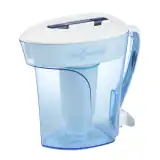
ZeroWater 10-Cup Pitcher
ZeroWater 10-Cup Pitcher
Certified for lead, chromium-6, mercury and PFOA/PFOS, with a TDS meter in the box. Budget for frequent filter changes.
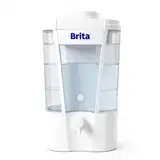
Brita UltraMax Dispenser
Brita UltraMax Dispenser
A large-capacity Brita dispenser for families. Pair it with an Elite filter if you want the lead claim; the Standard filter has none.
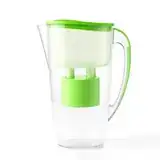
Clearly Filtered Water Pitcher with Affinity Filter
Clearly Filtered Water Pitcher with Affinity Filter
Another pitcher to compare if you want a broad published reduction list. Check its current data sheet against your water report.