Well Water Smells Like Eggs: Complete Fix Guide
Eliminate the rotten egg smell from your well water permanently with these proven solutions. Covers hydrogen sulfide chemistry, diagnostic testing, and treatment system selection for every concentration level.
Recommended Products
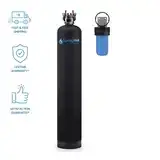
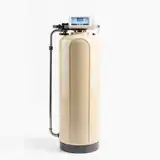
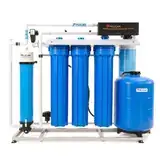
Explore Our Top Picks
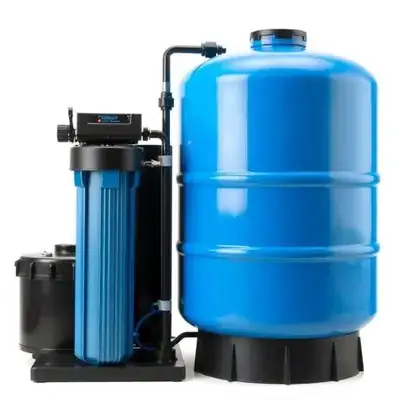
Understanding Hydrogen Sulfide: The Chemistry Behind the Smell
The rotten egg odor in well water is caused by hydrogen sulfide (H₂S), a colorless gas that's detectable by smell at concentrations as low as 0.05 parts per million (ppm)—roughly 50 parts per billion. At this threshold, most people describe a faint "sulfur" or "match-head" smell. As concentrations increase, the odor intensifies dramatically: at 1-3 ppm, the smell is strong and unpleasant; at 5+ ppm, it becomes nauseating; and at concentrations above 100 ppm, H₂S actually desensitizes your olfactory receptors—you stop smelling it while it continues to be toxic. This olfactory fatigue phenomenon is why high H₂S concentrations in confined spaces (well pits, pump houses) can be genuinely dangerous.
H₂S in well water originates from two primary sources: biological and geological. Sulfate-reducing bacteria (SRB, primarily Desulfovibrio species) are the most common biological source. These anaerobic bacteria thrive in oxygen-depleted groundwater environments and metabolize dissolved sulfate (SO₄²⁻) minerals—reducing them to hydrogen sulfide as a metabolic byproduct. This is essentially the same process that makes swamps and marshes smell like rotten eggs. The geological source involves the dissolution of sulfide-bearing minerals (pyrite, galena) in aquifer rock formations, which releases H₂S directly into groundwater without bacterial involvement.
The behavior of H₂S in water is pH-dependent, which has important implications for treatment. At pH below 7 (acidic), most sulfide exists as dissolved H₂S gas—easily removed by aeration or oxidation. At pH 7-9, sulfide splits between H₂S and HS⁻ (bisulfide ion). Above pH 9, nearly all sulfide exists as HS⁻, which is harder to remove by aeration alone. Most well water falls in the 6.5-8.0 pH range, making oxidation-based treatment highly effective.
H₂S Concentration Reference Guide
| Level (ppm) | Smell Intensity | Health Risk | Recommended Treatment |
|---|---|---|---|
| 0.05-0.3 | Faint | None | Catalytic carbon filter |
| 0.3-1.0 | Noticeable | Minimal | Catalytic carbon or AIO |
| 1.0-3.0 | Strong | Low | Air injection oxidation (AIO) |
| 3.0-8.0 | Very strong | Moderate | AIO or chlorination |
| 8.0+ | Overwhelming | Significant | Chlorination + carbon post-filter |
Step-by-Step Diagnostic: Identify the Source of the Smell
Before choosing a solution, you need to determine where the odor is coming from. This diagnostic process takes 30-60 minutes and saves you from installing the wrong treatment system. Many homeowners waste $1,000+ by treating the well when the problem is actually in the water heater.
Test 1: Hot vs Cold Water Isolation
Run both hot and cold water separately at multiple taps.
Only hot water smells:
- Problem is in your water heater
- Sulfur bacteria growing in the tank
- Magnesium anode rod reacting with bacteria
- Solution: Replace anode rod ($20-50 DIY) or flush/sanitize tank
Both hot AND cold smell:
- Hydrogen sulfide is in the well water itself
- Requires whole-house treatment
- Most common scenario for well owners
- Solution: Oxidation system or chlorination
Test 2: First Draw vs Flushed Water
If smell only appears after water sits unused for several hours:
- Sulfur bacteria growing in your plumbing or pressure tank
- Biofilm has established in pipes (common in older homes)
- May need to sanitize pipes, pressure tank, and well casing
- Consider adding a continuous chlorination system for ongoing disinfection
Test 3: Wellhead vs House Tap
Collect water directly at the wellhead (before pressure tank) and compare to house tap:
- If wellhead water smells: H₂S is in the aquifer/well—geological or SRB source
- If only house tap smells: Bacteria colonized pressure tank or plumbing
- This test is the most diagnostic but requires wellhead access
- A professional can also test at the wellhead for precise H₂S concentration
Treatment Solutions Ranked by Effectiveness
The right treatment depends entirely on your H₂S concentration level. Using an undersized system leads to breakthrough (smell returns), while an oversized system wastes money. Get your H₂S levels tested before purchasing any treatment system. Here are all viable treatment technologies ranked by effectiveness, with detailed cost and performance data for each.
Best Overall Solution
Air Injection Oxidation (AIO) System
Air injection oxidation is the most popular and effective treatment for moderate H₂S levels (1-8 ppm). The system draws air into a pressure tank through a venturi valve or dedicated air pump, creating an oxidation chamber where dissolved H₂S gas is converted to solid elemental sulfur particles. These particles are then trapped in a filter bed (typically birm, manganese greensand, or catalytic carbon) and automatically backwashed to drain every few days.
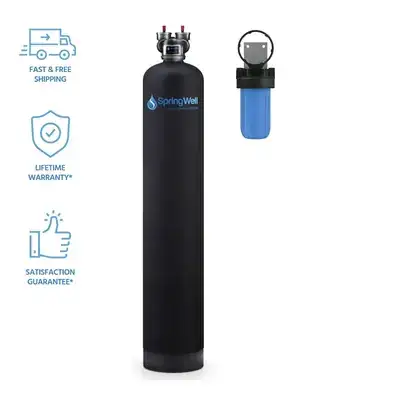
The key advantage of AIO is that it requires no chemicals—the oxidation uses atmospheric air, making it the most environmentally friendly and lowest-maintenance option. AIO systems also simultaneously oxidize dissolved iron (up to 7 ppm) and manganese (up to 1 ppm), addressing the co-contaminants that commonly accompany H₂S in well water. The SpringWell WS system uses this technology with a patented air pocket design.
- Removes up to 8 ppm of hydrogen sulfide completely
- Also removes iron (7 ppm), manganese (1 ppm), sediment
- No chemicals, no salt, no ongoing consumables
- Automatic backwash—self-cleaning media bed
- Media lasts 5-8 years before replacement ($150-300)
Cost: $1,500-3,000 installed | Annual maintenance: $50-100
Best for High Sulfide Levels (8+ ppm)
Chlorination + Carbon Filter System
For H₂S concentrations above 8 ppm, or when sulfur bacteria are the primary source, continuous chlorination is the most reliable treatment. A chemical feed pump injects a precise dose of sodium hypochlorite (bleach) solution into the water line upstream of a contact tank, providing 20+ minutes of contact time for complete oxidation and disinfection. A whole-house activated carbon filter downstream removes residual chlorine taste and odor, plus any remaining oxidized sulfur particles.
- Handles very high sulfide levels (8-20+ ppm)
- Kills sulfur bacteria completely—prevents regrowth
- Also disinfects entire water supply (coliform, E. coli)
- Requires periodic chlorine refills ($50-100/year)
Cost: $1,500-3,500 installed | Annual maintenance: $100-200
Best Budget Solution (Low H₂S)
Catalytic Carbon Filter (Point-of-Entry)
Catalytic carbon is a specialized form of activated carbon with enhanced surface chemistry that accelerates the oxidation of hydrogen sulfide. Unlike standard GAC, catalytic carbon's modified surface acts as a catalyst—facilitating the conversion of dissolved H₂S to solid sulfur without requiring external oxidant injection. This makes it the simplest and most affordable whole-house H₂S treatment, though it's limited to low concentrations.
- Good for low to moderate H₂S (under 3 ppm)
- No chemicals, no electricity needed
- Also improves taste and removes chlorine, VOCs
- Lower upfront cost than oxidation systems
Cost: $600-1,200 installed | Media replacement: Every 3-5 years ($200-400)
Quick Fix for Water Heater Only
Replace Water Heater Anode Rod
If the smell is only in hot water, the magnesium anode rod is likely reacting with sulfur bacteria in the tank. The magnesium provides electrons that sulfate-reducing bacteria use as an energy source, accelerating H₂S production. Switching to an aluminum/zinc anode eliminates this reaction while still protecting the tank from corrosion.
- Replace with aluminum/zinc anode rod
- Flush and sanitize the water heater tank with bleach
- Cost: $20-50 DIY or $150-300 professional
- Also consider raising water heater to 140°F to kill bacteria
Co-Contaminants: What Else Lurks in Sulfurous Well Water
Hydrogen sulfide rarely exists alone in well water. The same geological and biological conditions that produce H₂S typically create a cocktail of co-contaminants that require a multi-stage treatment approach. Understanding these relationships is critical for designing an effective treatment system—treating H₂S alone while ignoring iron or manganese leads to premature media fouling and system failure.
| Co-Contaminant | Common Level | Symptoms | Treatment Sequence | Added Cost |
|---|---|---|---|---|
| Iron (Fe²⁺) | 0.3-10 ppm | Orange/red staining | AIO treats simultaneously | $0 (same system) |
| Manganese (Mn²⁺) | 0.05-2 ppm | Black staining | AIO treats simultaneously | $0 (same system) |
| Hardness (Ca/Mg) | 10-25 GPG | Scale, dry skin | Softener AFTER iron/H₂S | $600-1,500 |
| Low pH (acidic) | 5.5-6.5 | Blue-green staining | Calcite neutralizer FIRST | $500-1,000 |
| Coliform bacteria | Present/Absent | Health risk | Chlorination or UV disinfection | $500-1,500 |
| Tannins (organics) | 0.5-5 ppm | Yellow/tea color | Anion exchange after oxidation | $800-1,500 |
Treatment sequence matters: For wells with multiple contaminants, the correct installation order is typically: Sediment pre-filter → pH neutralizer (if needed) → Air injection oxidation (iron, manganese, H₂S) → Water softener (if needed) → Carbon post-filter → RO system for drinking water. Installing components out of order can damage downstream equipment. See our well water maintenance guide for detailed sequencing instructions.
DIY vs Professional Installation: Full Cost Comparison
DIY Well Shock Treatment
Cost: $50-100
Effectiveness: Temporary fix (weeks to months)
Difficulty: Moderate (requires wellhead access)
Pour chlorine bleach down well, circulate through plumbing, flush out. Kills bacteria but doesn't prevent regrowth. Repeat every 3-6 months or install permanent system.
DIY Shock Treatment Steps:
- Turn off well pump at breaker
- Remove well cap and pour 1 gallon of unscented household bleach per 100 feet of well depth
- Connect garden hose to outdoor spigot, run back into well for 30 minutes to circulate
- Open each tap until you smell chlorine, then close
- Let sit 12-24 hours (do not use water)
- Flush system through outdoor spigot until chlorine smell dissipates
Professional Treatment System
Cost: $1,000-3,500 installed
Effectiveness: Permanent solution
Difficulty: None (professional handles everything)
One-time installation provides ongoing treatment. No more smell, ever. Best long-term value. Professional testing identifies exact H₂S concentration and co-contaminants for precise system sizing.
Professional Installation Includes:
- • Comprehensive water analysis ($100-200 value)
- • System sizing based on flow rate and contamination levels
- • Plumbing connections and bypass valve installation
- • Drain line connection for backwash
- • System programming and calibration
- • 1-year warranty on installation labor
Preventing Sulfur Smell from Returning
Even after installing treatment, sulfur bacteria can re-establish if conditions are favorable. These preventive measures reduce the likelihood of smell recurrence and extend treatment system life. Regular well water maintenance is essential for all well owners, not just those with H₂S issues.
Annual Well Sanitization
Shock-chlorinate the well annually even with a treatment system. This kills bacterial biofilms that build up in the well casing and pipe joints—areas your treatment system can't reach.
Pressure Tank Maintenance
Drain and sanitize the pressure tank every 6-12 months. The warm, dark interior is ideal for SRB colonization. Maintain proper air charge (typically 2 PSI below cut-in pressure) to prevent waterlogging.
Water Heater Management
Set water heater temperature to at least 140°F (check local codes) to inhibit bacterial growth. Flush the tank annually to remove sediment where bacteria thrive. Use an aluminum/zinc anode instead of magnesium—many water softener troubleshooting issues trace back to anode rod interactions.
Regular Water Testing
Test for H₂S, iron, manganese, pH, and bacteria annually. Changes in any parameter can indicate aquifer shifts, well integrity issues, or treatment system decline. Professional field testing costs $150-300 and provides immediate results.
Frequently Asked Questions
Related Articles
Eliminate Rotten Egg Smell Permanently
Test your water to measure H₂S levels and choose the right treatment system.