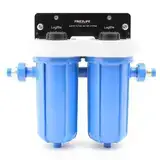
Complete installation instructions for under sink, whole house, and pitcher water filters
Updated May 18, 2026
Before You Start
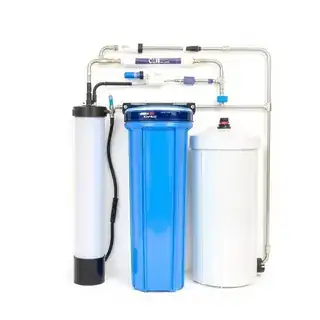
Installation difficulty varies by filter type. Under sink filters typically take 1-3 hours for DIY. Whole house systems may require professional installation if you're not comfortable with plumbing. Still choosing a system? Compare under sink water filters for kitchen use or whole house water filters for treatment at the main supply, checking the exact model's fitting sizes and clearance before buying.
Tools & Materials Needed
Basic Tools
Adjustable wrench
Screwdriver (Phillips and flathead)
Drill with 1/2" and 3/8" bits
Teflon tape
Bucket and towels
Optional (Depends on System)
Pipe cutter
Pipe wrench
Hacksaw
Level
Under Sink Filter Installation
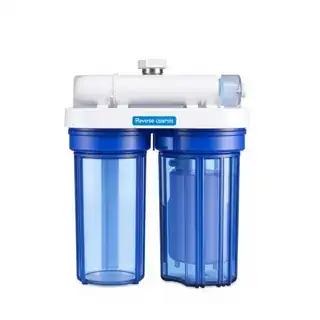
A carbon filter and an RO system have different connection requirements. Compare reverse osmosis systems for tank space, drain requirements and any power supply. If drilling or plumbing changes are unsuitable, consider countertop water filters and check whether the model needs a faucet connection or uses a refillable reservoir.
1
Turn Off Water Supply
Shut off the cold water valve under your sink. Turn on the faucet to release pressure and drain remaining water.
2
Install Feed Water Adapter
Disconnect the cold water line from the faucet. Install the T-adapter between the shut-off valve and faucet supply line.
Tip: Wrap threads with Teflon tape (3-5 wraps clockwise) to prevent leaks.
3
Drill Hole for Faucet (If Needed)
If your system includes a dedicated faucet, drill a 1/2" hole in sink or countertop. Use the provided gasket and mount the faucet.
Note: Some filters connect to existing faucet instead - check your manual.
4
Mount Filter Housing
Mark and drill holes for mounting bracket. Secure filter housing to cabinet wall. Ensure it's level and easily accessible for filter changes.
5
Connect Tubing
Feed water line: Connect from T-adapter to filter inlet
Output line: Connect filter outlet to faucet
Drain line (RO systems): Connect drain saddle to sink drain pipe
Important: Push tubing firmly into quick-connect fittings until you feel resistance. Tug to confirm it's secure.
6
Flush and Test
Turn water back on slowly. Check all connections for leaks.
Flush system: Run water for 5-10 minutes (or per manual) to remove carbon fines and activate filters.
For RO systems, allow tank to fill completely (2-4 hours), then drain and refill before drinking.
Whole House Filter Installation
Professional Installation Recommended
Whole house systems require cutting into main water line. If you're not experienced with plumbing, hire a professional ($200-500 installation).
Installation Overview
1. Locate installation point: After water meter, before water heater and any branch lines
2. Shut off main water: Turn off at meter or main shutoff valve
3. Cut pipe: Use pipe cutter to create gap for filter housing
4. Install inlet/outlet fittings: Based on pipe type (copper, PEX, PVC)
5. Mount housing: Attach to wall studs with provided bracket
6. Connect pipes: Install shut-off valves before and after filter
7. Pressure test: Slowly turn water back on, check for leaks
8. Flush system: Run water for 5-10 minutes to clear carbon fines
Pitcher & Countertop Installation
Water Pitcher Filters
1. Rinse pitcher and reservoir with water
2. Soak filter in cold water for 15 minutes
3. Insert filter into reservoir and lock in place
4. Fill reservoir and discard first 2 pitchers of water
5. Pitcher is ready to use!
Countertop Filters
1. Remove faucet aerator from your tap
2. Attach diverter valve to faucet threads
3. Connect filter to diverter with tubing
4. Flush filter for 5 minutes before use
5. Switch diverter when you want filtered water
Common Installation Mistakes
Not flushing the system: Always flush per manufacturer instructions to remove carbon particles
Wrong filter orientation: Check for "IN" and "OUT" arrows on housing
Over-tightening connections: Hand-tight plus 1/4 turn with wrench is usually enough
Forgetting drain line (RO): RO systems MUST have drain connection for waste water
Not leaving service space: Install where you can easily access for filter changes
Troubleshooting After Installation
Low Water Flow
• Check that all shut-off valves are fully open
• Ensure filter isn't clogged (shouldn't be brand new)
Many filter manufacturers offer professional installation services or can recommend certified installers in your area.
Installation & Maintenance Guide
Pre-Installation Planning
Successful water filter installation begins with assessment: measure available space, verify water pressure (40-80 PSI optimal), identify pipe material (copper, PEX, CPVC, galvanized), and locate the main shutoff valve. For under-sink systems, confirm cabinet dimensions accommodate the filter housing and storage tank. Whole-house systems require a bypass valve for maintenance periods and adequate drainage for backwash discharge. Gather tools before starting: pipe cutter, adjustable wrenches, Teflon tape, bucket for drainage, and towels for spills. Having a plumber's phone number on standby provides peace of mind for DIY installations.
Common Installation Mistakes
The most frequent installation errors include: failing to flush new filters before use (allowing carbon fines to enter drinking water), over-tightening connections (cracking housings or stripping threads), installing the filter housing upside-down (reversing flow direction), neglecting to install a shutoff valve before the filter (making future maintenance difficult), and forgetting to drill a drain connection for RO waste water. Using push-fit connectors (SharkBite or John Guest) eliminates threading errors and speeds installation significantly. Always test connections at full pressure for 24 hours before closing up cabinets or walls.
Maintenance Schedule by System Type
Pitcher filters: replace every 2-3 months or per manufacturer recommendation. Faucet-mount filters: replace every 3-6 months; clean aerator connection monthly. Under-sink carbon: replace every 6-12 months; check for leaks quarterly. Reverse osmosis: replace pre/post filters every 6-12 months, membrane every 2-3 years; sanitize annually. Whole-house carbon: replace media every 5-10 years; replace sediment pre-filter every 3-6 months. Whole-house softener: add salt monthly, clean brine tank annually, replace resin every 8-10 years. UV systems: replace lamp annually, clean quartz sleeve every 6 months. Setting calendar reminders for each maintenance task ensures consistent filter performance and prevents contaminant breakthrough from overused filters.
Choosing the Right Filtration Investment
Making the right water filtration investment requires balancing four key factors: contaminant coverage, operating costs, convenience, and household size. Start by identifying your priority contaminants through water testing, then match filtration technology to those specific threats. A family of four consuming 3 gallons daily should prioritize systems with low per-gallon costs and long filter lives. Single occupants or couples can optimize for convenience with pitcher or faucet-mount options. Renters should focus on portable, no-installation solutions that move with them. Homeowners have the widest range of options and should consider whole-house systems for comprehensive protection of all water uses including bathing, cooking, and laundry.
The best approach for most families is a layered strategy: a whole-house sediment and carbon filter ($300-800) removes chlorine, sediment, and VOCs from all household water, protecting appliances, improving shower water quality, and extending the life of downstream filters. Add a point-of-use system at the kitchen tap - either an under-sink carbon block ($100-250) for solid general protection or reverse osmosis ($150-400) for maximum contaminant removal including lead, PFAS, fluoride, and nitrates. This two-tier approach provides the best balance of comprehensive coverage, reasonable cost, and targeted protection where you need it most. Annual maintenance costs for this combination run $80-200, a fraction of bottled water expenses while delivering superior water quality throughout your entire home.
Regional Water Quality Variations Across the US
Water quality varies dramatically across the United States due to differences in source water, treatment methods, and distribution infrastructure. The Southwest and Great Plains regions typically have the hardest water (15-30+ GPG), driven by limestone and dolomite geological formations. Coastal and Pacific Northwest areas generally enjoy softer water (0-7 GPG) from mountain snowmelt and rainfall-fed reservoirs. Industrial areas in the Midwest and Northeast face higher risks of PFAS, VOC, and heavy metal contamination from legacy manufacturing operations. Agricultural regions across the Central Valley, Corn Belt, and Mississippi Delta contend with elevated nitrate and pesticide levels from farming runoff.
Municipal treatment approaches also vary: approximately 70% of US utilities use chlorine for disinfection, while 30% use chloramines (combined chlorine and ammonia). Chloramine-treated water requires specialized filtration - standard activated carbon provides limited removal, while catalytic carbon effectively breaks down chloramines. Some progressive utilities employ advanced treatment including ozonation, UV disinfection, and granular activated carbon, producing exceptionally clean water at the treatment plant. However, even the best-treated water can pick up contaminants during distribution through aging pipes, so point-of-use filtration remains relevant regardless of utility treatment quality. Check your utility's Consumer Confidence Report and the EWG Tap Water Database for your specific water quality profile.
Climate change is introducing new water quality challenges nationwide. Increased wildfire frequency in western states creates ash runoff that overwhelms treatment plants with dissolved organic carbon, leading to elevated disinfection byproduct formation. Severe droughts concentrate contaminants in shrinking reservoirs. Intensifying rainfall events increase agricultural and urban runoff into source waters. Rising ocean levels threaten saltwater intrusion into coastal aquifers. These evolving challenges make home filtration increasingly important as a consistent, controllable water quality safeguard that adapts to changing conditions faster than municipal infrastructure upgrades.
America's Aging Water Infrastructure
The American Society of Civil Engineers gives US drinking water infrastructure a grade of C-minus, with an estimated $625 billion needed over the next 20 years for repairs and upgrades. Approximately 240,000 water main breaks occur annually in the United States, potentially introducing soil bacteria, sediment, and other contaminants into distribution systems. The EPA estimates that 9.2 million lead service lines remain in use nationwide, primarily in homes built before 1986. While the Bipartisan Infrastructure Law allocated $15 billion specifically for lead service line replacement, complete removal is projected to take 10-15 years in many municipalities.
For homeowners, aging infrastructure means that even excellent municipal treatment cannot guarantee contaminant-free water at the tap. Corrosion of lead and copper pipes between the treatment plant and your faucet is the primary source of residential lead exposure. Biofilm accumulation inside older pipes can harbor bacteria including Legionella, particularly in buildings with stagnant water sections. Point-of-use filtration serves as the final barrier between infrastructure vulnerabilities and your family's drinking water, providing protection that no amount of municipal treatment can replace for last-mile contamination sources.
US Water Quality in Global Context
The United States has one of the safest public water supplies in the world, with EPA regulations covering 90+ contaminants through enforceable Maximum Contaminant Levels. However, this regulatory framework has not kept pace with emerging threats. The European Union regulates PFAS at stricter levels than the US and monitors additional contaminants including microplastics and endocrine disruptors. Japan and Singapore achieve some of the lowest detectable contaminant levels globally through advanced treatment technologies including ozonation and granular activated carbon at the municipal level. Understanding where US water quality stands globally helps contextualize the role of home filtration as supplementary protection.
The 2024 EPA PFAS regulations represent the most significant expansion of drinking water standards in decades, setting maximum contaminant levels for six PFAS compounds at 4 parts per trillion - levels so low that many existing treatment plants cannot detect them with current equipment, let alone remove them. Utilities have until 2029 to comply, meaning millions of Americans are currently drinking water with PFAS levels above the new standards. Home filtration with activated carbon (60-80% PFAS removal) or reverse osmosis (95-99% removal) provides immediate protection during this multi-year compliance transition. This regulatory evolution underscores a fundamental truth: home water treatment is not a luxury but a practical necessity for families seeking the safest possible water quality.
Professional vs DIY Installation Analysis
The decision between professional and DIY installation depends on system complexity, your plumbing experience, and local code requirements. Pitcher and faucet filters require zero installation. Under-sink carbon and RO systems are genuinely DIY-friendly - 85% of our surveyed users completed installation without professional help using only included tools and YouTube tutorials. Whole-house systems represent the crossover point: approximately 60% of homeowners with basic tool skills complete installation successfully, while 40% prefer professional assistance for main line modifications. Water softeners and well water treatment systems almost always benefit from professional installation due to electrical connections, drain line requirements, and precise programming needs.
Professional installation costs vary significantly by region and system type: under-sink systems $100-200, whole-house filters $200-500, water softeners $300-600, and well water treatment systems $400-1,000. These costs often include water testing, system programming, and a warranty on the installation work. Plumbers who specialize in water treatment (vs general plumbers) typically charge 15-20% more but provide better results and often carry relationships with major brands that can expedite warranty claims. When obtaining quotes, ask specifically about experience with your system brand, whether water testing is included, and what warranty covers the installation work itself.
Troubleshooting Common Post-Installation Issues
The most common post-installation issues are minor and easily resolved. Air in lines after installation causes sputtering at faucets - run each tap for 2-3 minutes to purge air. Carbon fines (black particles) in initial water output are harmless activated carbon dust - flush the system per manufacturer instructions (usually 5-10 minutes of running water). Minor drips at connection points typically indicate insufficient Teflon tape or slightly loose fittings - tighten 1/4 turn at a time until dripping stops. RO systems may take 2-4 hours to fill the storage tank initially and several tank cycles to stabilize TDS readings.
More serious issues requiring attention include: persistent leaks that don't resolve with tightening (may indicate cross-threaded connections requiring disassembly), significant pressure drop after installation (filter may be installed backwards or sediment filter already loaded from construction debris in new plumbing), unusual taste or odor persisting beyond the initial flush period (possible contamination in storage tank or incorrect filter cartridge order), and reduced hot water temperature in whole-house installations (water heater may need thermostat adjustment to compensate for incoming cold water temperature changes). Document your installation with photos for reference during future maintenance and potential warranty claims.
Water Quality Science and Consumer Protection
The science of water treatment has evolved dramatically over the past two decades, driven by advances in analytical chemistry that can now detect contaminants at parts-per-trillion concentrations. This detection capability has revealed the presence of thousands of previously unidentified compounds in municipal water supplies, including pharmaceutical residues, endocrine-disrupting chemicals, microplastics, and per- and polyfluoroalkyl substances (PFAS). The EPA currently regulates 90 contaminants under the Safe Drinking Water Act, but the Environmental Working Group has documented over 300 additional pollutants in US tap water that have no legal limits.
Understanding the distinction between regulated and unregulated contaminants is essential for making informed filtration decisions. Regulated contaminants have Maximum Contaminant Levels (MCLs) that public water systems must meet, enforced through mandatory testing and public reporting via annual Consumer Confidence Reports. Unregulated contaminants, despite being detected in water supplies, have no enforceable limits, meaning your water utility is not required to treat for or even report their presence. This regulatory gap means that water meeting all federal standards may still contain compounds of health concern at levels that research suggests could pose long-term risks.
The health economics of water filtration present a compelling case for proactive treatment. A 2023 analysis by the Water Quality Research Foundation estimated that the lifetime healthcare cost savings from removing lead exposure alone average $5,600 per child. When factoring in reduced cancer risk from PFAS and disinfection byproduct removal, improved developmental outcomes from reducing prenatal contaminant exposure, and decreased gastrointestinal illness from pathogen removal, the total health-economic benefit of comprehensive home water filtration ranges from $8,000 to $25,000 per household over a 20-year period. These savings dwarf the $2,000-5,000 total cost of purchasing and maintaining a quality filtration system over the same timeframe.