How Long Can You Store Water Safely? Complete Guide for 2026
How long water stays safe in storage, which containers to use, and how to treat it for maximum shelf life — based on FEMA, CDC, and EPA guidelines.Whether you're preparing for natural disasters, power outages, or infrastructure failures, proper water storage is the foundation of emergency preparedness. Learn exactly how long water stays safe, which containers to use, and how to treat water for maximum shelf life — based on FEMA, CDC, and EPA guidelines.
Plan safe storage before choosing extra treatment
Containers, safe source water and rotation come first. Buying a filter does not extend stored water’s safe life.
- Choose appropriate containers and follow the storage and rotation guidance below.
- Disinfect tanks or containers when needed; filtration does not sanitize them.
- For emergency collection, choose treatment for the source and its known limitations.
Quick answer
Replace self-filled emergency water every 6 months following CDC guidance. Safe source water, clean drinking-water containers and proper storage matter more than buying a filter. Clear water and low TDS do not establish safety.
When Source-Water Treatment Makes Sense
A known-safe water source and clean drinking-water containers come first. A whole house system may address an identified source-water issue, but it does not replace disinfection or rotation. Carbon can remove chlorine residual, so do not buy a filter solely to extend storage life.
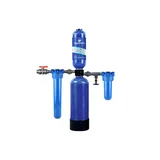
Aquasana Rhino Whole House
Aquasana Rhino Whole House
Best for: Municipal water homes with suitable flow and inlet conditions
Compare for an identified city-water issue covered by the exact model’s performance sheet. Carbon can reduce the chlorine residual; it is not a storage preservative or a reason to extend rotation intervals.
Not sure which system matches your water? Compare available options in our whole house water filter guide.
Water Storage Questions, Answered
Can stored water be unsafe even if it looks clear?
Yes. Harmful microorganisms and dissolved chemicals can be present without changing the water's appearance or smell. Start with a known safe source and clean, food-grade containers. If contamination is suspected, use a known safe supply and appropriate laboratory testing; clarity, taste, and a TDS reading do not prove drinking-water safety.
Does filtering water make it last longer in storage?
Not by itself. Filtration can improve source-water quality, but it does not sanitize containers or provide lasting protection against recontamination. Carbon filters can remove the chlorine residual already in tap water, and UV leaves no residual disinfectant. Keep the appropriate cleaning, disinfection, and rotation plan even when using filtered water.
Will a portable filter make old stored water safe to drink?
Not in every situation. Many portable filters reduce bacteria and protozoa but do not remove viruses, dissolved salts, or toxic chemicals. They also cannot repair contamination from an unsuitable container. Choose treatment for the actual risk, follow its instructions, and use known safe water if fuel or chemical contamination is possible.
Do I need a whole house filter to store emergency water?
No. A known safe water source, suitable containers, and correct storage practices matter more than owning a whole house system. Whole house treatment may address source-water issues such as sediment or chlorine taste, but it is not a storage preservative. Choose treatment from a water test rather than buying equipment solely to extend storage life.
How Long Water Lasts: Duration by Source and Treatment
The shelf life of stored water depends on three critical factors: the source water quality, the treatment applied before storage, and the storage conditions (container type, temperature, and light exposure). Here's a comprehensive breakdown using CDC’s self-filled water rotation recommendation and product-specific storage instructions.
Water Storage Duration Reference Chart
| Water Type | Container | Treatment | Duration |
|---|---|---|---|
| Municipal Tap | Food-grade HDPE | Chlorine residual | 6 months |
| Municipal Tap | Food-grade HDPE | + Water preserver | Exact product label only |
| Well Water | Food-grade HDPE | Bleach treatment | 6 months |
| Well Water | Food-grade HDPE | None | Use known safe source water |
| Commercial Bottled | Sealed PET | Factory sealed | Manufacturer date and storage instructions |
| Filtered Water | Glass/Steel | Bleach treatment | 6-month rotation for self-filled supplies |
Treated municipal water may contain a disinfectant residual, but that does not remove the need for clean containers and safe handling. Carbon filtration can reduce that residual. Do not infer a guaranteed shelf life from chlorine alone.
For well-fed supplies, use water known to be safe through appropriate source testing and treatment. Follow public-health guidance for any required disinfection before filling containers; do not use untreated suspect water as an emergency reserve.
CDC Emergency Supply Planning
Minimum (3 days)
1 person: 3 gallons
Family of 4: 12 gallons
Recommended (2 weeks)
1 person: 14 gallons
Family of 4: 56 gallons
Extended (1 month)
1 person: 30 gallons
Family of 4: 120 gallons
Best Containers for Water Storage
The container you choose is just as important as the treatment method. The wrong container can leach chemicals into your water, degrade over time, or harbor bacteria in microscopic surface imperfections. Here's what to use and what to avoid.
Recommended Containers
- Containers intended for drinking-water storage: Choose a durable design with a tight closure and follow its cleaning and filling instructions. A recycling code alone does not prove suitability.
- Commercial water bottles: Follow the label’s storage instructions and date. Check the seal and bottle for damage.
- Glass containers: Use suitable clean containers with secure closures; account for weight and breakage.
- Drinking-water-rated tanks: Check material compatibility, cleaning access and manufacturer maintenance requirements.
- Purpose-made bathtub bladders: Check the exact label for potable use, capacity and reuse limits. Ordinary bathtub water is not an assumed drinking supply.
Containers to AVOID
- Milk jugs: Thin plastic degrades quickly; milk proteins promote bacterial growth even after cleaning.
- Previously used food containers: Residues can be difficult to clean fully. Prefer containers designed for drinking-water storage.
- Non-food-grade plastic: May contain BPA, phthalates, or other chemicals that leach into water.
- Containers of unknown suitability: Verify drinking-water compatibility, including any internal lining.
- Previously used chemical containers: Even after washing, chemical residue may remain in the plastic matrix.
For most families, a combination of commercially bottled water (for grab-and-go emergencies) and 5-gallon food-grade containers (for at-home storage) provides the best balance of convenience and capacity. Consider investing in a drinking-water drum with a hand pump if you have suitable indoor space. At the 1-gallon-per-person-per-day baseline, four people need 56 gallons for fourteen days; a 55-gallon drum alone is just short. Always label containers with the fill date and treatment method applied.
Water Treatment Methods for Long-Term Storage
Additional treatment is not automatically needed for water already known to be safe. Any required treatment depends on your water source, planned storage duration, and whether the water will be used for drinking or sanitation. For cisterns, RV tanks, and larger storage systems, follow our water storage tank disinfection guide before refilling; treating the water alone does not clean the tank walls.
Method 1: Emergency disinfection instructions
Use the exact concentration-specific EPA emergency drinking-water instructions for plain unscented bleach. Dose and waiting time depend on the product and water conditions; this is not a blanket six-month disinfectant guarantee. Never use bleach to remedy fuel or toxic chemical contamination.
Method 2: Label-specific storage treatments
Check the exact product’s approved label for intended use, dose, source-water requirements and storage conditions. Do not assume every water-treatment product maintains sterility for five years.
Method 3: Boiling (Immediate Use)
Bringing water to a rolling boil for 1 minute (3 minutes above 6,500 feet elevation) is CDC’s recommended microbial emergency boiling procedure. However, boiling does NOT extend storage life once the water cools — it simply treats what's already present. CDC recommends replacing self-filled stored water every 6 months; this is not a guaranteed safety period for every container. Note: boiling does not remove chemical contaminants like lead or PFAS.
Method 4: UV Treatment (Supplemental)
UV treats suitable water during its prescribed cycle but leaves no residual disinfectant. It does not sanitize a storage container or extend shelf life, and its effectiveness depends on water clarity, equipment condition and proper use.
UV for Well-Fed Storage Systems
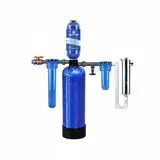
Aquasana Rhino Well Water with UV
Aquasana Rhino Well Water with UV
For a permanent well-fed storage setup, Aquasana Rhino Well Water with UV can treat water as it passes through a correctly installed system. UV leaves no disinfectant residual and does not extend storage life; keep the tank sanitizing, disinfection and rotation steps above.
Compare sizing, treatment options and ongoing costs in our best well water filters guide.
Compare dedicated UV stages in our best UV water purifiers guide before deciding where treatment belongs in a tank-fed system.
Optimal Storage Conditions
Even properly treated water in food-grade containers can become unsafe if stored improperly. Temperature, light exposure, and container placement all affect how long your water remains safe to drink. Follow these guidelines to maximize shelf life.
Temperature
Keep water cool and follow the container’s temperature limits. Avoid heat and freezing damage. Choose a suitable indoor location rather than relying on a universal safe temperature threshold.
Light Protection
Store water in opaque containers or keep clear containers in dark areas. Avoid direct sunlight and follow the container’s storage instructions; light and heat can affect the supply and its packaging.
Placement
Place containers on a clean, stable surface protected from damage. Keep away from gasoline, pesticides, and cleaning chemicals — plastic can absorb vapors. Don't stack heavy items on containers.
For families in hot climates like Arizona, Texas, and Florida, maintaining proper storage temperatures is the biggest challenge. Garages in these regions can reach 120°F+ during summer, drastically reducing water storage life. Consider indoor storage only, or invest in insulated water storage containers designed for extreme environments. Testing your water periodically with water testing kits can help investigate specific concerns, but home kits are not a universal safety clearance. Ask a laboratory or health department which tests are appropriate.
Signs Your Stored Water Has Gone Bad
Before drinking any stored water, especially water that's been sitting for several months, look for damage or warning signs, but do not use sensory checks to prove safety. While some dangerous contaminants are undetectable without testing, many common forms of contamination produce visible or olfactory warnings.
Warning Signs — Do NOT Drink If You Observe:
Cloudiness or turbidity: Indicates bacterial growth, sediment, or chemical precipitation
Green or brown discoloration: Algae growth from light exposure
Slimy film on container walls: Biofilm formation from bacterial colonies
Musty or earthy smell: Mold or bacterial metabolic byproducts
Chemical or plastic odor: Container degradation or chemical leaching
Unexpected flavor noticed during ordinary use: Stop using the supply and investigate. Never taste suspect water as a safety test.
If your stored water shows any of these signs, do not drink it. Use a known safe supply whenever possible. Our portable water filter guide explains which filters reduce bacteria and protozoa, and which need a separate disinfection step for viruses. A portable filter, boiling, or bleach will not make water contaminated with fuel or toxic chemicals safe.
Purifying Stored Water Before Drinking
Clear water with no unusual smell is not proof of safety. A suitable portable filter can reduce bacteria and protozoa before drinking, but it does not replace safe storage or any required disinfection. Compare treatment limits and practical options in our best portable water filters guide.
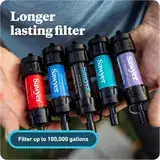
Sawyer Mini
Sawyer Mini
Best for: Emergency kits where a lightweight bacteria and protozoa filter is appropriate
A compact, reusable filter for reducing bacteria and protozoa when drawing water from an emergency supply. It does not remove viruses, dissolved salts, or toxic chemicals, and it does not disinfect containers or extend storage life. Use a separate disinfection step when virus protection is needed; follow the filter manufacturer's instructions.
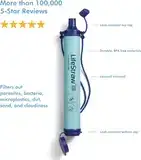
LifeStraw Personal
LifeStraw Personal
Best for: One-person go-bags where a no-setup filter is appropriate
A personal straw-style filter may reduce bacteria and protozoa within its label limits. It does not remove viruses or toxic dissolved chemicals, and it cannot establish that an old or improperly stored supply is safe.
Want cleaner water before it enters storage?
Compare the source-water options above only for an identified treatment need. None sanitizes a container or extends stored-water life, and carbon can reduce the chlorine residual.
Compare recommended whole house filtersEmergency Water Storage Calculator
Use this reference to determine exactly how much water your household needs for different emergency scenarios. Remember that water is needed for more than just drinking — sanitation, cooking, and medical needs must also be factored in. CDC’s baseline of 1 gallon per person per day covers both drinking and basic sanitation.
| Scenario | 1 Person | 2 People | Family of 4 | Family of 6 |
|---|---|---|---|---|
| 3-Day Emergency | 3 gal | 6 gal | 12 gal | 18 gal |
| 1-Week Supply | 7 gal | 14 gal | 28 gal | 42 gal |
| 2-Week Supply (CDC planning goal) | 14 gal | 28 gal | 56 gal | 84 gal |
| 1-Month Preparedness | 30 gal | 60 gal | 120 gal | 180 gal |
| Example: 30 days with 50% extra (not a universal heat allowance) | 45 gal | 90 gal | 180 gal | 270 gal |
Add water for pets, hot weather, illness, medications and other individual needs. Ask your veterinarian about pets and your clinician about medical or infant-feeding needs rather than using a single fixed extra allowance. For comprehensive emergency water planning, see our guides on emergency water purification and best emergency water filters.
Water Storage Rotation Schedule
A consistent rotation schedule ensures your emergency water supply is always fresh and safe. The key is making rotation effortless by integrating it into existing routines. Here's a practical system that works for most families.
Every 6 Months (Standard Rotation)
Mark your calendar for January 1 and July 1 (or another pair of dates six months apart). Use old water only for suitable non-drinking purposes if contamination is not suspected. Wash containers with soap and hot water, rinse thoroughly, refill with known safe water following CDC’s container preparation instructions, and label the new date. CDC recommends replacing self-filled stored water every six months; this is not a guarantee of safety for an improperly handled supply.
Follow the Exact Storage-Treatment Label
Follow only the exact storage-treatment product’s label and conditions. In the absence of such instructions, keep CDC’s six-month rotation recommendation for self-filled supplies. Inspect containers and use appropriate laboratory testing when contamination is suspected.
Pro tip: use a permanent marker to write the fill date, water source, and treatment method directly on each container. Keep a simple log — even a note on your phone — listing container locations, capacities, and next rotation dates. This small organizational effort ensures you never wonder whether your emergency water is still good when you actually need it. For broader emergency planning, explore emergency water filters and our emergency water treatment guide.
Explore Our Top Picks
Best Portable Filters
Essential for emergency water purification
Emergency Treatment
Match treatment to the emergency and water source
Water Testing Kits
Compare tests for specific water-quality concerns
Best Water Pitchers
Simple daily filtration for peace of mind
Best RO Systems
Compare treatment for an identified source-water need
Water Filter Guide
Find the right filter for your needs
Frequently Asked Questions
Related Articles
Best Reverse Osmosis Systems
Top-rated RO water filters
Best Water Softeners
Top water softening systems
See the best Whole House Water Filters
Complete whole-house filtration
Best Well Water Filters
Specialized well water treatment
Deep dive — Water Filter Buying Guide
Avoid common buying mistakes
More on State Water Quality Guide
Water quality by state