Emergency Water Treatment
Plan for safe drinking water during an outage or advisory. Compare boiling, labeled disinfectants and portable filters by what they can—and cannot—treat.
By Jason Carter, Home Water Guide Writer
Store safe water first; choose backup treatment for the actual risk
A portable filter is backup equipment, not permission to drink floodwater or chemically contaminated water.
- Read the advisory and distinguish boil-water from do-not-drink instructions.
- Keep stored drinking water and a practical plan for household and pet needs.
- Check the exact filter or disinfectant label, replacement supplies and operating limits.
Quick answer
Use stored known-safe drinking water first. During a microbial boil-water advisory, follow official instructions for boiling or emergency disinfection. Fuel, toxic chemicals and radioactive material cannot be made safe by ordinary boiling, bleach or a portable filter; use another source.
Read the advisory before treating water
| Notice | What it usually means | What to do |
|---|---|---|
| Boil water | Germs may be in the water, for example after a main break or pressure loss | Boil or use stored water for drinking, cooking, brushing teeth and ice, as the notice directs |
| Do not drink | A contaminant boiling won't fix, such as a chemical | Use bottled or supplied water; do not boil or filter tap water to drink |
| Do not use | Contact with the water itself is unsafe | Avoid drinking, cooking and bathing with tap water until officials lift the notice |
Ask your utility or health department which uses are restricted and when normal use can resume. A boil-water advisory addresses a different situation from a do-not-drink or do-not-use notice. Do not assume an outage alone creates the same contamination problem in every system.
Keep bottled or properly stored safe water for drinking, food preparation, brushing teeth and ice where directed. Do not drink floodwater, swimming-pool water or hot-tub water. Clear streams and rainwater are not automatically safe.
After flooding or damage to a private well, contact a qualified well professional and the health department. Restoring pump power or installing a filter is not proof that the source is safe.
Match the method to the risk
| Method | Appropriate role | Important limit |
|---|---|---|
| Boiling | Microbial emergencies when officials recommend it | Does not remedy fuel or toxic chemical contamination |
| Bleach or tablets | Label-specific emergency disinfection | Dose, contact time and organism coverage vary |
| Portable filter | Model-specific particle and microbial reduction | Many do not remove viruses or dissolved chemicals |
| UV | Validated cycle in suitable clear water | Needs power and leaves no residual protection |
Combining methods can address particular microbial limits, but does not turn unknown chemical contamination into a safe drinking source.
Boil according to official microbial guidance
- Let cloudy water settle and pass it through a clean cloth or coffee filter when possible. This removes visible particles, not all germs.
- Bring water to a rolling boil for 1 minute. Above 6,500 feet, CDC recommends 3 minutes.
- Cool naturally and store in a clean, covered container. Do not add suspect water or ice.
Use a heat source safely. Keep fuel-burning equipment outdoors as instructed; never use an outdoor camp stove inside a home. Follow the advisory’s instructions for other household uses and for vulnerable household members.
Use the exact bleach or tablet instructions
For emergency drinking-water disinfection, use the EPA’s concentration-specific instructions. Check the sodium-hypochlorite strength and whether the water is cloudy. Do not transfer a dose from one concentration or container size to another.
Never use scented, gel, splashless, color-safe or cleaner-added bleach. Keep a printed copy of the directions with your kit, measure carefully and complete the prescribed contact time. Tank-cleaning doses are not drinking-water doses.
For tablets, follow the exact label for active ingredient, water volume, temperature, organisms covered and waiting time. Iodine, chlorine and chlorine dioxide are not interchangeable; products may have health cautions. Do not use thyroid-protection tablets such as potassium iodide as water disinfectants.
Build a practical kit around safe stored water
- Store at least 1 gallon per person per day for 3 days; CDC recommends trying for two weeks if possible. Include additional water for pets, heat and individual needs.
- Use clean containers intended for drinking water and label home-filled supplies. Replace self-filled stored water every 6 months.
- Keep an appropriate portable filter with clean collection equipment and a separate clean-water container.
- Carry a labeled backup disinfectant or safe boiling setup. Check expiry dates and keep the instructions.
- Protect cartridges from damage and freezing according to the manufacturer. Do not assume unlimited service life.
For infants, plan safe formula preparation with your pediatrician; ready-to-feed formula requires no added water. Treatment gear does not replace a safe-source plan for high-risk household members.
Keep authoritative instructions with your kit
- CDC drinking-water emergency guidance
- EPA emergency disinfection directions
- CDC emergency supply and storage guidance
Local notices take priority for the actual emergency. Record the source, treatment and date, and keep untreated collection gear separate from drinking-water containers.
Product options to compare
These saved product links are for comparing emergency equipment, not promises that any source can be treated. Check the current offer, exact model, replacement cartridge and manufacturer instructions.
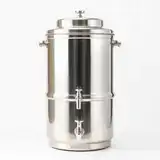
Berkey Big Berkey Gravity Filter
Berkey Big Berkey Gravity Filter
A gravity system that needs no power or water pressure and can fill containers for the household during an outage. Check the current filter-element test data, and use it with known-suitable source water; it is not a fix for floodwater or chemical contamination.
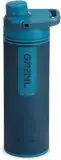
GRAYL UltraPress
GRAYL UltraPress
Compare a press-style purifier within its exact cartridge and source-water limits. It is not a desalination system or a remedy for floodwater, fuel spills or unknown chemical pollution.
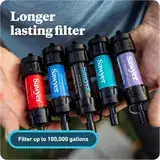
Sawyer Mini
Sawyer Mini
A compact bacteria and protozoa filter where appropriate. It does not remove viruses or toxic dissolved chemicals. Plan additional disinfection when needed and follow maintenance instructions.
Compare more options, including straw and bottle filters, in our best portable water filters guide.
Explore Our Top Picks
Frequently Asked Questions
Related Articles
Read: Water Filter Buying Guide
Complete guide to choosing the right filter
Deep dive — How Water Filters Work
Understanding filtration technologies explained
More on Water Filter Cost Comparison
Annual costs across all filter types
Water Testing Kits Guide: complete how-to
Test your water before buying a filter
Keep it running: Filter Replacement Guide
When and how to replace filter cartridges
Deep dive — Water Filter Health Benefits
Health advantages of filtered water