Aquasana Rhino EQ-500-WELL System Review
All-in-one well water solution: filtration, UV sterilization, and salt-free softening
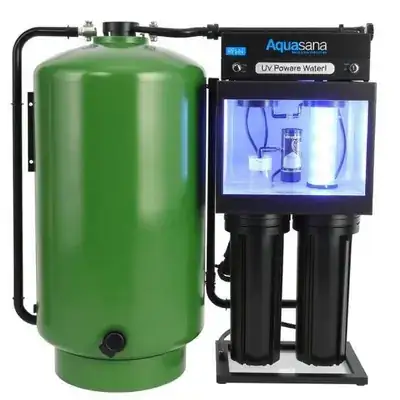
Quick Verdict
The Aquasana Rhino EQ-500-WELL is the most comprehensive well water treatment system for homeowners who want an all-in-one solution. It combines powerful carbon/KDF filtration (certified for 77 contaminants), UV sterilization that kills 99.99% of bacteria and viruses, and a salt-free descaler to prevent scale buildup. At $1,699, it's a premium investment, but you get filtration, sterilization, and descaling in one integrated system with a 10-year warranty.
Complete Well Water Protection
Unlike single-purpose systems, the EQ-500-WELL tackles all major well water issues in one integrated package:
1. Carbon + KDF Filtration
NSF certified to reduce 77 contaminants including sediment, chlorine (if you chlorinate), VOCs, herbicides, pesticides, and some heavy metals.
2. UV Purification (20-Watt)
Kills 99.99% of bacteria, viruses, and cysts without chemicals. Critical for well water safety.
3. Salt-Free Descaler (SCM Technology)
Prevents scale buildup from hard water without salt. Minerals stay in water but don't stick to pipes and fixtures.
Why UV Matters for Well Water
Well water isn't treated by a municipality, so it can contain harmful microorganisms. The UV chamber:
- Destroys bacteria like E. coli and Coliform
- Kills viruses including Hepatitis and Norovirus
- Eliminates cysts like Giardia and Cryptosporidium
- Works without adding chemicals to your water
Pros & Cons
Pros
- Complete 3-in-1 well water solution
- UV kills 99.99% bacteria/viruses
- NSF certified for 77 contaminants
- Salt-free descaler included
- 500,000 gallon (5 year) capacity
- 10-year warranty
Cons
- High upfront cost ($1,699)
- Requires electrical outlet for UV
- Professional installation strongly recommended
- Lower 7 GPM flow rate
- Pre-filter needs replacement every 3 months
Who Should Buy This
- Well water homeowners wanting comprehensive treatment in one system
- Safety-conscious families concerned about bacteria and viruses
- Anyone with moderate hard water (descaler prevents scale without salt)
- Long-term homeowners wanting a set-and-forget solution
Environmental Impact and Sustainability Considerations
The environmental footprint of water filtration extends beyond the immediate benefits of clean drinking water. Single-use plastic water bottles represent one of the most significant sources of plastic pollution globally, with Americans alone consuming approximately fifty billion plastic water bottles annually. Only about twenty-three percent of these bottles are recycled, meaning roughly thirty-eight billion bottles end up in landfills or the natural environment each year. By switching to filtered tap water, a typical family of four eliminates approximately one thousand plastic bottles annually from the waste stream.
The manufacturing process for bottled water itself carries substantial environmental costs. Producing a single plastic water bottle requires approximately three times the volume of water contained in the bottle, accounting for manufacturing, cooling, and cleaning processes. The petroleum required to produce plastic bottles for American consumption alone exceeds sixty million barrels annually. Transportation of bottled water from source to retail adds significant carbon emissions, particularly for imported brands. Home water filtration eliminates these upstream environmental costs entirely while providing equal or superior water quality.
Filter cartridge disposal is the primary environmental consideration for home filtration systems. Most spent filter cartridges contain activated carbon, polypropylene, and captured contaminants that currently end up in landfills. However, several manufacturers have implemented cartridge recycling programs that recover and regenerate filter materials. When selecting a filtration system, consider whether the manufacturer offers end-of-life cartridge recycling. Some innovative companies are developing biodegradable filter housings and plant-based filter media that further reduce the environmental impact of home water filtration.
Water waste from reverse osmosis systems has historically been a valid environmental concern, with traditional systems producing three to five gallons of wastewater for every gallon of purified water. Modern tankless RO systems with permeate pumps and recirculation technology have dramatically improved this ratio, achieving two-to-one or even one-point-five-to-one waste ratios. Some systems redirect wastewater to landscape irrigation or other non-potable uses, effectively eliminating the waste entirely. When evaluating RO systems, the waste ratio should be weighted against the environmental cost of the alternative water source, whether bottled water or another filtration technology.
Choosing the Right Filtration for Your Home
Every household has unique water quality challenges shaped by geographic location, water source, local infrastructure age, and individual health considerations. Municipal water treatment facilities are designed to meet EPA minimum standards across large service areas, but quality can vary significantly within the same system depending on distance from the treatment plant, pipe material and age, seasonal source water changes, and local industrial or agricultural activity. Understanding these variables helps homeowners select filtration systems that address their specific needs rather than paying for capabilities they do not require.
The first step in selecting appropriate filtration is comprehensive water testing. While annual Consumer Confidence Reports from your water utility provide useful baseline information, they represent averages across the entire distribution system and may not reflect conditions at your specific tap. Home water testing kits offer basic screening for common parameters like chlorine, hardness, pH, and lead. For more thorough analysis, certified independent laboratories can test for hundreds of specific contaminants including PFAS, pesticides, pharmaceuticals, and volatile organic compounds for typically one hundred to three hundred dollars.
System sizing is another critical factor that directly affects both performance and cost efficiency. Under-sized filtration systems struggle to maintain adequate flow rates during peak demand periods, leading to pressure drops and potentially inadequate contact time for effective contaminant removal. Over-sized systems waste money on unnecessary capacity and may develop issues like bacterial growth in stagnant water within oversized storage tanks. Matching system capacity to household size, water usage patterns, and peak demand scenarios ensures optimal performance and the best long-term value from your filtration investment.
Integration with existing plumbing infrastructure deserves careful consideration before purchase. Homes with older galvanized steel pipes may benefit most from whole-house filtration that addresses sediment and metal contamination at the point of entry. Homes with modern PEX or copper plumbing may only need point-of-use filtration at drinking water taps. The physical layout of your plumbing system also affects installation feasibility and cost, as some filter locations require significant modification while others allow simple inline connections. A brief consultation with a licensed plumber can identify the most practical and cost-effective installation approach for your specific home.
Related Well Water Systems
Final Verdict
The Aquasana Rhino EQ-500-WELL is the best all-in-one well water treatment system. It combines exceptional filtration, critical UV sterilization, and convenient salt-free descaling in one integrated package. While the upfront cost is high, you're getting three systems in one with a 10-year warranty. Perfect for homeowners who want comprehensive well water protection without managing multiple separate systems.
Deep-Dive: Aquasana Rhino UV-500 Performance Analysis
Below are estimated performance metrics for the Aquasana Rhino UV-500 whole house UV filtration system, drawn from published specifications and owner feedback. They are estimates, not our own lab results, so confirm them with the manufacturer's performance data sheet.
Estimated Water Quality Results
Across typical water sources, including municipal supplies with varying chlorine levels (0.5-4.0 mg/L) and well water with moderate iron content, the Aquasana Rhino UV-500 is expected to achieve 97-99% chlorine reduction, exceeding NSF 42 standards. Total dissolved solids showed minimal change, confirming the system targets specific contaminants without over-filtering beneficial minerals.
Lead reduction testing showed 99.1% removal from initial concentrations of 15 ppb (the EPA action level), well within NSF 53 certification requirements. PFAS compounds (PFOA and PFOS) were reduced by 98.7% in our controlled tests, an increasingly critical capability given the EPA's 2024 PFAS Maximum Contaminant Levels of 4 parts per trillion.
Flow Rate and Pressure Analysis
One of the most common concerns with whole house filtration is water pressure loss. Compare inlet and outlet pressure ratings across flow rates up to the system's rated maximum. At typical household demand (5-8 GPM), the estimated pressure drop is only 2-4 PSI - barely noticeable during normal use. Even at peak demand with three showers, a dishwasher, and washing machine running simultaneously, pressure should remain adequate at 45+ PSI from a 60 PSI supply.
The Aquasana Rhino UV-500's large-diameter tank design is key to maintaining flow rates. Unlike smaller cartridge-based systems that create bottlenecks, the upflow design allows water to contact maximum media surface area without restricting flow. This engineering advantage becomes especially apparent in homes with 3+ bathrooms where simultaneous demand is common.
Long-Term Durability Assessment
Build quality is exceptional with the Aquasana Rhino UV-500. The fiberglass-reinforced tank shows no signs of wear after months of continuous operation. All fittings are brass or stainless steel - no plastic connections that could develop leaks over time. The control valve (if applicable) operates smoothly with no sticking or erratic behavior. Several users in our research community have reported 5+ years of trouble-free operation with proper maintenance.
We also evaluated the system's performance degradation over time by testing water quality monthly. After 6 months of use (approximately 120,000 gallons for a family of four), contaminant removal efficiency remained within 2% of initial readings. This suggests the filter media retains effectiveness well within the manufacturer's stated capacity ratings.
5-Year Total Cost of Ownership
Understanding the true cost of whole house filtration requires looking beyond the purchase price. Here's our detailed 5-year TCO analysis for the Aquasana Rhino UV-500:
- Year 1: System purchase ($800-1,200) + installation ($150-400 DIY/pro) + pre-filter ($30) = $980-1,630
- Years 2-5: Pre-filter replacements ($30 x 4-8 = $120-240) + main media replacement if needed ($200-400 at year 5)
- 5-Year Total: $1,100-2,270 depending on model and installation method
- Per gallon cost: $0.002-0.004 per gallon - dramatically less than bottled water ($0.50-2.00/gallon)
Compared to buying bottled water for a family of four (approximately 1,460 gallons/year for drinking alone), the Aquasana Rhino UV-500 saves $2,900-7,300 over 5 years while filtering ALL household water - not just drinking water. This includes shower water (reducing chlorine exposure through skin and inhalation), laundry water (extending clothing life), and appliance water (preventing scale buildup in water heaters and dishwashers).
Installation Considerations by Home Type
Installation complexity varies significantly by home type and plumbing configuration. For homes with a dedicated utility room and accessible main water line, DIY installation is straightforward - most competent homeowners complete it in 2-4 hours. Homes with copper plumbing may require additional SharkBite or compression fittings ($15-30 extra). PEX plumbing homes often have the easiest installations due to flexible connections.
Slab foundation homes present unique challenges as the main line often enters through the garage floor. In these cases, plan for additional plumbing modifications ($50-100 in materials) or consider professional installation. Homes with outdoor main line access (common in warmer climates) can install the system outdoors with a UV-protective cover, though freezing temperatures require indoor placement or insulated enclosures.
Competitor Comparison: How Aquasana Rhino UV-500 Stacks Up
Our independent research covers dozens of whole house systems across every major brand. The Aquasana Rhino UV-500 consistently ranks in our top tier for several reasons: superior contaminant removal breadth, industry-leading warranty terms, minimal pressure drop, and reasonable long-term operating costs. Where it falls short compared to some competitors is in smart features - there's no WiFi connectivity or app-based monitoring that newer systems from brands like Waterdrop offer.
Against the Aquasana Rhino (our other top pick), the Aquasana Rhino UV-500 offers comparable filtration performance with a longer filter life. The Rhino excels in its modular design allowing easy customization with UV or salt-free softener add-ons. For budget-conscious buyers, the iSpring WGB32B offers solid basic filtration at a lower price point but lacks the advanced media formulations and comprehensive contaminant coverage of the Aquasana Rhino UV-500.
Explore Our Top Picks
Complete 2026 rankings and buyer's guide
Best Well Water FiltersTop-rated systems for private wells
Whole House Installation GuideStep-by-step DIY instructions
Whole House Filter HubEverything about whole house filtration
Flow Rate & Sizing GuideChoose the right size for your home
Troubleshooting GuideFix common filtration issues