Whole House Carbon Filters: Complete Guide
Everything you need to know about activated carbon filtration for your entire home — from GAC to catalytic carbon
Top Carbon Filter System Recommendations
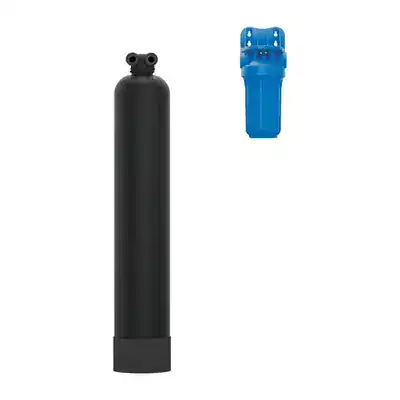
SpringWell CF1 Whole House Filter
Premium 4-stage system with catalytic carbon, certified NSF components, and lifetime warranty. Removes chlorine, chloramine, PFAS, VOCs, and heavy metals. The CF1 uses coconut shell catalytic carbon for superior adsorption and a 1,000,000-gallon or 6-year filter life — the longest in its class.
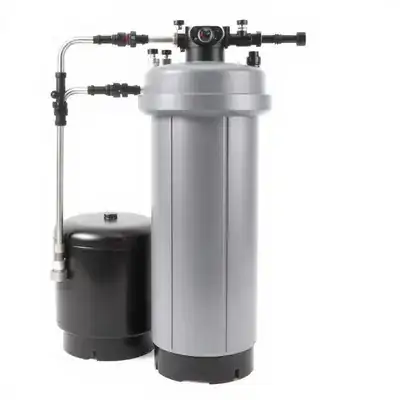
Aquasana Rhino EQ-1000
Aquasana's flagship whole house system uses a combination of KDF media and activated carbon to remove 97% of chlorine, reduce heavy metals, and filter organic chemicals. The 1,000,000-gallon capacity lasts up to 10 years with proper pre-filtration. NSF certified under Standards 42 and 61.
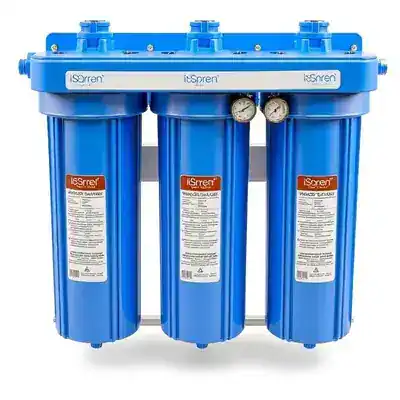
iSpring WGB32B
Affordable 3-stage carbon block system with sediment pre-filter and dual carbon stages. Excellent chlorine removal at a budget-friendly price. The 100,000-gallon capacity lasts about 12 months for average households. Great entry-level option for city water chlorine removal.
Understanding Activated Carbon Filtration
Activated carbon works through a process called adsorption — contaminants stick to the massive surface area of the carbon material. One pound of activated carbon has a surface area of 60-150 acres, creating countless microscopic pores that trap chemicals, chlorine, and organic compounds. This makes carbon the most widely used filtration media in residential water treatment.
What Carbon Removes
- Chlorine: 95-99% removal, eliminating taste, odor, and skin irritation
- VOCs: Benzene, toluene, pesticides — 80-95% reduction
- Taste & Odor: Removes musty, earthy flavors from algae and organic matter
- Some PFAS: 70-90% with catalytic carbon
- Hydrogen Sulfide: Effective for low concentrations from well water
What Carbon Does NOT Remove
- Heavy Metals: Lead, arsenic require RO or specialized media
- Hardness: Calcium and magnesium pass through; need softener
- Fluoride: Requires bone char or RO
- Bacteria/Viruses: Carbon can harbor bacteria; add UV disinfection
- TDS: Dissolved minerals remain; RO required for TDS reduction
Types of Carbon: GAC vs Carbon Block vs Catalytic
Not all carbon filters are created equal. The type of carbon and its form dramatically affect filtration performance, flow rate, and lifespan. Choosing the right carbon technology is the most important decision in whole-house filtration.
Granular Activated Carbon (GAC)
GAC consists of loose carbon granules in a tank. Water flows through the granules, providing good chlorine removal and high flow rates, but with shorter contact time than carbon blocks.
Advantages:
- • High flow rates (15-20 GPM typical)
- • Lower pressure drop (1-2 PSI)
- • Excellent chlorine removal (95-99%)
- • Less expensive than carbon block
- • Easy backwashing regenerates bed
Disadvantages:
- • Shorter contact time = less VOC removal
- • Potential for channeling
- • Cannot remove particles under 20 microns
- • Less effective for chloramine
Best for: Municipal water with chlorine, homes needing high flow rates, budget installations.
Carbon Block Filters
Carbon block filters compress activated carbon into a solid block with specific micron ratings (0.5-10 microns). This creates longer contact time and mechanical filtration in addition to chemical adsorption.
Advantages:
- • Superior VOC removal (85-95%)
- • Removes particles down to 0.5 microns
- • No channeling — water must pass through
- • Better taste and odor improvement
- • Some cyst reduction (Cryptosporidium, Giardia)
Disadvantages:
- • Lower flow rates (8-12 GPM)
- • Higher pressure drop (3-5 PSI)
- • More expensive ($100-300 per filter)
- • Cannot be backwashed — replace only
- • Clogs faster with sediment
Best for: Maximum contaminant removal, VOC concerns, combining filtration with sediment removal.
Catalytic Carbon (Advanced)
Catalytic carbon is heat-treated activated carbon with enhanced surface chemistry, specifically designed for chloramine removal and PFAS reduction. It costs 30-50% more but dramatically outperforms standard carbon for these contaminants. The SpringWell CF1 uses premium catalytic carbon for this reason.
Advantages:
- • Removes chloramine (90-95% vs 20-30% for GAC)
- • Reduces PFAS (70-90%)
- • Works at higher flow rates than standard carbon
- • Longer lifespan for chloramine applications
- • Still removes chlorine, VOCs, taste and odor
Disadvantages:
- • Higher cost ($200-500 per tank fill)
- • Overkill if you have chlorine only
- • Requires professional sizing for PFAS
- • Not all manufacturers offer catalytic
Best for: Cities using chloramine (check your water report), PFAS contamination, well water with organic contaminants.
How to Size a Whole House Carbon Filter
Flow Rate Requirements
Calculate your peak flow rate — the maximum water demand when multiple fixtures run simultaneously.
| Home Size | Bathrooms | Peak Flow Rate | Tank Size |
|---|---|---|---|
| 1-2 bedroom | 1-2 bath | 8-10 GPM | 9" x 48" |
| 3 bedroom | 2-2.5 bath | 10-15 GPM | 10" x 54" |
| 4-5 bedroom | 3-3.5 bath | 15-20 GPM | 12" x 52" |
| 5+ bedroom | 4+ bath | 20-25 GPM | 14" x 65" |
Complete Cost Analysis
| Cost Category | Basic GAC | Carbon Block | Catalytic |
|---|---|---|---|
| System Purchase | $400-800 | $800-1,500 | $1,200-2,500 |
| Installation | $250-400 | $250-400 | $300-500 |
| Annual Filters | $100-200 | $150-300 | $200-400 |
| 10-Year Total | $1,650-3,200 | $2,550-4,900 | $3,500-7,000 |
| Cost per Gallon | $0.0005 | $0.0008 | $0.001 |
Based on average household consumption of 80-100 gallons/day. See detailed cost analysis for more scenarios.
Installation Requirements
Whole house carbon filters install at your main water line, after the pressure tank (for well water) or after the main shut-off valve (for municipal). Professional installation is recommended due to plumbing complexity.
- Choose installation location: Accessible, protected from freezing, adequate floor space with 6-12 inches clearance.
- Install sediment pre-filter: 5-20 micron filter before carbon prevents premature fouling. Essential for well water.
- Cut into main water line: Shut off water, drain system, use pipe cutter to remove section.
- Install bypass valves: 3-valve bypass allows isolating system for maintenance.
- Mount tank and connect: Secure tank, thread inlet and outlet fittings with Teflon tape.
- Fill tank with carbon media: Follow manufacturer specifications exactly.
- Backwash and rinse: Run backwards 10-15 minutes, then forward flush 5-10 minutes.
- Check and test: Inspect connections, monitor pressure, test chlorine removal after 24 hours.
Professional Installation Recommended
Cutting into main water lines requires plumbing expertise. Professional installation costs $200-500 and includes proper sizing verification. See installation guide.
Maintenance Schedule
GAC Tanks (Municipal Water)
Chlorine removal only
Catalytic Carbon (Chloramine)
Chloramine disinfection systems
Carbon Block Cartridges
Pre-filter + carbon combo units
Well Water Applications
Higher sediment and organics load
Signs carbon needs replacement: Chlorine taste or odor returns, water tastes flat, visible discoloration, reduced pressure.
Carbon Filters vs Other Whole House Options
Carbon Filter vs Water Softener
Carbon: Removes chemicals, chlorine, taste and odor. Softener: Removes hardness minerals. Most homes with hard water need BOTH systems. Learn more: Water softener guide
Carbon vs UV Disinfection
Carbon: Removes chemicals but can harbor bacteria. UV: Kills 99.99% bacteria but doesn't remove chemicals. Well water systems often combine both. Learn more: UV disinfection guide
Whole House Carbon vs Point-of-Use RO
Carbon treats all water at $0.001/gallon. RO provides hospital-grade drinking water purification. Ideal: SpringWell CF1 for whole house + under-sink RO for drinking water.
Explore Our Top Picks
Related Resources
Understanding Water Quality Science
Water quality is determined by a complex interplay of dissolved minerals, organic compounds, and potential contaminants that vary significantly by geographic region and water source. Municipal water treatment facilities use multi-stage processes including coagulation, sedimentation, sand filtration, and chemical disinfection to meet EPA Safe Drinking Water Act standards. However, these treatment processes can introduce disinfection byproducts such as trihalomethanes and haloacetic acids, which form when chlorine reacts with naturally occurring organic matter in the source water.
Private well water faces different challenges, as it bypasses municipal treatment entirely and may contain naturally occurring contaminants like arsenic, radon, and heavy metals that leach from surrounding geological formations. The Environmental Protection Agency recommends annual testing for coliform bacteria, nitrates, total dissolved solids, and pH levels for all private wells. Additional testing for volatile organic compounds, pesticides, and heavy metals should be conducted if you live near agricultural areas, industrial sites, or old mining operations. Understanding your specific water chemistry is the critical first step in selecting the most effective filtration system for your household needs.
Total dissolved solids (TDS) measurements provide a general indicator of water purity but should not be the sole basis for filtration decisions. Water with high TDS from beneficial minerals like calcium and magnesium may actually be healthier than ultra-purified water. The World Health Organization has noted that demineralized water may have adverse health effects due to the absence of essential minerals. This is why many advanced filtration systems, particularly reverse osmosis units, now include remineralization stages that add back beneficial minerals after removing contaminants. The ideal approach balances contaminant removal with mineral retention, targeting specific harmful substances identified through comprehensive water testing while preserving the natural mineral content that contributes to both taste and health benefits.
Filtration Technology Comparison
Modern water filtration leverages several distinct technologies, each with unique strengths for addressing specific water quality challenges. Activated carbon filtration, the most common residential method, uses adsorption to capture chlorine, volatile organic compounds, and taste-affecting chemicals. Granular activated carbon (GAC) filters provide good flow rates but may allow channeling, while carbon block filters compress carbon particles for more consistent contact time and finer filtration down to 0.5 microns. Catalytic carbon represents the latest advancement, specifically engineered to break down chloramines through a catalytic reaction rather than simple adsorption.
Reverse osmosis systems force water through a semipermeable membrane with pore sizes as small as 0.0001 microns, effectively removing dissolved solids, heavy metals, and most microorganisms. Modern RO systems achieve 95-99 percent rejection rates for contaminants like lead, arsenic, fluoride, and PFAS compounds. The primary considerations for RO systems include water waste ratios (typically 3:1 to 4:1 for standard systems, improved to 1:1 in premium tankless models), storage tank requirements, and the need for pre-filtration to protect the delicate membrane from sediment and chlorine damage.
Ion exchange technology, used in both water softeners and specialized contaminant removal systems, swaps problematic ions in the water with benign alternatives. Water softeners exchange calcium and magnesium ions for sodium ions, preventing scale buildup in plumbing and appliances. Specialized ion exchange resins can target specific contaminants like lead, nitrates, or perchlorate. Ultraviolet purification provides chemical-free disinfection by disrupting the DNA of bacteria, viruses, and protozoa at wavelengths around 254 nanometers. UV systems are particularly valuable for well water and as a final treatment stage in multi-barrier systems, though they do not remove chemical contaminants or improve taste.
Long-Term Cost Analysis
When evaluating water filtration costs, the total cost of ownership over five years provides a much more accurate picture than initial purchase price alone. A budget pitcher filter at thirty dollars may seem economical, but replacement filters at forty dollars every two months add up to over twelve hundred dollars in five years. Meanwhile, an under-sink system costing two hundred dollars upfront with sixty-dollar annual filter changes totals just five hundred dollars over the same period, delivering superior filtration at less than half the long-term cost.
Whole house filtration systems represent a larger initial investment of eight hundred to two thousand dollars including professional installation, but they protect all water fixtures and appliances simultaneously. When you factor in the extended lifespan of water heaters, dishwashers, and washing machines that no longer process unfiltered water, the return on investment often exceeds the system cost within three to four years. Water softener savings are particularly dramatic: the Water Quality Association estimates that soft water can reduce water heating costs by up to twenty-nine percent and extend appliance lifespans by thirty to fifty percent.
For households currently purchasing bottled water, any home filtration system provides massive savings. The average family spending twenty dollars per week on bottled water spends over five thousand dollars in five years. Even the most premium whole house filtration system with annual maintenance costs less than two thousand dollars over the same period, saving over three thousand dollars while eliminating hundreds of plastic bottles from landfills annually. The environmental and financial case for home filtration is compelling at every price point.
Health and Safety Considerations
The health implications of water contaminants vary significantly based on exposure levels and duration. Lead exposure, even at low levels, can cause developmental delays in children, cardiovascular problems in adults, and reproductive issues. The EPA has set the maximum contaminant level goal for lead at zero, acknowledging that no level of lead exposure is considered safe. Homes built before 1986 are at particular risk due to lead solder in copper pipes and lead service lines connecting to municipal water mains.
PFAS compounds, known as forever chemicals due to their environmental persistence, have been detected in drinking water supplies serving over one hundred million Americans. These synthetic chemicals, used in nonstick cookware, food packaging, and firefighting foam, have been linked to cancer, thyroid disease, immune system effects, and reproductive problems. The EPA established enforceable maximum contaminant levels for six PFAS compounds in 2024, driving increased demand for filtration systems capable of removing these persistent pollutants.
Microbiological contaminants including bacteria, viruses, and parasitic cysts present acute health risks, particularly for immunocompromised individuals, elderly people, infants, and pregnant women. Cryptosporidium and Giardia cysts are resistant to chlorine disinfection and require physical removal through filtration at one micron or smaller. UV purification provides an additional barrier against biological threats without adding chemicals to the water. For comprehensive protection, the Centers for Disease Control recommends a multi-barrier approach combining physical filtration, chemical or UV disinfection, and regular testing to verify system performance and identify emerging contaminant threats in your water supply.
Related Resources
Calculate flow rate requirements
Whole House for City WaterMunicipal water treatment solutions
Sediment Filtration GuideProtecting your home plumbing
Carbon Filter TechnologyHow activated carbon works
Installation GuideProfessional installation tips
Flow Rate SizingEnsure adequate water pressure