Why your ice maker needs a filter
Ice melts into your drink, so its quality matters as much as the water you pour. Municipal water contains chlorine, sediment and dissolved minerals that affect taste and can build up inside the machine. Check your water quality report before choosing a filter.
| Water issue | Effect on ice | Effect on machine |
|---|---|---|
| Chlorine | Chemical taste or smell | Can affect rubber seals |
| Hard water | White, cloudy cubes | Scale buildup, clogged valves |
| Sediment | Visible particles | Clogged lines and valves |
| Iron | Yellow or brown tint | Stained components |
| High TDS | Mineral taste, opacity | Faster scaling |
Types of ice maker filters
Inline carbon filter
Installs on the 1/4-inch supply line. Reduces chlorine taste and sediment. Best for under-counter and standalone ice machines.
Refrigerator replacement filter
Built into the fridge and shared with the water dispenser. Use the manufacturer's cartridge or a certified compatible one.
Scale-inhibitor filter
Polyphosphate media slows scale without removing minerals. Useful for hard water and commercial machines.
Under-sink RO (shared line)
Feeds the ice maker from an RO system for the clearest ice. Many RO kits include an ice maker connection.
How to get clearer ice
Home ice freezes from the outside in, pushing dissolved minerals and air toward the center. Lower-mineral water freezes clearer, which is why RO-fed ice makers produce the clearest cubes. Use a TDS meter to compare your water before and after filtering. For cocktail ice, pair filtered water with a directional freezing mold.
How to install an inline filter
- Close the shutoff valve feeding the ice maker.
- Disconnect the 1/4-inch supply line; keep a towel ready.
- Fit the filter with the flow arrow pointing toward the ice maker.
- Flush per the filter instructions and discard the first batches of ice.
- Write the install date on the filter.
For RO-to-ice-maker setups, see our RO installation guide and ice maker filter installation guide.
Recommended picks
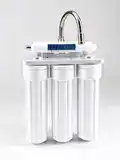
Aquasana OptimH2O Reverse Osmosis
Aquasana OptimH2O Reverse Osmosis
An under-sink RO system for clearer ice and better-tasting drinking water from one kitchen line.
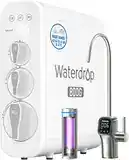
Waterdrop G3P800 Tankless RO
Waterdrop G3P800 Tankless RO
A tankless RO alternative for kitchens with limited cabinet space. Confirm your ice maker hookup before buying.
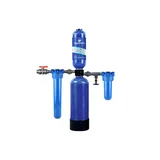
Aquasana Rhino Whole House Water Filter
Aquasana Rhino Whole House Water Filter
For city water homes that want chlorine taste reduced at every tap, including the fridge and ice maker line.
Compare sizing, treatment options and ongoing costs in our best whole house water filters guide.
Maintenance tips
- Replace filters on the manufacturer's schedule.
- Clean the ice bin regularly with warm water and mild soap.
- Descale the ice maker per its manual if you have hard water.
- Check supply lines for kinks, leaks or buildup.
- Replace the filter early if ice clarity or taste changes.
For persistent problems, test with a home test kit, and see how long filters last.