Canada Well Water Treatment: Complete Province-by-Province Guide
What Canadian homeowners need to know about testing, treating and maintaining private well water, with notes on regional concerns and where to find provincial testing programs.
4M+
Canadians on private wells
30-40%
Wells with coliform bacteria
100+ GPG
Prairie hardness levels
0
Federal treatment requirements
Well Water Challenges by Canadian Region
Canada's vast geological diversity means well water quality varies dramatically from province to province—and even within regions. Understanding your local challenges is the first step to effective treatment.
Prairie Provinces (Alberta, Saskatchewan, Manitoba)
The Canadian Prairies have some of the hardest water in the world, with groundwater hardness commonly ranging from 20 to over 100 GPG (grains per gallon). This extreme hardness comes from limestone and dolomite formations that underlie much of the region.
Key Challenges
- • Extreme hardness: 20-100+ GPG, requires heavy-duty water softeners
- • High TDS: Often 1,000-3,000+ mg/L, affects taste significantly
- • Sulfates: Common in Saskatchewan, causes laxative effect above 500 mg/L
- • Iron & manganese: Widespread, causes staining and metallic taste
- • Nitrates: Agricultural areas, especially feedlot-adjacent wells
Recommended treatment: High-capacity softener (48K-64K grain) + sediment filter + carbon filter + UV sterilizer. For TDS above 1,500 mg/L, add an under-sink RO system for drinking water. See our softener sizing guide for proper capacity calculations.
Maritime Provinces (Nova Scotia, New Brunswick, PEI, Newfoundland)
The Maritimes' granite and slate bedrock creates unique challenges. Naturally occurring arsenic and uranium contamination is a significant concern, with studies finding 20% or more of wells in some Nova Scotia communities exceeding Health Canada's arsenic guideline of 0.01 mg/L.
Key Challenges
- • Arsenic: Common in granite bedrock, tasteless and odorless. Learn about arsenic removal
- • Uranium: Found in some groundwater formations, especially in New Brunswick
- • Low pH: Acidic water (pH 5.5-6.5) corrodes pipes, releases lead and copper
- • Iron & manganese: Moderate to high levels in many areas
- • Salt intrusion: Coastal wells susceptible to saltwater contamination
Recommended treatment: Under-sink RO for arsenic/uranium removal + acid neutralizer (calcite or soda ash) for pH correction + UV sterilizer. If iron >0.3 ppm, add an iron filter.
Ontario & Quebec
Ontario and Quebec have the largest number of private wells in Canada. Water quality varies from moderate hardness in limestone regions to bacterial concerns in agricultural areas. The Walkerton tragedy (2000) highlighted the critical importance of well water treatment in these provinces.
Key Challenges
- • Bacteria: Agricultural runoff, especially near livestock operations
- • Nitrates: Common near farmland, dangerous for infants above 10 mg/L as N
- • Moderate hardness: 10-25 GPG typical in limestone regions
- • Tannins: Brown discoloration in boreal and wetland-adjacent areas
- • Lead: Older homes may have lead service lines or solder. See our lead removal guide
Recommended treatment: UV sterilizer (essential) + softener (if >7 GPG) + carbon filter + sediment pre-filter. For nitrate concerns, add an RO system for drinking water.
British Columbia
BC's diverse geography—from coastal rainforests to interior desert—creates varied well water challenges. Coastal areas deal with iron, tannins, and turbidity, while interior regions face arsenic and fluoride from volcanic geology.
Key Challenges
- • Iron & tannins: Common on Vancouver Island and coastal regions
- • Turbidity: Seasonal fluctuations, especially during spring melt
- • Arsenic & fluoride: Interior volcanic regions (Okanagan, Kamloops)
- • Bacteria: Surface water influence in shallow wells
- • Low hardness: Soft water (2-8 GPG) typical—softener rarely needed
Recommended treatment: Sediment filter + iron filter (coastal) + UV sterilizer + carbon filter. Interior wells may need RO for arsenic/fluoride removal.
Canadian Well Water Testing Protocol
Proper testing is the foundation of effective treatment. Health Canada recommends a minimum testing schedule for all private well owners:
| Parameter | Frequency | Cost (CAD) | Why It Matters |
|---|---|---|---|
| Bacteria (E. coli, coliform) | 2× per year (spring + fall) | Free-$30 | Immediate health risk |
| Nitrates | Annually | $20-50 | Infant health risk (blue baby) |
| Heavy metals panel | Every 2-3 years | $100-200 | Arsenic, lead, uranium |
| General chemistry | Annually | $100-250 | Hardness, iron, pH, TDS |
| VOCs (near industrial sites) | Annually | $150-300 | Petroleum, solvents |
Most provincial health authorities offer free bacterial testing for private well owners—contact your local public health unit. For comprehensive chemical analysis, use a provincially accredited lab. Learn more about testing options in our water quality testing guide and best water test kits review.
The Universal Canadian Well Water Treatment Train
While specific needs vary by region, most Canadian well owners benefit from a multi-stage treatment system. Here's the recommended sequence, with each stage addressing specific contaminants:
Stage 1: Sediment Pre-Filter (5-20 micron)
Removes sand, silt, rust particles, and debris. Protects downstream equipment from premature wear. Essential for all wells. Cost: $50-150 for housing + cartridge. Replace every 3-6 months. See our sediment filter guide.
Stage 2: Iron/Manganese Filter (If Needed)
Required if iron >0.3 ppm or manganese >0.05 ppm. Air injection (chemical-free) or greensand systems oxidize and filter dissolved metals. Cost: $800-2,000 installed. Automatic backwash every 2-3 days. Our iron filter guide covers all options.
Stage 3: Water Softener (If Hardness >7 GPG)
Essential for Prairie provinces. Ion exchange removes calcium and magnesium, preventing scale buildup and improving soap efficiency. Size based on hardness × daily usage. Cost: $800-2,500 CAD. See sizing guide and regeneration optimization.
Stage 4: Activated Carbon Filter
Removes taste and odor compounds, pesticides, herbicides, VOCs, and some organic chemicals. Important in agricultural regions. Cost: $150-400 for whole-house carbon. Replace media annually. Details in our carbon filter guide.
Stage 5: UV Sterilizer (Strongly Recommended for ALL Wells)
Health Canada's strongest recommendation for private wells. UV sterilization provides 99.99% inactivation of bacteria, viruses, and protozoa without chemicals. Must be the final stage (after sediment removal for UV transmittance). Cost: $200-500 CAD + $50-80 annual lamp replacement. See our UV purifier guide.
Stage 6: Under-Sink RO (For Drinking Water, If Needed)
Add for arsenic, uranium, fluoride, or high TDS removal at the drinking water tap. Removes 95-99% of dissolved contaminants. Cost: $300-700 CAD. See our RO system recommendations.
10-Year Total Cost of Ownership (CAD)
Understanding the full cost helps Canadian well owners budget appropriately for water treatment:
| Treatment Level | Equipment | Installation | 10-Yr Maintenance | 10-Yr Total |
|---|---|---|---|---|
| Basic (UV + sediment) | $300-600 | $200-400 | $800-1,500 | $1,300-2,500 |
| Standard (+ softener + carbon) | $1,500-3,500 | $500-1,000 | $2,000-4,000 | $4,000-8,500 |
| Comprehensive (+ iron filter + RO) | $3,000-6,000 | $800-1,500 | $3,000-6,000 | $6,800-13,500 |
Note: Salt costs for water softeners average $100-200/year in Prairie provinces with very hard water. Energy costs for UV systems are minimal (~$40/year). All costs in Canadian dollars.
Canadian Winter Considerations
Canada's harsh winters create unique challenges for well water systems that homeowners in milder climates don't face:
Freeze Protection
- • Insulate well casing above frost line with foam wrap
- • Install heat trace cable on vulnerable pipe runs
- • Keep pressure tank and treatment equipment in heated space (above 4°C)
- • During extreme cold (-30°C+), keep a tap dripping to prevent freeze
- • Stock replacement filters before winter in case of delivery delays
Seasonal Quality Changes
- • Spring thaw often increases turbidity and bacterial risk
- • Test bacteria immediately after spring melt
- • Increase sediment filter changes during spring runoff season
- • Monitor UV transmittance—turbid spring water reduces UV effectiveness
- • Shallow wells are most susceptible to seasonal contamination
Provincial Resources for Well Owners
Each province has specific regulations and resources for private well owners. Contact your provincial authority for free or subsidized testing, well construction standards, and local treatment recommendations. Many provinces also offer rebate programs for water treatment equipment installation.
Key contacts include your local public health unit (free bacterial testing in most provinces), the provincial Ministry of Environment or Natural Resources (well construction permits and regulations), and certified water treatment professionals registered with your provincial authority. For Health Canada's full guidelines, reference the Guidelines for Canadian Drinking Water Quality documentation.
Best Systems for Canadian Well Water
These systems handle the most common Canadian well water challenges—hardness, iron, bacteria, and arsenic:
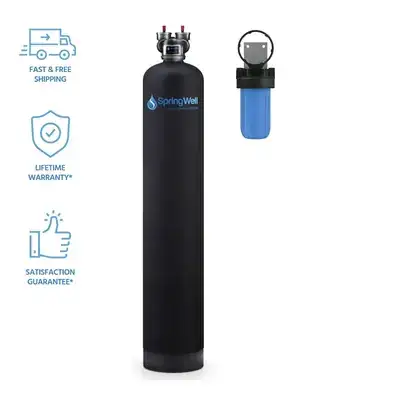
SpringWell Well Water
$1,500–$2,500
- • Air injection iron removal
- • Chemical-free process
- • Handles H₂S sulfur
- • Winterization-friendly
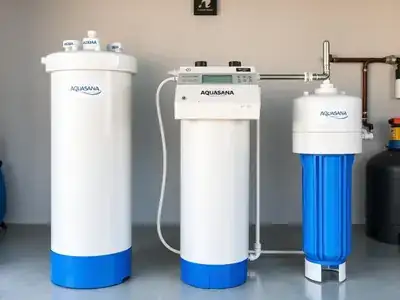
Aquasana Well Water
$1,200–$2,000
- • UV + carbon + sediment
- • Bacteria & virus removal
- • 500K gallon capacity
- • NSF certified
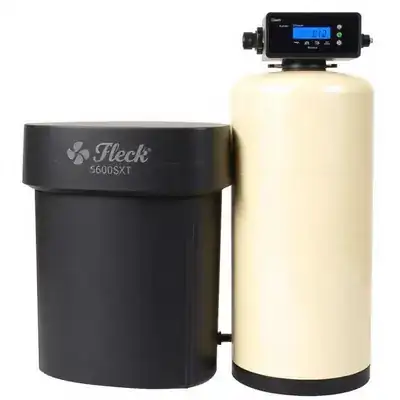
Fleck 5600SXT
$600–$900
- • Handles 75+ GPG hardness
- • Metered regeneration
- • Digital control valve
- • Proven reliability
Frequently Asked Questions
Related Articles
Top-rated Well Water Filters
Top-rated filtration systems designed for well water challenges
More on Well Water Bacteria Treatment
Shock chlorination and UV sterilization for bacterial contamination
Top-rated Water Softeners
Ion exchange systems for hard water—essential for Prairie provinces
More on Water Softener Sizing Guide
Calculate the right softener capacity for your household and hardness level
Best UV Water Purifiers
UV sterilizers recommended for all Canadian well water
Top-rated RO Systems
Reverse osmosis for arsenic, uranium, and fluoride removal