Best Water Filters for Canada (2026)
How to choose a water filter for a Canadian home, whether you are on city water or a private well. It covers common local concerns, which certifications to look for, and practical questions about shipping, warranty and replacement filters.
Canada is known for its pristine lakes and rivers, but the reality of Canadian tap water quality is more nuanced than most residents realize. While municipal water treatment in Canada is generally excellent, contaminants can enter your water through aging distribution infrastructure, lead service lines in older neighborhoods, agricultural runoff in rural areas, and naturally occurring minerals in groundwater. Approximately 30% of Canadians rely on private wells that receive no government water quality monitoring whatsoever.
This guide reviews the best water filtration systems available to Canadian consumers, including systems that ship from the US with full warranty coverage. We have evaluated each system for contaminant removal performance, NSF certifications recognized by Health Canada, Canadian shipping costs, warranty coverage for Canadian customers, and long-term replacement filter availability.
Whether you are on municipal water in Toronto, Vancouver, or Montreal, or drawing from a private well in rural Alberta or Ontario, we will help you find the right system for your specific water quality challenges and budget. Start with our whole house filter buying guide for municipal-water treatment, or the well water filter buying guide for a test-based treatment plan. Confirm Canadian availability, delivered prices and warranty terms for the exact model before ordering.
30% on Wells
Nearly one-third of Canadians rely on private wells with no government quality monitoring
5 PPB Lead
Health Canada's lead guideline is 3x stricter than the US EPA action level of 15 ppb
90+ Parameters
Health Canada guidelines cover 90+ water quality parameters for drinking water
Canadian Water Quality Challenges by Region
British Columbia & Alberta
Surface water sources susceptible to seasonal turbidity from snowmelt and runoff. Mining operations in BC create localized heavy metal concerns. Alberta's oil sands region faces industrial contamination risks. Rural properties often on wells with naturally occurring manganese and iron. High organic content in some BC reservoirs creates elevated THM levels after chlorination.
Recommended: Whole-house carbon filter + under-sink RO for drinking water
Ontario & Quebec
Lead service lines remain widespread in Toronto, Montreal, Hamilton, and Ottawa. Great Lakes source water faces pharmaceutical and microplastic contamination. Agricultural regions (southwestern Ontario, St. Lawrence Valley) have nitrate and pesticide concerns. First Nations communities face ongoing water quality challenges. Quebec uses ozone disinfection in some cities, reducing THMs but requiring different filtration approaches.
Recommended: NSF 53 certified filter for lead + RO system for comprehensive protection
Prairie Provinces (Saskatchewan & Manitoba)
Hard water is extremely common—some of the hardest water in North America. Naturally occurring uranium and radium in Saskatchewan groundwater exceed guidelines in some areas. Intensive agriculture creates nitrate and pesticide contamination in rural wells. TDS levels frequently exceed aesthetic guidelines (500 mg/L). Many small communities on boil-water advisories due to inadequate treatment infrastructure.
Recommended: Water softener for hardness + RO for drinking water
Atlantic Provinces & Northern Canada
High iron and manganese levels in New Brunswick and Nova Scotia groundwater. Coastal communities face saltwater intrusion in aquifers. Northern communities face unique challenges with permafrost changes affecting water sources. Many remote communities remain on long-term boil-water advisories. PEI has the most private wells per capita in Canada, with virtually no government testing requirement.
Recommended: Multi-stage treatment with UV + carbon + iron filtration
Top Recommended Water Filters for Canada
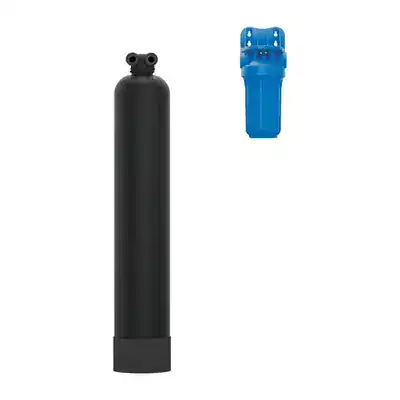
SpringWell CF1 Whole House Carbon Filter
The SpringWell CF1 is our top whole-house recommendation for Canadian homes. With 1,000,000-gallon capacity coconut shell carbon media, it removes 99% of chlorine, chloramine, VOCs, and organic chemicals from every tap. Ships to Canada with full lifetime warranty on tanks and valves. The system handles Canadian cold water temperatures without performance loss.
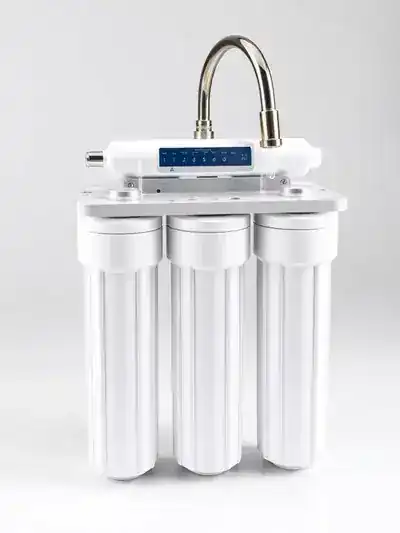
Aquasana OptimH2O Reverse Osmosis
For Canadian homes concerned about lead, PFAS, pharmaceuticals, and maximum contaminant removal, the Aquasana OptimH2O delivers 95-99% reduction of 88+ contaminants. The remineralization stage adds back calcium and magnesium for taste and health. NSF 42, 53, 58, 401, and P473 certified. Ships to Canada with warranty coverage.
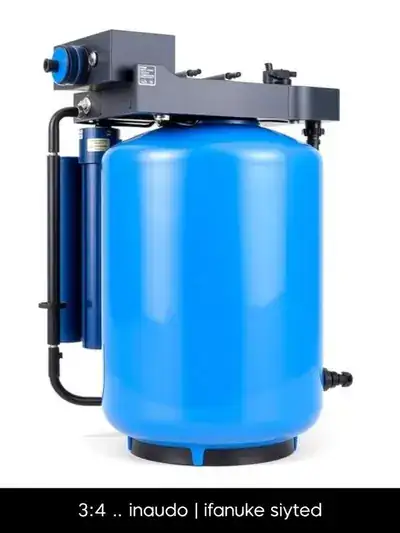
Aquasana Rhino EQ-1000 + UV Bundle
For the 30% of Canadian households on well water, the Aquasana Rhino with UV disinfection provides comprehensive treatment. The carbon and KDF media handle chlorine, heavy metals, and organic chemicals while the UV stage eliminates bacteria, viruses, and parasites. Essential for rural Canadian properties without municipal treatment.
Lead in Canadian Drinking Water: A Growing Concern
Canada Has Stricter Lead Standards Than the US
Health Canada's maximum acceptable concentration (MAC) for lead is 5 micrograms per liter, three times stricter than the US EPA action level of 15 ppb. Despite this, many Canadian cities still have lead service lines connecting water mains to homes.
Investigative journalism and government testing have revealed concerning lead levels in Canadian municipalities. Homes built before 1975 may have lead service lines, and those built before 1990 likely have lead solder on copper pipes. Running your cold water tap for 2-5 minutes after periods of non-use helps flush lead-contaminated water, but the only permanent solution is a certified lead removal filter. Our under-sink water filter buying guide compares kitchen options; the reverse osmosis buying guide covers membrane systems. Check each model's specific lead-reduction certification rather than relying on the filter type alone.
Cities with Known Lead Service Line Issues:
- Montreal, QC
- Toronto, ON
- Ottawa, ON
- Hamilton, ON
- Saskatoon, SK
- Regina, SK
- Winnipeg, MB
- Halifax, NS
- Saint John, NB
Tips for Canadian Water Filter Buyers
Shipping & Import Considerations
- Most US brands ship to Canada for $30-75 CAD
- Expect 5-15% import duties on water treatment equipment
- GST/HST applies to imported water filters
- Factor in exchange rate (currently ~1.35 CAD/USD)
- Amazon.ca often has better pricing than direct shipping
Cold Climate Considerations
- Incoming water temperatures can drop to 1-4°C in winter
- RO systems produce less water in cold temperatures—size up
- Whole-house systems in unheated basements need freeze protection
- Carbon filters still work in cold water but may be slightly slower
- UV systems unaffected by temperature—ideal for Canadian wells
Cost Comparison in Canadian Dollars
| System Type | Purchase (CAD) | Annual Filters (CAD) | 5-Year Total (CAD) |
|---|---|---|---|
| Pitcher Filter | $40-80 | $50-100 | $290-580 |
| Faucet Filter | $30-70 | $50-100 | $280-570 |
| Under-Sink Carbon | $150-400 | $40-80 | $350-800 |
| Under-Sink RO | $300-800 | $80-160 | $700-1,600 |
| Whole House Carbon | $1,000-1,800 | $60-200 | $1,300-2,800 |
Prices in CAD include estimated shipping from US manufacturers. Buying from Amazon.ca may reduce costs. Annual filter prices assume direct purchase from manufacturer with Canadian shipping. See our detailed cost comparison for more analysis.
Canadian Water Quality Regulations vs US EPA Standards
Health Canada's Guidelines for Canadian Drinking Water Quality set Maximum Acceptable Concentrations (MACs) that are comparable to—and in some cases stricter than—US EPA Maximum Contaminant Levels. Canada's lead MAC of 5 ppb (as of 2019) is significantly stricter than the US EPA action level of 15 ppb, reflecting updated scientific consensus on lead's neurotoxicity at very low levels. For PFAS, Health Canada has proposed guidelines of 30 ng/L for total PFAS—less strict than the US EPA's 4 ppt individual compound limits but covering a broader range of PFAS compounds.
The key difference for Canadian consumers is that water quality regulation is primarily a provincial responsibility, with Health Canada providing guidelines rather than enforceable federal standards. This means water quality protections vary significantly by province. Ontario and British Columbia have the most comprehensive provincial regulations, while some territories and remote communities face persistent challenges meeting even basic guidelines. First Nations communities are disproportionately affected—over 30 long-term drinking water advisories remained active across Canadian Indigenous communities as of 2025.
Canadian winters create unique filtration challenges. Whole house systems installed in unheated garages, basements, or crawl spaces must be protected from freezing—water expanding inside filter housings can crack plastic and even metal components. Insulate exposed plumbing and filter housings, or relocate systems to heated spaces. Well-dependent rural Canadian homes in northern provinces should also consider UV disinfection, as spring snowmelt can introduce surface bacteria into shallow wells during the annual thaw cycle, even in wells that test clean during summer months.
Explore Our Top Picks
Best Whole House Filters
Complete home filtration systems
Best RO Systems
Maximum contaminant removal
Best Under-Sink Filters
Kitchen drinking water protection
Best Water Softeners
Hard water solutions
Best Well Water Filters
Rural and well water treatment
Best Water Pitchers
Budget-friendly filtered water
Best Countertop Filters
No-install options
Water Test Kits
Test your water quality
Frequently Asked Questions
Related Articles
More on Water Filter Buying Guide
Complete guide to choosing the right filter
How Water Filters Work
Understanding filtration technologies explained
Read: Water Filter Cost Comparison
Annual costs across all filter types
Water Testing Kits Guide
Test your water before buying a filter
Filter Replacement Guide
When and how to replace filter cartridges
Water Filter Health Benefits
Health advantages of filtered water