Portable Water Filter Installation & Setup Guide
Quick assembly for camping, hiking, backpacking & international travel filters
A properly prepared portable water filter is the difference between staying hydrated and healthy on the trail versus dealing with Giardia, Cryptosporidium, or E. coli infections that can ruin a trip—or worse. Whether you're day-hiking with a LifeStraw or Sawyer Mini, backpacking with a gravity system, or traveling internationally with a Grayl purifier, proper setup and priming is essential for safe water treatment.
This guide covers the complete setup process for all major portable filter types, including the critical priming and backflushing procedures that most new users skip—leading to frustratingly slow flow rates and premature filter failure. We also include field maintenance protocols, freezing protection strategies, and a detailed comparison of what each filter type actually removes.
According to the CDC, waterborne disease affects an estimated 7.2 million Americans annually. For international travelers, the risk multiplies in regions without treated water infrastructure.
Portable Filter Types: Complete Comparison
Choosing the right portable filter depends on your use case, group size, water sources, and whether viruses are a concern in your destination.
Straw Filters
LifeStraw, Survivor Filter, LifeStraw Go
- • How they work: Suck water directly through hollow fiber membrane
- • Setup: Remove caps—no assembly needed
- • Flow rate: 0.5-1 L/min (depends on sucking force)
- • Removes: Bacteria (99.9999%), protozoa (99.9%)
- • Doesn't remove: Viruses, chemicals, heavy metals, taste
- • Lifespan: 1,000-4,000 gallons depending on model
- • Weight: 2-3 oz — ultralight for solo hikers
- • Best for: Day hikes, emergency kits, ultralight backpacking
Squeeze Filters
Sawyer Mini, Sawyer Squeeze, Katadyn BeFree
- • How they work: Squeeze pouch forces water through 0.1-micron hollow fibers
- • Setup: Attach filter to pouch/bottle, prime with syringe
- • Flow rate: 1-2 L/min (fresh filter, properly primed)
- • Removes: Bacteria (99.99999%), protozoa (99.9999%)
- • Doesn't remove: Viruses, chemicals, dissolved minerals
- • Lifespan: Sawyer: 100,000 gal; BeFree: 1,000 L
- • Weight: 2-3 oz filter + pouch
- • Best for: Backpacking, thru-hiking, versatile daily use
Gravity Filters
Platypus GravityWorks, Sawyer Gravity, MSR AutoFlow
- • How they work: Dirty bag hangs above clean bag; gravity pulls water through filter
- • Setup: Connect bags to filter with hoses, hang from tree/branch
- • Flow rate: 1.5-3 L/min (hands-free, passive)
- • Removes: Same as squeeze—bacteria and protozoa
- • Lifespan: 1,500+ gallons with maintenance
- • Weight: 10-12 oz total system
- • Best for: Groups (2-4 people), base camp, minimal effort
Press Purifiers
Grayl Geopress, Grayl Ultrapress, MSR Guardian
- • How they work: Press inner chamber into outer—forces water through cartridge
- • Setup: Insert cartridge, fill outer with dirty water, press down
- • Flow rate: 24 oz in 8 seconds (Geopress)
- • Removes: Bacteria, protozoa, AND viruses (99.99%)
- • Also removes: Heavy metals, chemicals, microplastics
- • Lifespan: 65 gallons per cartridge ($25 replacement)
- • Weight: 10-16 oz
- • Best for: International travel, areas with viral contamination
What Does Each Filter Type Actually Remove?
| Contaminant | Straw | Squeeze | Gravity | Press Purifier | UV (SteriPen) |
|---|---|---|---|---|---|
| Bacteria | 99.9999% | 99.99999% | 99.9999% | 99.9999% | 99.9% |
| Protozoa (Giardia) | 99.9% | 99.9999% | 99.9% | 99.999% | 99.9% |
| Viruses | No | No | No | 99.99% | 99.9% |
| Chemicals/Pesticides | No | No | No | Some | No |
| Heavy Metals | No | No | No | Some | No |
| Microplastics | Yes | Yes | Yes | Yes | No |
For areas with viral contamination risk, use a purifier (Grayl) or combine a filter with UV/chemical treatment. See our how water filters work guide for detailed explanations.
Step-by-Step Setup Process
Step 1:Unpack and Inspect
Remove filter from packaging and check for all components. Inspect filter housing for cracks or damage from shipping.
Step 2:Read Instructions
Review manufacturer guidelines for your specific model. Note priming requirements, backflush procedures, and flow direction arrows.
Step 3:Prepare Filter Media
For gravity filters, prime ceramic or carbon elements by soaking. Hollow fiber filters need water pushed through to wet membranes.
Priming by Filter Type:
- • Sawyer Mini/Squeeze: Fill included syringe with clean water, push backwards through filter 3-5 times. Essential for initial flow rate
- • Katadyn BeFree: Fill flask, attach filter, squeeze gently to prime. Shake filter in clean water to clear fibers
- • Grayl Geopress: Fill outer with clean water, press down firmly. Repeat 2x to flush carbon
- • Ceramic (Katadyn Pocket): Soak ceramic element in clean water 1 minute before first use
Step 4:Assemble Components
Connect bottles, straws, or filter housings per instructions. Ensure O-rings are seated properly and connections are tight.
Step 5:Initial Flush
Run clean water through filter 2-3 times to remove carbon fines and activate filter media. Discard first filtered water.
Step 6:Test and Pack
Verify proper function by filtering test water. Pack for your adventure with backflush syringe accessible.
Backflushing: The #1 Maintenance Task
Backflushing is the single most important maintenance step for hollow fiber filters. It reverses water flow to push trapped sediment out of the filter pores, restoring flow rate and extending filter life by years.
When to Backflush
- • After every use with murky/turbid water
- • Whenever flow rate noticeably decreases
- • Before storing for more than a week
- • At minimum: after every trip
How to Backflush (Sawyer)
- Fill included syringe with clean water
- Attach syringe to the OUTLET end of filter (the drinking end)
- Push water backwards through filter firmly but steadily
- Dirty water exits from the intake end—this is normal
- Repeat 3-5 times until backflush water runs clear
- Test flow rate by filtering clean water—should be noticeably faster
Cold Weather & Freezing Protection
Freezing Destroys Hollow Fiber Filters
If your Sawyer, LifeStraw, or Katadyn BeFree freezes while wet, ice crystals rupture the hollow fiber membranes. The damage is invisible—the filter looks fine but bacteria pass through. There is NO way to test whether a frozen filter is still effective. When in doubt, replace it.
Portable Filter Cost Comparison
| Filter | Price | Per-Gallon Cost | Lifespan | Replacement |
|---|---|---|---|---|
| Sawyer Mini | $20-25 | $0.0002 | 100,000 gal | N/A (backflush) |
| Sawyer Squeeze | $30-35 | $0.0003 | 100,000 gal | N/A (backflush) |
| Katadyn BeFree | $40-45 | $0.15 | 264 gal (1,000L) | $35 cartridge |
| LifeStraw Personal | $15-20 | $0.02 | 1,000 gal | Non-replaceable |
| Grayl Geopress | $90-100 | $0.38 | 65 gal/cartridge | $25 cartridge |
| Platypus GravityWorks | $100-120 | $0.07 | 1,500 gal | $35 cartridge |
For detailed cost breakdowns, see our complete filter cost comparison.
Field Maintenance & Pro Tips
Water Source Selection
- Collect from moving water (streams, rivers) over stagnant sources
- Go upstream from camps, trails, and animal activity
- Pre-filter turbid water through bandana or coffee filter
- Avoid water near agricultural land (pesticides), mining operations (heavy metals), or algae blooms (toxins)
Long-Term Storage
- Backflush thoroughly before storing
- Shake out excess water and air dry 24-48 hours
- Store in breathable bag (mesh or paper)—NOT sealed plastic
- Store at room temp away from direct sunlight
- Replace after 2+ years of storage even if unused
Emergency Preparedness: Portable Filters in Disaster Kits
Portable water filters are essential emergency preparedness items. FEMA recommends 1 gallon per person per day for drinking and sanitation. A Sawyer Mini can filter 100,000 gallons—enough for a family of 4 for decades of emergency use.
Best Portable Water Filters
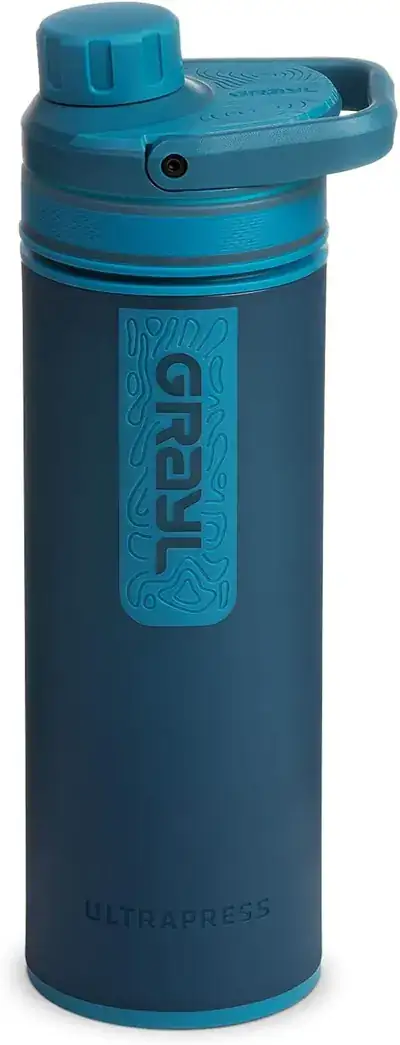
GRAYL Ultrapress
$90–$100
- • Purifier (removes viruses)
- • 10-second press
- • 16.9 oz capacity
- • 300 uses/cartridge
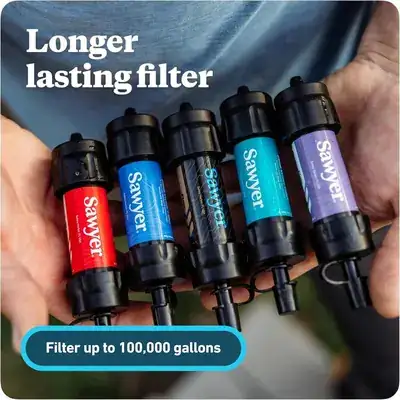
Sawyer Mini
$20–$25
- • 0.1 micron hollow fiber
- • 100,000 gallon lifetime
- • Inline or straw use
- • Ultra lightweight
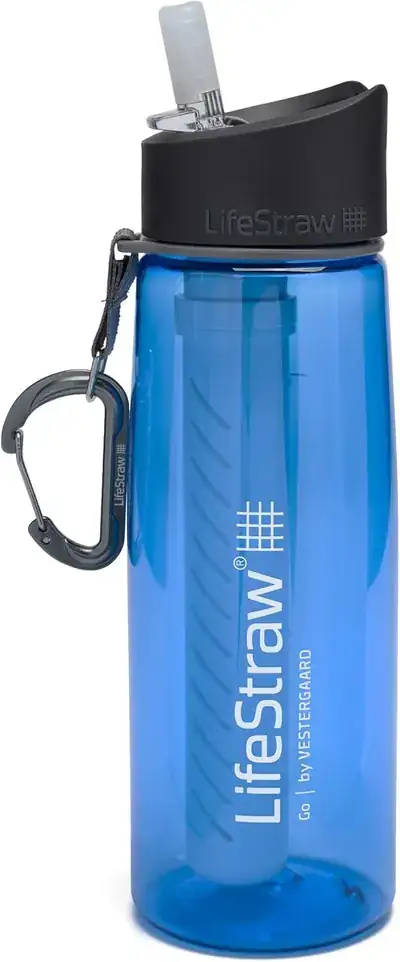
LifeStraw Go
$35–$45
- • 1,000 gallon capacity
- • Carbon capsule for taste
- • BPA-free Tritan
- • Integrated design
Frequently Asked Questions
Related Guides
Related Articles
Deep dive — Water Filter Buying Guide
Complete guide to choosing the right filter
Read: How Water Filters Work
Understanding filtration technologies explained
Water Filter Cost Comparison
Annual costs across all filter types
Step-by-step: Water Testing Kits Guide
Test your water before buying a filter
Filter Replacement Guide (upkeep tips)
When and how to replace filter cartridges
Read: Water Filter Health Benefits
Health advantages of filtered water