Hard Water vs. Soft Water: Everything You Need to Know
Over 85% of American homes have hard water, and most don't realize it's costing them $800-1,200 per year in appliance damage, excess soap, and energy waste. This guide explains the real differences between hard and soft water—what matters for health, what matters for your wallet, and when a water softener is actually worth the investment.
Quick Summary
Hard water is safe to drink and contains beneficial minerals, but damages appliances and causes skin/hair issues. Soft water prevents scale damage and improves soap performance, but adds sodium and removes minerals. Most homes benefit from softening for household use while keeping unsoftened water for drinking.
What Makes Water "Hard" or "Soft"?
Water hardness refers to the concentration of dissolved calcium (Ca²⁺) and magnesium (Mg²⁺) ions. As groundwater flows through limestone, chalk, and dolomite rock formations, it dissolves these minerals. The more contact with mineral-rich geology, the harder the water.
Water Hardness Classification
| Classification | GPG | PPM | What You'll Notice |
|---|---|---|---|
| Soft | 0-3.5 | 0-60 | Great lather, no scale, slightly "slippery" feel |
| Moderately hard | 3.5-7 | 61-120 | Minor scale, adequate lather |
| Hard | 7-10.5 | 121-180 | Visible scale, poor lather, spots on dishes |
| Very hard | 10.5+ | 180+ | Heavy scale, appliance damage, skin issues |
Health Effects: Hard Water vs. Soft Water
The health question is where most people get confused. Here's the evidence-based breakdown:
Hard Water Health
Soft Water Health
The Real Cost of Hard Water
Annual Hard Water Costs (Average US Home)
| Cost Category | Moderate (7 GPG) | Hard (12 GPG) | Very Hard (20+ GPG) |
|---|---|---|---|
| Extra soap/detergent | $80 | $200 | $400 |
| Energy waste (scale on heater) | $50 | $150 | $300 |
| Appliance replacement (amortized) | $50 | $150 | $250 |
| Plumbing maintenance | $30 | $80 | $150 |
| Cleaning products | $30 | $60 | $100 |
| Total Annual Cost | $240 | $640 | $1,200 |
| 10-Year Cost | $2,400 | $6,400 | $12,000 |
Estimates based on DOE research and WQA industry data for a 4-person household.
Solutions: Softeners, Conditioners & Filters
Ion Exchange Water Softeners (Most Effective)
Traditional softeners use resin beads charged with sodium ions. As hard water flows through, calcium and magnesium ions swap with sodium ions—truly "softening" the water to 0 GPG. They require salt refills (40-80 lbs/month) and periodic resin regeneration. Best for: homes with 7+ GPG hardness.
- SpringWell WS1 ($1,000-1,200): Best overall salt-based softener. Smart metered regeneration, Bluetooth app control.
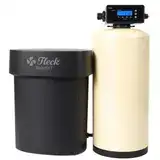
- Fleck 5600SXT ($600-800): Industry workhorse. Reliable, proven, affordable. Most popular among plumbers.
Salt-Free Conditioners (Scale Prevention Only)
TAC (template-assisted crystallization) systems don't remove minerals—they transform them into crystals that won't adhere to surfaces. Water still tests as "hard" but causes 60-90% less scale. No salt, no wastewater, no electricity. Best for: mild-moderate hardness where scale prevention is the primary goal.
- SpringWell FutureSoft ($800-1,000): Top-rated salt-free conditioner with lifetime warranty.
- Pelican SimplySoft ($700-900): NaturSoft TAC media with proven scale prevention.
Softener + Filter Combos
For homes that need both softening and filtration, combination systems save space and installation cost:
- SpringWell SS1 ($1,500-1,800): Whole-house carbon filter + salt-based softener in one system.
- Aquasana + SimplySoft ($1,200-1,500): Rhino filter paired with salt-free conditioning.
Hard Water and Your Home
Appliance Impact
- Water heater: 1/4" scale = 25% efficiency loss. Lifespan reduced 30-50%.
- Dishwasher: Scale clogs spray arms and heating elements. Spots on dishes.
- Washing machine: Scale buildup, clothes feel stiff, colors fade faster.
- Coffee maker: Scale clogs internal tubes. Requires monthly descaling.
- Pipes: Scale narrows pipe diameter over decades, reducing water pressure.
Signs You Need a Softener
- White crusty buildup on faucets and showerheads
- Soap and shampoo don't lather well
- Water spots on dishes even after dishwasher
- Dry, itchy skin after showers
- Stiff, dingy laundry despite good detergent
- Reduced water pressure from scale in pipes
- Water heater making popping/rumbling noises
Regional Hardness in the US
Water hardness varies dramatically by region, driven by local geology. Understanding your area's typical hardness helps you choose the right treatment approach and budget appropriately for equipment and maintenance.
US Regional Water Hardness Map
| Region | Typical GPG | Key States | Primary Mineral Source |
|---|---|---|---|
| Southwest | 15-30+ | Arizona, Nevada, Utah, New Mexico | Limestone aquifers, Colorado River |
| Great Plains | 12-25 | Kansas, Nebraska, Oklahoma, Texas (Hill Country) | Ogallala Aquifer, limestone bedrock |
| Midwest | 10-20 | Indiana, Ohio, Minnesota, Wisconsin | Glacial deposits, dolomite formations |
| Southeast | 5-15 | Florida (central), Georgia, Alabama | Limestone karst geology |
| Mid-Atlantic | 3-10 | Virginia, Maryland, Pennsylvania | Mixed geology, variable sources |
| Pacific Northwest | 1-4 | Oregon, Washington | Volcanic rock, snowmelt sources |
| New England | 1-5 | Maine, Vermont, Massachusetts | Granite bedrock, surface water |
For your specific water hardness, check your city's water quality report or test at your tap with a $5 hardness strip. Keep in mind that well water hardness can vary significantly even within the same county, depending on aquifer depth and geology. If you're on well water, our well water filter guide covers treatment options specific to private wells.
The Science Behind Hard Water Damage
Understanding why hard water causes problems requires a look at the chemistry. When water containing dissolved calcium and magnesium is heated, these minerals precipitate out of solution and form calcium carbonate (CaCO₃) scale—the white, chalky buildup you see on faucets and inside appliances. This process accelerates dramatically above 140°F (60°C), which is why water heaters are the most affected appliance.
Scale acts as an insulator on heating elements. The Department of Energy estimates that just 1/16 inch of scale reduces heat transfer efficiency by approximately 12%. At 1/4 inch—common in untreated hard water areas after 2-3 years—efficiency drops by 25% or more. This means your water heater works harder and longer to achieve the same temperature, directly increasing your energy bill.
Beyond energy waste, scale creates other cascading problems. It narrows pipe interiors over time, reducing water pressure and flow rate. In severe cases (20+ GPG over decades), pipes can become significantly restricted. Scale also provides a rough surface where bacteria can colonize, potentially affecting water quality. Tankless water heaters are not immune—scale buildup on their heat exchangers requires annual flushing with vinegar or descaling solution.
Hard Water and Skin: What Dermatologists Say
The relationship between hard water and skin health is well-documented in dermatological research. A 2018 study published in the Journal of Investigative Dermatology found that hard water damages the skin barrier function by depositing calcium and magnesium on the skin surface. These mineral deposits interact with soap to form insoluble compounds (soap scum) that clog pores and strip away the skin's natural protective lipid layer.
For people with eczema (atopic dermatitis), hard water exposure is particularly problematic. The University of Sheffield conducted a randomized controlled trial showing that hard water significantly increased transepidermal water loss (TEWL)—a key marker of skin barrier damage—compared to soft water. Participants experienced measurable improvements in skin hydration and reduced irritation after switching to softened water for bathing.
Practical solutions for hard water skin issues include installing a shower filter (which can reduce chlorine but doesn't soften water), using a whole-house softener, or applying a barrier cream after bathing. For eczema sufferers, dermatologists often recommend a water softener as part of a comprehensive skin care strategy alongside moisturizers and prescribed treatments.
Hard Water and Hair: The Complete Picture
Hard water affects hair through multiple mechanisms. Calcium and magnesium ions bind to the negatively charged surface of hair strands, creating a mineral film that makes hair feel rough, look dull, and prevents moisture absorption. This mineral coating also makes it difficult for shampoo to lather and for conditioner to penetrate the hair shaft, leading to a cycle of product buildup.
Color-treated hair is especially vulnerable. Hard water minerals can react with hair dye molecules, causing premature fading and brassiness—particularly in blonde and red tones. Salon professionals in hard water areas often recommend chelating shampoos (which contain ingredients like EDTA that bind to and remove mineral deposits) as a regular maintenance step between color treatments.
While hard water doesn't cause true hair loss (follicle death), the cumulative mineral damage can lead to significant breakage, giving the appearance of thinning hair. If you've noticed hair quality deterioration after moving to a new area, testing your water hardness is a good first step. A whole-house softener provides the most comprehensive solution, while a shower head filter offers a budget-friendly alternative, though it won't fully address hardness.
Water Softener Installation: What to Expect
Installing a water softener is a significant plumbing project that most homeowners hire professionals for, though experienced DIYers can handle it. Here's what the process typically involves and what to budget for:
Installation Cost Breakdown
| Component | DIY Cost | Professional Cost |
|---|---|---|
| Softener unit (48,000 grain) | $600-1,200 | $800-2,000 |
| Plumbing supplies (fittings, bypass) | $50-100 | Included |
| Drain connection | $20-50 | Included |
| Labor | Your time (4-8 hrs) | $200-500 |
| Total | $670-1,350 | $1,000-2,500 |
| Annual salt cost | $50-100 (40-80 lbs/month at $6-8/bag) | |
Key installation considerations: you'll need a nearby floor drain or utility sink for regeneration wastewater, a standard 120V outlet, and enough space for the unit (typically 18" x 18" floor space). The softener connects to your main water line after the pressure regulator but before the water heater. Most installations include a bypass valve so you can service the unit without shutting off water to the entire house. For complete step-by-step guidance, see our water softener installation guide.
Maintenance Requirements Compared
Long-term maintenance is an important factor when choosing between softener types. Salt-based systems require the most ongoing attention, while salt-free conditioners are essentially maintenance-free after installation.
| Task | Salt-Based Softener | Salt-Free Conditioner |
|---|---|---|
| Salt/media refills | Monthly (40-80 lbs) | Every 6-10 years (media) |
| Resin replacement | Every 10-15 years ($200-400) | N/A |
| Brine tank cleaning | Annually | N/A |
| Settings adjustment | As needed (hardness changes) | None required |
| Annual operating cost | $50-100 (salt) + $20-40 (water/electricity) | ~$0 |
| Wastewater generation | 25-65 gal per regeneration | None |
For detailed maintenance schedules and troubleshooting tips, visit our maintenance hub. Proper maintenance extends system lifespan significantly—a well-maintained salt-based softener can last 15-20 years, while neglected units may fail in 8-10.
Hard Water vs. Soft Water for Specific Uses
| Use Case | Hard Water | Soft Water | Recommendation |
|---|---|---|---|
| Drinking | ✅ Minerals | ⚠️ Sodium | Hard (or filtered) |
| Cooking | ✅ OK | ✅ Better taste | Either works |
| Bathing/Skin | ❌ Drying | ✅ Gentle | Soft preferred |
| Hair washing | ❌ Damage | ✅ Smooth | Soft preferred |
| Laundry | ❌ Stiff | ✅ Fluffy | Soft preferred |
| Dishwashing | ❌ Spots | ✅ Spotless | Soft preferred |
| Coffee/Tea | ⚠️ Scale | ✅ Better | Filtered + soft |
| Aquariums | Depends on species | ❌ No sodium | Species-dependent |
| Plant watering | ✅ Minerals help | ❌ Sodium harms | Hard or filtered |
| Car washing | ❌ Water spots | ✅ Spot-free | Soft preferred |
Environmental Considerations
Water softeners have environmental trade-offs worth considering. Salt-based systems discharge brine (sodium chloride solution) during regeneration, which enters wastewater treatment systems. In water-scarce regions like California, some municipalities have banned or restricted salt-based softeners due to concerns about sodium levels in recycled wastewater used for irrigation.
Salt-free conditioners produce zero wastewater and require no electricity, making them the more environmentally friendly option. However, they're less effective for very hard water. If you're environmentally conscious but live in a very hard water area, consider a high-efficiency metered softener (like the SpringWell WS1) that regenerates based on actual water usage rather than a timer—reducing salt and water waste by 30-50% compared to timer-based models.
Another consideration: hard water itself is energy-inefficient. The scale buildup in water heaters increases energy consumption, contributing to higher carbon emissions. A softener that eliminates scale may actually reduce your home's overall environmental footprint despite its own water and salt usage. The WQA estimates that eliminating scale can reduce water heater energy consumption by 22-29%.
Hard Water and Your Plumbing System
The impact of hard water on residential plumbing extends far beyond visible faucet deposits. Inside your walls, hard water minerals gradually build up within copper, galvanized steel, and even PEX pipes. Over decades, this accumulation can restrict water flow by 25-75%, reducing pressure at fixtures and increasing strain on your water pump or pressure regulator. In extreme cases—typically 20+ GPG hardness over 15-20 years—pipes can become so restricted that replacement is the only option.
Hot water recirculation systems are particularly vulnerable to hard water scale. The constant heating and reheating cycle accelerates mineral precipitation, and the narrow-diameter recirculation lines can clog within 3-5 years in very hard water areas. If you have a recirculation pump, a water softener isn't just a convenience—it's essential to prevent a costly replumbing project.
Tankless water heaters, often marketed as "maintenance-free," require annual flushing with vinegar or descaling solution when used with hard water above 7 GPG. Without this maintenance, scale buildup on the heat exchanger can trigger error codes, reduce efficiency by 30-40%, and void manufacturer warranties. Most tankless heater manufacturers explicitly recommend a water softener for installations in hard water areas.
The economic case for softening becomes clearest when you factor in plumbing repair and replacement costs. A single tankless water heater heat exchanger replacement costs $500-800 in parts and labor. Replumbing a section of restricted pipe runs $300-1,000. Compared to a softener cost of $800-2,500 installed with $50-100/year in salt, the softener pays for itself by preventing just one or two major plumbing repairs over its 15-20 year lifespan.
Common Myths About Hard and Soft Water
Misinformation about water hardness is rampant online, leading to unnecessary purchases or neglected problems. Here are the most persistent myths and what science actually says:
Myth: Hard water causes kidney stones
Reality: Multiple studies, including a large WHO review, found no causal link between hard water consumption and kidney stone formation. Kidney stones are influenced by genetics, diet (especially oxalate and sodium intake), hydration levels, and medical conditions—not water hardness. In fact, the calcium in hard water may actually help prevent certain types of kidney stones by binding with oxalates in the gut before they reach the kidneys.
Myth: Salt-free conditioners are just as good as softeners
Reality: Salt-free TAC systems prevent scale buildup (60-90% effective) but do not remove hardness minerals. Your water still tests as hard, soap still doesn't lather as well, and you won't get the "slippery" feel of soft water. For homes with 7+ GPG hardness where laundry quality, skin health, and appliance protection all matter, ion exchange softening is significantly more effective.
Myth: Soft water leaves a "slimy" residue on skin
Reality: The "slippery" sensation after washing with soft water isn't residue—it's your skin's natural oils. Hard water creates soap scum that strips these oils away, so the dry, "squeaky clean" feeling people associate with cleanliness is actually skin damage. Soft water allows soap to rinse completely while preserving your skin's natural moisture barrier.
Myth: Magnetic or electronic "softeners" work
Reality: Magnetic water treatment devices claim to alter mineral behavior using magnets or electromagnetic fields. Independent scientific testing, including a comprehensive study by the U.S. Army Corps of Engineers, found no measurable scale reduction from magnetic devices. The WQA and consumer protection agencies have repeatedly warned consumers about these unproven products.
How to Test Your Water Hardness
Before investing in any water treatment equipment, it's essential to know your exact hardness level. Different hardness levels call for different solutions, and testing is quick, easy, and affordable. Here are your options from simplest to most comprehensive:
- Hardness test strips ($5-10 for 50 strips): Dip in water for 2 seconds, compare color to chart. Accuracy: ±2 GPG. Good enough for determining if you need a softener and what size.
- Titration drop test kits ($8-15): Add drops to a water sample until color changes. Count the drops to determine exact GPG. More accurate than strips (±0.5 GPG). Preferred by water treatment professionals.
- Your water utility's CCR: Free. Check your annual Consumer Confidence Report for reported hardness levels. Note: this reflects source water, not what arrives at your tap after traveling through building pipes.
- Professional water analysis ($50-150): A certified lab test provides exact mineral composition, including calcium, magnesium, iron, and manganese separately. Recommended before purchasing whole-house systems to ensure proper sizing.
For well water users, testing is especially important because hardness can vary significantly with seasonal groundwater changes, aquifer depth, and nearby geological activity. Test at least twice per year—once in spring after snowmelt and once in late summer during low water table periods—to capture the range your softener needs to handle.
Once you know your hardness level, our water softener sizing guide helps you calculate the exact grain capacity needed based on household size, water usage, and hardness level. Oversizing wastes salt and water; undersizing leads to hard water breakthrough between regeneration cycles.
Recommended Products
Explore Our Top Picks
Frequently Asked Questions
Related Articles
Best Water Softeners 2026
Top-rated salt-based and salt-free systems
Our picks for Salt-Free Water Conditioners
Scale prevention without salt or drain
How Salt-Based compares to Salt-Free Softeners
Which technology is right for your home?
Water Softener Sizing Guide
Calculate grain capacity for your household
Walkthrough — Water Softener Installation
DIY installation step-by-step
Keep it running: Water Softener Maintenance
Salt refills, resin cleaning, and care schedule