Best Alkaline Water Filters: Ionizers vs Mineral Systems (2026)
Alkaline water filters raise your water's pH to 8-10 while adding beneficial minerals like calcium and magnesium. The alkaline water market has exploded—but the science behind the health claims is more nuanced than marketing suggests. This guide separates fact from hype, covering the three main alkaline filtration technologies (RO remineralization, mineral pitchers, and electronic ionizers), with honest performance assessments, cost analysis, and recommendations based on what actually matters: certified contaminant removal combined with mineral enhancement.
Expert Perspective
Bottom line: Removing contaminants is more important than adjusting pH. The best alkaline filters do both—they remove harmful substances first, then add beneficial minerals. An RO system with alkaline remineralization ($250-350) provides better health protection than a $2,000 ionizer that doesn't filter contaminants effectively.
How Alkaline Water Filters Work
Alkaline water filters use one of three technologies to increase pH and add minerals. Understanding each mechanism helps you choose the right system for your goals and budget.
1. Mineral Remineralization (Post-RO)
The most effective approach: a reverse osmosis system first removes 95-99% of all contaminants (including harmful ones), then a final alkaline remineralization cartridge adds back beneficial minerals. The cartridge contains calcite (calcium carbonate), corosex (magnesium oxide), and sometimes tourmaline or maifan stone. Water passes through these mineral beds, dissolving small amounts that raise pH to 8-9.5.
Best for: Anyone who wants comprehensive contaminant removal AND alkaline mineral water. This is our recommended approach because it addresses both safety and pH preferences.
2. Alkaline Pitcher Filters
Alkaline pitchers use a combination of activated carbon (for chlorine/taste removal) and mineral balls or beads (for pH adjustment). The mineral media slowly dissolves as water passes through, releasing calcium, magnesium, and potassium ions that raise pH. These pitchers are the simplest and cheapest alkaline option, but their contaminant removal is limited compared to RO systems.
Best for: Budget-conscious buyers who want to try alkaline water, apartments/renters, or supplementing an existing filtration system with mineral addition.
3. Electronic Water Ionizers
Ionizers use electrolysis to separate water into acidic and alkaline streams. Water passes over electrically charged platinum-coated titanium plates. The cathode side produces alkaline, mineral-rich water for drinking; the anode side produces acidic water (useful for cleaning and skin care). Most ionizers offer adjustable pH from 4 to 11, with drinking water typically set between 8.5-9.5.
Best for: Enthusiasts willing to invest $1,200-4,000 for adjustable pH control and long-term plate durability. Note: ionizers have limited contaminant removal—pair with a pre-filter for best results.
Type Comparison
| Feature | RO + Alkaline | Alkaline Pitcher | Water Ionizer |
|---|---|---|---|
| pH Range | 8.0-9.5 | 8.0-9.5 | 4.0-11.0 (adjustable) |
| Contaminant Removal | 95-99% (excellent) | Limited (chlorine only) | Minimal |
| Minerals Added | Calcium, magnesium | Calcium, magnesium, potassium | Concentrates existing minerals |
| Upfront Cost | $250-400 | $30-60 | $1,200-4,000 |
| Annual Filters | $60-120 | $40-80 | $0-50 |
| Installation | Under-sink | None | Countertop |
| NSF Certification | Common (NSF 58) | Rare | Rare |
Top Alkaline Filter Recommendations
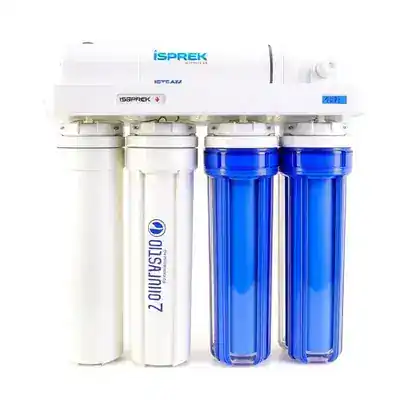
Best Overall: iSpring RCC7AK (6-Stage RO + Alkaline)
The iSpring RCC7AK combines comprehensive 5-stage reverse osmosis with a 6th alkaline remineralization stage. It removes 99% of 1,000+ contaminants including lead, fluoride, arsenic, and chlorine, then adds back calcium and magnesium to raise pH to 7.5-8.5 and improve taste. NSF/ANSI 58 certified with a 75 GPD membrane.
- 6 stages: sediment, GAC carbon, carbon block, RO membrane, T33 carbon, alkaline remineralization
- Removes: lead, fluoride, arsenic, chlorine, PFAS, TDS
- Output pH: 7.5-8.5 (natural alkaline, not artificially high)
- Annual filter cost: $60-80 (replace pre/post filters every 6-12 months)
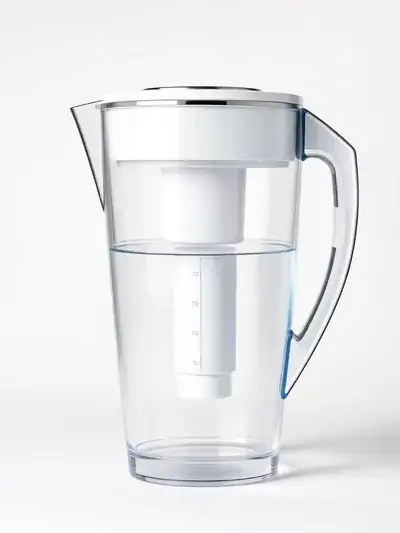
Best Pitcher: Invigorated Water pH RESTORE
The most popular alkaline pitcher, using a long-life alkaline filter with mineral balls that raise pH to 8.5-9.5. The filter also includes activated carbon for basic chlorine and taste removal. At $40-60 with filters lasting 3 months, it's an affordable entry point to alkaline water without installation.
- pH output: 8.5-9.5 (varies with source water)
- Filter life: 96 gallons / 3 months
- Removes: chlorine, taste, odor (basic carbon filtration)
- Does NOT remove: lead, fluoride, PFAS, heavy metals
The Science: Are Alkaline Water Health Claims Valid?
The alkaline water industry markets numerous health benefits—improved hydration, anti-aging, cancer prevention, and detoxification. It's important to evaluate these claims against available scientific evidence.
What Science Supports
- Acid reflux relief: A 2012 study found pH 8.8 water deactivated pepsin, an enzyme contributing to reflux damage. Promising but limited evidence.
- Mineral supplementation: Calcium and magnesium in alkaline water are bioavailable and contribute to daily mineral intake, though food remains the primary source.
- Taste preference: Many people prefer the smooth, slightly sweet taste of mineral-rich alkaline water over standard tap water, which may increase water consumption.
What Science Does NOT Support
- Blood pH changes: Your body maintains blood pH at 7.35-7.45 regardless of what you drink. Kidneys and lungs regulate this within minutes. Alkaline water cannot meaningfully alter blood pH.
- Cancer prevention: No credible scientific study supports the claim that alkaline water prevents or treats cancer. The alkaline diet theory has been repeatedly debunked.
- "Detoxification": Your liver and kidneys detoxify your body. Water pH does not enhance this process. The concept of "alkaline detox" has no scientific basis.
- Superior hydration: A small 2016 study suggested alkaline water reduced blood viscosity after exercise, but the study had significant limitations and hasn't been replicated.
What Alkaline Filters Actually Remove
Filtration capability varies enormously between alkaline filter types. This distinction is critical—a filter that only adjusts pH without removing contaminants provides minimal health benefit.
RO + Alkaline Removes ✅
- • Lead, arsenic, chromium-6 (95-99%)
- • Fluoride (85-95%)
- • PFAS "forever chemicals" (90-99%)
- • Chlorine and chloramine (99%)
- • Bacteria and viruses (99.99%)
- • Nitrates, pharmaceuticals, pesticides
- • Then adds back beneficial minerals
Alkaline Pitchers Don't Remove ❌
- • Lead and heavy metals
- • Fluoride
- • PFAS
- • Arsenic, chromium-6
- • Bacteria and viruses
- • Nitrates, pharmaceuticals
- • Only remove chlorine taste/odor
How to Test Your Water's pH
Before investing in an alkaline filter, test your current water pH to determine if adjustment is even necessary. Most municipal water in the US falls between pH 7.0-8.5, which is already within the healthy range:
- pH test strips ($5-10): Dip in water for 2 seconds, compare color to the included chart. Accuracy: ±0.5 pH units. Best for quick screening.
- Digital pH meter ($15-40): Submerge the electrode, read the digital display. Accuracy: ±0.1 pH units. Requires periodic calibration with buffer solutions. Best for ongoing monitoring.
- Professional lab test ($30-50): Send a sample to Tap Score or similar lab for precise pH measurement alongside comprehensive contaminant analysis. Best for establishing a baseline.
Key insight: If your water already tests at pH 7.5-8.5, an alkaline filter provides minimal benefit. Your water is already slightly alkaline. Focus on contaminant removal instead—a standard under-sink filter or RO system will improve your water quality far more than pH adjustment.
Alkaline Water for Specific Needs
Athletes and Active Lifestyles
Some athletes prefer alkaline water for post-workout hydration, claiming it helps neutralize lactic acid buildup. While the science is limited, a small 2010 study in the Journal of the International Society of Sports Nutrition found that alkaline water improved hydration status and acid-base balance during anaerobic exercise compared to regular water. If you train intensively and want to try alkaline water, an alkaline pitcher ($40-60) is the lowest-cost experiment before committing to a larger system.
Acid Reflux and GERD Management
The strongest scientific case for alkaline water involves acid reflux. A 2012 study published in the Annals of Otology, Rhinology & Laryngology found that water at pH 8.8 permanently deactivated human pepsin, the enzyme responsible for reflux-related tissue damage. This doesn't replace medical treatment (PPIs, lifestyle changes), but drinking pH 8.8 water between meals may provide supplemental relief. An RO system with alkaline remineralization provides consistent pH 8-8.5 water—close to the therapeutic range studied.
Households With RO Systems
RO water has a pH of 5.5-6.5 (slightly acidic) because the membrane removes alkaline minerals and dissolved CO2 creates carbonic acid. Many people find pure RO water tastes "flat" or "empty." Adding an alkaline remineralization stage ($15-25 cartridge) raises pH back to 7.5-8.5 and improves taste by adding calcium and magnesium. This is the most practical and cost-effective use of alkaline technology—enhancing already-purified water rather than trying to get health benefits from pH alone.
5-Year Cost Comparison
| System | Upfront | 5-Year Filters | 5-Year Total | Contaminant Removal |
|---|---|---|---|---|
| RO + Alkaline (iSpring) | $250-300 | $300-400 | $550-700 | Excellent (99%) |
| Alkaline Pitcher | $40-60 | $200-400 | $240-460 | Basic (chlorine only) |
| Water Ionizer | $1,200-4,000 | $0-250 | $1,200-4,250 | Minimal |
| Bottled alkaline water | $0 | $2,500-5,000 | $2,500-5,000 | Varies by brand |
Alkaline Water Myths vs Reality
Myth: "Alkaline water cures cancer"
Reality: No credible scientific study supports this claim. Cancer cells do create acidic microenvironments, but drinking alkaline water cannot change intracellular pH. The alkaline diet theory for cancer prevention has been repeatedly debunked by oncologists and nutritional scientists. Do not delay medical treatment based on alkaline water claims.
Myth: "Higher pH is always better"
Reality: Water above pH 10 tastes soapy, can irritate mucous membranes, and may interfere with stomach acid needed for digestion and nutrient absorption. The optimal drinking range is pH 8.0-9.5. Some ionizers can produce pH 11+ water—this is not recommended for regular consumption.
Myth: "Your body is too acidic and needs alkaline water"
Reality: Blood pH is tightly regulated at 7.35-7.45 by your kidneys and respiratory system. Drinking alkaline water cannot meaningfully change blood pH—your body compensates within minutes. If your blood pH actually changed significantly, it would be a medical emergency requiring hospitalization, not a hydration issue.
Who Should (and Shouldn't) Buy an Alkaline Filter
Consider an alkaline filter if:
- You already have an RO system and want to add minerals back (remineralization cartridge, $15-25)
- You prefer the taste of mineral-rich water over "flat" RO water
- You experience acid reflux and want to try pH 8.8 water as a complement to medical treatment
- Your water is naturally acidic (pH below 6.5) and you want to neutralize it
- You're interested in trying alkaline water without committing to bottled water costs
Skip the alkaline filter if:
- Your primary concern is contaminant removal—a standard under-sink filter or RO system is more effective
- You're buying based on cancer prevention or detox claims—these are not scientifically supported
- Your water already tests at pH 7.5-8.5—it's already slightly alkaline naturally
- You have kidney disease—consult your doctor before consuming highly alkaline water
Related Resources
Understanding Water Quality Science
Water quality is determined by a complex interplay of dissolved minerals, organic compounds, and potential contaminants that vary significantly by geographic region and water source. Municipal water treatment facilities use multi-stage processes including coagulation, sedimentation, sand filtration, and chemical disinfection to meet EPA Safe Drinking Water Act standards. However, these treatment processes can introduce disinfection byproducts such as trihalomethanes and haloacetic acids, which form when chlorine reacts with naturally occurring organic matter in the source water.
Private well water faces different challenges, as it bypasses municipal treatment entirely and may contain naturally occurring contaminants like arsenic, radon, and heavy metals that leach from surrounding geological formations. The Environmental Protection Agency recommends annual testing for coliform bacteria, nitrates, total dissolved solids, and pH levels for all private wells. Additional testing for volatile organic compounds, pesticides, and heavy metals should be conducted if you live near agricultural areas, industrial sites, or old mining operations. Understanding your specific water chemistry is the critical first step in selecting the most effective filtration system for your household needs.
Total dissolved solids (TDS) measurements provide a general indicator of water purity but should not be the sole basis for filtration decisions. Water with high TDS from beneficial minerals like calcium and magnesium may actually be healthier than ultra-purified water. The World Health Organization has noted that demineralized water may have adverse health effects due to the absence of essential minerals. This is why many advanced filtration systems, particularly reverse osmosis units, now include remineralization stages that add back beneficial minerals after removing contaminants. The ideal approach balances contaminant removal with mineral retention, targeting specific harmful substances identified through comprehensive water testing while preserving the natural mineral content that contributes to both taste and health benefits.
Filtration Technology Comparison
Modern water filtration leverages several distinct technologies, each with unique strengths for addressing specific water quality challenges. Activated carbon filtration, the most common residential method, uses adsorption to capture chlorine, volatile organic compounds, and taste-affecting chemicals. Granular activated carbon (GAC) filters provide good flow rates but may allow channeling, while carbon block filters compress carbon particles for more consistent contact time and finer filtration down to 0.5 microns. Catalytic carbon represents the latest advancement, specifically engineered to break down chloramines through a catalytic reaction rather than simple adsorption.
Reverse osmosis systems force water through a semipermeable membrane with pore sizes as small as 0.0001 microns, effectively removing dissolved solids, heavy metals, and most microorganisms. Modern RO systems achieve 95-99 percent rejection rates for contaminants like lead, arsenic, fluoride, and PFAS compounds. The primary considerations for RO systems include water waste ratios (typically 3:1 to 4:1 for standard systems, improved to 1:1 in premium tankless models), storage tank requirements, and the need for pre-filtration to protect the delicate membrane from sediment and chlorine damage.
Ion exchange technology, used in both water softeners and specialized contaminant removal systems, swaps problematic ions in the water with benign alternatives. Water softeners exchange calcium and magnesium ions for sodium ions, preventing scale buildup in plumbing and appliances. Specialized ion exchange resins can target specific contaminants like lead, nitrates, or perchlorate. Ultraviolet purification provides chemical-free disinfection by disrupting the DNA of bacteria, viruses, and protozoa at wavelengths around 254 nanometers. UV systems are particularly valuable for well water and as a final treatment stage in multi-barrier systems, though they do not remove chemical contaminants or improve taste.
Related Resources
Frequently Asked Questions
Related Articles
See the best Reverse Osmosis Systems
Top-rated RO water filters
Top-rated Water Softeners
Top water softening systems
See the best Whole House Water Filters
Complete whole-house filtration
Our picks for Well Water Filters
Specialized well water treatment
Deep dive — Water Filter Buying Guide
Avoid common buying mistakes
More on State Water Quality Guide
Water quality by state