What causes blue-green stains
Copper pipes and brass fixtures release small amounts of copper when water is corrosive. As drips evaporate, the copper is left behind as a blue-green film on porcelain, enamel, grout and toilet bowls.
Low pH (acidic) water
Common in private wells. Acidic water dissolves copper from pipes and brass fittings.
Very soft or low-mineral water
Water with little dissolved mineral content can be more corrosive to copper plumbing.
New or damaged copper plumbing
Recent plumbing work, stray electrical grounding or worn pipes can increase copper release.
Water that sits overnight
Copper levels are usually highest in the first water drawn after pipes sit unused.
How to test
- Collect a first-draw sample from the kitchen cold tap after water has sat for at least six hours.
- Test for copper, lead and pH. A certified laboratory gives the most reliable results; see our water test kit guide.
- Compare results with the EPA action levels (1.3 mg/L for copper, 15 µg/L for lead) and read our guide to reading your water report.
- City water? Share copper or lead results with your utility and ask about corrosion control.
How to fix it
| Situation | Source fix | Drinking water meanwhile |
|---|---|---|
| Private well, low pH | Acid-neutralizing filter sized by a professional | Flush cold tap; consider RO at the kitchen |
| City water | Report results; ask utility about corrosion control | Flush cold tap; consider RO at the kitchen |
| Leaks or green pipe joints | Plumber inspection and repair | Test for copper and lead |
To clean existing stains, use white vinegar, lemon juice or a cleaner labeled for copper or mineral stains, testing on a hidden area first. For related symptoms, see metallic taste in tap water and hard water stains.
Recommended picks
These don't stop pipe corrosion, but they fit common situations once you have test results.
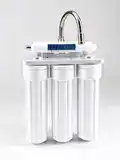
Aquasana OptimH2O Reverse Osmosis
Aquasana OptimH2O Reverse Osmosis
An under-sink RO option for drinking and cooking water if testing finds copper or lead while you fix corrosion at the source.
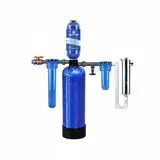
Aquasana Rhino Well Water with UV
Aquasana Rhino Well Water with UV
For private wells that also need sediment, chemical and microbiological treatment. Pair it with a separately sized acid neutralizer if your pH is low.
Compare sizing, treatment options and ongoing costs in our best well water filters guide.