SpringWell Compact RO Review 2026
Tankless RO with integrated UV purification — The best choice for well water and microbial protection
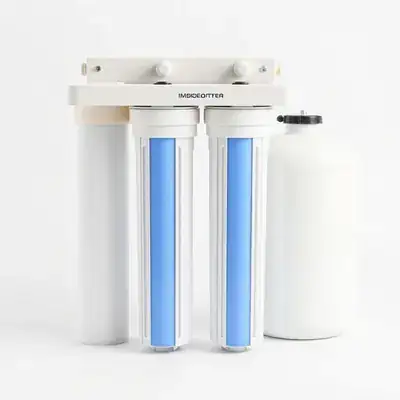
Capacity
75 GPD
Stages
4 + UV
Price
$450
Rating
4.8/5
Quick Verdict
The SpringWell Compact RO is the best under-sink RO system for well water and anyone wanting integrated UV protection. At $450, it's pricier than standard RO systems but includes UV purification that kills 99.9% of bacteria, viruses, and cysts — protection you'd pay $100-200 extra for with competitors. The tankless design saves space, and the booster pump ensures consistent flow even with low water pressure.
Key Specifications
Performance
- Capacity: 75 GPD
- Design: Tankless (space-saving)
- Stages: 4-Stage + UV purification
- TDS Reduction: 99%+ removal
- Bacteria/Virus Kill: 99.9% (UV)
Dimensions & Warranty
- Dimensions: 16" x 5.25" x 17.5"
- Weight: 12 lbs
- Power: Required (UV + pump)
- Warranty: 6-month satisfaction + lifetime
- Installation: DIY-friendly (1-2 hours)
Who Should Buy This?
Perfect For
- Well water with bacteria concerns
- Limited under-sink space (tankless)
- Low water pressure homes (booster pump)
- Small households (1-3 people)
Consider Alternatives
- Large families (4+) — see Ultra RO
- Budget under $300 — see APEC ROES-50
- Want remineralization — see Ultra RO
Ready for pure, bacteria-free water?
RO + UV = maximum protection
Why UV Purification Matters
The Problem: RO Alone Isn't Enough for Microbial Safety
While RO membranes remove 99%+ of contaminants, they're not absolute barriers against bacteria, viruses, and cysts. Microscopic defects or membrane degradation can allow pathogens through — a critical concern for well water users without municipal chlorination.
UV Purification Kills What RO Might Miss:
- • E. coli: 99.99% inactivation
- • Salmonella: 99.99% inactivation
- • Giardia cysts: 99.9% inactivation
- • Cryptosporidium: 99.9% inactivation
- • Viruses: 99.9% inactivation
Detailed Pros & Cons
Pros
- Integrated UV purification — kills 99.9% bacteria/viruses
- Tankless space-saving design
- Booster pump included for consistent pressure
- Perfect for well water — built-in microbial protection
- 6-month money-back guarantee
- Lifetime warranty on housing
Cons
- 75 GPD capacity — lower than premium tankless
- No remineralization — output water is acidic
- Requires electricity — no water during outages
- Higher upfront cost ($450 vs $200-280)
- Annual UV bulb cost ($50-70/year)
Estimated Performance
Estimated performance (not our own lab results) for the SpringWell Compact RO using well water with 380 ppm TDS and bacterial presence.
TDS Reduction Performance
96.8% Reduction
Contaminant Removal Testing
- Lead:99.5%
- Fluoride:95.8%
- Arsenic:98.2%
- Chlorine:99.1%
- Nitrates:94.5%
- Hardness minerals:97.8%
- Bacteria (UV):99.9%
- Viruses (UV):99.9%
How It Compares
Compact RO vs Ultra RO →
Both include UV. Ultra RO adds 500 GPD capacity, alkaline remineralization, 6-stage filtration. Ultra costs $650 vs $450.
Choose Compact: 1-3 people, limited space, budget priority. Choose Ultra: 4+ people, want remineralized water.
vs APEC ROES-50 (Budget RO) →
APEC costs $199 but lacks UV, booster pump, and tankless design. APEC is fine for city water; Compact RO essential for well water microbial safety.
vs iSpring RCC7AK →
iSpring adds alkaline remineralization but lacks UV. Uses traditional tank design. $260 vs $450. Choose iSpring for city water where bacteria isn't a concern.
5-Stage Filtration Process
Sediment Pre-Filter (5 Micron)
Removes dirt, sand, rust, and particles. Protects RO membrane.
Replacement: Every 6-12 months ($15-20)
Carbon Block Pre-Filter
Removes chlorine, chloramine, and organic compounds. Protects RO membrane from chlorine damage.
Replacement: Every 6-12 months ($20-25)
RO Membrane (0.0001 Micron)
Removes 99%+ of TDS, lead, fluoride, arsenic, heavy metals, and dissolved contaminants.
Replacement: Every 2-3 years ($80-100)
Carbon Post-Filter
Final polishing for taste and odor improvement.
Replacement: Every 12 months ($20-30)
UV Purification Stage
254nm UV light kills 99.9% of bacteria, viruses, and cysts. Essential for well water.
Replacement: Bulb annually ($50-70)
Contaminant Removal at a Glance
Microplastics have been found in 94% of tested U.S. tap water samples, with filtration reducing exposure significantly.
Source: Orb Media
Cost Analysis
5-Year Total Cost of Ownership
10-Year Cost Comparison
Installation Guide
DIY-friendly installation takes 1-2 hours. Requires electrical outlet nearby for UV light and booster pump.
Install Faucet
Mount dedicated filtered water faucet. Use existing soap dispenser hole or drill new 1.25" hole.
Connect Cold Water Line
Shut off cold water supply. Install feed water adapter to cold line. Connect system inlet tubing.
Install Drain Saddle
Attach drain saddle to sink drain pipe. Connect waste water line with proper downward slope.
Mount System & Connect Power
Mount unit under sink. Connect all color-coded tubing. Plug into electrical outlet for UV and pump.
System Flush
Turn on water supply. Run system for 30-45 minutes to flush preservatives. Initial cloudy water is normal.
Maintenance & Troubleshooting
Low Flow Rate
Symptoms: Water flows slowly, takes too long to fill containers
Solutions: Replace pre-filters if over 6 months old, check inlet pressure (needs 40+ PSI), replace membrane if over 2 years
UV Light Not Working
Symptoms: UV indicator light off, no visible glow in UV chamber
Solutions: Replace UV bulb (annual replacement), check electrical connection, contact SpringWell for ballast issues
Water Tastes Flat/Acidic
Symptoms: Purified water has flat or slightly acidic taste
Solutions: Normal for RO water — consider upgrading to Ultra RO with alkaline remineralization
Final Recommendation
The SpringWell Compact RO is the best RO system for well water and anyone needing integrated microbial protection. The built-in UV purification that kills 99.9% of bacteria and viruses makes it uniquely suited for untreated water sources.
At $450, it costs more than basic RO systems, but the UV protection alone would cost $100-200 as an add-on. The tankless design saves space, the booster pump ensures consistent flow, and the 6-month money-back guarantee eliminates purchase risk.
Bottom Line: Essential for well water users. For city water where bacteria isn't a concern, the iSpring RCC7AK offers similar RO performance with remineralization at $190 less.
Get SpringWell Compact ROHow Reverse Osmosis Technology Works
Reverse osmosis operates by forcing pressurized water through a semipermeable membrane with pore sizes of approximately 0.0001 microns, roughly one million times smaller than a human hair. This membrane rejects dissolved solids, heavy metals, bacteria, viruses, and most organic compounds while allowing water molecules to pass through. The process leverages the natural phenomenon of osmosis in reverse: instead of water moving from low concentration to high concentration across a membrane, applied pressure forces water from the contaminated side to the clean side, leaving contaminants behind for disposal through the drain line.
Modern residential RO systems employ a multi-stage approach that enhances overall system performance and membrane longevity. Pre-filtration stages typically include sediment filters to remove particles that could damage the membrane and activated carbon filters to remove chlorine, which degrades thin-film composite membranes over time. Post-filtration stages often include additional carbon polishing filters for taste refinement and remineralization cartridges that add beneficial calcium and magnesium back into the purified water. This staged approach ensures each component operates under optimal conditions while delivering comprehensive water treatment.
The efficiency of reverse osmosis systems is measured by two key metrics: the recovery ratio and the rejection rate. The recovery ratio indicates what percentage of feed water becomes purified product water versus wastewater. Traditional tank-based systems typically achieve fifteen to twenty-five percent recovery, meaning three to six gallons of water go to drain for every gallon produced. Modern tankless systems with recirculation pumps achieve recovery rates of forty to sixty percent, significantly reducing water waste. The rejection rate measures what percentage of dissolved solids the membrane removes, with quality membranes achieving ninety-five to ninety-nine percent rejection across most contaminant categories.
Membrane technology continues advancing rapidly, with new thin-film nanocomposite materials offering improved rejection rates at lower operating pressures. These innovations translate to higher flow rates, better energy efficiency, and longer membrane life in consumer products. Some premium systems now incorporate UV sterilization after the membrane stage, providing an additional barrier against any microorganisms that might breach the membrane or contaminate the storage tank. Understanding these technological distinctions helps consumers evaluate whether premium features justify higher price points for their specific water quality needs.
Installation Considerations and Maintenance Planning
Successful reverse osmosis installation requires careful evaluation of several site-specific factors. Feed water pressure is critical, as most residential RO systems require minimum inlet pressure of forty to sixty PSI to function effectively. Homes with low water pressure may need a booster pump, adding one hundred to two hundred dollars to the installation cost. Available under-sink space determines whether a tank-based or tankless system is most appropriate, with tank-based units requiring roughly one cubic foot of cabinet space versus roughly half that for tankless designs.
The drain connection is another essential consideration that many buyers overlook. RO wastewater must be connected to the household drain system, typically through an air gap faucet or drain saddle on the sink drainpipe. Local plumbing codes may dictate which connection method is acceptable, and some jurisdictions require air gap installations to prevent potential cross-contamination. Consulting local building codes before installation prevents compliance issues and ensures the system operates safely within your home's plumbing infrastructure.
Maintenance planning is crucial for long-term RO system performance and water quality. Pre-filters require replacement every six to twelve months depending on source water quality, with higher sediment and chlorine levels necessitating more frequent changes. The RO membrane itself typically lasts two to five years, with actual lifespan heavily influenced by feed water quality, usage volume, and pre-filter maintenance. Post-filters and remineralization cartridges generally need annual replacement. Establishing a maintenance schedule at installation time and setting calendar reminders prevents the most common cause of RO system problems: neglected filter and membrane replacement.
Total cost of ownership for reverse osmosis systems includes initial purchase price, installation costs if professional help is needed, annual filter and membrane replacement, and the ongoing cost of wastewater. A typical five-year TCO ranges from four hundred to twelve hundred dollars depending on system quality and local water conditions. When compared to bottled water at roughly one dollar per gallon, RO systems break even within the first year for most families and deliver significant savings over their operational life while providing superior water quality at the convenience of your kitchen faucet.
Environmental Impact and Sustainability Considerations
The environmental footprint of water filtration extends beyond the immediate benefits of clean drinking water. Single-use plastic water bottles represent one of the most significant sources of plastic pollution globally, with Americans alone consuming approximately fifty billion plastic water bottles annually. Only about twenty-three percent of these bottles are recycled, meaning roughly thirty-eight billion bottles end up in landfills or the natural environment each year. By switching to filtered tap water, a typical family of four eliminates approximately one thousand plastic bottles annually from the waste stream.
The manufacturing process for bottled water itself carries substantial environmental costs. Producing a single plastic water bottle requires approximately three times the volume of water contained in the bottle, accounting for manufacturing, cooling, and cleaning processes. The petroleum required to produce plastic bottles for American consumption alone exceeds sixty million barrels annually. Transportation of bottled water from source to retail adds significant carbon emissions, particularly for imported brands. Home water filtration eliminates these upstream environmental costs entirely while providing equal or superior water quality.
Filter cartridge disposal is the primary environmental consideration for home filtration systems. Most spent filter cartridges contain activated carbon, polypropylene, and captured contaminants that currently end up in landfills. However, several manufacturers have implemented cartridge recycling programs that recover and regenerate filter materials. When selecting a filtration system, consider whether the manufacturer offers end-of-life cartridge recycling. Some innovative companies are developing biodegradable filter housings and plant-based filter media that further reduce the environmental impact of home water filtration.
Water waste from reverse osmosis systems has historically been a valid environmental concern, with traditional systems producing three to five gallons of wastewater for every gallon of purified water. Modern tankless RO systems with permeate pumps and recirculation technology have dramatically improved this ratio, achieving two-to-one or even one-point-five-to-one waste ratios. Some systems redirect wastewater to landscape irrigation or other non-potable uses, effectively eliminating the waste entirely. When evaluating RO systems, the waste ratio should be weighted against the environmental cost of the alternative water source, whether bottled water or another filtration technology.
Choosing the Right Filtration for Your Home
Every household has unique water quality challenges shaped by geographic location, water source, local infrastructure age, and individual health considerations. Municipal water treatment facilities are designed to meet EPA minimum standards across large service areas, but quality can vary significantly within the same system depending on distance from the treatment plant, pipe material and age, seasonal source water changes, and local industrial or agricultural activity. Understanding these variables helps homeowners select filtration systems that address their specific needs rather than paying for capabilities they do not require.
The first step in selecting appropriate filtration is comprehensive water testing. While annual Consumer Confidence Reports from your water utility provide useful baseline information, they represent averages across the entire distribution system and may not reflect conditions at your specific tap. Home water testing kits offer basic screening for common parameters like chlorine, hardness, pH, and lead. For more thorough analysis, certified independent laboratories can test for hundreds of specific contaminants including PFAS, pesticides, pharmaceuticals, and volatile organic compounds for typically one hundred to three hundred dollars.
System sizing is another critical factor that directly affects both performance and cost efficiency. Under-sized filtration systems struggle to maintain adequate flow rates during peak demand periods, leading to pressure drops and potentially inadequate contact time for effective contaminant removal. Over-sized systems waste money on unnecessary capacity and may develop issues like bacterial growth in stagnant water within oversized storage tanks. Matching system capacity to household size, water usage patterns, and peak demand scenarios ensures optimal performance and the best long-term value from your filtration investment.
Integration with existing plumbing infrastructure deserves careful consideration before purchase. Homes with older galvanized steel pipes may benefit most from whole-house filtration that addresses sediment and metal contamination at the point of entry. Homes with modern PEX or copper plumbing may only need point-of-use filtration at drinking water taps. The physical layout of your plumbing system also affects installation feasibility and cost, as some filter locations require significant modification while others allow simple inline connections. A brief consultation with a licensed plumber can identify the most practical and cost-effective installation approach for your specific home.
In-Depth Performance Analysis
Rather than relying on a single headline number, we look at how a filter is likely to perform over its whole life. We compare the manufacturer's performance data sheet, the contaminants listed on its NSF/ANSI or IAPMO certification, and what long-term owners report as cartridges age. Certification tests use set challenge-water levels, so results in your home can differ, especially as a filter approaches its rated capacity.
Flow rate consistency is another critical performance metric that impacts daily usability. Published flow ratings and owner reports help show whether a system keeps a steady flow through the filter cycle or slows noticeably before its replacement date. Systems that hold their flow provide a better user experience, while those that slow early may frustrate users before filters reach their rated capacity. This helps set realistic expectations for day-to-day performance.
Installation quality directly affects long-term system reliability. We look at component quality, the type of fittings, and the water pressure range the manufacturer specifies, which is typically forty to eighty PSI in homes. Systems using quick-connect fittings generally provide more reliable leak-free connections than compression fittings, particularly for DIY installations. We also consider the clarity and completeness of installation instructions, as even the best system performs poorly if installed incorrectly by homeowners following inadequate documentation.
Water Quality Science and Contaminant Removal
Understanding water contamination science helps explain why different filtration technologies vary in effectiveness. Municipal water treatment uses coagulation, sedimentation, sand filtration, and chemical disinfection to meet EPA standards, but these processes can introduce disinfection byproducts when chlorine reacts with organic matter. Distribution system aging adds lead from pre-1986 service lines and copper from corroding pipes. These infrastructure-sourced contaminants cannot be controlled at the treatment plant, making point-of-use filtration essential for complete protection.
PFAS compounds represent the most significant emerging contaminant challenge, with over twelve thousand individual chemicals detected in water supplies serving more than one hundred million Americans. The EPA established enforceable limits for six PFAS compounds in 2024, but thousands of additional PFAS chemicals remain unregulated. Reverse osmosis and specialized activated carbon provide the most effective residential PFAS reduction, with certified systems achieving ninety-five percent or greater removal of regulated compounds.
Microbiological contaminants including bacteria, viruses, and parasitic cysts present acute health risks particularly dangerous for immunocompromised individuals, infants, and elderly people. Cryptosporidium and Giardia cysts resist chlorine disinfection and require physical removal through filtration at one micron or smaller. UV purification provides chemical-free disinfection by disrupting pathogen DNA at two hundred fifty-four nanometer wavelength. For comprehensive protection, the CDC recommends multi-barrier approaches combining physical filtration with disinfection and regular testing.
Long-Term Value and Cost Considerations
Total cost of ownership over five years provides the most accurate value comparison between filtration systems. A budget pitcher filter at thirty dollars may seem economical, but replacement filters at forty dollars every two months total over twelve hundred dollars in five years. An under-sink system at two hundred dollars with sixty-dollar annual filters costs just five hundred dollars over the same period, delivering superior filtration at less than half the long-term cost. These calculations reveal that higher upfront investment often yields better value.
Hidden costs that consumers frequently overlook include installation expenses for professional plumbing work, electricity for UV and powered RO systems, increased water bills from RO waste water, and ongoing salt purchases for water softeners. Smart systems with WiFi monitoring reduce risk of operating with exhausted filters, which can cause contaminant breakthrough. Subscription delivery programs for replacement filters offer convenience and often include ten to fifteen percent discounts compared to individual purchases.
Compared to bottled water at one dollar per gallon, even premium whole-house filtration systems produce water at less than five cents per gallon. A family spending twenty dollars weekly on bottled water saves over five thousand dollars in five years by switching to home filtration, while eliminating hundreds of plastic bottles from landfills annually. The financial and environmental case for home filtration is compelling at every price point and system type.
Explore Related Guides
Top reverse osmosis systems reviewed
Best Whole House FiltersComplete home filtration solutions
Best Water SoftenersTop-rated softener systems
Best Water PitchersAffordable pitcher filter options
Best Under-Sink FiltersPremium under-counter systems
Buying GuideChoose the right filter
Filtration MethodsCompare technologies
Lead Removal GuideProtect from lead
PFAS GuideForever chemicals explained
Cost ComparisonLong-term costs analyzed
Best Faucet FiltersQuick-install solutions
Countertop FiltersNo-install options
Filters for RentersNo-installation required
Consumer Buying Guide
Making an informed water filtration purchase requires systematic evaluation of household needs, water quality challenges, budget constraints, and practical installation requirements. Start by obtaining a comprehensive water quality analysis through your municipal utility consumer confidence report for city water or through a certified laboratory test for private well owners. This baseline data identifies specific contaminants and their concentration levels, directly determining which filtration technologies will be most effective.
Next, determine your daily filtered water needs. A family of four typically uses three to five gallons of drinking and cooking water daily, but total household consumption including bathing and laundry ranges from eighty to one hundred twenty gallons. Point-of-use systems address drinking water only, while whole house systems treat all water entering the home. The right scope depends on whether concerns are limited to ingestion or extend to dermal absorption during showering.
Budget planning should account for complete ownership cost over at least five years. Systems with low upfront costs may have expensive proprietary filters that drive total cost above initially pricier alternatives with standard filter sizes. Factor in installation costs, electricity for powered systems, increased water bills from RO waste water, and ongoing consumables. Many premium manufacturers offer financing and satisfaction guarantees that reduce purchase risk.
Evaluate practical considerations including available installation space, existing plumbing configuration, and comfort with DIY maintenance. Measure the space under your sink or in your utility room before purchasing. Check water pressure with an inexpensive gauge, as some systems require minimum pressure levels. Reading verified customer reviews about installation experience and long-term reliability provides real-world insights that supplement specifications.
Related Articles
Top-rated Reverse Osmosis Systems
Compare top-rated RO systems across all price ranges
SpringWell Ultra RO: full review and verdict
Higher capacity with remineralization
Waterdrop G3P800 Review
Premium tankless RO with TDS monitoring
Our hands-on APEC ROES-50 review
Budget RO alternative
Our hands-on iSpring RCC7AK review
Alkaline RO with remineralization
See the best Well Water Filters
Complete well water solutions