Bottled vs Bottleless Water Dispensers
How traditional bottled water coolers compare with bottleless dispensers that connect to your water line, on cost, convenience, space, upkeep and water quality, so you can pick the right type for your home or office.
Quick Decision Guide
Choose Bottled If You:
- Rent and prefer low upfront costs
- Don't have access to a water line
- Need portability to move between locations
- Have limited daily water consumption
Choose Bottleless If You:
- Want long-term cost savings
- Have access to a water line
- Prioritize environmental sustainability
- Have high daily water consumption
Understanding Water Dispenser Types
The choice between bottled and bottleless water dispensers represents fundamentally different approaches to accessing clean drinking water. This decision affects your daily convenience, long-term costs, environmental impact, and even your office or home aesthetics.
What Are Bottled Water Dispensers?
Bottled water dispensers, also called water coolers, use large 3-gallon or 5-gallon bottles of pre-purified water. These bottles are typically delivered on a regular schedule by water delivery services. The dispenser simply cools (and sometimes heats) the water, providing instant access to chilled or hot water for drinking and cooking.
Most bottled dispensers come in two configurations: top-loading models where you lift the bottle onto the unit, and bottom-loading models with a hidden cabinet that makes bottle replacement easier. The water source is spring water, purified municipal water, or distilled water processed at a bottling facility.
What Are Bottleless Water Dispensers?
Bottleless water dispensers, also known as point-of-use (POU) systems, connect directly to your existing water line. They feature built-in multi-stage filtration systems that purify your tap water on-demand. These systems typically include sediment filters, carbon block filters, and sometimes UV purification or reverse osmosis filtration.
Because they're plumbed into your water supply, bottleless dispensers provide unlimited filtered water without the need for bottle delivery, storage, or replacement. They represent a more permanent installation compared to bottled units but offer superior long-term convenience and cost savings.
Dispensers to Compare
One option for each approach: two plumbed-in bottleless dispensers and one bottled cooler.
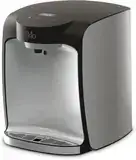
Brio CLBXL520SC Self-Cleaning Bottleless Dispenser
Brio CLBXL520SC Self-Cleaning Bottleless Dispenser
A plumbed-in dispenser with hot, cold and room-temperature water and a self-cleaning cycle. It needs a cold-water line nearby, so budget for installation if you are not comfortable with plumbing.
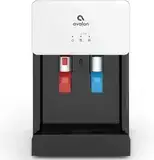
Avalon B8WHT Touchless Bottleless Dispenser
Avalon B8WHT Touchless Bottleless Dispenser
A bottleless dispenser with touchless dispensing, which suits shared kitchens and offices. Like any plumbed unit it needs a water line, and its filters must be changed on the maker's schedule.
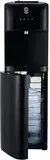
Primo Bottom-Loading Classic 2-Temp Dispenser
Primo Bottom-Loading Classic 2-Temp Dispenser
A bottom-loading cooler with cold and room-temperature water. The bottle sits in a cabinet at the base, so there is no heavy lifting onto the top and no plumbing. You keep paying for bottles, and it does not filter the water itself.
Compare more models, including countertop options, in our best water dispensers guide. Open each deal for the current price.
Comprehensive Side-by-Side Comparison
Cost Analysis
| Cost Factor | Bottled Dispenser | Bottleless Dispenser |
|---|---|---|
| Initial Purchase | $50-$300 | $300-$2,000 |
| Installation | $0 (DIY) | $100-$300 (professional) |
| Monthly Water Cost | $30-$80 | $0 (uses tap water) |
| Filter Replacement | N/A | $50-$150/year |
| 5-Year Total | $2,050-$5,100 | $700-$3,050 |
💰 Long-term savings: Bottleless dispensers save $1,350-$2,050 over 5 years
The initial sticker shock of bottleless dispensers quickly fades when you calculate ongoing costs. A typical office using 10 bottles monthly spends $600-$960 annually on water delivery alone. With bottleless systems, your only recurring cost is filter replacement every 6-12 months, typically $50-$150 depending on the system.
For homes or offices with high water consumption, the payback period is often just 8-14 months. After that, you're enjoying essentially free filtered water. Understanding your household's flow rate requirements helps you choose the right capacity system.
Installation & Setup Requirements
Bottled Dispenser Setup
- Time: 5-10 minutes
- Tools: None required
- Skills: Basic — anyone can do it
- Requirements: Electrical outlet only
- Challenge: Lifting 40+ lb bottles
Bottleless Dispenser Setup
- Time: 1-3 hours
- Tools: Plumbing tools required
- Skills: Moderate plumbing knowledge
- Requirements: Water line + electrical outlet
- Benefit: One-time setup, no ongoing lifting
Bottled dispensers win on initial simplicity — unbox, plug in, load a bottle, and you're ready. Bottom-loading models make bottle changes easier, but you still need to lift or tilt 40-42 pound bottles regularly. This can be challenging for elderly users or those with back problems.
Bottleless dispensers require professional installation in most cases. A plumber connects the unit to your cold water line (usually under the sink or behind the refrigerator) and installs a T-valve connector. Check our countertop filter installation guide for DIY-friendly alternatives.
Water Quality & Filtration
Bottled Water Quality
Bottled water delivered to your dispenser typically comes from three sources: natural spring water, purified municipal water, or distilled water. Reputable suppliers test their water regularly and must meet FDA bottled water standards.
Once the bottle is opened and installed, water can be exposed to airborne contaminants and bacteria growth in the dispenser's reservoir and spouts. Regular maintenance and cleaning is essential to maintain quality.
Bottleless Water Quality
Bottleless dispensers filter your tap water on-demand, so the quality depends on both your source water and the filtration system. Most bottleless units use multi-stage filtration:
- Sediment filter: Removes particles, rust, and sand (5-10 micron) — learn more in our sediment filter guide
- Carbon block filter: Reduces chlorine, taste, odor, and organic compounds
- Post-filter: Final polishing for taste and clarity
- Optional UV or RO: Advanced models add UV sterilization or reverse osmosis filtration
If your tap water has specific issues like high hardness, iron contamination, or chloramine, you can select filters designed to address those problems. This customization isn't possible with pre-bottled water. Consider getting a water test kit before choosing a system.
10-Year Total Cost of Ownership
| Cost Component | Bottled (Top-Load) | Bottled (Bottom-Load) | Bottleless (POU) |
|---|---|---|---|
| Equipment | $80-$150 | $200-$350 | $600-$1,500 |
| Installation | $0 | $0 | $100-$300 |
| Water (10 yr) | $3,600-$9,600 | $3,600-$9,600 | $0 |
| Filters (10 yr) | N/A | N/A | $500-$1,500 |
| Electricity (10 yr) | $350-$950 | $350-$950 | $480-$1,200 |
| 10-Year Total | $4,030-$10,700 | $4,150-$10,900 | $1,680-$4,500 |
| Savings vs Bottled | — | — | $2,350-$6,400 |
Convenience & Lifestyle Factors
Daily Use Experience
Bottled Dispensers: The main inconvenience is managing bottle inventory and scheduling deliveries. You need storage space for 2-4 backup bottles. Running out of water means either emergency delivery fees or temporarily losing access to filtered water.
Bottleless Dispensers: After installation, daily use is effortless. Unlimited water is always available. The only maintenance is filter replacement every 6-12 months, which takes 5-10 minutes and doesn't require heavy lifting.
Space Requirements
Bottled dispensers need dedicated storage for backup bottles. A family using 2 bottles weekly needs space for at least 4-6 bottles (about 4-6 square feet). Bottleless dispensers only occupy the unit's footprint (typically 12-15 inches wide) with no ancillary storage needed.
Portability & Flexibility
Bottled dispensers are highly portable — unplug, drain, and move anywhere. Ideal for renters or temporary office spaces. Bottleless dispensers are semi-permanent installations that require disconnecting from the water line to relocate.
Environmental Considerations
Environmental Impact at a Glance
Bottled Dispensers
- 52-104 plastic bottles used annually
- Delivery truck emissions (weekly/biweekly)
- Energy for bottling plant operations
Bottleless Dispensers
- 1-2 filter cartridges replaced annually
- No delivery emissions
- 90% less plastic waste
The environmental difference is dramatic. Bottleless systems eliminate nearly all plastic waste. The only waste is filter cartridges (typically 1-4 pounds annually), compared to handling hundreds of pounds of plastic bottles yearly. For those concerned about microplastic contamination, bottleless systems with quality filtration also reduce exposure.
Best Use Cases for Each Type
Bottled Dispensers Excel In:
- Rental properties: No plumbing modifications required
- Small offices (5-10 people): Low upfront cost
- Locations without water access: Basements, garages, events
- Short-term situations: Temporary offices, construction sites
Bottleless Dispensers Excel In:
- Owned homes/buildings: Long-term investment
- Large offices (15+ people): Much more economical
- Eco-friendly organizations: Minimal environmental impact
- High-volume users: Gyms, medical offices, schools
Making Your Final Decision
Decision Framework
1. What's your daily water consumption?
Low (1-2 gal/day): Either works • Medium (3-5 gal/day): Bottleless is more economical • High (5+ gal/day): Bottleless strongly recommended
2. Do you own or rent?
Renting: Bottled is more practical • Owning: Bottleless adds value and convenience
3. What's your tap water quality?
Unknown: Get a water quality test • Good quality: Bottleless with standard filtration • Poor quality: May need whole-house filtration
4. How important is environmental impact?
Very important: Bottleless is the clear winner • Not a priority: Base decision on cost and convenience
For most homeowners and established businesses, bottleless dispensers offer superior long-term value, convenience, and environmental benefits. The higher upfront cost is offset by eliminating monthly bottle fees within 8-14 months.
Related Resources
Frequently Asked Questions
Ready to Choose Your Water Dispenser?
Compare bottled and bottleless models side by side in our dispenser buying guide, or test your tap water first to see whether a filtered dispenser is enough.