Best Water Filters for Apartments 2026: No-Installation Renter-Friendly Options
Clean water without permanent installation. These filters move with you and require no landlord permission. We researched portable systems to find options suited to apartment living.
Recommended Products
Explore Our Top Picks
Why Apartments Need Special Filters
Apartment dwellers face unique challenges: you can't modify plumbing, you move frequently, and you're often dealing with older building infrastructure. The good news? Modern portable water filters deliver excellent filtration without permanent installation.
Whether you're in a studio, high-rise, or garden apartment, there's a renter-friendly solution that provides clean water and moves with you when your lease ends. Our research found that portable filters can match under-sink performance for drinking water - you just trade capacity for portability.
Quick Comparison: Best Apartment Filters
| Filter | Type | Price | Contaminants | Best For |
|---|---|---|---|---|
| Brita UltraMax | Dispenser | $35-45 | 6+ | Overall value |
| PUR FM-3700 | Faucet | $25-35 | 70+ | Max filtration |
| ZeroWater 10-Cup | Pitcher | $35-40 | 23+ | TDS removal |
| Aquasana CWM | Countertop RO | $150-180 | 77+ | Premium portable |
| Berkey Light | Gravity | $275-325 | 200+ | Long-term renters |
Top Water Filters for Apartments
Brita UltraMax Dispenser
Best overall for apartment living
Key Features
- Removes chlorine, mercury, copper, cadmium
- Zero installation required
- 18-cup (1+ gallon) capacity
- Fits in most fridge shelves
- Filter lasts 40 gallons (~2 months)
3-Year Total Cost
"The Brita UltraMax is my top recommendation for renters. It holds more water than standard pitchers, requires zero setup, and the filters are available everywhere. Perfect for apartment living."
Sarah Anderson
Water Quality Specialist
Pros
- Large capacity reduces refills
- Spigot dispenser (no lifting)
- Filters available at any store
- NSF 42 & 53 certified
Cons
- Doesn't remove fluoride
- Takes up fridge space
- Slower filtration than faucet
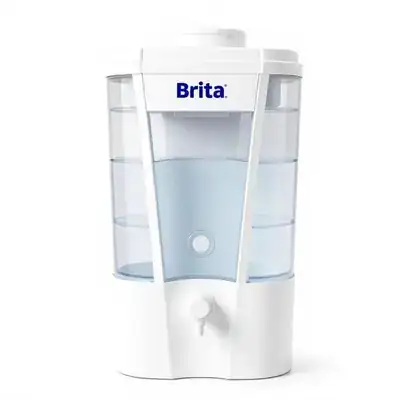
The Brita UltraMax dispenser combines the convenience of a pitcher with higher capacity. At 18 cups (1.13 gallons), it reduces refill frequency compared to standard pitchers. The spigot design makes dispensing easy without lifting a heavy pitcher. It fits in most fridge doors or can sit on a shelf. The filters remove chlorine taste and odor, reduce mercury and copper, and last for 40 gallons (about 2 months for most people). When you move, simply empty it, pack it, and take it with you. No tools, no damage to the apartment.
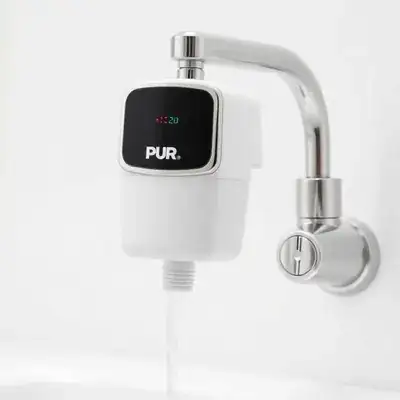
PUR FM-3700 Faucet Filter
Best for maximum filtration, no counter space
Key Features
- Removes 70+ contaminants including lead
- 30-second installation, no tools
- Zero counter/fridge space needed
- 100-gallon filter life (3 months)
- Switch between filtered/unfiltered
3-Year Total Cost
Pros
- Most contaminants removed (70+)
- Removes lead (NSF 53 certified)
- Instant filtered water on demand
- Removes in seconds when moving
Cons
- Won't fit pull-out spray faucets
- Slightly reduces water pressure
- Doesn't remove fluoride or TDS
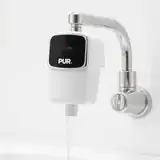
The PUR FM-3700 faucet filter screws onto your existing faucet in 30 seconds with no tools. It removes 70 contaminants including lead, mercury, pesticides, and pharmaceuticals - far more than pitcher filters. The toggle switch lets you choose filtered water for drinking/cooking or unfiltered for washing dishes. When you move, simply unscrew it and pack it. The filter leaves no marks on your faucet. Perfect for apartments with standard threaded faucets (won't fit pull-out sprayers).
ZeroWater 10-Cup Pitcher
Best for removing dissolved solids and fluoride
Key Features
- Only pitcher to achieve 0 PPM TDS
- Removes fluoride, lead, chromium, PFAS
- Includes free TDS meter ($15 value)
- Compact design for small fridges
Considerations
- Filters deplete faster in hard water areas
- Slower filtration (10-15 min per pitcher)
- Higher per-gallon cost than Brita
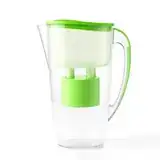
ZeroWater is the only gravity-fed pitcher that truly removes dissolved solids to 0 PPM. This is important for apartments with high TDS water or concerns about fluoride. The included TDS meter lets you verify the filter is working. Downside: filters deplete faster in areas with hard water (300+ TDS), so costs can be 2-3x higher than Brita in those areas.
Aquasana Clean Water Machine
RO-level filtration with zero installation
Key Features
- Removes 77 contaminants (RO-level)
- Adds back healthy minerals
- Just plug in and pour - no plumbing
- Filters last 6 months (600 gallons)
3-Year Total Cost
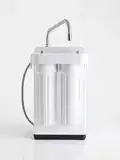
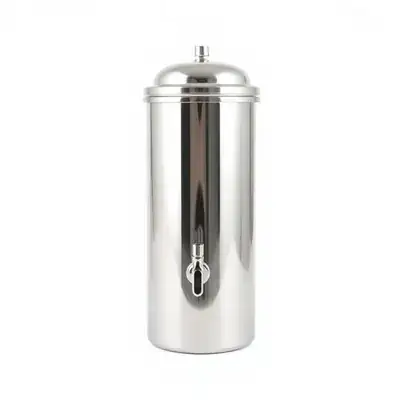
For renters who want maximum filtration without installation, the Aquasana Clean Water Machine delivers. It provides reverse osmosis-level contaminant removal (including lead, fluoride, arsenic, and PFAS) while adding beneficial minerals back for taste. Takes up countertop space (~12"x8") but eliminates the need for fridge space. Perfect for serious water quality concerns in older apartment buildings.
Berkey Light
Best filter longevity for long-term renters
Key Features
- Filters last 6,000 gallons (3-5 years!)
- Removes bacteria, viruses, chemicals
- No electricity or plumbing required
- 2.75 gallon capacity
Considerations
- Higher upfront cost ($275-325)
- Large footprint (countertop)
- Not NSF certified (independent testing)
The Berkey Light is the ultimate choice for renters staying 2+ years. While the upfront cost is higher ($275-325), the Black Berkey filters last 6,000 gallons - that's 3-5 years of filtering for a typical family! Long-term cost per gallon is just $0.02 vs $0.10-0.15 for pitchers. Gravity-fed design means no electricity or plumbing. Perfect for eco-conscious renters who want minimal waste.
Apartment-Specific Considerations
Old Building Concerns
Apartments built before 1986 may have lead pipes or lead solder. Even if the main water supply is safe, lead can leach from building plumbing.
Recommended Actions:
- Use filters certified for lead removal (NSF 53)
- Run cold water 30 seconds before use
- Never use hot tap water for drinking/cooking
- Request a lead test from your landlord
Small Space Solutions
Studio apartments and small kitchens need space-efficient options. Here's how to maximize filtration in minimal space.
Best Options by Space:
- Zero counter space: Faucet filter (PUR/Brita)
- Small fridge: ZeroWater 6-cup pitcher
- Fridge door only: Brita Stream (slim design)
- Some counter: Aquasana CWM (12" x 8")
Moving Day Checklist for Water Filters
Before Moving:
- Empty and dry all pitchers/dispensers
- Remove faucet filter, restore original aerator
- Seal filters in plastic bags
During Transport:
- Pack upright if possible
- Keep filters in climate-controlled space
- Don't let filters freeze or overheat
At New Place:
- Run water for 2 min before filtering
- Flush filter with 3 pitchers of water
- Clean pitcher/dispenser with vinegar
5-Year Cost Comparison
| Filter | Upfront | Annual Filters | 5-Year Total | Cost/Gallon |
|---|---|---|---|---|
| Brita UltraMax | $40 | $60 | $340 | $0.11 |
| PUR FM-3700 | $30 | $65 | $355 | $0.09 |
| ZeroWater 10-Cup | $40 | $120 | $640 | $0.21 |
| Aquasana CWM | $175 | $80 | $575 | $0.10 |
| Berkey Light | $300 | $0* | $300 | $0.02 |
| Bottled Water | $0 | $520 | $2,600 | $1.00+ |
*Berkey filters last 6,000 gallons (3-5 years). Based on 500 gallons/year typical usage.
Frequently Asked Questions
Budget Water Filtration Guide
Maximizing Filtration on a Budget
Effective water filtration doesn't require expensive equipment. The most cost-effective strategy starts with understanding your specific water quality issues through a $15-30 home test kit. If chlorine taste is your only concern, a $25 Brita pitcher provides adequate treatment at $0.15/gallon. For renters needing lead protection, the PUR faucet filter ($30-40) offers NSF 53-certified lead removal without plumbing modifications. Under-sink systems like the Waterdrop CKC1 ($35-50 per filter change) provide the best per-gallon value for families consuming 3+ gallons daily.
Hidden Costs to Consider
The purchase price tells only part of the story. Filter replacement costs vary dramatically: Brita Standard ($20/3-pack, lasting 6 months) vs Clearly Filtered ($70/2-pack, lasting 4 months). Installation costs range from $0 (pitchers, faucet-mount) to $150-500 (whole house professional installation). Water waste with RO systems adds $30-80 annually to water bills. Electricity for UV systems runs $15-25/year. Always calculate the 2-year total cost of ownership before purchasing. In our analysis, mid-range faucet filters consistently deliver the best value for drinking water filtration, while whole-house carbon filters provide the lowest per-gallon cost for total home coverage.
When to Invest More
Certain water quality situations justify higher-end systems. Well water with iron, bacteria, or sulfur requires specialized treatment ($500-2,000) that budget filters cannot address. Homes with very high lead levels (above 15 ppb) benefit from reverse osmosis ($150-400) for thorough removal. Families with immunocompromised members should consider UV purification ($100-300) for biological safety. PFAS contamination above EPA limits (4 ppt) warrants RO or premium carbon block systems. In these scenarios, the health and infrastructure protection value far exceeds the investment. For basic municipal water with standard chlorine treatment, budget options provide perfectly adequate protection.
Regional Water Quality Variations Across the US
Water quality varies dramatically across the United States due to differences in source water, treatment methods, and distribution infrastructure. The Southwest and Great Plains regions typically have the hardest water (15-30+ GPG), driven by limestone and dolomite geological formations. Coastal and Pacific Northwest areas generally enjoy softer water (0-7 GPG) from mountain snowmelt and rainfall-fed reservoirs. Industrial areas in the Midwest and Northeast face higher risks of PFAS, VOC, and heavy metal contamination from legacy manufacturing operations. Agricultural regions across the Central Valley, Corn Belt, and Mississippi Delta contend with elevated nitrate and pesticide levels from farming runoff.
Municipal treatment approaches also vary: approximately 70% of US utilities use chlorine for disinfection, while 30% use chloramines (combined chlorine and ammonia). Chloramine-treated water requires specialized filtration - standard activated carbon provides limited removal, while catalytic carbon effectively breaks down chloramines. Some progressive utilities employ advanced treatment including ozonation, UV disinfection, and granular activated carbon, producing exceptionally clean water at the treatment plant. However, even the best-treated water can pick up contaminants during distribution through aging pipes, so point-of-use filtration remains relevant regardless of utility treatment quality. Check your utility's Consumer Confidence Report and the EWG Tap Water Database for your specific water quality profile.
Climate change is introducing new water quality challenges nationwide. Increased wildfire frequency in western states creates ash runoff that overwhelms treatment plants with dissolved organic carbon, leading to elevated disinfection byproduct formation. Severe droughts concentrate contaminants in shrinking reservoirs. Intensifying rainfall events increase agricultural and urban runoff into source waters. Rising ocean levels threaten saltwater intrusion into coastal aquifers. These evolving challenges make home filtration increasingly important as a consistent, controllable water quality safeguard that adapts to changing conditions faster than municipal infrastructure upgrades.
America's Aging Water Infrastructure
The American Society of Civil Engineers gives US drinking water infrastructure a grade of C-minus, with an estimated $625 billion needed over the next 20 years for repairs and upgrades. Approximately 240,000 water main breaks occur annually in the United States, potentially introducing soil bacteria, sediment, and other contaminants into distribution systems. The EPA estimates that 9.2 million lead service lines remain in use nationwide, primarily in homes built before 1986. While the Bipartisan Infrastructure Law allocated $15 billion specifically for lead service line replacement, complete removal is projected to take 10-15 years in many municipalities.
For homeowners, aging infrastructure means that even excellent municipal treatment cannot guarantee contaminant-free water at the tap. Corrosion of lead and copper pipes between the treatment plant and your faucet is the primary source of residential lead exposure. Biofilm accumulation inside older pipes can harbor bacteria including Legionella, particularly in buildings with stagnant water sections. Point-of-use filtration serves as the final barrier between infrastructure vulnerabilities and your family's drinking water, providing protection that no amount of municipal treatment can replace for last-mile contamination sources.
Budget Filtration Strategy by Living Situation
Your living situation dramatically affects which budget filtration approach makes sense. College students and dorm residents should start with a Brita Metro pitcher ($20) - it's small enough for mini-fridges and provides basic chlorine removal at minimal cost. Single apartment renters benefit most from faucet-mount filters ($25-45) that provide NSF 53 lead protection without any installation commitment. Couples and small families in apartments should consider the Aquasana AQ-5200 under-sink system ($150) - while it requires minor installation (usually landlord-approved), the 6-month filter life and comprehensive contaminant removal justify the upfront investment within a year.
Homeowners have more options but should still follow the "test first, then treat" principle. Spending $15-30 on a comprehensive home test kit often prevents hundreds in unnecessary filtration purchases. If your municipal water report shows compliant levels across all contaminants, a simple carbon pitcher or faucet filter addresses taste and provides precautionary protection. Only invest in under-sink RO ($150-350) or whole-house systems ($300-1,500) if testing reveals specific contaminants that basic carbon filtration cannot address - lead above 5 ppb, PFAS above 4 ppt, or nitrates above 5 mg/L. This targeted approach maximizes protection while minimizing unnecessary spending.
DIY Cost-Saving Tips for Water Filtration
Several strategies can reduce water filtration costs without compromising quality. Buy replacement filters in bulk - most manufacturers offer 15-25% discounts on annual filter packs versus individual purchases. Subscribe to auto-delivery programs from Amazon or manufacturer websites for additional 5-15% savings on recurring filter purchases. Install systems yourself instead of hiring a plumber - under-sink systems typically require only a wrench and drill, saving $100-300 in installation fees. For whole-house systems, watch manufacturer installation videos before deciding whether professional help is needed - many DIY-friendly homeowners complete installation in 2-4 hours.
Consider refurbished or previous-model-year systems for significant savings. RO systems from reputable brands are often discounted 30-40% when new models launch, despite using identical filtration technology. Third-party compatible filters can reduce ongoing costs by 40-60% compared to OEM replacements - however, verify that compatible filters carry NSF certifications independently, as some generic filters lack the quality control of brand-name replacements. Never compromise on filter quality for health-related contaminants like lead and PFAS; savings on basic taste filters are acceptable, but performance-critical filtration stages should always use verified, certified replacement cartridges.
Water Quality Science and Consumer Protection
The science of water treatment has evolved dramatically over the past two decades, driven by advances in analytical chemistry that can now detect contaminants at parts-per-trillion concentrations. This detection capability has revealed the presence of thousands of previously unidentified compounds in municipal water supplies, including pharmaceutical residues, endocrine-disrupting chemicals, microplastics, and per- and polyfluoroalkyl substances (PFAS). The EPA currently regulates 90 contaminants under the Safe Drinking Water Act, but the Environmental Working Group has documented over 300 additional pollutants in US tap water that have no legal limits.
Understanding the distinction between regulated and unregulated contaminants is essential for making informed filtration decisions. Regulated contaminants have Maximum Contaminant Levels (MCLs) that public water systems must meet, enforced through mandatory testing and public reporting via annual Consumer Confidence Reports. Unregulated contaminants, despite being detected in water supplies, have no enforceable limits, meaning your water utility is not required to treat for or even report their presence. This regulatory gap means that water meeting all federal standards may still contain compounds of health concern at levels that research suggests could pose long-term risks.
The health economics of water filtration present a compelling case for proactive treatment. A 2023 analysis by the Water Quality Research Foundation estimated that the lifetime healthcare cost savings from removing lead exposure alone average $5,600 per child. When factoring in reduced cancer risk from PFAS and disinfection byproduct removal, improved developmental outcomes from reducing prenatal contaminant exposure, and decreased gastrointestinal illness from pathogen removal, the total health-economic benefit of comprehensive home water filtration ranges from $8,000 to $25,000 per household over a 20-year period. These savings dwarf the $2,000-5,000 total cost of purchasing and maintaining a quality filtration system over the same timeframe.
Infrastructure Challenges and Future Outlook
Americas water infrastructure faces unprecedented challenges that directly impact household water quality. The American Society of Civil Engineers grades US drinking water infrastructure at C-minus, with an estimated $625 billion investment needed over 20 years to bring systems to adequate condition. Approximately 6 billion gallons of treated water are lost daily through 240,000 water main breaks annually. These infrastructure failures not only waste resources but create potential contamination pathways where soil, bacteria, and chemicals can enter the distribution system through pressure drops and pipe fractures.
Lead service lines remain the most pressing infrastructure concern, with an estimated 6-10 million lead pipes still delivering water to American homes. The EPA Lead and Copper Rule Revisions mandate replacement of all lead service lines within the coming decade, but the scale of the project ($3,000-8,000 per line) and limited workforce capacity mean many households will continue receiving water through lead pipes for years. During the replacement process itself, disturbance of existing pipes can temporarily increase lead levels by 10-100x above baseline. Point-of-use filtration certified to NSF 53 for lead provides the most reliable protection during this transition period.
Climate change introduces compounding water quality challenges that existing treatment infrastructure was not designed to address. Rising temperatures promote harmful algal blooms producing cyanotoxins that overwhelm conventional treatment processes. Increased wildfire frequency deposits ash-borne benzene and heavy metals into source watersheds. Extreme precipitation events cause combined sewer overflows that introduce untreated sewage into source water. Sea level rise threatens coastal aquifers with saltwater intrusion, increasing TDS and chloride levels beyond treatment capacity. These converging pressures reinforce the critical importance of residential water treatment as the final barrier between environmental challenges and family health.
Explore Our Top Picks
Related Resources
Related Articles
Top-rated Water Filters for Apartments
Portable and no-installation filter options for renters
Best Water Filter Pitchers
Top-rated pitcher filters perfect for apartments
Buying guide: Faucet Filters
Easy-install faucet filters that need no plumbing
See the best Countertop Filters
No-plumbing countertop filtration systems
Buying guide: Water Dispensers
Countertop and freestanding dispensers for apartments
Buying guide: Shower Filters
Renter-friendly shower filtration options
Ready to Improve Your Apartment Water?
Browse renter-friendly filters that require no installation and move with you.