Well Water Test Kits: Complete Testing & Interpretation Guide
Everything private well owners need to know about testing their water — from choosing the right test kit to understanding what your results mean and what action to take.
Testing is the only way to know if your well water is safe. Unlike city water, which is tested continuously by trained professionals and regulated by the EPA, private well water receives no monitoring, no treatment, and no regulatory oversight. The 23 million American households that rely on private wells are entirely responsible for their own water quality — and testing is the foundation of that responsibility.
The challenge is that many of the most dangerous well water contaminants — arsenic, lead, radon, nitrates, bacteria, and PFAS — are completely invisible, tasteless, and odorless. You cannot determine water safety by looking at it, smelling it, or tasting it. A glass of crystal-clear, fresh-tasting well water can contain arsenic at levels that increase cancer risk with every sip. Only laboratory analysis can reveal what your senses cannot detect.
This guide covers every aspect of well water testing: what to test for based on your location and situation, how to choose between DIY test kits and professional laboratory analysis, proper sample collection techniques that ensure accurate results, how to interpret your results against EPA standards, and what actions to take based on specific findings. Whether you are a first-time well owner or have been on well water for decades, this information will help you maintain the safest possible water supply for your family.
Why Well Water Testing Is Non-Negotiable
The statistics are sobering. According to the U.S. Geological Survey, approximately 20% of private wells in the United States contain at least one contaminant exceeding EPA health-based benchmarks. The CDC reports that private wells cause 30% of waterborne disease outbreaks despite serving only 15% of the population. An estimated 2.1 million Americans drink well water with arsenic above the EPA Maximum Contaminant Level. These are not abstract risks — they represent real health consequences for families who assumed their well water was safe because it looked and tasted fine.
Well water quality is not static. A well that tested clean five years ago may be contaminated today due to changes in land use, seasonal groundwater patterns, aging well infrastructure, or natural geological processes. Agricultural runoff introduces nitrates and pesticides during growing seasons. Spring snowmelt pushes surface contaminants into shallow aquifers. Well casings corrode and develop cracks over decades. Underground contaminant plumes from industrial sites can migrate through aquifers at rates of feet per year, eventually reaching previously clean wells.
Testing is also essential for selecting and maintaining the right treatment system. A water softener cannot remove bacteria. A carbon filter cannot remove nitrates. An iron filter cannot remove arsenic. Installing treatment without testing is like taking medicine without a diagnosis — expensive, potentially ineffective, and possibly dangerous if it creates false confidence in water safety. Testing identifies your specific contamination profile so you can invest in treatment that actually addresses your problems.
Bottom Line
Annual testing costs $100-300. A comprehensive test every 3-5 years costs $200-500. Treatment for a preventable waterborne illness costs thousands. Long-term exposure to undetected arsenic or lead creates health consequences that no amount of money can reverse. Testing is the single best investment in water safety a well owner can make.
What to Test For: Priority Contaminants
Not every well needs testing for every contaminant. The most cost-effective approach is a tiered testing strategy that starts with essential parameters and expands based on your location, land use, and initial results. Here is the priority framework we recommend.
Tier 1: Essential Annual Testing ($50-150)
Total Coliform Bacteria
Indicator of contamination pathway — any positive result warrants investigation and treatment
E. coli
Definitive indicator of fecal contamination — immediate health risk
Nitrates (as Nitrogen)
Most common chemical contaminant in wells, especially near agriculture. Dangerous for infants.
pH
Affects corrosion rates, metal solubility, and treatment system effectiveness
Total Dissolved Solids (TDS)
General indicator of overall mineral content and water quality
Tier 2: Recommended Every 3-5 Years ($150-300)
Iron
Aesthetic concern — causes orange staining
Manganese
Health advisory at 0.3 ppm — neurological risk for children
Hardness
Affects appliances, soap effectiveness, and scale buildup
Lead
No safe level — ideally below 1 ppb, especially for children
Arsenic
Tasteless, odorless carcinogen — essential in western U.S.
Copper
Tests for pipe corrosion from acidic water
Fluoride
Dental fluorosis in children at high levels
Sulfate
Laxative effect at high levels, taste impact
Tier 3: Situational Testing ($100-500 per panel)
Test for these contaminants based on your specific risk factors:
- Radon — If in a granite or uranium-bearing rock region (New England, Appalachian Mountains, Rocky Mountains)
- Pesticides/Herbicides — If within 1 mile of active agricultural land
- Volatile Organic Compounds (VOCs) — If within 1 mile of gas stations, dry cleaners, or industrial sites
- PFAS — If near military bases, airports with firefighting training areas, or manufacturing facilities
- Uranium/Radium — If in known radioactive mineral zones
- Perchlorate — If near military installations or rocket fuel manufacturing
Types of Well Water Test Kits Compared
Well water testing options range from instant DIY strips to comprehensive laboratory analysis. Each has a place in a well owner's testing toolkit. Understanding the strengths and limitations of each type helps you choose the right approach for your situation.
DIY Test Strips ($10-30)
Dip-and-read strips that change color to indicate approximate contaminant levels. Most well water strip kits test for pH, hardness, iron, nitrates/nitrites, and sometimes bacteria. Results in 1-10 minutes.
Strengths
- Instant results
- Very low cost
- Good for routine screening
- No laboratory wait time
Limitations
- Approximate results only
- Cannot detect arsenic, lead, VOCs, PFAS
- High false-negative rate for bacteria
- Not accepted for legal/real estate purposes
Best for: Monthly quick checks between annual laboratory tests. Monitoring known issues (pH, iron) between professional tests.
Mail-In Laboratory Kits ($100-500)
You collect the sample at home using provided containers and instructions, then ship it to a certified laboratory for analysis. Results are delivered online with detailed interpretation. Leading providers include Tap Score by SimpleWater, MyTapScore, and National Testing Laboratories.
Strengths
- Laboratory-accurate results
- Comprehensive contaminant panels
- Professional interpretation included
- Convenient sample collection at home
Limitations
- 7-14 day turnaround
- Higher cost than DIY strips
- Sample integrity depends on proper shipping
- May not be state-certified (check before purchase)
Best for: Annual comprehensive testing, new well evaluation, and homeowners who want professional-quality results without visiting a laboratory.
State-Certified Laboratory Testing ($25-800)
Direct submission to a state-certified water testing laboratory. You pick up sample containers, collect your samples, and deliver them to the lab. Results are certified for legal and regulatory purposes. Find your nearest certified lab through your state health department or EPA's Safe Drinking Water Hotline (800-426-4791).
Strengths
- Highest accuracy and reliability
- Legally defensible results
- Required for real estate and lending
- Widest range of contaminants available
Limitations
- Requires visiting the lab
- Strict sample handling requirements
- Basic results without interpretation
- Comprehensive panels can be expensive
Best for: Home purchases, post-contamination confirmation, insurance claims, and definitive testing for health-critical contaminants.
How to Collect Water Samples Properly
Proper sample collection is as important as the analysis itself. Contaminated containers, incorrect collection timing, or improper storage can produce false results — either falsely alarming you with contaminants that are not actually present, or falsely reassuring you by failing to detect real contamination. Follow these procedures for reliable results.
Bacteria Sample Collection
- Use only sterile containers provided by or approved by the testing laboratory. Do not use your own containers — even washed containers can introduce bacteria that produce false-positive results. Sterile containers often contain a dechlorinating agent (sodium thiosulfate) — do not rinse it out.
- Choose the right faucet. Use an indoor faucet that is closest to where the well water enters your home (usually a kitchen or utility sink). Do not use a faucet with a point-of-use filter or water softener connected.
- Remove the aerator from the faucet. Aerators harbor biofilm that can contaminate your sample and produce false-positive results.
- Disinfect the faucet. Wipe the faucet outlet with a bleach-soaked cloth or paper towel. Let it sit for 30 seconds, then remove.
- Run cold water for 2-3 minutes to flush standing water from the pipes. This ensures you are sampling well water, not water that has been sitting in household plumbing.
- Fill the container carefully. Open it without touching the inside of the cap or container. Fill to the marked line (usually 100 mL). Cap immediately.
- Keep cold and deliver quickly. Place the sample on ice or in a refrigerator. Deliver to the laboratory within the time window specified (typically 6-30 hours, depending on the laboratory).
Lead and Metal Sample Collection
For lead and copper testing, the protocol is intentionally different. Collect a first-draw morning sample — fill the container from the kitchen cold water tap before anyone in the household has used water that morning. Do not run the water first. This captures the worst-case scenario where water has sat in contact with lead-containing plumbing components overnight, providing the most conservative (safest) assessment of your lead exposure.
General Chemistry Sample Collection
For pH, TDS, hardness, iron, sulfate, and most mineral testing, run cold water for 3-5 minutes before collecting. This ensures you are testing representative well water rather than water influenced by standing in household plumbing. Use containers provided by the laboratory (some require special preservatives). Label every container with the date, time, location, and your name. Deliver within the specified holding time.
Common Collection Mistakes
- Using non-sterile containers (causes false-positive bacteria results)
- Touching the inside of the container or cap (introduces contamination)
- Collecting from a filtered faucet (hides actual water quality)
- Flushing before lead testing (misses worst-case exposure)
- Delayed delivery (bacteria can multiply or die, skewing results)
- Testing during or immediately after treatment (does not reflect normal water quality)
Testing Cost Comparison
| Test Type | DIY Strips | Mail-In Kit | Certified Lab |
|---|---|---|---|
| Basic (bacteria, nitrates, pH) | $10-15 | $50-100 | $25-75 |
| Standard (+ metals, hardness) | $20-30 | $100-200 | $100-200 |
| Comprehensive (+ arsenic, lead, VOCs) | N/A | $200-400 | $200-500 |
| Premium (+ pesticides, radon, PFAS) | N/A | $300-500 | $400-800 |
| Turnaround Time | 1-10 min | 7-14 days | 3-21 days |
Recommended Testing Schedule
A structured testing schedule balances thorough monitoring with practical cost management. This schedule is based on EPA recommendations and supplemented with our expert experience with thousands of private well systems.
| Frequency | Parameters | Est. Annual Cost |
|---|---|---|
| Every Year | Bacteria (coliform + E. coli), nitrates, pH, TDS | $50-150 |
| Every 3 Years | Iron, manganese, hardness, sulfate, chloride, fluoride | $30-65/year avg |
| Every 5 Years | Lead, arsenic, copper, full metals panel | $20-60/year avg |
| As Needed | VOCs, pesticides, radon, PFAS (based on risk) | Variable |
| Emergency | Bacteria + relevant contaminants (after flooding, etc.) | $25-200 per event |
Total estimated annual cost for responsible well water monitoring: $150-300 per year. For detailed scheduling, see our complete testing schedule guide.
How to Interpret Your Test Results
When you receive your test results, each parameter is typically reported with three pieces of information: the detected value (your water's actual level), the applicable standard (EPA MCL or SMCL), and whether your result exceeds the standard. Understanding the difference between MCLs and SMCLs helps you prioritize your response.
Health-Based Standards (MCLs) — Enforceable
Maximum Contaminant Levels are health-based standards set by the EPA. Exceeding an MCL means the water poses a documented health risk at the level detected. While MCLs are only legally enforceable for public water systems, they represent the best available guidance for private well owners. Treat any MCL exceedance as a strong recommendation for treatment. Key MCLs include: bacteria (absent), nitrates (10 mg/L), arsenic (10 ppb), lead (15 ppb action level), PFOA/PFOS (4 ppt), fluoride (4 ppm), and mercury (2 ppb).
Aesthetic Standards (SMCLs) — Non-Enforceable
Secondary Maximum Contaminant Levels are aesthetic guidelines — they indicate levels where water may have objectionable taste, odor, or appearance, but do not represent health hazards at those concentrations. Exceeding an SMCL affects quality of life and can damage appliances but does not pose direct health risk. Key SMCLs include: iron (0.3 ppm), manganese (0.05 ppm), TDS (500 ppm), sulfate (250 ppm), chloride (250 ppm), and pH (6.5-8.5). Note that manganese has a separate health advisory at 0.3 ppm for acute exposure — making it both an aesthetic and health concern.
Interpretation Resources
For detailed interpretation guidance including contaminant-by-contaminant threshold cards and filter technology matching, see our interpreting water test results guide.
Action Steps Based on Results
Your test results determine not just whether treatment is needed, but what type of treatment will be effective. Here is a decision framework organized by urgency level.
Immediate Action Required
- Bacteria detected (total coliform or E. coli) — Stop drinking water, shock chlorinate well, install UV disinfection
- Nitrates above 10 mg/L — Use bottled/RO water immediately, especially for infants
- E. coli positive — Fecal contamination confirmed, well inspection required
- Lead above 15 ppb — Install NSF-53 certified POU filter, investigate source
Treatment Recommended Within 30 Days
- Arsenic above 10 ppb — Install RO at drinking water taps
- Iron above 0.3 ppm — Install iron removal system
- pH below 6.5 — Install acid neutralizer to prevent corrosion
- Hardness above 7 GPG — Install water softener or conditioner
- Hydrogen sulfide detected — Install aeration or oxidation system
Monitor and Address as Budget Allows
- TDS above 500 ppm — RO for drinking water improves taste
- Manganese 0.05-0.3 ppm — Consider treatment especially with children in home
- Sulfate above 250 ppm — Taste impact, laxative effect at high levels
- Fluoride 2-4 ppm — Consider RO for children's drinking water
Recommended Treatment Products
Once testing identifies your specific contaminants, these systems provide targeted treatment for the most common well water issues.
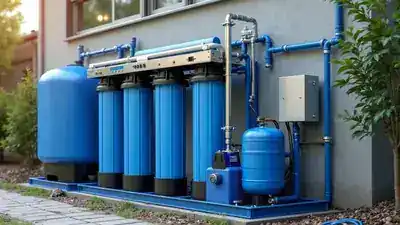
SpringWell Ultra Well Water System
If your testing reveals multiple contaminant issues (iron + bacteria + sediment), this all-in-one system addresses them in a single installation. Includes UV disinfection, iron filtration, and carbon treatment. The most comprehensive solution for wells that test positive for multiple concerns.
Check Price at SpringWell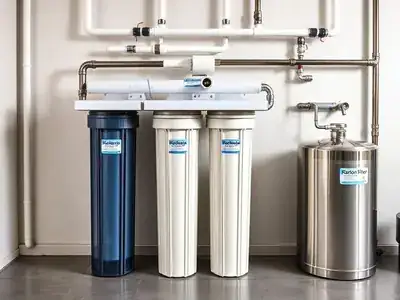
SpringWell WS1 Iron & Sulfur Filter
When testing reveals elevated iron (above 0.3 ppm) and/or hydrogen sulfide (rotten egg smell), the WS1 provides targeted treatment. Air injection oxidation removes up to 7 ppm iron, 1 ppm manganese, and 8 ppm H2S without chemicals. Ideal when iron and sulfur are your primary concerns.
Check Price at SpringWellExplore Our Top Picks
Well Water Testing: Frequently Asked Questions
Related Articles
Read: Water Filter Buying Guide
Complete guide to choosing the right filter
Deep dive — How Water Filters Work
Understanding filtration technologies explained
More on Water Filter Cost Comparison
Annual costs across all filter types
Water Testing Kits Guide: complete how-to
Test your water before buying a filter
Keep it running: Filter Replacement Guide
When and how to replace filter cartridges
Deep dive — Water Filter Health Benefits
Health advantages of filtered water