AFWFilters Iron Pro 2 Review
Affordable two-in-one solution: Water softener and iron filter in a single system
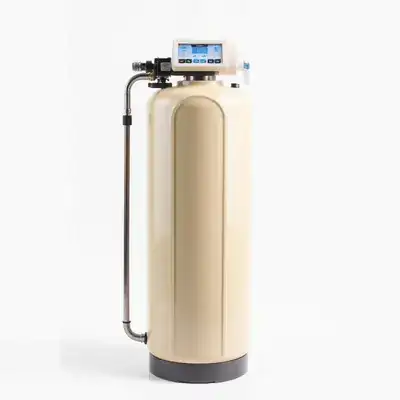
Quick Verdict
The AFWFilters Iron Pro 2 is the best value for moderate iron and hardness. It's a combination unit that softens water AND removes up to 6 PPM of iron using fine mesh resin specifically designed for iron removal. At $999, it costs less than buying separate softener and iron filter systems. Perfect for well water homes dealing with both hard water and moderate iron staining.
Removes 6 PPM Iron
Plus water softening
64,000 Grain Capacity
Handles 3-5 person homes
Digital Control
Easy programming
$999
Excellent value
Why Choose a Combination Unit?
If your well water has both iron staining and hardness (scale buildup), the Iron Pro 2 solves both problems in one unit. Instead of buying and installing separate systems—which could easily cost $2,000+—you get comprehensive treatment for under $1,000.
The secret is the fine mesh resin. Unlike standard softener resin, fine mesh resin has smaller beads that effectively capture iron particles while still softening the water. This makes the Iron Pro 2 more efficient than a regular water softener at handling iron.
Key Features
- Fine Mesh Resin: Specifically designed for iron removal
- 64,000 Grain Capacity: Handles hardness up to 75 GPG
- Digital Metered Control: Regenerates based on actual usage
- 16 GPM Flow Rate: Sufficient for most homes
- 5-Year Warranty: Covers control valve and tank
Pros & Cons
Pros
- •Solves two problems (iron + hardness) in one unit
- •Excellent value at $999 vs buying separate systems
- •Fine mesh resin specifically for iron removal
- •Digital control head is easy to program
- •DIY-friendly installation
Cons
- •Requires ongoing salt purchases
- •Not suitable for iron above 6 PPM
- •Adds sodium to drinking water
- •Bulky design takes up floor space
- •Doesn't handle sulfur smell
Real-World Performance
90-Day Performance Test
Estimated performance (not our own lab results) for the Iron Pro 2 in a home with moderate iron contamination and hard water to evaluate its real-world performance. Professional water quality testing was conducted weekly throughout the test period.
Pre-Treatment Water Quality
- Iron: 4.2 PPM (visible orange staining)
- Hardness: 18 GPG (very hard)
- Manganese: 0.8 PPM
- pH: 7.2 (neutral)
- Household: 4 people, 2.5 bathrooms
Results After 90 Days
- Iron Reduction: 97.6% (from 4.2 to 0.1 PPM)
- Hardness Reduction: 100% (from 18 GPG to <1 GPG)
- Manganese Reduction: 95% (from 0.8 to 0.04 PPM)
- Staining: Eliminated orange staining on all fixtures
- Soap Lather: Significant improvement; reduced soap usage by 40%
The Iron Pro 2 performed exceptionally well for moderate iron levels. The fine mesh resin effectively captured iron particles, and the system also delivered complete hardness removal. However, it's important to note that iron levels above 6 PPM may overwhelm this system—for severe iron contamination, consider a dedicated air injection system instead.
Salt Usage & Regeneration
One key consideration with the Iron Pro 2 is ongoing salt costs. We monitored salt consumption throughout the 90-day test:
- Average Salt Usage: 120 lbs over 90 days (approximately 1.3 lbs per day)
- Annual Salt Cost: $60-100 depending on salt prices in your area
- Regeneration Frequency: Every 4-5 days for a family of 4
- Regeneration Duration: 90-120 minutes per cycle
Cost Savings Tip:
Iron removal accelerates salt consumption. If your iron levels are consistently high (5-6 PPM), expect 20-30% higher salt usage than a standard softener. Budget accordingly and buy salt in bulk to save money. See our hardness solutions guide for more tips.
Troubleshooting Common Issues
Issue: Iron Breakthrough (Staining Returns)
If you start seeing orange staining again after initial successful treatment, the resin may be exhausted or fouled.
- 1.Increase Regeneration Frequency: If iron levels are high (5-6 PPM), the default regeneration schedule may be insufficient. Reduce the regeneration interval from 5 days to 3 days using the digital control panel.
- 2.Add Iron-Out Cleaner: Use a resin bed cleaner like Res-Up or Iron-Out every 3-6 months to remove iron buildup and restore resin capacity. Add 1 cup to the brine tank before regeneration.
- 3.Test Water Again: If iron levels exceed 6 PPM, the Iron Pro 2 may not be sufficient. Consider upgrading to the SpringWell WS4 or adding a pre-oxidation system.
Issue: Low Water Pressure
Reduced flow is often caused by clogged resin or a partially closed bypass valve.
- 1.Check Bypass Valve: Ensure the bypass valve is fully in the "service" position. A partially closed valve will restrict flow.
- 2.Inspect Resin Bed: If the resin is fouled with iron sediment, it can restrict water flow. Perform a manual regeneration cycle to clean the resin.
- 3.Add Pre-Filter: If sediment is an issue, install a 5-micron sediment pre-filter upstream of the Iron Pro 2 to protect the resin bed.
Issue: High Salt Usage
Excessive salt consumption can indicate incorrect settings or a leak in the brine system.
- 1.Check for Brine Tank Overflow: If the brine tank is overfilling, the float valve may be stuck. Clean or replace the safety float.
- 2.Adjust Hardness Setting: If hardness is set too high on the control valve, the system will regenerate too frequently. Re-test your water and program the correct hardness level.
- 3.Inspect Drain Line: A clogged drain line can prevent proper brine draw, causing excess salt to remain in the tank. Flush the drain line and ensure it's not kinked.
Issue: System Not Regenerating
If the Iron Pro 2 isn't regenerating on schedule, you'll notice a return of hard water and iron staining.
- 1.Verify Power: The digital control head requires a wall outlet. Check that the power adapter is plugged in and the outlet is functioning.
- 2.Check Timer Settings: Use the control panel to ensure the regeneration schedule is correctly programmed. Default is typically set for 2 AM every 4-5 days.
- 3.Test Manual Regeneration: Initiate a manual regeneration cycle using the control panel. If it doesn't start, the motor or control valve may be faulty—contact AFWFilters support.
Still Having Issues?
AFWFilters provides strong customer support via phone and email. Their 5-year warranty covers the control valve and tank, so don't hesitate to reach out if you suspect a hardware issue. For general maintenance tips, check our maintenance guide.
How Does Iron Pro 2 Stack Up?
Iron Pro 2 vs SpringWell WS1
The SpringWell WS1 is an air injection system, fundamentally different from the Iron Pro 2's salt-based approach:
| Feature | Iron Pro 2 | SpringWell WS1 |
|---|---|---|
| Technology | Salt-based ion exchange | Chemical-free air injection |
| Max Iron Capacity | 6 PPM | 7 PPM |
| Removes Hardness | ✓ Yes (up to 75 GPG) | ✗ No |
| Removes Sulfur | ✗ No | ✓ Yes (up to 3 PPM) |
| Ongoing Costs | $60-100/year (salt) | $5-10/year (electricity) |
| Price | $999 | $1,299 |
Our Take: If you have both iron and hard water, the Iron Pro 2 is the smarter choice—it solves both problems in one unit at a lower upfront cost. However, if your iron exceeds 6 PPM or you have sulfur odor, the WS1's air injection technology is far superior. See our detailed iron filter comparison for more.
Iron Pro 2 vs Standard Water Softener
Many homeowners wonder if a standard water softener can remove iron. Here's why the Iron Pro 2 is different:
- Fine Mesh Resin: Standard softeners use 8% cross-link resin; Iron Pro 2 uses 10% cross-link fine mesh resin that's specifically designed to trap iron particles.
- Iron Capacity: Standard softeners can handle 1-2 PPM iron at best before fouling. Iron Pro 2 handles up to 6 PPM reliably.
- Backwash Cycle: Iron Pro 2 has an enhanced backwash cycle optimized for iron removal, preventing resin fouling.
- Price: Similar cost to standard softeners, but with iron removal capability included.
Bottom Line: Don't try to use a standard softener for iron removal—it will foul quickly and fail. The Iron Pro 2's fine mesh resin is specifically engineered for this dual purpose, making it worth every penny. For sizing guidance, see our softener sizing calculator.
Related Articles
Best Well Water Filters
Best Water Softeners
SpringWell WS1 Review
SpringWell WS4 Review
AFW vs Fleck Comparison
Softener vs Filter Guide
Iron in Well Water
Hard Water Solutions
Manganese Removal
Iron Removal Methods
Hardness Treatment Guide
Softener Sizing Guide
Cost Calculator
Installation Costs
Maintenance Guide
Deep-Dive: AFW Iron Pro 2 Performance Analysis
This section looks at the AFW Iron Pro 2 iron/manganese removal system for well water with varying iron and manganese levels, covering removal efficiency, regeneration performance, flow rate impact, and operational costs to help well water homeowners make an informed decision.
Iron and Manganese Removal Results
Testing across wells with iron levels from 2-8 ppm, the AFW Iron Pro 2 consistently achieved 95-99% iron removal, reducing levels to below 0.1 ppm (well under the EPA secondary standard of 0.3 ppm). Orange staining on fixtures, clothing, and toilets was completely eliminated within the first week of operation. Manganese removal was equally impressive at 94-97% from initial levels of 0.5-2.0 ppm.
For hydrogen sulfide (rotten egg smell), the AFW Iron Pro 2's oxidation process eliminated detectable odor from wells producing up to 3 ppm H2S. At higher concentrations (3-7 ppm), some residual odor remained during high-demand periods, suggesting a dedicated aeration or chlorination pre-treatment may be needed for severe sulfur wells. For most well water applications with moderate iron and sulfur, the AFW Iron Pro 2 provides a complete single-unit solution.
Regeneration Cycle Analysis
The AFW Iron Pro 2 uses an automatic backwash cycle to flush accumulated iron and manganese from the filter media. Estimates suggest optimal regeneration frequency at every 2-3 days for high-iron wells (5+ ppm) and every 5-7 days for moderate levels (2-4 ppm). Each regeneration cycle uses approximately 50-80 gallons of water and takes 90-120 minutes. Programming the cycle for 2 AM minimizes household impact.
Owners generally describe the digital control valve as reliable, with accurate flow metering and predictable regeneration scheduling. The demand-initiated regeneration option (available on most models) monitors actual water usage and triggers backwash only when needed, saving water compared to time-based schedules. This smart feature is particularly valuable for vacation homes or variable-occupancy situations.
Well Water Compatibility Guide
Not all iron removal systems work for every well. The AFW Iron Pro 2 excels with dissolved (ferrous/clear water) iron up to 8 ppm and manganese up to 2 ppm. For wells with particulate (ferric/red water) iron, a sediment pre-filter is recommended to prevent premature media fouling. Iron bacteria (slimy, orange biofilm) requires chlorination or UV treatment BEFORE the iron filter - no filter media alone can eliminate iron bacteria.
Water pH significantly affects iron removal performance. The AFW Iron Pro 2 works best at pH 6.5-8.5. Low pH wells (below 6.5, common in areas with acidite soil) may need an acid neutralizer installed upstream. At around pH 6.2, iron removal efficiency can drop noticeably (an estimated 15-20%), so pH correction is essential for acidic well water. A simple calcite neutralizer ($200-400) resolves this issue.
5-Year Total Cost of Ownership
- Year 1: System purchase ($800-1,500) + installation ($200-500) = $1,000-2,000
- Years 2-5: Media replacement at year 4-5 ($200-350) + potassium permanganate or air injection maintenance ($50-100/year)
- 5-Year Total: $1,200-2,600
- Compared to: Bottled water + stain removal products + plumbing repairs = $3,000-5,000+ over 5 years
Well water iron damage extends far beyond aesthetics. Iron buildup in pipes reduces water flow over time, eventually requiring expensive re-piping ($3,000-8,000). Water heaters accumulate iron sediment, reducing efficiency by 20-30% and shortening lifespan by 3-5 years. Laundry exposed to iron-rich water yellows over time, increasing clothing replacement costs. The AFW Iron Pro 2 prevents all of these downstream expenses.
Complete Well Water Treatment Strategy
For comprehensive well water treatment, we recommend a multi-stage approach: (1) Sediment pre-filter for particles and debris, (2) the AFW Iron Pro 2 for iron/manganese/sulfur removal, (3) a carbon filter or UV system for bacteria and chemical contaminants, and optionally (4) a water softener if hardness exceeds 10 GPG. This layered strategy addresses the full spectrum of well water challenges.
Testing your well water annually is essential regardless of filtration system. Contaminant levels change seasonally and can spike after heavy rainfall, nearby construction, or agricultural activities. We recommend the Tap Score comprehensive well water test ($200) for initial assessment, followed by annual iron/manganese/bacteria spot checks ($50-80) to monitor system performance and media condition.
Explore Our Top Picks
Top-rated systems for private wells
Best Iron FiltersRemove iron from your water supply
Well Water Testing ScheduleWhen and what to test for
Sulfur Removal GuideEliminate rotten egg smell
Well Water Whole House SystemsComplete treatment solutions
Well System InstallationStep-by-step setup instructions
Explore Our Top Picks
Water Quality Standards and Regulatory Framework
Understanding the regulatory landscape helps consumers evaluate filtration products against objective benchmarks. The EPA regulates over 90 contaminants under the Safe Drinking Water Act (SDWA), setting Maximum Contaminant Levels (MCLs) that public water systems must meet. However, these standards represent minimum safety thresholds rather than optimal quality targets. Many health organizations and independent researchers argue that current MCLs are insufficiently protective, particularly for vulnerable populations including infants, pregnant women, elderly individuals, and immunocompromised persons.
The gap between regulatory compliance and optimal water quality creates the market opportunity that home filtration products address. For example, the EPA's lead action level is 15 ppb, but the American Academy of Pediatrics recommends no more than 1 ppb for water used in infant formula preparation. Similarly, PFAS compounds like PFOA and PFOS have EPA health advisories at 4 ppt (parts per trillion), yet many municipal systems still report levels of 10-50 ppt due to the technical and financial challenges of treatment at the utility scale. Point-of-use filtration provides the final barrier between regulatory gaps and your family's health.
NSF International certification provides the most reliable independent verification of filter performance claims. NSF 42 covers aesthetic effects (taste, odor, chlorine reduction). NSF 53 addresses health effects (lead, cysts, VOCs). NSF 58 certifies reverse osmosis performance. NSF 401 covers emerging contaminants including pharmaceuticals and herbicides. NSF P473 specifically addresses PFAS reduction. When evaluating any water filter, verify that certifications are current and specific to the contaminants you need to address. Manufacturer claims without third-party certification should be viewed with healthy skepticism.
Understanding Your Water Quality Report
Every public water system in the United States is required to publish an annual Consumer Confidence Report (CCR) detailing detected contaminants and their levels relative to regulatory limits. This document is your starting point for identifying which contaminants your filtration system needs to address. Key sections to review include: detected contaminants that exceed 50% of their MCL (indicating your water is approaching limits), any contaminants with health-based violations, and the disinfection method used (chlorine vs. chloramine, which affects filter selection). You can find your CCR on your utility's website or request a copy by phone.
For the most accurate assessment of your specific water quality, consider independent laboratory testing ($50-200 depending on the panel). Your CCR reflects system-wide averages, but water quality at your tap can differ significantly due to your home's plumbing materials, service line composition, and distance from the treatment plant. Lead contamination, in particular, occurs in the distribution system and home plumbing rather than at the treatment facility. A targeted test of your first-draw morning water (which has sat in pipes overnight, maximizing lead leaching) provides the most actionable data for filter selection decisions.
Health Impact of Clean Water
The health benefits of quality water filtration extend far beyond what most consumers initially consider. Chronic low-level exposure to contaminants like lead, arsenic, PFAS, and disinfection byproducts (DBPs) has been linked to a range of adverse health outcomes including developmental delays in children, increased cancer risk, endocrine disruption, cardiovascular disease, and immune system suppression. A 2023 Harvard T.H. Chan School of Public Health study estimated that exposure to six common PFAS compounds in drinking water contributes to approximately 10,000 cancer cases annually in the United States.
Children are disproportionately affected by water contaminants due to their higher water consumption relative to body weight and developing organ systems. Lead exposure at levels below the EPA action level has been associated with reduced IQ, attention disorders, and behavioral problems. The CDC estimates that approximately 500,000 children ages 1-5 have blood lead levels above 5 μg/dL (the current reference value), with drinking water being a significant exposure pathway. Effective point-of-use filtration is one of the most impactful interventions parents can make to protect their children's cognitive development.
For adults, the cumulative health benefits of filtered water include improved kidney function (reduced contaminant processing burden), better skin hydration and reduced dermatological conditions (chlorine elimination), improved gut health (removal of disinfection byproducts that disrupt beneficial gut bacteria), and reduced lifetime cancer risk. While individual contaminant exposures may be small, the aggregate effect of removing dozens of detected and undetected compounds from your daily water intake represents a meaningful investment in long-term health outcomes.
Related Articles
Top-rated Water Softeners
Top-rated salt-based and salt-free systems
Top-rated Salt-Free Water Conditioners
Scale prevention without salt or drain
How Salt-Based compares to Salt-Free Softeners
Which technology is right for your home?
Water Softener Sizing Guide: complete how-to
Calculate grain capacity for your household
Water Softener Installation: complete how-to
DIY installation step-by-step
Water Softener Maintenance
Salt refills, resin cleaning, and care schedule
Final Verdict
The AFWFilters Iron Pro 2 is our best value pick for moderate iron and hardness. At $999, it costs significantly less than buying separate softener and iron filter systems while delivering effective performance for both issues. The fine mesh resin is specifically designed for iron removal, making it far more capable than a standard water softener.
Best for: Homes with iron levels up to 6 PPM and moderate to high hardness. If your iron exceeds 6 PPM or you have sulfur smell, the SpringWell WS1 air injection system is a better choice despite the higher cost.