RO Pressure Requirements: The Complete 2026 Guide
Everything you need to know about water pressure for reverse osmosis systems—from testing and optimization to booster pump selection
Pressure Ranges at a Glance
Pump required
50% output
Full production
Add a PRV
Pressure drives reverse osmosis. Without 40–80 PSI at the inlet, your membrane can't push water through fast enough — production drops, waste climbs, and TDS rejection slips. The fix is usually simple: test your pressure, then add a booster pump or a regulator.
Small pressure changes cause big shifts in output, waste, and rejection. Match your inlet PSI to the row below.
| PSI | Output | Waste | Reject | Status |
|---|---|---|---|---|
| 20 | ~0 | — | — | Fails |
| 30 | 25–35% | 6:1+ | 80–88% | Poor |
| 40 | 50–60% | 4:1 | 90–94% | Marginal |
| 50 | 70–80% | 3:1 | 94–97% | Good |
| 60 | 90–100% | 2.5:1 | 95–98% | Optimal |
| 80+ | 100%+ | 1.5:1 | 97–99% | Risky |
All values PSI inlet. Output % of rated GPD.
A $60–100 booster pump can save 5,000+ gallons a year. See our wastewater reduction guide.
Recommended for standard pressure
A reliable RO that performs best in the 40–60 PSI range most homes already have.
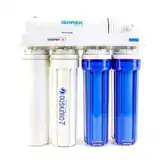
iSpring RCC7AK 6-Stage RO System
iSpring RCC7AK 6-Stage RO System
Under-sink reverse osmosis with a remineralization stage for drinking water. Check pressure, cabinet space and any well-water pretreatment before ordering.
Five minutes and a $10 gauge from any hardware store.
- Get a 0–200 PSI gauge with a 3/4" hose thread fitting.
- Attach to a hose bib, laundry faucet, or the cold line feeding the RO.
- Open the valve fully and read static pressure. Expect 40–80 PSI on city water, 30–50 PSI on wells.
- Test at peak usage (morning, evening). If it drops under 40 PSI, you need a booster pump.
- Record the lowest reading — that is your real worst case.
Recommended for testing
A certified lab test that checks both pressure-related performance and actual contaminant levels.

Tap Score Advanced City Water Test
Tap Score Advanced City Water Test
Certified Lab Kit
Our top pick because it uses EPA-certified lab analysis for 110+ contaminants and delivers the clearest, most actionable report.
Signs you need one
- • Static pressure below 40 PSI
- • Tank fills in 4+ hours
- • Poor TDS rejection
- • Waste ratio above 5:1
- • Well water with cycling pressure
- • High-rise above 4th floor
What to look for
- • Output: 75–100 PSI (adjustable)
- • GPD: matches your RO rating
- • 24V DC, auto shut-off
- • Under 50 dB for kitchen use
- • $60–120 typical
- • Installs before the pre-filter
Heads up: the pump goes before the pre-filters, not after the membrane. Installing it downstream only pressurizes the tank — it won't help production.
Skip the separate pump
A tankless RO with a built-in booster pump handles low pressure without extra hardware.

Waterdrop G3P800
Waterdrop G3P800
Tankless RO
Its built-in pump compensates for inlet pressure as low as ~15 PSI, so it delivers full output on wells, older homes, and high-rise units without a separate booster.
Well systems cycle between cut-in and cut-out pressure, so your RO sees a moving target.
- 30/50 (standard): marginal at the bottom of the cycle. A booster pump smooths it out.
- 40/60 (recommended): ask your well tech for a pressure switch swap.
- Constant pressure (VFD): holds 50–60 PSI on demand. Ideal for RO; $1,500–3,000 upgrade.
Iron above 0.3 ppm? Add an iron filter first — it fouls membranes fast at low pressure. A softener also helps reduce scaling.
Recommended for well + RO setups
One pre-treatment system that protects your RO from pressure swings and well-water fouling.
Match dedicated treatment to your water test and available flow; general filtration, softening and RO are not interchangeable. Compare well-water treatment options.
Above 80 PSI risks blown fittings and a shorter membrane life. Some municipal zones hit 90–100 PSI.
Pressure Reducing Valve (PRV)
- • Install on main line or before RO
- • Adjustable 25–75 PSI (set to 60)
- • $30–80, protects all plumbing
Signs of high-pressure damage
- • Leaking push-fit connections
- • Hissing fittings or burst tubing
- • Constantly dripping RO faucet
- • Rapid membrane wear
Recommended for high-pressure protection
A whole-house filter installed before the RO also smooths pressure spikes and removes chlorine.
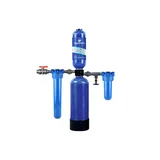
Aquasana Rhino Whole House Water Filter
Aquasana Rhino Whole House Water Filter
Whole-house filtration for chlorine taste and odor. Match the system to your water report; it does not replace softening or dedicated well-water treatment.
Tankless (recommended)
- Built-in booster pump
- Works down to 15 PSI
- On-demand flow
- $300–600
- Needs an outlet
Tank-based (add a pump)
- $150–300 upfront
- No outlet needed (without pump)
- +$60–120 pump
- Tank bladder can fail
- Takes more space
Recommended tank-based option
A premium tank RO that pairs with an add-on pump kit when pressure is just below 40 PSI.
iSpring RCC7AK 6-Stage RO System
iSpring RCC7AK 6-Stage RO System
Under-sink reverse osmosis with a remineralization stage for drinking water. Check pressure, cabinet space and any well-water pretreatment before ordering.
Frequently Asked Questions
Explore More
Related Articles
Top-rated Reverse Osmosis Systems
Top-rated RO systems with detailed comparisons
APEC vs iSpring RO Comparison
Head-to-head comparison of leading RO brands
Waterdrop versus iSpring RO Systems — which wins
Compare tankless vs tank RO systems
Walkthrough — RO Installation Guide
Step-by-step RO system installation
RO Maintenance & Troubleshooting (upkeep tips)
Filter replacement schedules and common fixes
Our picks for Tankless RO Systems Guide
On-demand RO without storage tanks