RO Wastewater Reduction: The Complete 2026 Guide
Cut RO water waste from 4:1 to 1:1 ratio and save 5,000+ gallons per year with proven efficiency strategies
Waste Ratios at a Glance
9,000 gal/yr
7,300 gal/yr
3,600 gal/yr
1,800 gal/yr
The biggest knock on reverse osmosis is water waste — 3–4 gallons down the drain for every gallon produced. The fix is simple: add a permeate pump, run a tankless unit, or reuse the drain water for plants and cleaning. Any of these turns an "inefficient" RO into a near-zero-waste system.
Pick the row that matches your setup. Annual figures assume 5 gallons/day of RO use.
| System | Ratio | Annual | Rating |
|---|---|---|---|
| Basic tank | 5:1 | ~9,000 | Poor |
| Standard tank | 4:1 | ~7,300 | Fair |
| Tankless | 2–3:1 | ~4,500 | Good |
| + Permeate pump | 1:1 | ~1,800 | Excellent |
| + Reuse drain | 0:1 | 0 (reused) | Zero |
A non-electric hydraulic device that uses drain-line energy to boost production — drops waste from 4:1 to 1:1 (a ~75% cut).
Benefits
- • 75% less waste water
- • Saves 3,000–5,000 gal/year
- • No electricity needed
- • Better TDS rejection
- • Longer membrane life
- • Pays for itself in 6–12 months
Limitations
- • Tank systems only (not tankless)
- • Adds 6–8" of under-sink space
- • Slight noise during operation
- • Slower tank fill
- • Replace every 5–7 years
RO drain water is just concentrated tap water — perfectly safe for non-potable use. Reusing it makes any system effectively zero-waste.
🌱 Garden irrigation
Route drain to a 5–20 gal bucket. Avoid salt-sensitive plants if you have a softener upstream.
🧽 Household cleaning
Mopping, counters, windows, car washing. Mineral content doesn't affect cleaning.
👕 Laundry pre-rinse
Pre-soak heavily soiled clothes. Some users plumb directly to the washer inlet.
🚽 Toilet flushing
Offsets 8–13 gallons/day. Needs a diverter and float valve in the tank.
Don't use drain water for
Drinking, cooking, baby formula, aquariums, humidifiers, or steam irons.
No new system needed — these maintenance tweaks can cut waste by 20–40%.
1. Boost inlet pressure to 50–60 PSI
A $60–100 booster pump can drop waste from 5:1 to 3:1.
Learn more →2. Replace pre-filters on schedule
Clogged pre-filters restrict flow and worsen the ratio. ~$25–50/year.
3. Check tank air pressure (7–8 PSI empty)
Low tank pressure forces the membrane to work harder. Top up with a bike pump.
4. Swap aging membranes (3+ years)
A fresh membrane often improves waste ratio 20–30%. Replace when TDS rejection drops below 85%.
5. Right-size the flow restrictor
A $5–10 part match to your membrane GPD can improve efficiency with no other changes.

iSpring RCC7AK 6-Stage RO System
iSpring RCC7AK 6-Stage RO System
A tank-style six-stage RO system with remineralization. Its drain-water ratio depends on your water pressure, temperature and TDS; a compatible permeate pump can improve efficiency on many tank systems, so check compatibility with the maker first.
Compare sizing, treatment options and ongoing costs in our best reverse osmosis systems guide.
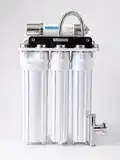
Aquasana OptimH2O RO with Remineralizer
Aquasana OptimH2O RO with Remineralizer
An under-sink RO alternative with a separate remineralization stage. Compare its stated drain-water ratio and replacement filter costs with other models before buying.
Cut waste before replacing a system
Many high-waste RO systems improve with pressure and maintenance fixes.
- Measure incoming water pressure; low pressure increases drain water.
- Check the tank's empty air pressure and the flow restrictor match.
- Ask the maker whether a permeate pump suits your model.
RO waste is real, but small compared to other household uses — and far less impactful than bottled water.
| Use | Monthly | % home |
|---|---|---|
| Showers | 480 gal | 16% |
| Toilets | 240 gal | 8% |
| Laundry | 320 gal | 11% |
| Lawn | 1,000+ gal | 33%+ |
| RO 4:1 | 600 gal | 3–5% |
| RO 1:1 | 150 gal | <1% |
Bottled water takes ~3 liters of water (plus plastic and transport) to deliver 1 liter — switching from bottled water to RO is a net water and carbon win.
Priority actions
- • Install a permeate pump
- • Route drain to the garden
- • Pick a tankless system with built-in pump
- • Maintain 50–60 PSI inlet
- • Replace filters on schedule
Zero-waste alternatives
Explore Our Top Picks
Frequently Asked Questions
Related Articles
Top-rated Reverse Osmosis Systems
Top-rated RO systems with detailed comparisons
How APEC compares to iSpring RO Comparison
Head-to-head comparison of leading RO brands
Waterdrop or iSpring RO Systems? Full breakdown
Compare tankless vs tank RO systems
RO Installation Guide
Step-by-step RO system installation
Keep it running: RO Maintenance & Troubleshooting
Filter replacement schedules and common fixes
Tankless RO Systems Guide
On-demand RO without storage tanks