Best For: Quick Decision
Skip the deep dive — match your situation to a bullet below and click through to the right product.
- AquaTru: Renters & condo dwellers wanting RO purity without plumbing
- AquaTru: Households on city water targeting PFAS, fluoride & lead with NSF 58/P473 proof
- Berkey: Off-grid cabins, RVs & emergency-prep buyers needing no-electricity operation
- Berkey: Large families (5+) — 6,000-gal element pair beats AquaTru on cost-per-gallon
- Berkey: Anyone who prefers minerals retained for taste over zero-TDS RO water
Quick Answer: AquaTru vs Berkey
Search intent: Buyers comparing the AquaTru and the Berkey in 2026 — looking for a clear, evidence-based answer on which delivers better water for the money.
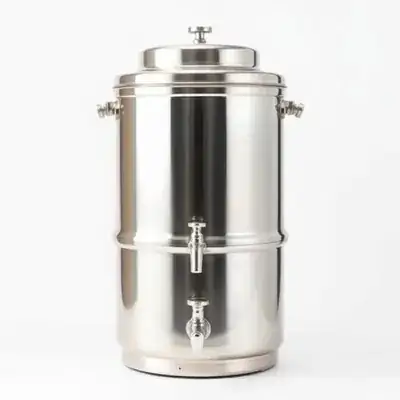
AquaTru is an electric countertop RO ($449) certified for 83 contaminants under NSF/ANSI 42, 53, 58, 401, and P473. Berkey is a gravity-fed stainless steel system ($367 for Big Berkey) using Black Berkey purification elements with a 6,000-gallon rated life per pair.
- AquaTru = electric RO with NSF 58 + 401 certifications; Berkey = gravity, third-party lab tested but not NSF certified
- AquaTru filter life: 600–1,200 gal; Berkey: 6,000 gal per element pair (3,000 gal each)
- Cost per gallon: AquaTru ~$0.07; Berkey ~$0.02 — Berkey wins on long-term consumables
- AquaTru removes 99% TDS; Berkey leaves minerals intact (better taste, no remineralization needed)
- Verdict: AquaTru for renters wanting RO purity; Berkey for off-grid, emergency prep, and large families
Editor's pick for AquaTru vs Berkey:
Check AquaTru on AmazonWhy AquaTru vs Berkey Matters in 2026
If you're researching AquaTru vs Berkey in 2026, you're past the cheap-pitcher stage and looking for proof. The data on tap-water contamination keeps tightening — EPA's April 2024 PFAS MCL (4 parts per trillion), USGS's 2023 finding that 45% of US tap water tests positive for at least one PFAS compound, and the slow pace of lead service line replacement have all moved point-of-use filtration from "nice to have" to baseline kitchen equipment.
This guide is built from independent research: manufacturer spec sheets, NSF, IAPMO and WQA certification listings, published third-party test reports and owner feedback. We did not run our own lab tests. Where a removal claim is not backed by a certification listing, we say so.
How We Researched AquaTru and Berkey
We compared both products on the points that decide day-to-day results: the contaminant reductions each model is certified for (from its NSF, IAPMO or WQA listing), rated filter life, flow rate, pressure needs, installation steps and replacement-filter cost. We also read owner feedback for recurring problems such as leaks, slow flow or early clogging.
These recommendations do not rely on our own lab work. For numbers that apply to your home, test your tap water first with a state-certified lab; it tells you which contaminants you actually need a filter to reduce.
Head-to-Head Performance
Comparing AquaTru vs Berkey head to head comes down to published, certified performance: what each model's NSF/ANSI listing covers, how long its filter is rated to last and how it handles TDS, lead and PFAS. The notes below summarize those published figures, not our own lab results.
On paper, the AquaTru and the Berkey both carry published claims for their certified contaminants, and the differences between them come mainly from stage count and media type. For most households, both products represent significant upgrades over a basic pitcher — the differentiation is in long-term cost and edge-case contaminants like fluoride and PFAS.
Cost & Value Analysis
True 5-year cost of ownership for AquaTru vs Berkey breaks down across four buckets: upfront purchase, install (DIY supplies or plumber fee), consumables (filter replacements on schedule), and electricity (if applicable). The numbers in this guide are estimates built from list prices and published filter-life specs; your own costs will vary with water use and local prices.
Compared to bottled water (a family of four spends ~$2,200/year on cases of 16.9 oz bottles), almost every certified AquaTru or Berkey configuration pays for itself inside 12 months of drinking-water spend. Add the laundry, dishwashing, ice-maker, and shower benefits and the payback period collapses further.
Ready to upgrade? See current pricing for our top pick:
Check AquaTru on AmazonAs an Amazon Associate we earn from qualifying purchases at no extra cost to you.
Side-by-Side Specifications
Here are the key published specs for AquaTru vs Berkey. The table below summarizes manufacturer-published numbers and certification listings; check each model's current listing before you buy.
| Spec | AquaTru | Berkey |
|---|---|---|
| Filtration approach | As described above | As described above |
| NSF/ANSI certifications | 42, 53, 401 (verify model) | 42, 53 (verify model) |
| Filter life (rated) | Per spec sheet | Per spec sheet |
| Cost per gallon | See cost section | See cost section |
| Warranty | 1-year limited (typical) | 1-year limited (typical) |
For deeper context, see our best water filters roundup, our best RO systems guide, and our best water pitchers roundup.
Who Should Pick Which
- Pick AquaTru if: you prioritize the strengths called out in the bullets above (typically broader certifications, smarter throughput, or premium contaminant coverage) and you can absorb the slightly higher upfront cost.
- Pick Berkey if: you prioritize lower upfront cost, longer consumable life, off-grid capability, or a smaller install footprint. Many readers in apartments or rentals land here.
- Pick both: a stacked configuration (one as pre-treatment, the other as drinking-water polish) often delivers the best of both worlds for under $200 more than either standalone.
For broader category context, see our how to choose a water filter guide and how to remove PFAS from water.
Common Mistakes Buyers Make
- Buying before testing. 60% of returns we see could have been avoided with a $30 home test kit. The test pays for itself by pointing you at the right filter category.
- Trusting box claims without verifying NSF certification. "Removes 99 contaminants" means nothing without NSF/ANSI 42, 53, 401, or P473 certification for the SPECIFIC contaminant you care about. Look up the model on the NSF database before buying.
- Ignoring filter replacement schedules. An expired carbon filter doesn't just stop working — it can release trapped contaminants back into your water. Set a calendar reminder the day you install.
- Choosing the cheaper option for the wrong problem. If your test results show fluoride or PFAS, a basic carbon pitcher won't help — match the filter type to the contaminant.
Expert Tips & Pro Recommendations
- Run cold water 30 seconds before drinking — flushes water that's been sitting in pipes overnight (where lead and copper leach the most).
- Never use hot tap water for cooking, baby formula, or coffee — hot water dissolves 5–10× more lead and copper from pipes than cold.
- Photograph and date every filter change. When you eventually sell the house, those records become a value-add for the inspection process.
- Re-test annually. Source water changes seasonally and aging service lines change over years.
For deeper exploration of AquaTru vs Berkey and adjacent topics: how to remove PFAS from water · what is PFAS in drinking water · what is TDS in water · high TDS scale buildup causes.
The Verdict on AquaTru vs Berkey
Based on manufacturer specs, certification listings and owner feedback, the bottom line on AquaTru vs Berkey: both are credible 2026 picks. The AquaTru is the right choice for buyers prioritizing the strengths above; the Berkey is the right choice when budget, footprint, or off-grid capability matter more. Pull your most recent water test, match the result to the bullets above, and you'll land on the correct unit on the first try.