Best Water Filters for Arsenic Removal (2026)
Comprehensive guide to removing arsenic from drinking water. Compare RO, activated alumina, and ion exchange technologies with real performance data and cost analysis.
Critical Health Alert
Arsenic is a tasteless, odorless carcinogen linked to bladder, lung, and skin cancer. The EPA MCL is 10 ppb, but health experts recommend below 5 ppb. Over 2.1 million Americans drink water exceeding EPA limits.
Arsenic contamination affects millions of private wells and municipal systems across the United States, particularly in the Southwest, New England, and Midwest regions. Understanding arsenic chemistry is essential for selecting effective treatment.
Two Forms of Arsenic
Arsenic V (Arsenate)
Oxidized form — easier to remove
- Found in oxygenated water sources
- Removed by RO, ion exchange, activated alumina
- 95-99% removal efficiency
Arsenic III (Arsenite)
Reduced form — harder to remove
- Common in deep wells
- Requires pre-oxidation before most filters
- RO removes both forms without pre-treatment
Health Effects of Arsenic Exposure
Cancer Risks
- • Bladder cancer (5-8x risk)
- • Lung cancer
- • Skin cancer
- • Liver cancer
Chronic Effects
- • Cardiovascular disease
- • Diabetes (type 2)
- • Skin lesions
- • Neurological damage
Children
- • Cognitive impairment
- • Growth retardation
- • Immune suppression
- • Developmental delays
Geographic Risk Zones
- Southwest: Arizona, Nevada, New Mexico — volcanic geology and mining
- New England: Maine, New Hampshire — bedrock dissolution
- Midwest: Michigan, Wisconsin — glacial deposits
- California: Central Valley groundwater contamination
Reverse Osmosis95-99% Removal
Semi-permeable membrane blocks both arsenic III and V without pre-treatment. Most reliable technology for home use.
Activated Alumina90-95% Removal
Aluminum oxide media adsorbs arsenic V. Requires pH 5.5-8.5. Only removes As V—requires pre-oxidation for As III. 3-5 year media lifespan.
Anion Exchange Resin90-95% Removal
Exchanges chloride ions for arsenic V. Similar to water softener technology. Only removes As V. 5-10 year resin life. Requires regeneration.
Aquasana OptimH2O
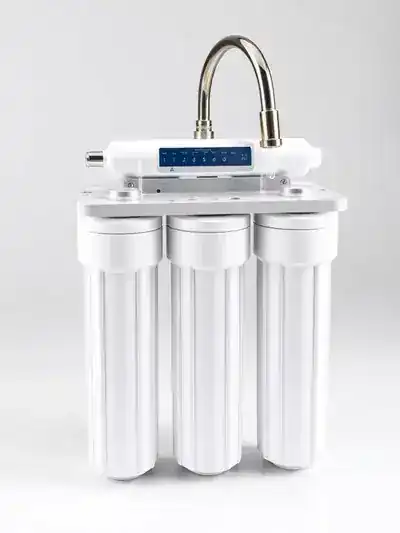
The Aquasana OptimH2O combines RO with Claryum® technology and remineralization for 95%+ arsenic removal while retaining healthy minerals. NSF certified, compact design fits under most sinks.
Check Aquasana OptimH2O PriceWaterdrop G3P800
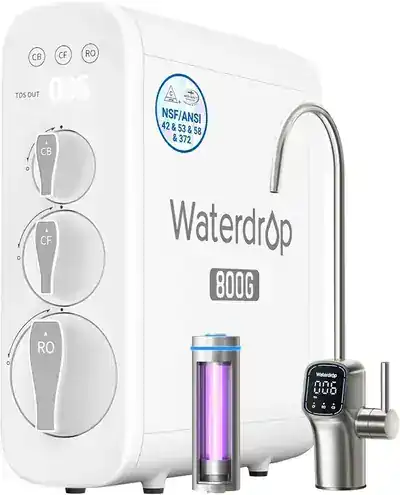
Tankless 800 GPD design with smart TDS monitoring. Removes 99% of arsenic (both forms), plus fluoride, lead, and PFAS. 3:1 pure-to-drain ratio for minimal waste.
Check Waterdrop G3P800 PriceSpringWell Ultra Well System
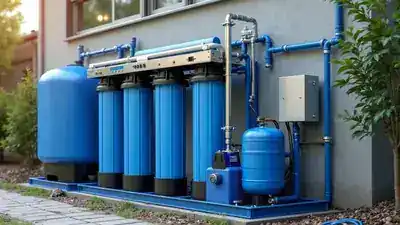
For well water with arsenic plus iron, manganese, and bacteria, the SpringWell Ultra provides comprehensive multi-stage treatment. Pair with an under-sink RO for maximum arsenic removal at the drinking water tap.
Check SpringWell Ultra Price| System | Upfront | Annual | As Removal | Best For |
|---|---|---|---|---|
| Aquasana OptimH2O | $200 | $80 | 95%+ | Best value |
| Waterdrop G3P800 | $450 | $100 | 99% | Maximum removal |
| SpringWell Ultra + RO | $2,950+ | $200 | 99%+ | Well water |
| Activated Alumina (WH) | $1,000-2,000 | $100-200 | 90-95% | As V only |
Arsenic in Water: Complete Science & Treatment Guide
Arsenic is one of the most dangerous naturally occurring contaminants in drinking water, classified as a Group 1 carcinogen by the International Agency for Research on Cancer (IARC). Unlike most water contaminants, arsenic is tasteless, odorless, and invisible—making laboratory testing the only reliable detection method. Over 2.1 million Americans drink water exceeding the EPA's 10 ppb maximum contaminant level, with the highest concentrations found in private wells across the Southwest, New England, and Great Plains regions.
Understanding the difference between arsenic III (arsenite) and arsenic V (arsenate) is critical for choosing the right treatment technology. Arsenic V is the oxidized form, carrying a negative charge that makes it readily removable by ion exchange, activated alumina, and reverse osmosis. Arsenic III is the reduced form found primarily in deep anaerobic wells—it carries no charge, making it invisible to many treatment technologies. Standard anion exchange resins remove 90-95% of arsenic V but less than 30% of arsenic III. Reverse osmosis is the only residential technology that effectively removes both forms without pre-treatment, achieving 95-99% removal regardless of arsenic speciation.
For wells with predominantly arsenic III, pre-oxidation converts it to the more treatable arsenic V form. Chlorination, potassium permanganate injection, or aeration can oxidize arsenic III to arsenic V, making it removable by subsequent filtration stages. This two-step approach (oxidation followed by adsorption or ion exchange) is common in whole-house well water systems and achieves 98%+ total arsenic removal when properly designed.
Treatment Technology Comparison
Reverse Osmosis (95-99% removal): The most reliable residential arsenic treatment. RO membranes reject arsenic through size exclusion and charge repulsion, effectively removing both arsenic III and V without pre-treatment. Systems like the Waterdrop G3P800 provide certified arsenic reduction at the point of use. Disadvantages include water waste (modern systems produce 1-2 gallons of waste per gallon of purified water), mineral removal requiring potential remineralization, and treatment limited to a single tap unless paired with a whole-house system.
Activated Alumina (90-95% removal of As V): This aluminum oxide media has a high affinity for arsenic V, with capacity of 1,000-5,000 bed volumes before exhaustion depending on water chemistry. Performance is highly pH-dependent—optimal at pH 5.5-6.0, declining significantly above pH 8.0. For alkaline well water, pH adjustment may be necessary. Activated alumina media costs $50-100 for a residential cartridge lasting 3-12 months depending on arsenic concentration and flow rate. It does not effectively remove arsenic III without pre-oxidation.
Iron-Based Adsorption Media (90-99% removal): Granular ferric hydroxide (GFH) and iron oxide-coated sand are emerging as cost-effective arsenic treatment options. These media adsorb both arsenic III and V through ligand exchange, with capacity of 10,000-50,000 bed volumes—far exceeding activated alumina. They work across a wider pH range (6.0-8.5) and are less affected by competing ions like sulfate and phosphate. The SpringWell Ultra Well System uses iron-based media for whole-house arsenic treatment, providing treatment at every tap.
Anion Exchange (90-95% removal of As V): Strong-base anion exchange resins remove arsenic V alongside other anions (nitrate, sulfate, chromate). The resin regenerates with salt brine, similar to a water softener. Advantages include automatic regeneration and long media life (5-10 years). Disadvantages include poor arsenic III removal, interference from competing anions (high sulfate water reduces arsenic capacity by 40-60%), and generation of arsenic-laden brine that requires proper disposal.
Testing & Monitoring Your Arsenic Levels
The EPA requires public water systems to test for arsenic and report results in annual Consumer Confidence Reports (CCR). Request your CCR from your water utility or find it online at the EPA's website. For private wells, annual laboratory testing is essential—arsenic levels can fluctuate seasonally, with concentrations typically highest during dry seasons when water tables drop and groundwater has longer contact with arsenic-bearing rock formations.
Laboratory testing through certified labs costs $30-100 for arsenic-specific analysis. Request total arsenic and arsenic speciation (As III vs As V) to determine the optimal treatment approach. Tap Score and SimpleLab offer mail-in arsenic testing with detailed reports and treatment recommendations. Home test strips for arsenic exist but provide only qualitative results (above/below 10 ppb) and should never substitute for laboratory confirmation when health decisions are at stake.
Health Effects & Regulatory Standards
Chronic arsenic exposure at levels above 10 ppb increases cancer risk for bladder (factor of 5-6x), lung (3-4x), and skin (2-3x) cancers over a lifetime. Non-cancer effects include cardiovascular disease, diabetes, peripheral neuropathy, and developmental impacts in children including reduced IQ scores. The EPA set the MCL at 10 ppb in 2001 (reduced from 50 ppb), but the Maximum Contaminant Level Goal (MCLG) is zero—acknowledging that no level of arsenic is considered safe for lifetime consumption.
New Jersey became the first state to adopt a lower arsenic standard at 5 ppb in 2006, with several other states considering similar reductions. The World Health Organization guideline is also 10 ppb, though it acknowledges this level represents a meaningful cancer risk and recommends achieving the lowest feasible level. For children, pregnant women, and immunocompromised individuals, many health organizations recommend treating any detectable arsenic level. If your water tests above 5 ppb, we strongly recommend installing certified reverse osmosis filtration for all drinking and cooking water.
Whole-House vs. Point-of-Use Treatment
For arsenic, point-of-use (POU) treatment at the kitchen tap is often sufficient because arsenic's primary health risk comes from ingestion, not skin absorption. An under-sink RO system ($200-500) effectively protects drinking and cooking water without the cost and complexity of whole-house treatment ($2,500-5,000+). However, whole-house treatment provides peace of mind by eliminating arsenic from shower water, laundry, and all other uses. For arsenic levels above 50 ppb, the EPA recommends whole-house treatment as a precautionary measure, as some research suggests possible dermal absorption at high concentrations.
Arsenic Filtration Maintenance & Long-Term Performance
Maintaining arsenic filtration systems requires more vigilance than standard water filters because arsenic breakthrough can occur without any taste, odor, or visual warning. Unlike chlorine or iron where you can detect filter failure through sensory cues, arsenic at dangerous levels is completely undetectable without laboratory testing. This makes scheduled maintenance and periodic verification testing non-negotiable for arsenic treatment systems.
For reverse osmosis systems treating arsenic, the pre-filters (sediment and carbon stages) must be replaced on schedule to protect the RO membrane from fouling. A fouled membrane allows arsenic passage at much higher rates. Test post-RO water for arsenic every 6 months—a properly functioning system should maintain 95%+ removal consistently. If post-treatment arsenic exceeds 5 ppb, replace the RO membrane immediately regardless of its age. The annual cost of $50-100 in replacement filters is trivial compared to the health consequences of undetected arsenic exposure.
Frequently Asked Questions
Related Articles
Top-rated Reverse Osmosis Systems
Top-rated RO water filters
See the best Water Softeners
Top water softening systems
See the best Whole House Water Filters
Complete whole-house filtration
Buying guide: Well Water Filters
Specialized well water treatment
Water Filter Buying Guide
Avoid common buying mistakes
Read: State Water Quality Guide
Water quality by state