Step 1: Check your fluoride level
- City water: your annual water quality report lists fluoride. Cities that add it aim for 0.7 mg/L, the U.S. Public Health Service recommendation.
- Private wells: natural fluoride can be much higher, so send a sample to a state-certified lab.
- The limits: EPA's enforceable limit is 4.0 mg/L and its secondary standard is 2.0 mg/L. See the EPA drinking water regulations.
Health research, including the 2024 National Toxicology Program review, is summarized in fluoride in drinking water.
Step 2: Choose a method that reduces fluoride
| Your situation | Usual treatment | Watch out for |
|---|---|---|
| Drinking and cooking water, can install under the sink | RO with a fluoride claim | Some water goes to drain; change filters on time |
| Renting, no plumbing changes | Countertop distiller or countertop RO | Distillers are slow and use electricity |
| Want a gravity or inline cartridge | Activated alumina or bone char | Capacity drops with use; replace on schedule |
| Well with high natural fluoride | RO, sized from a lab test | Very high levels may need a water treatment pro |
A filter that says it "reduces impurities" may not reduce fluoride at all. Look for fluoride named on the certification listing for the exact model, such as an RO system certified under NSF/ANSI 58.
RO systems to compare for fluoride
These under-sink RO systems treat drinking and cooking water. The iSpring adds some minerals back for taste; the Aquasana tankless system doesn't.
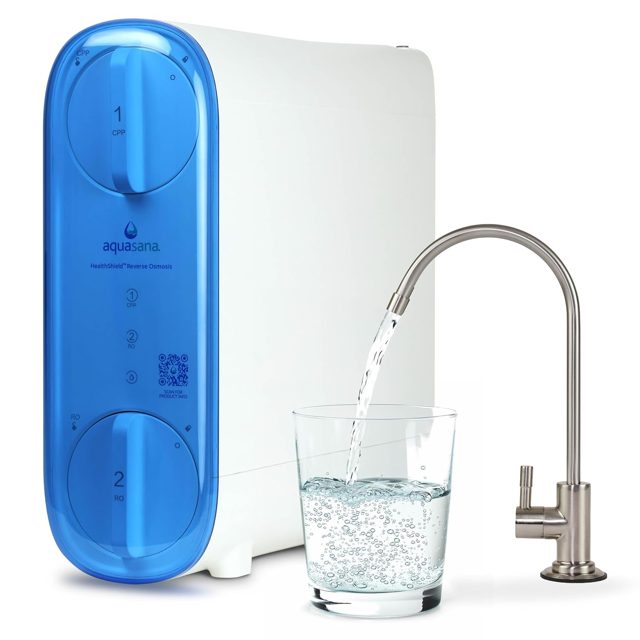
Aquasana Tankless Reverse Osmosis System (800 GPD)
Aquasana Tankless Reverse Osmosis System (800 GPD)
Aquasana's performance data sheet for this tankless model (AQ-HSRO800) shows 95.72% fluoride reduction from an 8 mg/L test under NSF/ANSI 58, and the system is IAPMO certified for the claims on that sheet. It has no storage tank, but it needs a power outlet and at least 60 psi of water pressure.
Compare sizing, treatment options and ongoing costs in our best reverse osmosis systems guide.
iSpring RCC7AK 6-Stage RO System
iSpring RCC7AK 6-Stage RO System
A lower-cost 6-stage RO system with a remineralization stage. RO membranes usually reject most fluoride, but NSF's listing for this model names TDS reduction only, so lab-test the RO tap for fluoride after installing.
Compare sizing, treatment options and ongoing costs in our best reverse osmosis systems guide.
Step 3: Install and maintain it
- Install RO at the kitchen tap and use it for drinking, cooking and coffee.
- Change pre-filters and the membrane on the manual's schedule; a tired membrane lets more fluoride through.
- Replace alumina or bone char before its rated capacity runs out, and keep alumina in slightly acidic water if the maker says so.
- Baby formula: fluoridated tap water is generally considered safe for formula. If you want low-fluoride water, ask your pediatrician; RO or distilled water are options.
Step 4: Retest the treated water
Test the treated tap after installing and once a year. Comparing it with your untreated water shows how much the system is removing.
What doesn't remove fluoride
- Boiling slightly concentrates fluoride.
- Standard carbon pitchers, faucet and fridge filters aren't designed for it. See does Brita remove fluoride.
- Water softeners don't reduce fluoride.
Bottom line
Find your fluoride level, then treat drinking water with RO, distillation or a fluoride-specific medium, and confirm the result. Read the background in fluoride in drinking water, and compare products in our best fluoride water filters guide and best reverse osmosis systems guide.