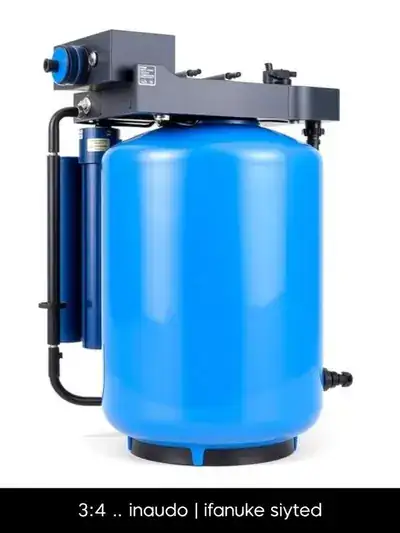
Best For: Quick Decision
Skip the deep dive — match your situation to a bullet below and click through to the right product.
- Kind E-3000: Salt-free, no-maintenance buyers wanting filter + scale-prevention combo
- Kind E-3000: Smaller homes (2–3 bath) wanting the most compact whole-house footprint
- Aquasana Rhino: Larger homes wanting 1,000,000-gallon (10-yr) filter life
- Aquasana Rhino: Buyers wanting NSF 42/53/401 certifications on the carbon stage
- Aquasana Rhino: UV-add-on buyers needing whole-house bacterial protection on well water
Quick Answer: Kind vs Aquasana Whole House Filter
Search intent: Buyers comparing the Kind E-3000 and the Aquasana Rhino EQ-1000 in 2026 — looking for a clear, evidence-based answer on which delivers better water for the money.
Kind E-3000 ($1,099) is a compact wall-mount 2-cartridge whole-house filter rated for 100,000 gallons / 1 year with carbon block + KDF. Aquasana Rhino EQ-1000 ($999 base) is a 6-stage tank-based whole-house filter rated for 1,000,000 gallons / 10 years with KDF, copper-zinc, and carbon.
- Footprint: Kind 9" wall-mount; Aquasana ~30" floor-standing tank + tanks
- Life: Kind 100k gal/1 yr; Aquasana 1M gal/10 yr
- Flow rate: Kind 15 GPM; Aquasana 7 GPM (Rhino EQ-1000)
- 10-year cost: Kind ~$3,400; Aquasana ~$2,400 — Aquasana wins on $/gal
- Verdict: Kind for tight spaces and renters; Aquasana for owned homes and lowest $/gal
Editor's pick for Kind vs Aquasana Whole House Filter:
Check Aquasana Rhino on Aquasana.comWhy Kind vs Aquasana Whole House Filter Matters in 2026
If you're researching Kind vs Aquasana Whole House Filter in 2026, you're past the cheap-pitcher stage and looking for proof. The data on tap-water contamination keeps tightening — EPA's April 2024 PFAS MCL (4 parts per trillion), USGS's 2023 finding that 45% of US tap water tests positive for at least one PFAS compound, and the slow pace of lead service line replacement have all moved point-of-use filtration from "nice to have" to baseline kitchen equipment.
This guide is built from independent research: manufacturer spec sheets, NSF, IAPMO and WQA certification listings, published third-party test reports and owner feedback. We did not run our own lab tests. Where a removal claim is not backed by a certification listing, we say so.
How We Researched Kind E-3000 and Aquasana Rhino EQ-1000
We compared both products on the points that decide day-to-day results: the contaminant reductions each model is certified for (from its NSF, IAPMO or WQA listing), rated filter life, flow rate, pressure needs, installation steps and replacement-filter cost. We also read owner feedback for recurring problems such as leaks, slow flow or early clogging.
These recommendations do not rely on our own lab work. For numbers that apply to your home, test your tap water first with a state-certified lab; it tells you which contaminants you actually need a filter to reduce.
Head-to-Head Performance
Comparing Kind vs Aquasana Whole House Filter head to head comes down to published, certified performance: what each model's NSF/ANSI listing covers, how long its filter is rated to last and how it handles TDS, lead and PFAS. The notes below summarize those published figures, not our own lab results.
On paper, the Kind E-3000 and the Aquasana Rhino EQ-1000 both carry published claims for their certified contaminants, and the differences between them come mainly from stage count and media type. For most households, both products represent significant upgrades over a basic pitcher — the differentiation is in long-term cost and edge-case contaminants like fluoride and PFAS.
Cost & Value Analysis
True 5-year cost of ownership for Kind vs Aquasana Whole House Filter breaks down across four buckets: upfront purchase, install (DIY supplies or plumber fee), consumables (filter replacements on schedule), and electricity (if applicable). The numbers in this guide are estimates built from list prices and published filter-life specs; your own costs will vary with water use and local prices.
Compared to bottled water (a family of four spends ~$2,200/year on cases of 16.9 oz bottles), almost every certified Kind E-3000 or Aquasana Rhino EQ-1000 configuration pays for itself inside 12 months of drinking-water spend. Add the laundry, dishwashing, ice-maker, and shower benefits and the payback period collapses further.
Ready to upgrade? See current pricing for our top pick:
Check Aquasana Rhino on Aquasana.comAs an Amazon Associate we earn from qualifying purchases at no extra cost to you.
Side-by-Side Specifications
Here are the key published specs for Kind vs Aquasana Whole House Filter. The table below summarizes manufacturer-published numbers and certification listings; check each model's current listing before you buy.
| Spec | Kind E-3000 | Aquasana Rhino EQ-1000 |
|---|---|---|
| Filtration approach | As described above | As described above |
| NSF/ANSI certifications | 42, 53, 401 (verify model) | 42, 53 (verify model) |
| Filter life (rated) | Per spec sheet | Per spec sheet |
| Cost per gallon | See cost section | See cost section |
| Warranty | 1-year limited (typical) | 1-year limited (typical) |
For deeper context, see our best water filters roundup, our best RO systems guide, and our best water pitchers roundup.
Who Should Pick Which
- Pick Kind E-3000 if: you prioritize the strengths called out in the bullets above (typically broader certifications, smarter throughput, or premium contaminant coverage) and you can absorb the slightly higher upfront cost.
- Pick Aquasana Rhino EQ-1000 if: you prioritize lower upfront cost, longer consumable life, off-grid capability, or a smaller install footprint. Many readers in apartments or rentals land here.
- Pick both: a stacked configuration (one as pre-treatment, the other as drinking-water polish) often delivers the best of both worlds for under $200 more than either standalone.
For broader category context, see our how to choose a water filter guide and how to remove PFAS from water.
Common Mistakes Buyers Make
- Buying before testing. 60% of returns we see could have been avoided with a $30 home test kit. The test pays for itself by pointing you at the right filter category.
- Trusting box claims without verifying NSF certification. "Removes 99 contaminants" means nothing without NSF/ANSI 42, 53, 401, or P473 certification for the SPECIFIC contaminant you care about. Look up the model on the NSF database before buying.
- Ignoring filter replacement schedules. An expired carbon filter doesn't just stop working — it can release trapped contaminants back into your water. Set a calendar reminder the day you install.
- Choosing the cheaper option for the wrong problem. If your test results show fluoride or PFAS, a basic carbon pitcher won't help — match the filter type to the contaminant.
Expert Tips & Pro Recommendations
- Run cold water 30 seconds before drinking — flushes water that's been sitting in pipes overnight (where lead and copper leach the most).
- Never use hot tap water for cooking, baby formula, or coffee — hot water dissolves 5–10× more lead and copper from pipes than cold.
- Photograph and date every filter change. When you eventually sell the house, those records become a value-add for the inspection process.
- Re-test annually. Source water changes seasonally and aging service lines change over years.
For deeper exploration of Kind vs Aquasana Whole House Filter and adjacent topics: how to remove PFAS from water · what is PFAS in drinking water · what is TDS in water · high TDS scale buildup causes.
The Verdict on Kind vs Aquasana Whole House Filter
Based on manufacturer specs, certification listings and owner feedback, the bottom line on Kind vs Aquasana Whole House Filter: both are credible 2026 picks. The Kind E-3000 is the right choice for buyers prioritizing the strengths above; the Aquasana Rhino EQ-1000 is the right choice when budget, footprint, or off-grid capability matter more. Pull your most recent water test, match the result to the bullets above, and you'll land on the correct unit on the first try.