Water Softener Problems & Solutions: Complete Troubleshooting Guide
When your water softener stops working properly, it's frustrating—and hard water can quickly damage appliances and fixtures. This comprehensive troubleshooting guide covers every common water softener problem, from salt bridges to regeneration failures, with step-by-step solutions you can implement yourself.
Quick Problem Diagnosis
| Symptom | Likely Cause | Quick Fix |
|---|---|---|
| Water feels hard | Salt bridge, low salt, bypassed system | Check salt, break bridge, verify bypass |
| Salty-tasting water | Clogged drain, failed rinse cycle | Clear drain, manual regeneration |
| Low water pressure | Clogged filter, fouled resin | Replace filter, clean resin |
| Brine tank full | Clogged injector, stuck valve | Clean injector, check float |
| Brown/yellow water | Iron fouling, old resin | Use iron cleaner, replace resin |
| Using too much salt | Leak, wrong settings | Check for leaks, verify hardness |
Table of Contents
Hard Water Breakthrough
Hard water breakthrough—when your softener stops softening—is the most common complaint. The water feels hard, soap doesn't lather well, and scale starts appearing on fixtures. Here's how to diagnose and fix it:
Step-by-Step Diagnosis
Check Bypass Valve Position
The bypass valve may have been left in bypass position during maintenance. Push the bypass valve fully into "service" position. This is the #1 overlooked cause of hard water after any work on the system.
Inspect Salt Level
Open the brine tank lid. Salt should be at least 1/3 full. If low, add salt and wait 2-3 hours before regenerating to allow brine to form. Use high-quality evaporated salt pellets for best results.
Check for Salt Bridge
Push a broom handle into the salt. If you hit a hard crust with hollow space below, you have a salt bridge. The salt appears full but no brine is being made because water can't reach the salt.
Run Manual Regeneration
After addressing salt issues, initiate a manual regeneration. Wait for the full cycle (60-90 minutes) to complete, then test water hardness with test strips. Soft water should read 0-3 GPG.
Verify Hardness Settings
Check your control valve settings match your actual water hardness. Test your incoming water and set the hardness number accordingly. Incorrect settings cause premature exhaustion.
If Water Is Still Hard After All Steps
The resin may be exhausted or fouled. Resin lasts 10-15 years normally but degrades faster with chlorinated water, iron contamination, or extremely hard water. Use a resin cleaner first; if that fails, the resin bed needs replacement ($150-300 for DIY, $300-500 professional).
Salt Bridge Problems
A salt bridge is a hardened crust of salt that forms in the brine tank, creating a hollow space between the salt and water below. This prevents brine from forming, so your softener regenerates with plain water—completely ineffective.
How to Identify a Salt Bridge
- Salt level appears unchanged for weeks despite regeneration cycles
- Water feels hard even though tank looks full of salt
- Broom handle pushed into salt hits hard surface then breaks through to hollow space
- Crunching sound when breaking through the salt layer
How to Fix a Salt Bridge
Step 1: Break Up the Bridge
Use a broom handle or similar tool to carefully push through and break up the hardened salt. Work around the perimeter, breaking the crust into pieces that fall into the water below.
Step 2: Remove Large Chunks
Remove any large chunks that won't dissolve easily. If the bridge is severe, you may need to scoop out salt, clean the tank, and start fresh.
Step 3: Add Hot Water
Pour a few gallons of hot (not boiling) water over the broken salt to help dissolve remaining chunks and create proper brine solution.
Step 4: Regenerate
Wait 2-3 hours for brine to form, then run a manual regeneration cycle. Test water afterward to confirm soft water is restored.
Preventing Future Salt Bridges
- Use quality salt: Evaporated salt pellets are 99.9% pure and least likely to bridge
- Don't overfill: Keep salt 1/3 to 2/3 full—not packed to the top
- Keep lid closed: Humidity causes bridging; a tight lid helps
- Monthly checks: Push a broom handle into salt monthly to check for early bridging
- Avoid solar salt in humid climates: It's more prone to bridging than evaporated
Regeneration Problems
Regenerating Too Often
Using excessive salt and water, running multiple times per week when once would suffice.
- Causes:
- • Hardness set too high
- • Capacity set too low
- • Running toilet or leak
- • Timer malfunction
Not Regenerating
System never enters regeneration cycle, resin becomes exhausted.
- Causes:
- • Power failure/unplugged
- • Timer motor failure
- • Meter not sensing flow
- • Control board failure
Regeneration Doesn't Complete
Cycle starts but stops mid-process or takes too long.
- Causes:
- • Clogged drain line
- • Power interruption
- • Valve stuck/jammed
- • Motor struggling
Regenerating at Wrong Time
Running during peak usage hours instead of 2 AM.
- Causes:
- • Clock set incorrectly
- • Power outage reset time
- • Wrong regeneration setting
- • Battery backup dead
Optimal Regeneration Settings
Most households benefit from regenerating every 3-7 days. Set regeneration for 2 AM when water usage is lowest. Demand-initiated regeneration (metered systems) is more efficient than timer-based, using 30-50% less salt. See our electric vs uplift comparison for more on regeneration types.
Low Water Pressure Problems
Water softeners can reduce water pressure, but a properly sized system should cause minimal drop (2-5 PSI). Significant pressure loss indicates a problem that needs addressing.
Pressure Loss Causes & Solutions
Clogged Sediment Prefilter
If you have a sediment filter before the softener, check it first. Replace if dirty—this is the most common cause of sudden pressure drops.
Fix: Replace filter cartridge ($10-30)
Iron-Fouled Resin
Iron accumulation on resin beads creates flow restriction. Water may also have red/brown tint.
Fix: Use iron-specific resin cleaner (Iron Out, Res-Up) following package directions. Repeat monthly if iron is ongoing.
Undersized System
System's flow rate can't keep up with demand. Check spec sheet—most 32K grain units handle 10-12 GPM; homes with multiple bathrooms may need 15+ GPM.
Fix: Upgrade to larger system with higher flow rate. See our sizing guide.
Resin in Pipes
Broken resin beads can escape and clog aerators, valves, and pipes. Check faucet aerators for small amber/brown beads.
Fix: Clean aerators, check softener's internal screens, replace resin if failing.
Testing Pressure Drop
Put softener in bypass and measure pressure at a faucet. Then put it back in service and measure again. More than 10 PSI drop indicates a problem with the softener. Normal drop is 2-5 PSI.
Brine Tank Problems
Tank Full of Water (Flooding)
Normal water level is 6-12 inches. If water is at or near the top, the system isn't draining properly during regeneration.
- Clogged Injector: Remove and clean the brine injector—a small orifice that's easily clogged by sediment
- Blocked Drain: Check and clear drain line from softener to drain
- Stuck Float: The safety float may be stuck open, allowing continuous water fill
- Failed Valve: Control valve piston or seals may need replacement
No Water in Tank
Should have 3-6 inches of water at the bottom to dissolve salt for brine. No water means no brine for regeneration.
- Clogged Fill: Brine refill line or valve may be clogged
- Float Stuck Closed: Safety float preventing water entry
- Timer Issue: Brine refill step not occurring
- Disconnected Line: Brine line may have come loose
Salt Mushing
Salt mushing occurs when dissolved salt recrystallizes at the bottom of the tank, forming a thick sludge that blocks brine from being drawn. Different from a salt bridge—mushing is at the bottom, bridges are at the top.
Solution: Empty the brine tank completely, clean out all mushed salt, rinse tank, and refill with high-quality evaporated salt pellets. Use a shop vac to remove water and debris.
Discolored Water from Softener
Brown/Rust Color
Cause: Iron in water fouling resin, or iron bacteria
Fix: Use iron-specific resin cleaner. If iron exceeds 3 ppm, add iron prefilter before softener. See our iron removal guide.
Yellow/Orange Tint
Cause: Organic matter (tannins), low-level iron
Fix: Test for tannins and iron. May need combination filter or specialty resin for tannin removal.
Black Specks
Cause: Manganese, or resin beads breaking down
Fix: Filter faucet for resin beads. Test for manganese. May need resin replacement if beads are failing.
Cloudy/Milky Water
Cause: Air in system, or micro-bubbles from regeneration
Fix: Usually temporary after regeneration. Let water run until clear. If persistent, check for air leaks in plumbing.
When to Test Water
If discoloration persists, get a comprehensive water test for iron, manganese, tannins, and bacteria. Well water especially should be tested annually. See our water test kit recommendations.
Reliable Water Softeners (If Replacement Is Needed)
If your softener is beyond repair or you're experiencing repeated issues with an older unit, these are our top recommendations for reliable, trouble-free operation:
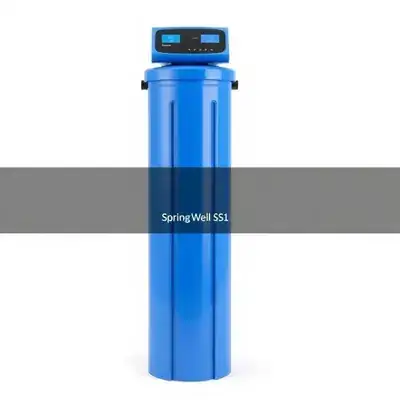
SpringWell SS1
Best overall for most homes. Bluetooth-enabled, high-efficiency, and backed by lifetime warranty.
Excellent customer support, easy DIY install
Read Full Review →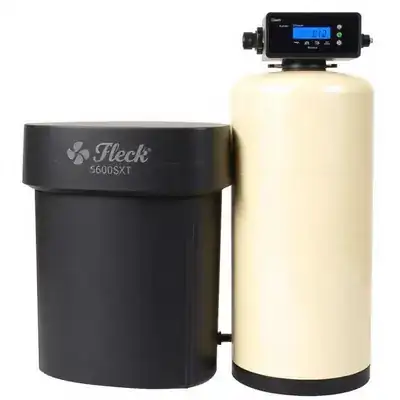
Fleck 5600SXT
Industry-standard control valve. Proven reliability with millions of installations.
Most parts readily available, DIY-friendly
Read Full Review →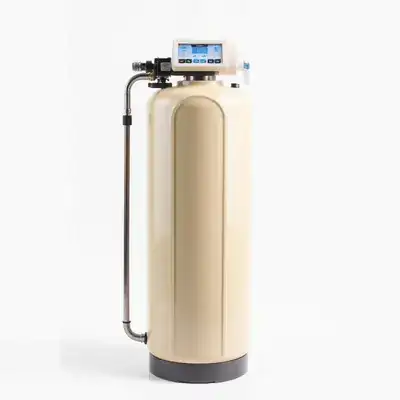
AFW Iron Pro 2
Best for well water with iron. Removes up to 8 ppm iron while softening.
Combines softening + iron removal
Read Full Review →Pro Tip: Before replacing, get quotes for both repair and replacement. Control valve rebuilds cost $200-400 and can extend life 5-10 years. Resin replacement costs $150-300 DIY. If repair costs exceed 50% of new system cost, replacement makes more sense. See our complete water softener buying guide.
When to Replace vs Repair
Worth Repairing
- ✓ System is less than 10 years old
- ✓ Problem is salt-related (bridge, low salt)
- ✓ Single component failure (timer, motor)
- ✓ Resin cleaning solves the issue
- ✓ Repair cost under $300
- ✓ Control valve rebuild available
Time to Replace
- ✗ System is 15+ years old
- ✗ Repeated breakdowns
- ✗ Resin completely failed
- ✗ Tank cracked or leaking
- ✗ Control valve obsolete (no parts)
- ✗ Repair cost exceeds 50% of new
Expected Lifespan by Component
| Component | Expected Life | Replacement Cost |
|---|---|---|
| Resin bed | 10-15 years | $150-300 (DIY) |
| Control valve | 15-20 years | $200-500 (rebuild) |
| Brine tank | 15-20+ years | $100-200 |
| Mineral tank | 20-25+ years | $200-400 |
| Complete system | 15-20 years | $600-2,500 |
Water Softener Troubleshooting FAQs
Related Articles
Best Water Softeners 2026
Top-rated salt-based and salt-free systems
Our picks for Salt-Free Water Conditioners
Scale prevention without salt or drain
Salt-Based versus Salt-Free Softeners — which wins
Which technology is right for your home?
Water Softener Sizing Guide: complete how-to
Calculate grain capacity for your household
Water Softener Installation: complete how-to
DIY installation step-by-step
Water Softener Maintenance
Salt refills, resin cleaning, and care schedule